
REVIEW · PLAZA MAYOR & OLD TOWN TOURS
Madrid Street Art Tour (Malasaña Chueca Gran Via & Lavapies)
Street art turns Madrid into a moving gallery. This pay-what-you-want walk threads Puerta del Sol and Gran Vía into Malasaña, Chueca, and Lavapiés street life, guided in English for about two hours.
I love how the guide starts with the origins of graffiti and then points you toward specific styles and artists you can actually spot on the walls. I also like the relaxed pacing, with short photo stops that keep things from feeling like a long march. The main drawback to consider is that it’s fully on foot, so if walking is tough for you, the Malasaña and Chueca stretches might feel like a lot.
In This Review
- Key things to know before you go
- How the tour works: meeting at Way Hostel and paying what it’s worth
- Getting started in Sol: first stops and the photo-friendly rhythm
- Puerta del Sol to Gran Vía: the street-art route through Madrid’s main stage
- Malasaña murals: where the neighborhood mood shows up in the walls
- Chueca: color, street-level art, and naming the styles you see
- Lavapiés: the cultural heart of Madrid in street-art form
- The pace question: it’s relaxed, but it’s still walking
- Cost and value: why the low upfront price isn’t the whole story
- What’s included (and what you should not expect)
- Photos and practical tips: how to get the best shots
- Who this tour suits best
- Should you book this Madrid street art walk?
- FAQ
- How long is the Madrid Street Art Tour?
- Where does the tour start and where does it end?
- Is it really free, or do I pay a set price?
- What neighborhoods and sights does the tour cover?
- Is the tour guided and in English?
- Is the tour wheelchair accessible?
- What should I bring for the tour?
Key things to know before you go
- Graffiti history, explained fast so you understand what you’re looking at (not just what it looks like)
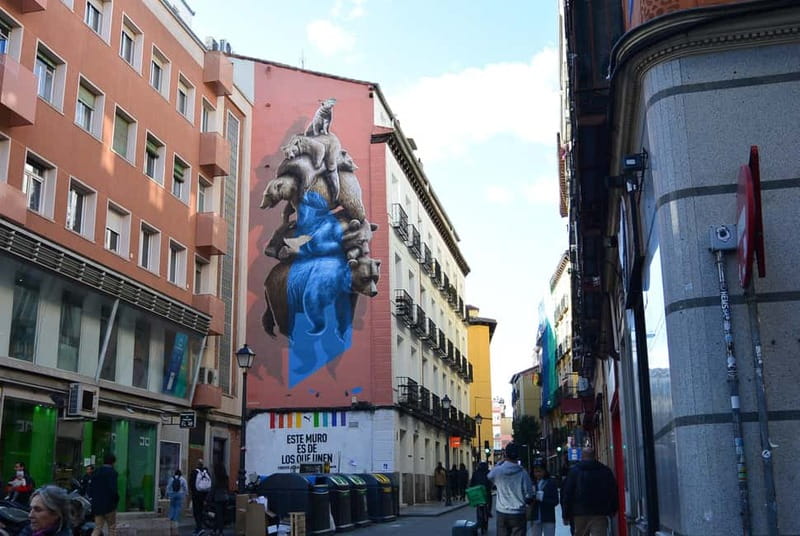
- Named artists and recognizable styles like paste-ups, mosaics, and urban sculpture
- Short photo stops built into the route so you can take pictures without slowing the group
- Big-city sights meet street art with stops near Gran Vía and Puerta del Sol
- Malasaña and Chueca first, Lavapiés next for a good “Madrid in layers” feeling
- Pay-what-you-want tip style lets you match the cost to your experience
Sol, the arches and the tangle of old streets
- Madrid Essential: Historic Center, Plaza Mayor & Royal Palace★ 5.0 · 6,416 reviews
- Madrid Walking Tour from Puerta del Sol to Retiro Park★ 5.0 · 2,285 reviews
- Madrid Old Town & Royal Palace Walking Tour Skip the Line Ticket★ 4.5 · 1,829 reviews
- Madrid Historic Centre Food Tour with Authentic Tapas & Wines★ 5.0 · 814 reviews
How the tour works: meeting at Way Hostel and paying what it’s worth
This is a free-style street art tour run by Wolves Tours. You reserve your spot, show up on time at the meeting point, and then reward the guide with whatever amount you think the tour was worth. The posted price you’ll see can look tiny, but the real cost is your tip at the end.
The tour is 2 hours long and led by a live guide in English. It’s designed for a group walk, so you’ll move on foot between neighborhood corners, with frequent stops to look closely and take photos.
The meeting point is simple: the guide waits at the door of Way Hostel Madrid, and the tour ends at Calle de la Magdalena, 23 (Centro, 28012 Madrid). That end location matters if you’re planning dinner nearby, because you’ll finish in the central area rather than being sent back to where you started.
If you’re wondering whether this is “worth it,” I’d think of it like an art lecture with a walking break. You’re paying for the guide’s ability to translate street art into context, plus the route that connects the neighborhoods in a logical flow.
Getting started in Sol: first stops and the photo-friendly rhythm
You kick things off at Way Hostel Madrid, then get moving quickly. Right away, the structure is built around short viewing moments, not long bus-style segments. You’ll hit a couple of photo stops early, which helps if you want to set your camera up before you start chasing murals.
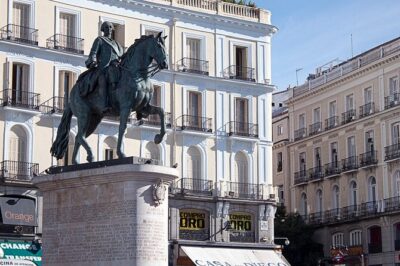
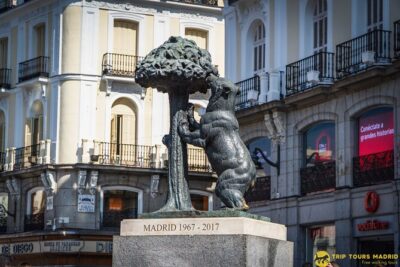
One of the first big anchors is Puerta del Sol. The tour treats Sol as more than just a landmark square. You’re there to connect the everyday Madrid you know with the street art you don’t usually notice when you rush through.
This is also where the guide’s pacing starts to make sense. Instead of sprinting from one wall to the next, you get quick stops that let you look. That small rhythm is part of why many people find it relaxing—even if you’re walking at a normal travel pace.
If you’re prone to taking photos nonstop, this is still workable. You’ll have time to pause, but the route keeps you from drifting into the wrong side streets for too long.
Puerta del Sol to Gran Vía: the street-art route through Madrid’s main stage
Next up is Gran Vía, often called the Spanish Broadway. Here’s the fun twist: you’re in one of Madrid’s most recognizable “main street” zones, but you’re not just sightseeing from a distance. The guide helps you spot how street art changes the vibe of a famous avenue.
Gran Vía also ties into the tour’s bigger goal: teaching you how to read street art. You’ll learn what makes certain works feel like part of a place, and how the style signals the artist’s influences and messages. That context is the difference between taking a photo and really understanding what you’re seeing.
The itinerary also includes stops around major buildings along the way, including the Capitol building. Even when the art isn’t literally on that exact façade, you’re building a mental map: where Madrid’s public life meets the walls that tell a different story.
Practical tip: if you want clean photos, aim for the photo stops when the guide calls them out. On Gran Vía and Sol, foot traffic can change fast, and you’ll get better results when you’re not choosing the moment yourself.
Malasaña murals: where the neighborhood mood shows up in the walls
Then the tour leans into Malasaña, one of Madrid’s most recognizable neighborhoods for alternative culture. You’ll spend about 30 minutes here, and the time is used well. This isn’t just “look at that mural.” You’ll learn why certain street art styles cluster in particular areas and how the neighborhood’s identity shows up in the artwork.
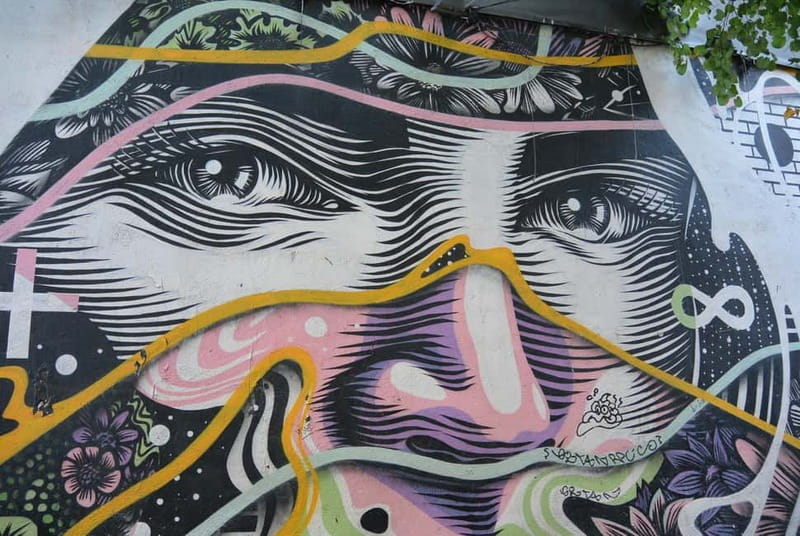
Malasaña is also where the tour gets more specific about artists and techniques. You’ll see examples connected to mosaics by local artists such as Okudart, Basket of Nean, El Rey de la Ruina, and Done Street. You’ll also get a chance to spot paste-ups, which are posters and sticker-style works that behave like fast, street-level messaging.
One highlight mentioned is the protected signature of Madrid artist MUELLE. That’s the kind of detail that makes you slow down. Instead of treating graffiti as random scribbles, you learn to look for the marks that have weight in local culture.
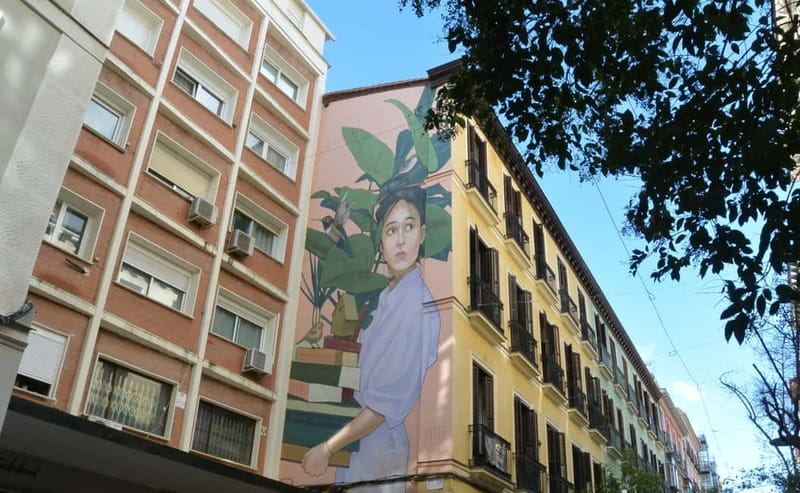
You’ll also notice how the architecture supports the art: multi-story street façades help keep the character of each neighborhood visible, even when the city changes around it. That’s useful context if you’re walking Madrid later on your own. Once you start seeing those patterns, you’ll catch street art in places you would’ve ignored before.
Set these beside it before you book anything in Madrid

Chueca: color, street-level art, and naming the styles you see
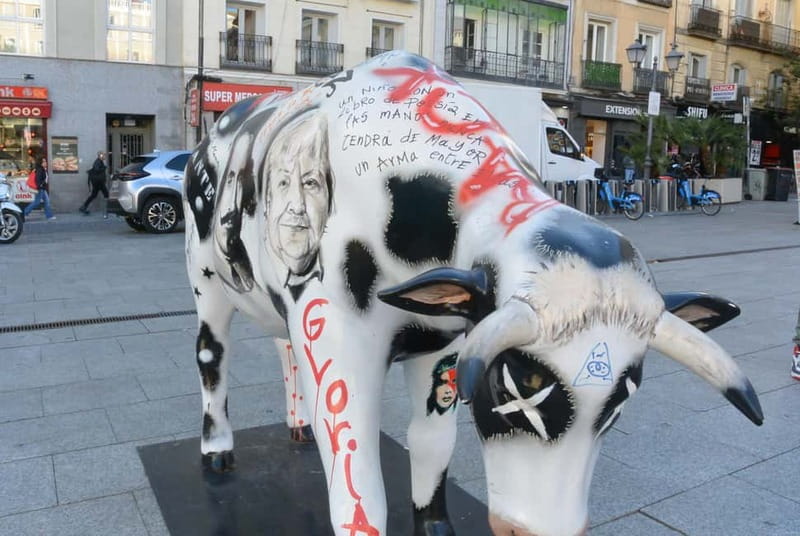
After Malasaña comes Chueca, another area with a strong creative reputation. Like Malasaña, you’ll spend about 30 minutes here, and the feel changes. The tour’s focus stays on art, but the tone shifts toward a more playful, color-forward street scene.
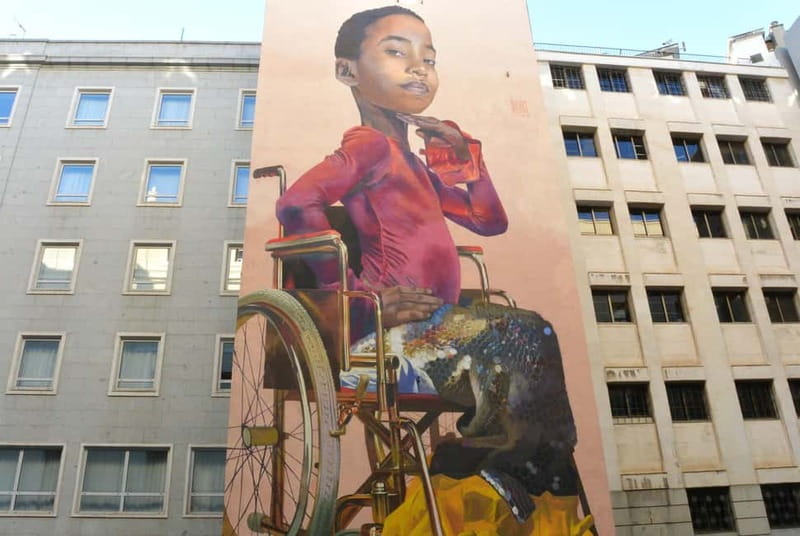
Chueca is also where the tour helps you connect art styles to modern street culture. You’ll talk about how contemporary street art blends different aesthetic codes, not just one “look.” That’s why the walls don’t all feel like the same genre. You get variety: large-scale murals, smaller pasted pieces, and street sculpture moments where the art takes up space like it owns the street.
In the guide’s explanation, you’ll hear references to street art connected to events, including murals tied to the Urvanity Art Fair and a Calle festival concept. The takeaway isn’t the event name for its own sake. It’s understanding how festivals and art fairs push new trends onto public walls, then those trends stick in the neighborhood for a while.
There’s also a practical side to Chueca. If you’re using this tour as your first orientation in Madrid, Chueca is a great checkpoint. Afterward, you’ll know where you are and how to navigate toward more nightlife, food stops, and extra photo locations.
Lavapiés: the cultural heart of Madrid in street-art form
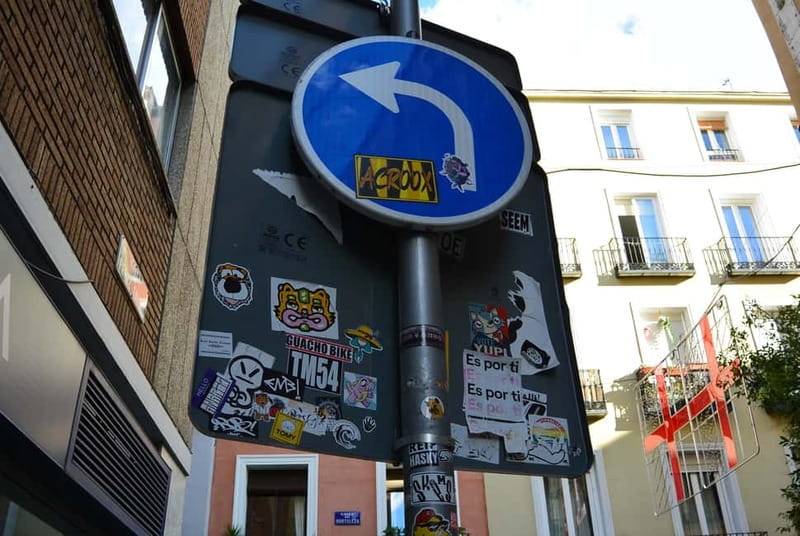
Finally, the tour heads toward Lavapiés, often described as the cultural heart of the city. In this neighborhood, street art feels less like a side attraction and more like part of daily visual life.
Lavapiés is known for layers: different communities, different languages, and lots of texture in the street scene. That matters because the tour doesn’t treat street art as separate from the city. You’ll learn how local stories show up in what gets painted, pasted, and placed on walls.
The tour mentions a lot of formats you’ll be looking for across the day: murals, mosaics, urban sculpture, stickers, paste-ups, and more. In Lavapiés, that mix tends to feel especially “real,” because you’re not only viewing art in a curated way. You’re watching it sit next to real shops, real streets, and real movement.
If you like street art because you like people watching, this is the part of the tour that usually clicks. You’ll still be following a route, but the neighborhood atmosphere makes it easier to slow down and notice what’s happening beyond the walls.
The pace question: it’s relaxed, but it’s still walking
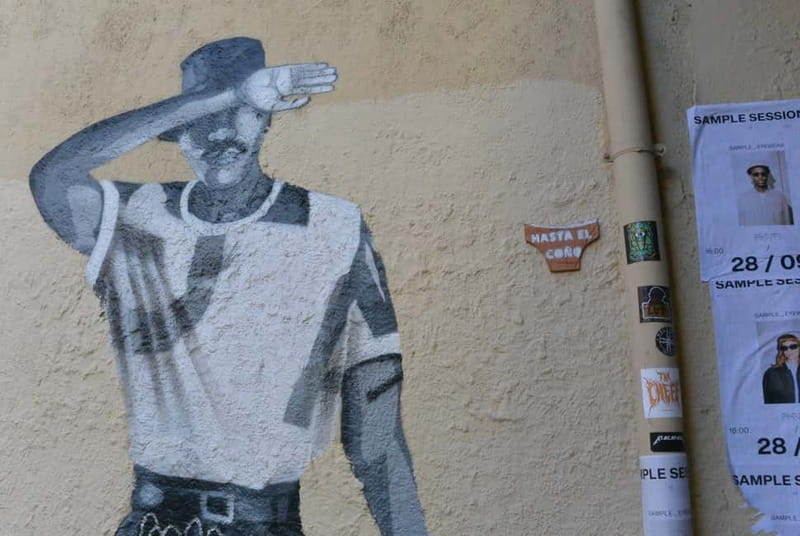
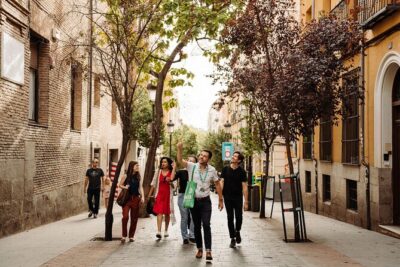
The itinerary is built around short guided stops, so the pace often feels manageable. You’ll spend roughly a half hour in each neighborhood segment (Malasaña and Chueca), plus shorter visits at Sol and around Gran Vía.
Still, one caution comes up clearly: it’s a walking tour. If you don’t walk much day-to-day, you may feel the distance more than you expect. One person even mentioned wanting it by bike because the walking was harder than they anticipated.
My advice: treat this like a city stroll with stops, not a sightseeing bus day. Wear shoes you trust. If you’re the type who plans your day around breaks, you’ll do fine. If you usually avoid long walks, consider shortening your plans after the tour and giving yourself time to sit.
The good news is that the tour is timed. You’re not trapped for hours. Two hours passes faster when you’re moving between photo stops and explanations instead of just walking without purpose.
Cost and value: why the low upfront price isn’t the whole story
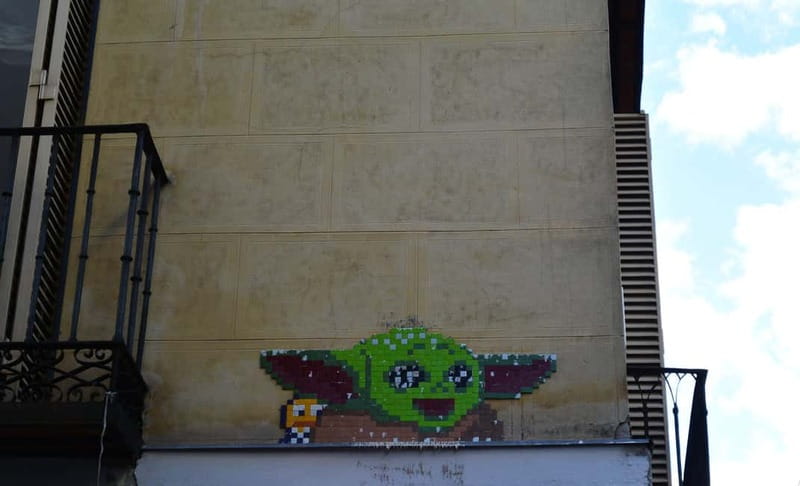
Pricing is where this tour can confuse people. You might see a small per-person price, but the tour works on a pay-what-you-want principle. That means value comes from what you get from the guide and the route.
What you’re paying for:
- A real guide in English who explains graffiti origins and local context
- A route that connects major Madrid reference points (Sol, Gran Vía) to neighborhoods that actually produce street art culture
- Time built in for photos and close looking
- Focus on specific artists and formats, so you leave with more than screenshots
If you leave the tour able to say names like MUELLE, recognize mosaic artist styles, and understand why paste-ups spread, you’ve gotten value. If you mostly wanted a quick selfie tour with minimal talking, you might not feel the same payoff.
Tip sizing is personal, but here’s the practical approach: if you felt the guide made you notice things you’d otherwise miss, reward accordingly. If your group moved faster than you wanted or you struggled to keep up on foot, give less. The “correct” amount is the amount that matches your experience.
What’s included (and what you should not expect)
This is primarily an outdoor street art experience. The included stops cover Puerta del Sol, Gran Vía, the Capitol building, Malasaña, Fuencarral Street, Chueca, Hortaleza Street, and Lavapiés.
What isn’t included: entry to attractions and entry to museums. So don’t plan museum time around it. You’re looking at art on streets and building exteriors, plus whatever artist-related stop the guide includes as part of the street experience.
That also shapes expectations for the route. You’ll spend your time on walls, streets, and “how the city tells stories” moments, not indoor ticketed sites.
Photos and practical tips: how to get the best shots
Bring a camera if you care about details. Street art rewards close attention, and the guide’s stops are timed so you can frame shots before the crowd shifts.
Wear comfortable shoes. You’ll be on foot for the whole tour, and your legs will do a lot more work than you think once you start looking up at murals.
If you want photos without stress, keep your camera gear simple. A pocket camera or phone works fine as long as you’re willing to pause. Also, charge your phone before you go, because you’ll likely take more pictures than you planned, especially once you start seeing recurring techniques like paste-ups and mosaics.
One more tip: if your goal is to understand the art as much as shoot it, take a quick note while the guide explains. Even one or two artist names or style terms can make it easier to remember what you saw later.
Who this tour suits best
This tour is a strong fit if you want:
- A guided introduction to graffiti and street art culture
- A walk through Madrid neighborhoods that feel different from each other
- A way to see major landmarks like Sol and Gran Vía without turning it into standard sightseeing
It’s especially good for first-timers in Madrid who want orientation plus culture in one move. You’ll leave with street-level context, which makes the rest of your trip feel easier.
It’s less ideal if you:
- Have limited walking tolerance
- Want only indoor stops or museum entry
- Prefer a no-explanations style tour
Should you book this Madrid street art walk?
I think you should book it if you want to see Madrid through street art and you’re okay spending two hours on your feet. The best part is the guidance: you’re not just wandering. You’re learning how graffiti started, then using that knowledge to read the walls in Malasaña, Chueca, and Lavapiés.
If walking is your weak spot, go in with a plan. Wear the right shoes, and consider keeping the rest of your day light after the tour. That way the route feels like a fun cultural experience instead of a physical chore.
If you care about photos and street art details, this is the kind of tour that leaves you with images and context at the same time.
FAQ
How long is the Madrid Street Art Tour?
The tour lasts about 2 hours.
Where does the tour start and where does it end?
The guide meets you at the door of Way Hostel Madrid. The tour finishes at Calle de la Magdalena, 23, Centro, 28012 Madrid.
Is it really free, or do I pay a set price?
It’s a free-style street art tour where there is no set fee. You reserve your spot and then reward the guide with whatever amount you think the tour was worth.
What neighborhoods and sights does the tour cover?
You’ll visit Puerta del Sol and Gran Vía, then spend time in Malasaña and Chueca, and end with Lavapiés. The tour also includes mentions of Fuencarral Street and Hortaleza Street, plus the Capitol building area.
Is the tour guided and in English?
Yes. It’s a live guided tour and is offered in English.
Is the tour wheelchair accessible?
Yes, it is listed as wheelchair accessible.
What should I bring for the tour?
Bring comfortable shoes, a camera, and comfortable clothes.
More Tours in Madrid
- Madrid: Tour Bernabéu Entry Ticket
★ 4.5 · 21,573 reviews - Madrid: Panoramic Route City Tour
★ 4.1 · 12,259 reviews - Avila & Segovia Tour with Tickets to Monuments from Madrid
★ 5.0 · 9,762 reviews - Madrid: Royal Palace Expert Guided Tour with Skip-the-Line
★ 4.7 · 8,407 reviews - Madrid: Segovia and Toledo Tour, Alcazar, and Cathedral
★ 4.7 · 7,797 reviews - Toledo Tour from Madrid: Cathedral, Synagogue & St. Tome’s Church
★ 5.0 · 6,784 reviews
More Tour Reviews in Madrid
- Madrid: Tour Bernabéu Entry Ticket
★ 4.5 · 21,573 reviews - Madrid: Prado Museum Entry Ticket
★ 4.6 · 20,699 reviews - Madrid: “Emociones” Live Flamenco Performance
★ 4.8 · 12,866 reviews - Madrid: Panoramic Route City Tour
★ 4.1 · 12,259 reviews - Madrid: Live Flamenco Show with Food and Drinks Options
★ 4.5 · 9,901 reviews - Avila & Segovia Tour with Tickets to Monuments from Madrid
★ 5.0 · 9,762 reviews
Old Madrid on Foot
- Madrid Essential: Historic Center, Plaza Mayor & Royal Palace
★ 5.0 · 6,416 reviews - Madrid Walking Tour from Puerta del Sol to Retiro Park
★ 5.0 · 2,285 reviews - Madrid Old Town & Royal Palace Walking Tour Skip the Line Ticket
★ 4.5 · 1,829 reviews - Madrid Historic Centre Food Tour with Authentic Tapas & Wines
★ 5.0 · 814 reviews - Madrid in a Day Tour:Royal Palace, Historic Center & Prado Museum
★ 5.0 · 628 reviews - Guided Tour of Madrid of the Austrias and the Historic Center
★ 5.0 · 520 reviews
Just Added: New Madrid Tour Reviews




Plaza Mayor & Old Town Tours, compared.
 ★ 5.0Madrid Essential: Historic Center, Plaza Mayor & Royal PalaceFrom $36,416 reviews
 ★ 5.0Madrid Walking Tour from Puerta del Sol to Retiro ParkFrom $32,285 reviews
 ★ 4.5Madrid Old Town & Royal Palace Walking Tour Skip the Line TicketFrom $401,829 reviews
 ★ 5.0Madrid Historic Centre Food Tour with Authentic Tapas & WinesFrom $78814 reviews
 ★ 5.0Madrid in a Day Tour:Royal Palace, Historic Center & Prado MuseumFrom $119628 reviews
 ★ 5.0Guided Tour of Madrid of the Austrias and the Historic CenterFrom $2520 reviews
 ★ 5.0Old Madrid Tapas and Fine Wine Small Group TourFrom $101415 reviews
 ★ 4.2From Madrid: Old Town Toledo Tour with Optional ActivitiesFrom $32403 reviews
Browse the lists this tour appears in