
REVIEW · MADRID BIKE TOURS
Madrid: Street Art Bike Tour
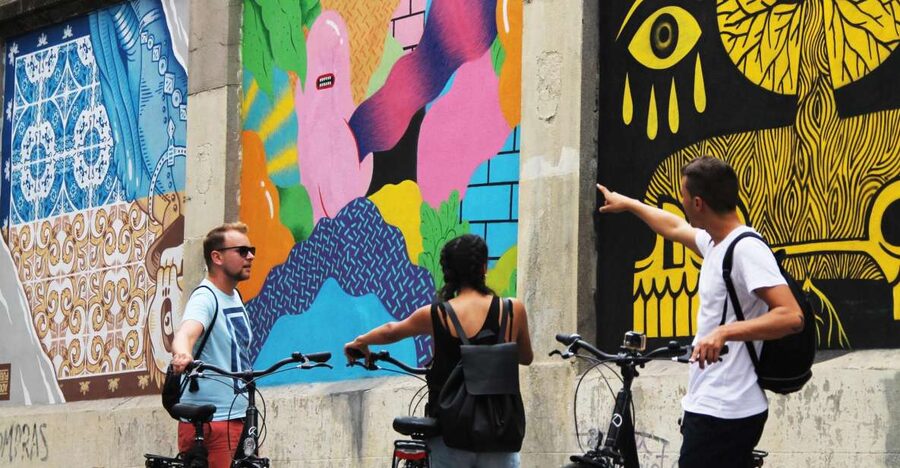
Street art feels different when you ride it. I love the way a local graffiti artist turns murals, tags, and techniques into a story while you pedal through Madrid. I also love the route through Malasaña & Lavapiés, where festival walls and community spaces sit right next to everyday streets. The only drawback is simple: this is a medium cycling tour, and Madrid traffic plus one uphill means you’ll want decent comfort on a bike.
You’ll get the basics that make the tour feel easy to join: bike rental, a helmet and lock, plus a city map. After a safety chat, the ride keeps moving so you don’t waste time hunting for the art.
The art itself goes way beyond pretty photos. You’ll hear about Muelle, considered a pioneer of Madrid graffiti, including a tag preserved from 1989, and then you’ll ride toward key works like a Boa Mistura piece around Alonso Martínez.
In This Review
- Key things I think you’ll enjoy
- Street art that gets explained while you ride
- Where you start: Carrefour Express near Gran Vía and Sol
- The ride feel: medium cycling, one uphill, city traffic in the mix
- Alonso Martínez: the guide’s first big artistic waypoint
- Malasaña: festival street art on streets you can actually feel
- Lavapiés and Noviciado: Solar Antonio Grilo and Esto es una Plaza
- The biggest mural in Madrid’s Center District
- Muelle and the 1989 tag: the Madrid pioneer moment
- What the guide does that turns it into a real experience
- Price and value: what $46 buys you in central Madrid
- Who should book this street art bike tour
- Should you book Cooltourspain’s Madrid Street Art Bike Tour?
- FAQ
- How long is the Madrid Street Art Bike Tour?
- Where does the tour meet, and where does it end?
- What’s included in the price?
- What language is the guide?
- Is transportation provided?
- Is there an uphill?
- What should I bring?
- Are beverages included?
Key things I think you’ll enjoy
- A local graffiti artist guide who explains techniques, not just artwork locations
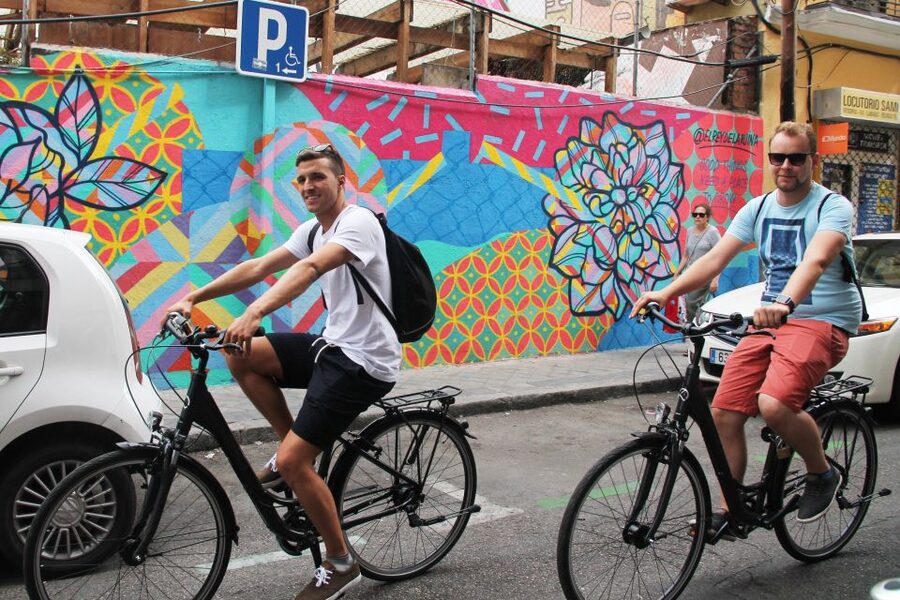
- Malasaña & Lavapiés by bike, including April festival spots like Plaza Dos de Mayo
- Big festival and community walls, plus a chance to spot Madrid’s biggest Center District mural
- Muelle’s preserved 1989 tag, a real anchor point for the city’s street art timeline
- Community urban gardens in Lavapiés, such as Solar Antonio Grilo and Esto es una Plaza
Two wheels through Madrid, more to ride
- Madrid Highlights Bike Tour★ 5.0 · 1,731 reviews
- Best of Madrid: 3-Hour Guided Bike Tour in Small Groups★ 4.8 · 1,417 reviews
- Madrid: City Highlights Guided Vintage Bike Tour★ 4.9 · 1,159 reviews
- Madrid: 3 hour Guided Highlights Bike Tour with Optional Tapas★ 5.0 · 443 reviews
Street art that gets explained while you ride
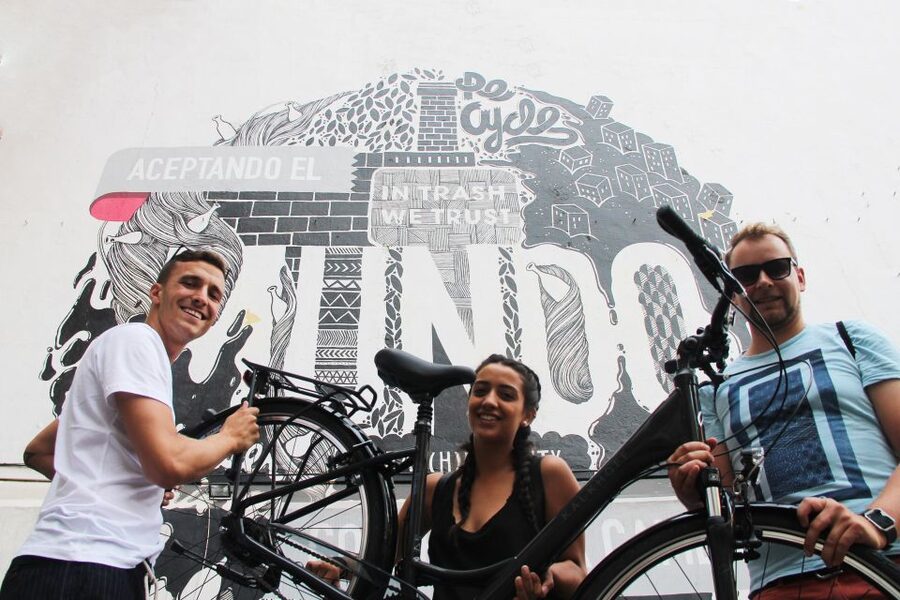
This tour works because it treats street art like culture, not decoration. Yes, you’ll see major pieces, but the guide also connects them to how graffiti happens: tags, how crews leave marks, and how style changes across eras and neighborhoods. That matters, because if you only look at the wall, you miss the choices artists made—where they place work, how they build letters or symbols, and why certain spots get repeated.
You’ll also get the sense that Madrid’s street art has layers. Older marks and early pioneers sit beside newer festival murals, and the ride stitches them together so the timeline feels real. The tour doesn’t ask you to be an art expert. It gives you enough context to look smarter by the time you arrive at each wall.
Where you start: Carrefour Express near Gran Vía and Sol
Logistics are refreshingly straightforward. You meet at the entrance of a small Carrefour Express in C/Montera 32, close to Gran Vía and Sol. It’s a practical starting point if you’re staying anywhere in the center, because you can get there by walking a bit or using the metro without overthinking it.
Once you arrive, you’re set up with the bike rental and gear. You’ll also get a helmet and a lock, which is one less thing you need to carry. A live guide in Spanish or English walks you through the plan, and there’s a map in the kit so you’re not totally dependent on the route once you’re done.
This is also where you’ll get the safety instructions before you start riding. You’ll want to treat that briefing seriously, since the tour is in active city areas, not some closed-off bike path.
The ride feel: medium cycling, one uphill, city traffic in the mix
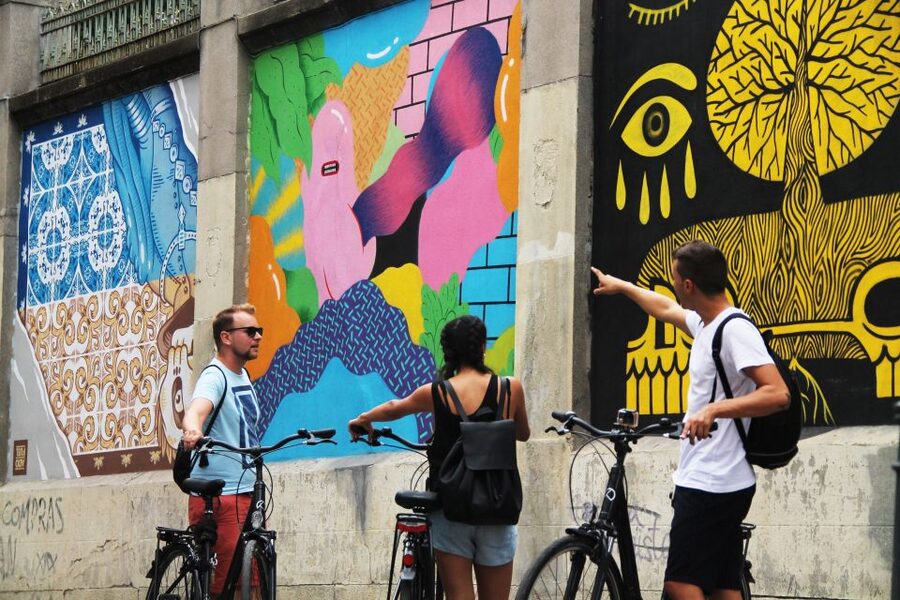
The tour runs about 2.5 hours, with a pace that fits a medium cycling level. The key point is that there’s just one uphill, so you’re not climbing for the whole afternoon. Still, you’ll feel Madrid’s streets and traffic flow, so it’s best when you’re comfortable pedaling in an urban setting.
That comfort can make or break the experience. If you’re confident on a bike and used to changing lanes or sharing space, you’ll glide through the route and spend more energy noticing the art. If you’re less confident, you’ll likely spend more focus on riding than absorbing stories.
One helpful detail from guide feedback is that the guide can adapt when the group has mixed cycling ability. So if you’re bringing someone who’s new to bikes, you still might be able to enjoy it, but you’ll want to be honest with yourself about comfort first.
Alonso Martínez: the guide’s first big artistic waypoint
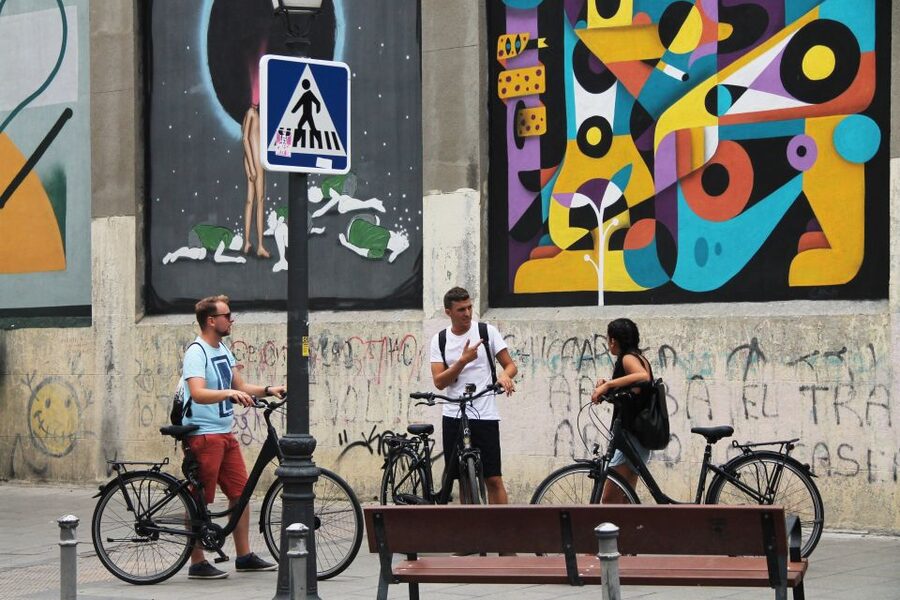
After the safety talk, the tour heads toward Alonso Martínez, which becomes an early artistic waypoint. This is where you’ll photograph one of Boa Mistura’s first pieces in the route. It’s a neat way to start, because it sets a tone: you’re not just spotting random murals, you’re learning how crews and agencies shape Madrid’s visual scene.
Boa Mistura is described as coming up from Madrid’s outskirts, with projects reaching across countries. Hearing that while you’re in the city center helps the work feel connected to people and places, not just style. You’ll look at the piece and the surrounding wall details differently once the guide frames how the work fits into larger collaborations and festival momentum.
More of Madrid on two wheels

Malasaña: festival street art on streets you can actually feel
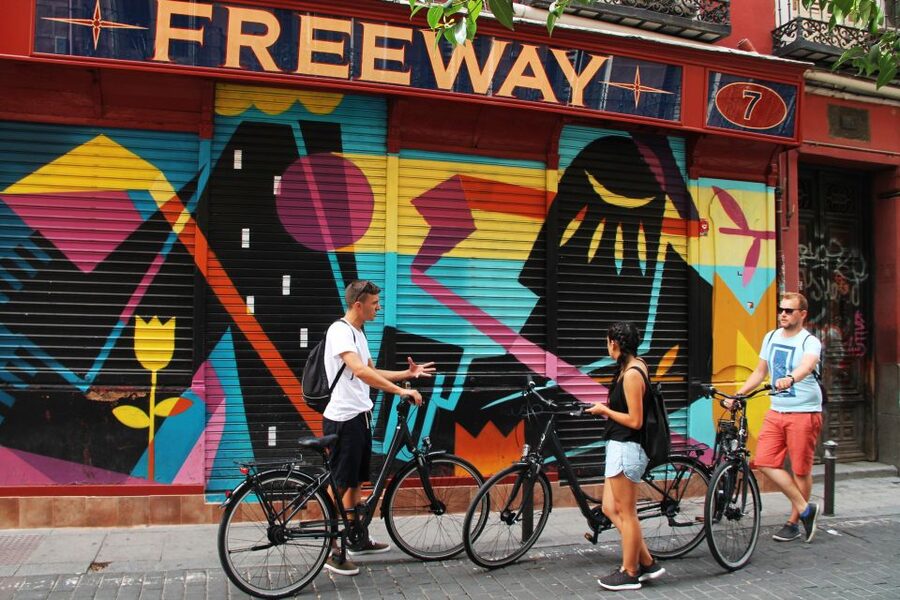
Malasaña is one of those neighborhoods where street art doesn’t sit in a separate world. It’s part of the vibe—cafés, shops, narrow streets, and walls that look like they’ve been collecting layers for years. By bike, you can cover the area without losing time. By walking alone, it’s easy to miss the small side walls that tell the bigger story.
You’ll cross art connected to national artists who participated in the 2017 edition of Pinta Malasaña, a street art festival held in April. Then you’ll hit the festival heart: Plaza Dos de Mayo. This is where the tour really makes the art feel like a seasonal event, not just permanent decoration.
One of the most memorable stops is a colorful set of traffic elements called Bolardo Voy, Bolardo vengo. It surprises people because it turns ordinary street furniture into a design statement. You’re used to thinking bollards and street markings are boring. Here, they become part of the city’s visual language.
If you like to photograph streets where art interacts with daily life, Malasaña is a strong match. Just keep an eye on where you stop so you’re not blocking the bike line or getting too close to the flow of pedestrians.
Lavapiés and Noviciado: Solar Antonio Grilo and Esto es una Plaza
Lavapiés is where the tour’s meaning gets bigger. Here, street art isn’t only about aesthetics. You’ll spend time around community hubs and urban gardens that transformed abandoned spaces into places for people. Two of the key stops are Solar Antonio Grilo and Esto es una Plaza, both linked to the Lavapiés and Noviciado areas.
What makes this part valuable is the idea of street art as community infrastructure. You’re not just seeing graffiti on a wall. You’re learning how these spaces function as meeting points, created for and by local culture. The tour also mentions these gardens as examples of hybrid economy systems, which helps explain why the work stays rooted in real neighborhood needs rather than being purely seasonal.
As you ride through these areas, you’ll notice interventions by artists like El Rey de la Ruina, Cassassola, Ze Carrión, Por Favor, and others. The important thing is not memorizing every name. It’s recognizing that each style and letter form is part of a bigger conversation happening across the neighborhood.
This is also the kind of stop that rewards slower looking. The walls might not all be huge murals, but the surrounding area—doors, corners, and reused surfaces—often tells you why the community chose that place to put the art in the first place.
The biggest mural in Madrid’s Center District
The tour highlights a chance to see the biggest mural in Madrid’s Center District. Even if you don’t think you’re the type who gets excited about scale, I think this stop works because it resets your expectations. Street art can feel like small marks at first—tags, stickers, quick letters—then it suddenly turns into something large enough that it becomes part of the skyline of a block.
Seeing a big mural inside a center-area ride also helps you understand how placement changes impact. A mural like this is harder to ignore, and that means the themes and style choices often need to land clearly for both locals and visitors. It’s the difference between catching a quick signature and standing in front of a statement.
Muelle and the 1989 tag: the Madrid pioneer moment
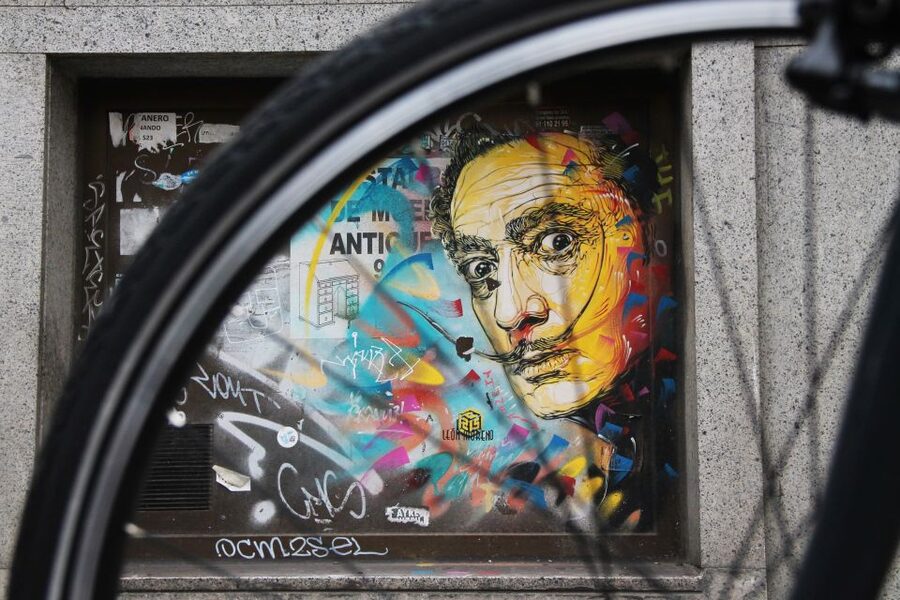
One of the tour’s most striking historical points is Muelle. The guide explains him as a pioneer of the graffiti movement in Madrid, with a tag that’s still preserved from 1989. That date matters because it anchors street art in real time—proof that what you’re seeing today has a longer chain than most people assume.
This part changes how you look. Once you know a specific mark has survived since 1989, every wall becomes more than a surface. You start noticing which parts seem older, which marks look intentionally preserved, and which corners appear repeatedly in the city’s street art timeline.
Muelle’s tag isn’t presented as a museum piece. It’s described as something you can observe on the street, which is why it feels so connected to Madrid rather than separated from it.
What the guide does that turns it into a real experience
The best tours don’t just show you things. They teach you how to see. Here, the live guide—often Spanish or English—links the artwork to the techniques and history behind it. That’s especially useful if you’re not already into graffiti culture.
Some of the strongest feedback ties to the guide’s friendliness and experience, including Javier, who has been mentioned as an excellent guide for family groups. The reason that matters is you can tell when a guide can explain street art in a way that keeps everyone engaged, not just the adults who came ready to zoom in with a camera.
The ride also tends to feel practical. Helmets, locks, and safety instructions reduce the stress. A restroom break is included, which sounds basic, but in a 2.5-hour city cycling tour it helps you stay comfortable and present.
Price and value: what $46 buys you in central Madrid
At $46 per person for about 2.5 hours, the pricing feels fair because you’re not paying only for a guide. You’re also getting bike rental plus helmet and a lock, a live English or Spanish guide, and a map. You’re essentially buying a ready-to-go way to access multiple neighborhoods and multiple mural locations without sorting out bikes, route planning, and meeting points on your own.
The guide also includes enough storytelling to make stops feel connected instead of random. That connection is where the value lives, because it turns “I saw some murals” into “I understand why these walls look the way they do.”
One other practical point: since drinks aren’t included, plan to bring water or buy it before you start. The tour itself focuses on moving and looking, not sitting with long breaks.
Who should book this street art bike tour
This tour is best for you if you enjoy street art and you also like the freedom of covering neighborhoods by bike. You’ll probably get the most from it if you can comfortably pedal for the duration and handle city intersections with a calm, attentive mindset.
It can work well for families too, as long as the kids can ride their own bikes. There’s feedback about a guide accommodating a family with a 7-year-old riding independently, with the tour adjusted as needed for the group.
If you prefer only flat routes or you’re worried about traffic, I’d take that seriously. The uphill is limited, but the urban bike environment is still part of the experience.
Should you book Cooltourspain’s Madrid Street Art Bike Tour?
If you want more than photos and captions, I think this is a smart booking. The tour combines street art technique explanations, real neighborhood stops in Malasaña and Lavapiés, and a couple of historically anchored moments like Muelle’s preserved 1989 tag. Add the bike rental, helmet, lock, map, and a restroom break, and you get good value for a focused 2.5-hour outing.
Book it when you’re comfortable riding in the city and you want your street art tour to have context. Skip it if cycling traffic stresses you out, because this tour’s best moments depend on staying engaged with the ride.
FAQ
How long is the Madrid Street Art Bike Tour?
The tour lasts about 2.5 hours. Starting times vary, so check availability for the exact schedule.
Where does the tour meet, and where does it end?
You meet at the entrance of the small Carrefour Express on C/Montera 32 near Gran Vía & Sol, and the tour ends back at the same meeting point.
What’s included in the price?
Bike rental is included, along with a helmet and lock, a Madrid city map, an English or Spanish live guide, and a restroom break.
What language is the guide?
The live guide is available in Spanish or English.
Is transportation provided?
You ride a rental bike as part of the tour, and you’ll receive a helmet and lock.
Is there an uphill?
The activity is described as medium level with just one uphill.
What should I bring?
Bring a passport or ID card, and wear comfortable shoes.
Are beverages included?
No, beverages are not included.
More Tours in Madrid
- Madrid: Tour Bernabéu Entry Ticket
★ 4.5 · 21,573 reviews - Madrid: Panoramic Route City Tour
★ 4.1 · 12,259 reviews - Avila & Segovia Tour with Tickets to Monuments from Madrid
★ 5.0 · 9,762 reviews - Madrid: Royal Palace Expert Guided Tour with Skip-the-Line
★ 4.7 · 8,407 reviews - Madrid: Segovia and Toledo Tour, Alcazar, and Cathedral
★ 4.7 · 7,797 reviews - Toledo Tour from Madrid: Cathedral, Synagogue & St. Tome’s Church
★ 5.0 · 6,784 reviews
More Tour Reviews in Madrid
- Madrid: Tour Bernabéu Entry Ticket
★ 4.5 · 21,573 reviews - Madrid: Prado Museum Entry Ticket
★ 4.6 · 20,699 reviews - Madrid: “Emociones” Live Flamenco Performance
★ 4.8 · 12,866 reviews - Madrid: Panoramic Route City Tour
★ 4.1 · 12,259 reviews - Madrid: Live Flamenco Show with Food and Drinks Options
★ 4.5 · 9,901 reviews - Avila & Segovia Tour with Tickets to Monuments from Madrid
★ 5.0 · 9,762 reviews
Ride Madrid on Two Wheels
- Madrid Highlights Bike Tour
★ 5.0 · 1,731 reviews - Best of Madrid: 3-Hour Guided Bike Tour in Small Groups
★ 4.8 · 1,417 reviews - Madrid: City Highlights Guided Vintage Bike Tour
★ 4.9 · 1,159 reviews - Madrid: 3 hour Guided Highlights Bike Tour with Optional Tapas
★ 5.0 · 443 reviews - Madrid City Guided Bike/E-Bike Tour for Small Groups
★ 4.8 · 308 reviews - Madrid: City Highlights Guided Vintage Bike Tour
★ 5.0 · 283 reviews
Just Added: New Madrid Tour Reviews




Madrid Bike Tours, compared.
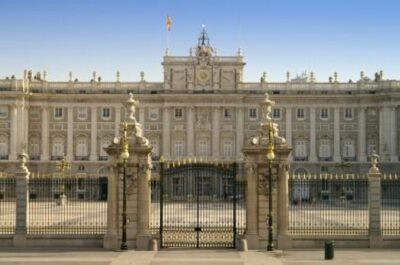 ★ 5.0Madrid Highlights Bike TourFrom $331,731 reviews
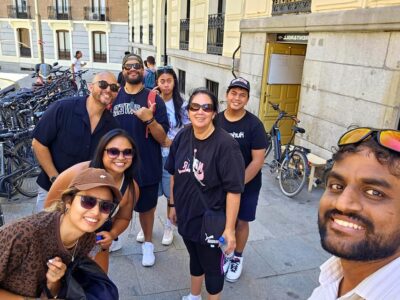 ★ 4.8Best of Madrid: 3-Hour Guided Bike Tour in Small GroupsFrom $331,417 reviews
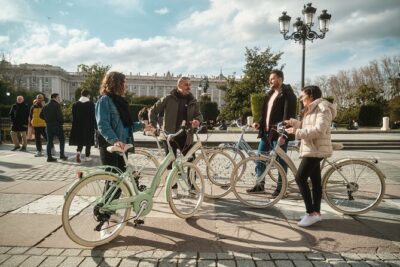 ★ 4.9City Highlights Guided Vintage Bike TourFrom $341,159 reviews
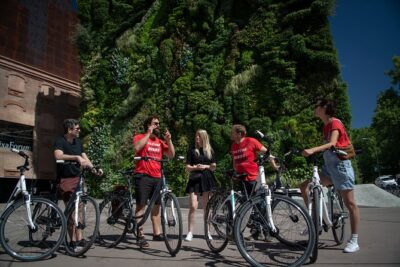 ★ 5.03 hour Guided Highlights Bike Tour with Optional TapasFrom $35443 reviews
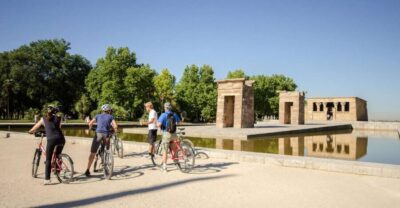 ★ 4.8Madrid City Guided Bike/E-Bike Tour for Small GroupsFrom $41308 reviews
★ 5.0City Highlights Guided Vintage Bike TourFrom $33283 reviews
★ 4.8Madrid City Guided Bike/E-Bike Tour for Small GroupsFrom $41308 reviews
★ 5.0City Highlights Guided Vintage Bike TourFrom $33283 reviews
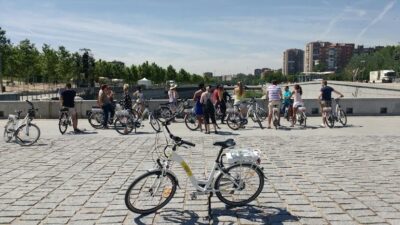 ★ 4.63-Hour Sightseeing Tour by Electric BikeFrom $53192 reviews
Guided Bike or E-Bike Tour with Local GuideFrom $27182 reviews
★ 4.63-Hour Sightseeing Tour by Electric BikeFrom $53192 reviews
Guided Bike or E-Bike Tour with Local GuideFrom $27182 reviews
Browse the lists this tour appears in