
REVIEW · REINA SOFÍA MUSEUM TOURS
Madrid: Reina Sofía Museum Private Guided Tour
A museum visit gets a lot better when someone explains what you are actually seeing. This private Reina Sofía tour is built for people who want the story behind modern art, with a guide who points out details you’d likely miss on your own, plus a strong focus on Guernica and the historical context that shapes it.
I also like that the tour is small and interactive, so you can ask questions as you go. One thing to consider: a negative experience can happen with any live guide—one past booking flagged concerns about space and health precautions—so if that matters to you, it’s smart to ask the operator ahead of time about headphones or mask/distance preferences.
In This Review
- Key things you’ll notice right away
- Meeting at the Nouvel building and why that area matters
- Skip the ticket line and get a real guide-led route
- How the 2-hour plan maps Modern European art (1881 to today)
- Guernica: the story behind the painting you came for
- Picasso, Dalí, Miró: surreal turns with historical grounding
- Personalization: how your interests change the tour
- Small group comfort, language options, and one real-world caution
- What $136 buys you (and when it might not)
- After the tour: staying in the museum longer
- Should you book this private Reina Sofía tour?
- FAQ
- Is this tour truly private?
- How long is the Reina Sofía private guided tour?
- Where do we meet the guide?
- Which languages are offered?
- Do you skip the ticket line?
- What’s included in the price?
- Can I stay in the museum after the guided portion?
- Is the museum wheelchair accessible?
- Can I cancel and do I pay right away?
Key things you’ll notice right away
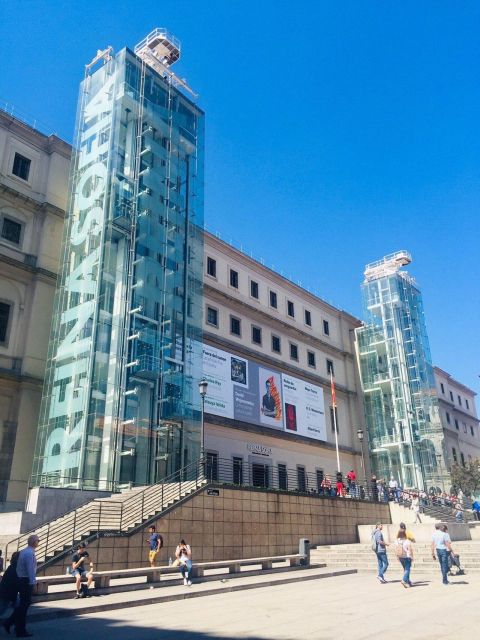
- Meet at the Nouvel building statue in Madrid’s UNESCO Landscape of Light area
- Skip the entrance ticket line and get into the museum faster
- A guided route from the late 1800s to today (Modern European art through contemporary work)
- Guernica with real context like the 1937 Paris Expo and wartime events
- Picasso, Dalí, and Miró connected through themes, not just stand-alone hits
- Small group cap of 7 for a more personal pace and questions
Guernica and the moderns, another look
- Madrid: Reina Sofía Museum Entrance Ticket★ 4.5 · 8,788 reviews
- Madrid: Reina Sofía Museum Guided Tour★ 4.3 · 659 reviews
- Spanish Civil War start of 2 World War, Guernica Franco★ 5.0 · 462 reviews
- Reina Sofia Museum Small Group Tour -6 people maximum-★ 5.0 · 433 reviews
Meeting at the Nouvel building and why that area matters
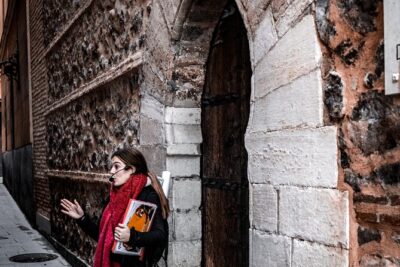
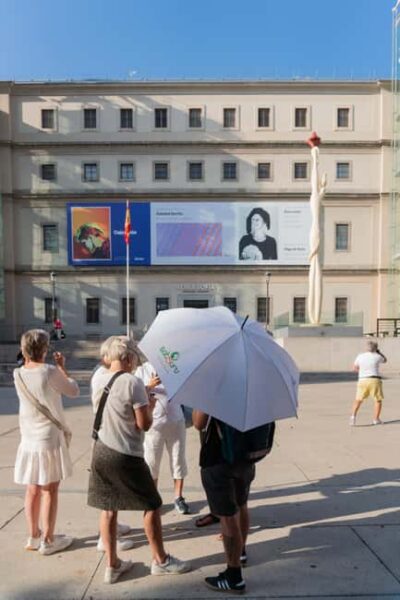
You meet your guide at your selected time at the statue in front of the Nouvel building. This isn’t just a convenient landmark. The area around it is Madrid’s Landscape of Light, a UNESCO World Heritage Site created under Carlos III. It’s a nice reminder that the museum experience starts before you even enter—Madrid’s identity and design are part of the framing.
In practice, this meeting setup helps you get your bearings quickly. You’ll start in the open air with your guide ready to move you toward the museum entrance, and that matters because it keeps the first minutes calm instead of chaotic. Once you’re inside, you can spend your energy on the art instead of waiting in line.
If you’re using public transit or walking in from another stop, just plan to arrive a few minutes early. With private tours, being on time is usually the difference between a smooth start and a rushed one.
Skip the ticket line and get a real guide-led route
This is a private group format with a maximum of 7 people, which is a big part of the value. It means your guide can adjust pace, spend more time on what you care about, and keep the conversation moving instead of forcing everyone through the same script.
The tour also includes skip-the-ticket-line entry. That matters at the Reina Sofía because modern art draws crowds. Less waiting means more time with the paintings and objects that actually matter to you.
Inside, the guide focuses on modern and contemporary work and connects it to bigger ideas: what changed in Europe from the late 19th century onward, why certain styles took off, and how major artists responded to politics, culture, and new ways of looking. You’re not just collecting highlights—you’re following a logic chain.
Also, languages are English and Spanish, so you should be able to pick a guide experience that fits you best.
How the 2-hour plan maps Modern European art (1881 to today)
The tour is designed as a guided journey through the evolution of Modern European art, from 1881 to the present. In 2 hours, you’re not expected to see everything. Instead, you get a guided path that helps your eyes understand the bigger shift happening across decades—how art moves from classic subjects and techniques into new forms of interpretation.
A good guide-led structure is what turns a museum from a list of names into a story you can follow. Your guide helps you see why styles changed and how artists influenced each other across borders. The tour is built to explain not only the artwork itself, but the choices behind it: composition, symbolism, and the cultural moment that shaped the work.
You’ll also notice that the tour isn’t limited to paintings. Based on guide approaches from the experiences people describe, it can include context through photos, propaganda posters, film clips, and sculptures. That mix is useful because it shows modern art didn’t appear in a vacuum—it grew out of media, war, and public life.
In other words, you leave with a clearer sense of what to look for next time you visit the galleries on your own.
Guernica: the story behind the painting you came for
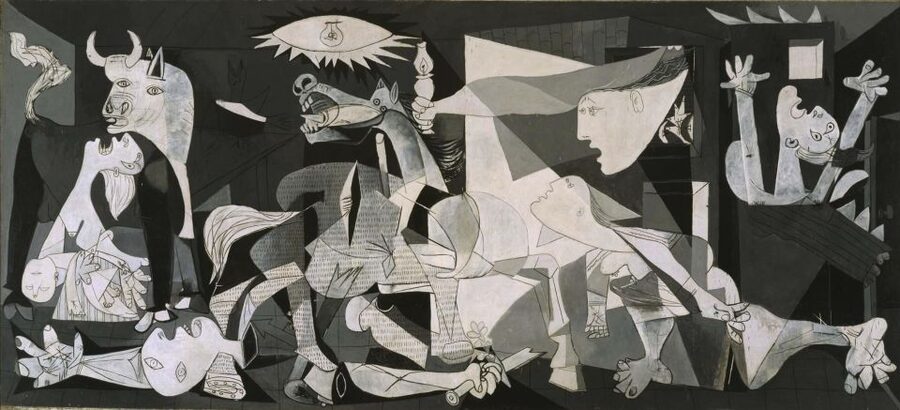
If Picasso’s Guernica is the reason you’re going, this is where the tour earns its ticket price. The guide is set up to explain why Guernica became a global reference point—not just as a masterpiece, but as a work tied to real events and public memory.
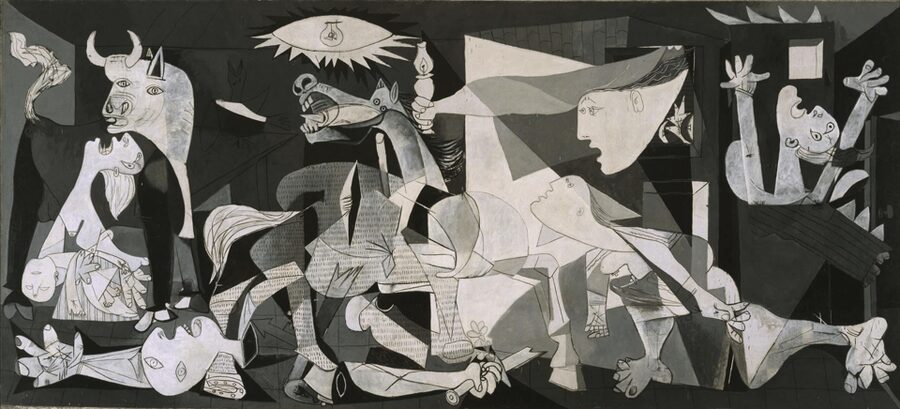
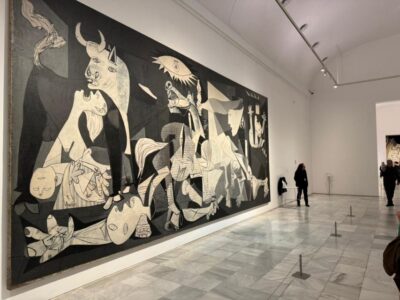
You get context about how Guernica was painted for the 1937 Paris Expo, and also what it responds to: the bombing of Guernica during the Spanish Civil War era. That historical framing matters because the painting often feels overwhelming at first glance. With the background, the details start to read like a message.
One especially memorable detail from the way guides explain this work: you may see the story through additional material such as photos of Guernica being painted and an invoice for Picasso’s payment from the government. Those kinds of specifics change how you understand the painting’s place in history—less myth, more reality.
This is also where a skilled guide earns repeat interest. They help you connect the visual language to the human stakes, so you’re not just staring at black, white, and gray. You’re reading a carefully constructed statement.
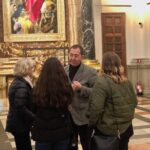
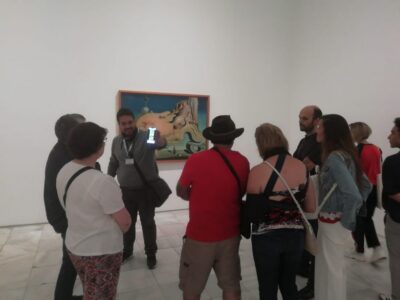
Private and unhurried, just your party




Picasso, Dalí, Miró: surreal turns with historical grounding
After Guernica, the tour follows the logic of modern art into other major voices, including Picasso, Dalí, and Miró. The goal isn’t to drop names. It’s to connect how different artists used new visual systems to express their ideas.
For instance, you should expect clearer explanations of cubism and how Spanish history ties into the art. When you understand cubism as a way of breaking and rebuilding perception, you start noticing the same mindset in other works around the museum. That’s exactly what makes a guided route valuable: your eyes learn a pattern.
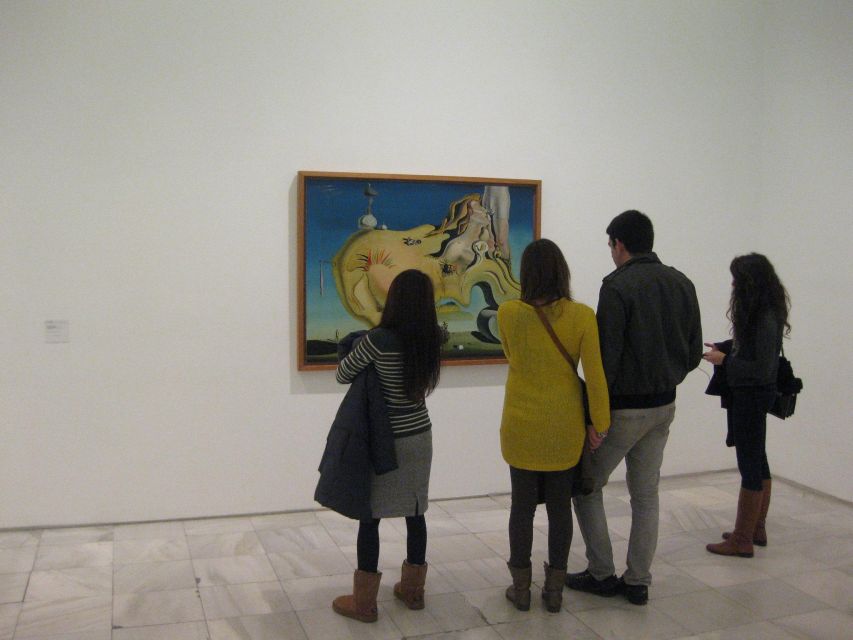
The same goes for Dalí and Miró. Even if you already recognize their styles, the guide’s job is to connect technique to meaning—why these works look the way they do, and how their imagery links to the broader modern shift happening across Europe.
One more thing that can make the experience feel more complete: some guides make a point of including works by female artists and pointing out connections between pieces that are separated into different rooms. For example, the way guides sometimes connect paintings showing intellectuals meeting—paired by male and female artists—helps you build a larger theme instead of treating rooms like isolated islands.
Personalization: how your interests change the tour
This tour isn’t advertised as a rigid checklist. It’s tailored to your interests. You tell the guide what fascinates you most, and they adjust what they emphasize during the route.
In a museum, personalization is only useful if it changes what you actually do. Here, it can: you’ll have a chance to ask questions and spend more time on aspects of modern art that match your curiosity—whether that’s political context, style and technique, or how one artist’s work connects to another.
A practical way to use this: before your start time, think of two or three things you want from the Reina Sofía. Maybe it’s Picasso above all, maybe it’s how surrealism fits into the bigger modern story, or maybe it’s how Spain’s modern history shaped what artists made. With that input, you’ll get more than a highlight reel.
And because it’s a small group, your preferences matter more. A busy, big-group tour tends to move too fast for real questions. Here, the structure is set up for interaction.
Small group comfort, language options, and one real-world caution
With up to 7 people, the vibe is typically more relaxed than large tours. That can help you focus. You also don’t have to shout to be heard, and you can reposition your attention between works without feeling trapped in a crowd.
The guide is available in English or Spanish, which helps you keep your understanding sharp. When you’re discussing art, a small language mismatch can turn a great explanation into effort. Having a guide who matches your language keeps the experience smooth.
The one caution worth taking seriously: in at least one past booking, there were concerns about the guide’s health precautions and how close they were standing, plus whether headphones were used. That’s not something you can fully predict ahead of time, but it is something you can address proactively.
If you have concerns about space, coughing/masks, or audio setup, message the provider in advance and ask about headphones and mask/distance preferences. It’s a small step that can prevent a big headache.
What $136 buys you (and when it might not)
At $136 per person for about 2 hours, you’re paying for three things at once:
1) an art guide (specialized explanation),
2) entrance fees and related charges,
3) line-skipping access that saves time and keeps the focus on the art.
You might not see the value if you only want a quick walk-by of famous pieces. A self-guided visit can work if you already know exactly what you want and you don’t need context.
But if you’re the kind of person who wants your first modern-art visit to feel understandable—this is where the guide earns its keep. In a short time, the tour turns confusing styles into ideas you can grasp. And because it’s small-group and personalized, the guide can spend time on what you personally care about, not what the largest number of people care about.
Also note what’s not included: transportation. That’s normal, but it means you’ll want your own plan for getting to the Nouvel building area and back.
After the tour: staying in the museum longer
One of the best practical bonuses is that you can stay inside after your guided portion. If your group is 7 people or less, you’ll have the option to continue exploring on your own, and the guide provides recommendations based on what you enjoyed during the tour.
This matters because modern art rewards lingering. Even a good 2-hour route can make you realize what else you want to see once your eyes are warmed up. The recommendations help you choose better than wandering randomly.
So think of the tour as a launchpad. You get orientation, a set of themes, and a sense of how to connect works. Then you can slow down in the galleries at your own pace—using what the guide gave you as your viewing compass.
Should you book this private Reina Sofía tour?
Book it if you want modern art to feel clear instead of intimidating. You’re paying for an experienced guide approach focused on Picasso, Dalí, Miró, and Guernica, plus a guided path through Modern European art from 1881 to today. If you care about context—history, meaning, and how styles connect—this format is a strong match.
Skip it (or at least consider self-guided) if you’re fine spending time on your own and you already have a clear plan for what you want to see. Also, if health precautions and personal space are important to you, send a quick message ahead of time about headphones and masking/distance expectations.
If you get your time right and you go in with a couple of interests in mind, you should leave with a museum you can actually interpret.
FAQ
Is this tour truly private?
It’s a private group tour with a small group size of no more than 7 people.
How long is the Reina Sofía private guided tour?
The tour lasts 2 hours.
Where do we meet the guide?
You’ll meet at your selected time by the statue in front of the Nouvel building. Meeting point may vary depending on the option booked.
Which languages are offered?
The live tour guide is available in English and Spanish.
Do you skip the ticket line?
Yes, the tour includes skip-the-ticket-line entry.
What’s included in the price?
Included are the specialized art guide, entrance fees, taxes, and fees/management fees. You can also stay in the museum after the visit if you choose (for groups of 7 or less).
Can I stay in the museum after the guided portion?
Yes. Once the tour ends, you can stay and explore further on your own if your group is 7 people or less, and you’ll receive recommendations.
Is the museum wheelchair accessible?
Yes. The museum is wheelchair accessible, and stroller access is also mentioned.
Can I cancel and do I pay right away?
Cancellation is free up to 24 hours in advance for a full refund. You can also reserve now and pay later.
More Tour Reviews in Madrid
- Madrid: Tour Bernabéu Entry Ticket
★ 4.5 · 21,573 reviews - Madrid: Prado Museum Entry Ticket
★ 4.6 · 20,699 reviews - Madrid: “Emociones” Live Flamenco Performance
★ 4.8 · 12,866 reviews - Madrid: Panoramic Route City Tour
★ 4.1 · 12,259 reviews - Madrid: Live Flamenco Show with Food and Drinks Options
★ 4.5 · 9,901 reviews - Avila & Segovia Tour with Tickets to Monuments from Madrid
★ 5.0 · 9,762 reviews
Private Days in the Capital
- Madrid: Private City Tour by Eco Tuk Tuk
★ 4.9 · 3,465 reviews - Madrid Welcome Tour with Local Guide in Eco Tuk Tuk Private
★ 5.0 · 2,936 reviews - Madrid Historical Tour with Local Guide in Eco Tuk Tuk Private
★ 5.0 · 876 reviews - Toledo Private Tour with Licensed Guide and Driver from Madrid
★ 5.0 · 637 reviews - Madrid Private Segway tour. Retiro Park – Centro Historico
★ 4.9 · 636 reviews - Madrid Express Tour with Local Guide in Eco Tuk Tuk Private
★ 5.0 · 413 reviews
Reina Sofia, Beyond Guernica
- Madrid: Reina Sofía Museum Entrance Ticket
★ 4.5 · 8,788 reviews - Madrid: Reina Sofía Museum Guided Tour
★ 4.3 · 659 reviews - Spanish Civil War start of 2 World War, Guernica Franco
★ 5.0 · 462 reviews - Reina Sofia Museum Small Group Tour -6 people maximum-
★ 5.0 · 433 reviews - Madrid: Guided Tour of Reina Sofía Museum with Entry Ticket
★ 4.9 · 363 reviews - Madrid: Reina Sofia and Prado Museum Tickets and Guided Tour
★ 4.6 · 342 reviews
Just Added: New Madrid Tour Reviews



Reina Sofía Museum Tours, compared.
 ★ 4.5Reina Sofía Museum Entrance TicketFrom $148,788 reviews
 ★ 4.3Reina Sofía Museum Guided TourFrom $38659 reviews
 ★ 5.0Spanish Civil War start of 2 World War, Guernica FrancoFrom $3462 reviews
 ★ 5.0Reina Sofia Museum Small Group Tour -6 people maximum-From $59433 reviews
 ★ 4.9Guided Tour of Reina Sofía Museum with Entry TicketFrom $59363 reviews
 ★ 4.6Reina Sofia and Prado Museum Tickets and Guided TourFrom $68342 reviews
 ★ 4.0Prado Museum with Reina Sofia Museum Guided TourFrom $81311 reviews
 ★ 4.3Reina Sofía Guided Tour with Skip-the-Line TicketsFrom $44293 reviews
Browse the lists this tour appears in