
REVIEW · MADRID TUK TUK TOURS
Madrid Historical Tour with Local Guide in Eco Tuk Tuk Private
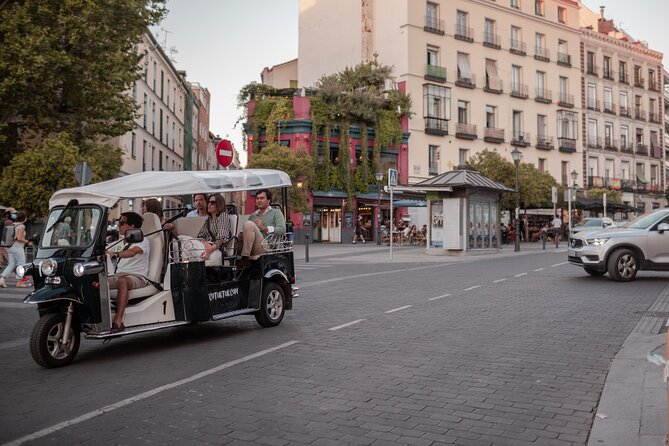
Electric tuk-tuks make Madrid feel effortless. This private ride-by-ride tour uses a 100% electric vehicle to help you see a lot fast, without grinding your feet into the pavement.
What I like most is the mix of iconic landmarks and real neighborhood context, explained by guides such as Carlos and Laura who are known for clear answers and keeping things fun. I also love that you get built-in photo timing at pre-selected stops, plus blankets when winter weather bites.
One thing to keep in mind: your route and photo moments are fixed, and the meeting point is tucked into the underground bus area by the Royal Palace, so read the directions carefully before you arrive.
In This Review
- Key highlights you’ll care about
- Electric tuk-tuk: the smart way to get oriented fast
- Getting from the meeting point to your first stop without stress
- Stop 1: The Market with old-world Madrid energy
- San Francisco el Grande: a church that feels like a landmark
- Atocha station: where Madrid’s rail heartbeat shows
- The Spanish Courts: architecture details that are easy to miss
- Plaza of the gods: Cibeles vs. Atlético’s arena moment
- Prado area meets art-school superlatives: a practical “why it matters” stop
- San Jerónimo el Real: late Gothic with Renaissance hints
- Puerta de Alcalá: a ceremonial gate with royal timing
- Big institutions around Plaza de Cibeles-era power blocks
- The National Bank building and the idea behind its look
- Plaza de Santa Ana: old square, changing face
- Almudena Cathedral: a modern consecration with deep importance
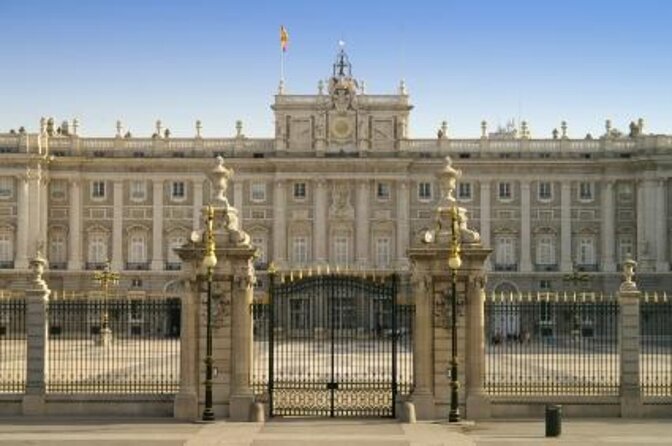
- Royal Palace area: Palacio de Oriente and two garden styles
- Debod Temple: an ancient Egyptian silhouette in the Spanish sky
- Comfort, pacing, and what to expect from the guides
- Value check: is $28.66 per person worth it?
- Should you book this Madrid Historical Tour?
- FAQ
- How long is the Madrid historical tour?
- Is this tour private?
- What language is the tour offered in?
- Is there a minimum age or child policy?
- Does the tour include blankets for cold or wind?
- Is the vehicle electric and sustainable?
- Where is the meeting point, exactly?
- How many passengers fit per tuk-tuk?
- Are stops flexible for photos, or can the route be changed?
- Is Debod Temple free?
- Cancellation: can I get a refund if plans change?
Key highlights you’ll care about
- Private tuk-tuk for your group only, timed to help you see Madrid’s big landmarks efficiently
- 100% electric ride with a quieter, smoother feel than most street traffic
- Blankets and protective layers for rain, wind, or cold days
- Pre-selected photo stops so you’re not stuck guessing where to pull over
- Atocha to the Royal Palace to Debod: one route, multiple “must-see” zones
- Guides that steer the experience with history, practical tips, and plenty of Q&A
Buzz the old centre by tuk tuk
- Madrid: Private City Tour by Eco Tuk Tuk★ 4.9 · 3,465 reviews
- Madrid Historical Tour with Local Guide in Eco Tuk Tuk Private★ 5.0 · 876 reviews
- Madrid Express Tour with Local Guide in Eco Tuk Tuk Private★ 5.0 · 413 reviews
- Madrid: Highlights City Tour by Electric Tuk Tuk★ 4.7 · 346 reviews
Electric tuk-tuk: the smart way to get oriented fast
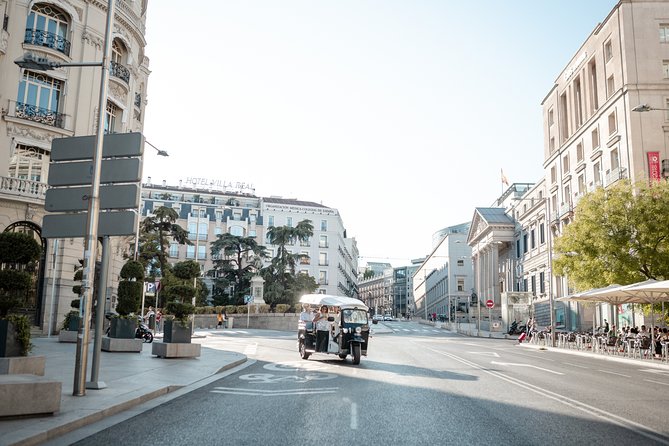
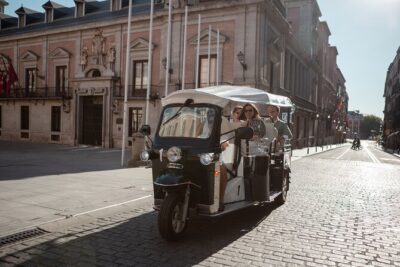
Madrid is big, spread out, and full of curves that hide landmarks until you’re suddenly right on top of them. This tour fixes that problem by using an electric eco tuk-tuk to link key areas in a short time. You get the motion of a city tour, with the stops of a guided walk—just without the constant climb-and-stumble.
I especially like that the vehicle is made for comfort: the company includes protective layers against rain and wind, and blankets for winter. That matters because Madrid’s weather can shift mid-day, and a “short tour” still feels long if you’re cold and wet. You’re also supported for easier boarding; the drivers help you get on if needed.
And because it’s private, you’re not stuck with the “wait-for-everyone” rhythm that can slow down group tours. It’s also offered in English, which is a big deal for pacing. When the guide can keep a steady narrative in your language, the whole route feels more like a guided conversation than a checklist.
Getting from the meeting point to your first stop without stress
The tour starts at C. de Bailén, 4 in Centro, near the Royal Palace area, but the actual pickup is at the underground bus station by Plaza de Oriente. One review note that matches what you should do: if you search for Calle Bailén 4 or Puerta del Príncipe on Google Maps, you’ll land at the right spot.
Look for the Eco Tuk Tuk signage at the stairs to the station—right across from the Prince’s Gate. If you’re worried, the company offers a WhatsApp contact (+34 696 99 78 89) so you can confirm you’re at the correct entrance. That small step can save you a lot of stress, especially if you’re arriving from the wrong metro exit.
Also note: the tour ends back at the meeting point, so you can plan your next activity nearby. No need to chase a different pickup zone.
Stop 1: The Market with old-world Madrid energy
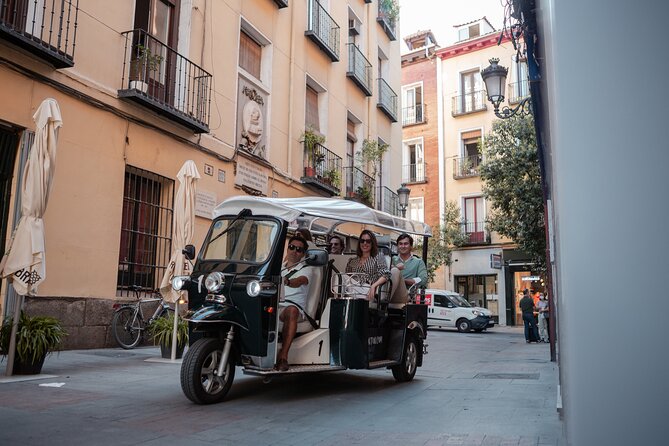
Your ride begins with a covered market area dating to around 1916. Expect an elegant setting where you can see how locals think about food: delicatessen counters, local items, and market-life events.
This stop is useful even if you’re not a foodie. Markets are where neighborhoods show their daily personality. You’ll learn the “rhythm” of the area and get a sense of what Madrid eats and celebrates, which makes later sightseeing feel more connected. It’s also a good early contrast point: big monuments are coming, but this is the grounded, everyday start.
One practical note: if you’re hoping for a long food crawl, this is mainly a sight-and-context stop rather than a full tasting tour. Still, it’s an excellent way to get the city “speaking” before you hit the major institutions.
San Francisco el Grande: a church that feels like a landmark
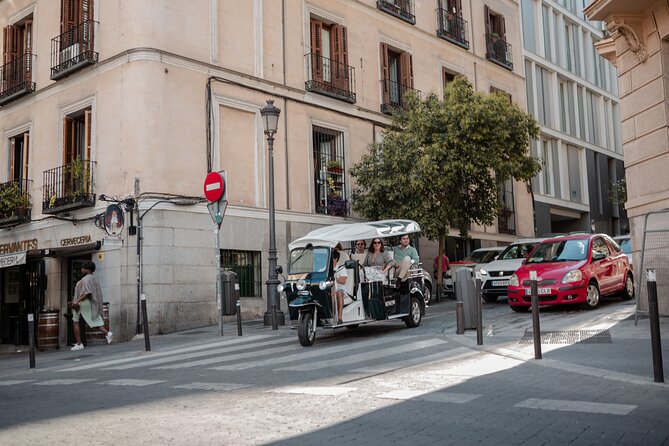
Next up is the Royal Basilica of San Francisco el Grande, officially the Basilica of Our Lady of the Angels, in the Palacio neighborhood. If you only know Madrid for palaces and museums, this basilica broadens the picture. It’s a major Catholic church that sits right in the historic center—so you get the feeling of Spain’s religious architecture without leaving the main action.
What I like about including a church this early is that it changes your visual focus. Instead of chasing facades, you start noticing scale, stonework, and the way Madrid’s historic center is layered. And since the tour is private, the guide can tailor the pacing to the group: a quick look for some, a longer pause for others.
This stop also sets you up for what comes next: Madrid’s civic and royal power are everywhere, but they show up in different “languages” of architecture—religious here, political and royal a bit later.
Private and unhurried, just your party




Atocha station: where Madrid’s rail heartbeat shows
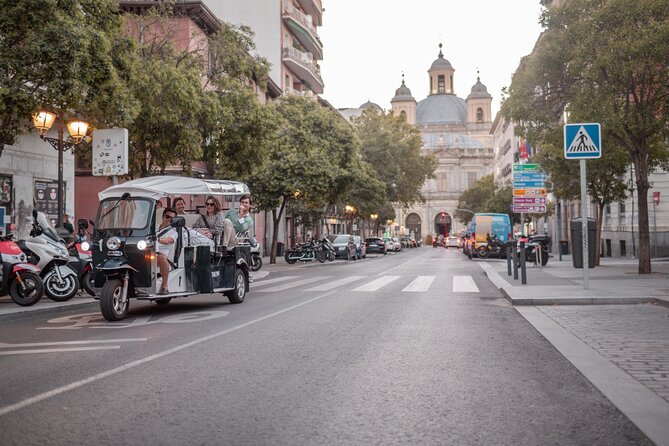
Then you roll into Atocha station, a major railway complex near Plaza del Emperador Carlos V. The tour frames it as the busiest station in Spain and one of the major hubs in Europe—so you can see it not just as a building, but as Madrid’s mobility engine.
Why this matters: when a city is this connected, neighborhoods feel linked in your head. Atocha helps you understand why Madrid spreads the way it does, and it becomes easier to plan future days on your own, from day trips to museum blocks.
Also, it’s a helpful stop for first-timers because it anchors Madrid’s layout. After you’ve seen the movement of rail, palaces and museums don’t feel randomly placed. They start to look like choices within a huge system.
The Spanish Courts: architecture details that are easy to miss
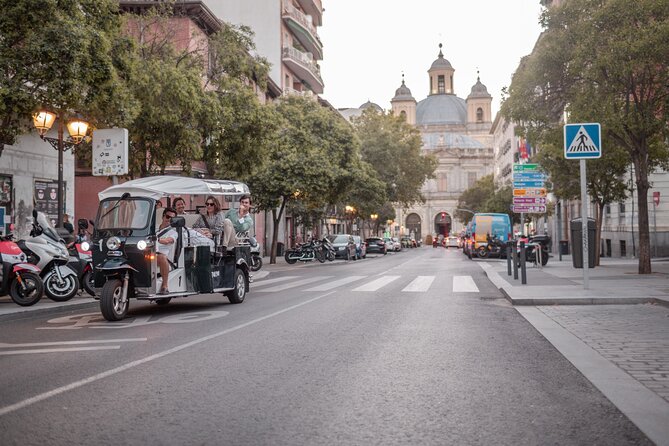
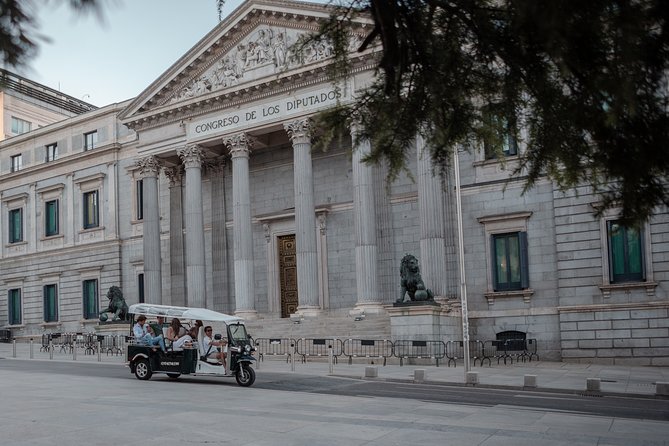
The tour continues to the Palace of the Spanish Courts, built on the site of the former convent of the Holy Spirit, which served as the seat of Congress between 1834 and 1841. That’s a fun detail because it turns a government building into a layered story: religious site → civic use → today’s impressive institutional architecture.
Pay attention to the front: the main facade has a staircase leading to a neoclassical portico with six Corinthian columns, plus a triangular pediment with reliefs by Ponciano Ponzano. The emblematic lions flanking the entrance have a particularly specific story: they were cast with the iron from cannons captured during the war in Africa.
If you’ve ever walked past ornate doors and thought, so what?—this stop changes that. The guide’s job here is to translate ornament into meaning. Even if you only catch a partial view of the building’s facade, the lion detail alone is worth the pause.
Plaza of the gods: Cibeles vs. Atlético’s arena moment
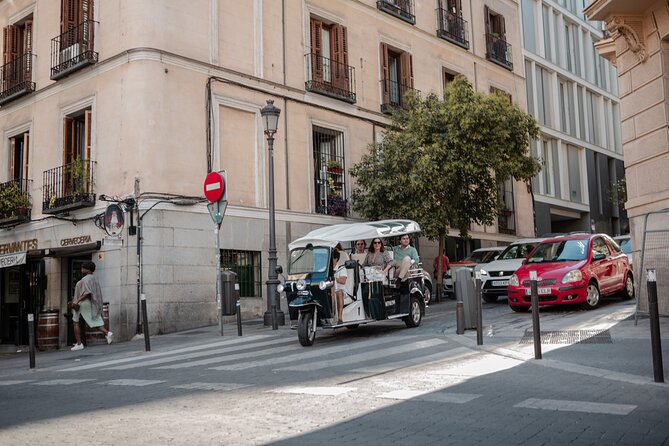
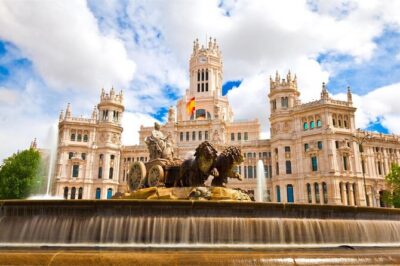
One of the most fun parts of Madrid culture is how sport and place overlap. The tour takes you to an area where you’ll see how fans mark victory spaces: Atlético de Madrid celebrates in the Plaza del Dios del Mar, while Real Madrid does so at Cibeles.
Even if you’re not a football person, this stop is valuable because it teaches you how the city “marks” identity in public space. Madrid doesn’t just have monuments—it has community meaning attached to them.
I like this as a mid-tour breather, too. You’re still in sight-heavy territory, but the story becomes more human and less formal.
Prado area meets art-school superlatives: a practical “why it matters” stop
You then hit the area linked to the Prado Museum, often described as a major museum for European painting. The tour references an art historian and Hispanicist, Jonathan Brown, who said few would doubt it’s the world’s most important museum for European painting.
Here’s the practical angle for your trip planning: even if you don’t go inside the museum, you’ll understand why this zone is such a big deal. Madrid’s art reputation isn’t a side note—it’s a centerpiece. Seeing the Prado area from outside gives you context for choosing when (and whether) to go in on another day.
Just don’t confuse outside views with the full experience. This is about orientation and context, not a substitute for the museum galleries.
San Jerónimo el Real: late Gothic with Renaissance hints
Next is the Parish Church of San Jerónimo el Real, popularly known as Los Jerónimos. It’s located next to the Prado Museum area, at the back, and it’s in late Gothic style with Renaissance influences from the early 16th century.
The church is worth your attention because it shows how Madrid rebuilt over centuries. The tour notes that little remains of the original building because it was remodeled and restored on many occasions. That’s important: restoration isn’t always a “loss.” Sometimes it explains why architecture looks the way it does today.
If you like architecture details, this stop gives you a slower moment after the bigger museum reputation. It’s also a good place to ask questions, because churches tend to lead into broader context about patronage, power, and art in Spain.
Puerta de Alcalá: a ceremonial gate with royal timing
Then you roll to the monumental gate built by order of Carlos III, meant to replace an earlier gate from the 16th century. It was inaugurated in 1778.
This is one of those Madrid landmarks that looks like it belongs in a painting. But what makes it useful on a tour is timing and intention: the guide connects it to a specific ruler and a specific replacement moment, so it feels anchored in history instead of floating as a photo backdrop.
If you’re short on time in Madrid, catching this gate in a guided window is a smart shortcut. You’ll also start seeing how the city’s grand entrances and civic spaces connect like puzzle pieces.
Big institutions around Plaza de Cibeles-era power blocks
From there, the route passes areas around major institutional buildings, including the Buenavista Palace (Army Headquarters), Linares Palace (America House), the Communications Palace (formerly the Post Office and now Madrid City Council), and the Bank of Spain.
The tour doesn’t treat these as random backdrops. It frames them as a cluster of state power. When you can visualize government, military, communications, and finance together, Madrid starts to make sense as a planned center—not just “a lot of old stuff.”
You’ll likely catch views where different architectural styles sit side by side. That contrast is one reason I like routes like this: you get the city’s timeline in a few minutes.
The National Bank building and the idea behind its look
The tour then points out a building described as a “decorative waste,” awarded at the National Exhibition of Fine Arts in 1884, built to make the National Bank headquarters match the importance of its role. That role included a single issue of coins and bills for Spain.
This stop is surprisingly educational because it shows how architecture can be political and practical at the same time. You’re not just seeing beauty; you’re seeing an argument about authority and standardization.
And yes, the tour frames it with a critical-sounding label. That’s useful. It keeps the experience honest. Madrid isn’t all soft praise. Some buildings got debate, and you’ll learn to notice that.
Plaza de Santa Ana: old square, changing face
Next is Plaza de Santa Ana, an open space in the Cortes neighborhood dating to 1810. The tour notes that it’s gone through multiple urbanization processes that changed its appearance over time.
This stop is more than a pause. Squares are Madrid’s social “outdoor rooms.” Seeing this one helps you understand why the city feels designed for people to gather, not just to move through.
If you’re thinking about where to eat later, a square like this can help you choose your next neighborhood because it tells you where foot traffic and energy concentrate.
Almudena Cathedral: a modern consecration with deep importance
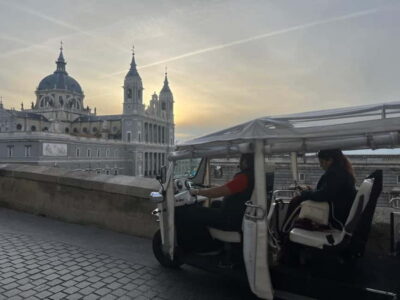
Then you reach Almudena Cathedral, described as the most important religious building in Madrid. The tour includes a specific milestone: it was consecrated by Pope John Paul II on June 15, 1993, becoming the first consecrated cathedral outside Rome.
That fact turns the stop into more than architecture appreciation. It’s a reminder that Madrid’s religious story didn’t stop in the medieval period. It kept going into modern times, with a global moment.
There’s also mention of the Almudena Cathedral Museum, which gathers objects that tell the story of the diocese of Madrid across multiple rooms, from mosaics to episcopal shields and ornaments. If you’re curious, this is the kind of museum that rewards people who like how faith, art, and local identity tie together.
Royal Palace area: Palacio de Oriente and two garden styles
After that, you go to the Royal Palace area, also called Palacio de Oriente. The tour explains that the palace is used exclusively for receptions, ceremonies, and official events, since the kings live in the Palacio de la Zarzuela.
Construction began in 1738 and lasted 17 years, and Carlos III established his habitual residence there in 1764. The tour also points out the site history: the same location once held the Palace of the Austrias, destroyed during the Christmas Eve fire in 1734.
Then comes the garden context:
- Campo del Moro: west of the palace, dating to the Middle Ages, and visitable during the day
- Sabatini Gardens: in front of the north facade of the palace, between Bailén street and the San Vicente slope, about 2.66 hectares, created in the twentieth century
Even if you don’t enter the palace, this stop helps you read Madrid’s “layers”: royal power, architectural ambition, and the way gardens were planned to support the palace’s role.
Debod Temple: an ancient Egyptian silhouette in the Spanish sky
Your tour also includes a stop at Templo de Debod, an ancient Egyptian building currently in Madrid. It’s free to visit, and the tour frames it as about 10 minutes here.
Location matters: it sits west of Plaza de España, next to Paseo del Pintor Rosales, on a hill where the Cuartel de la Montaña once stood. That mix—Egyptian structure, Spanish city hill, local military site history—gives Debod a strange, memorable vibe.
If you want one “wow” photo that isn’t just another palace wall, this is it. And because the stop is short, it doesn’t hijack your whole route.
Comfort, pacing, and what to expect from the guides
This tour is built around short viewpoints and guided storytelling. That means you’ll be moving, and you’ll see a lot, but you won’t feel stuck in one long lecture. It’s a good fit for first-time visitors because it shows major landmarks and gives enough interpretation to help you plan what to return for.
The guides are a big part of why this works. Names that show up in the tour experience include Christian, Fernando, Gloria, Clara, Alejandro, Nerea, Sandra, and Juan—often praised for being friendly, answering questions, and keeping the route flowing. Some are known for humor; others for safety-first driving and clear historical framing.
One small caution: if you’re sensitive to audio, one review note flags that the sound system may not be the best. If you need crisp audio, I’d recommend picking a seat where you can hear the guide clearly and letting them know if you’re missing details.
Value check: is $28.66 per person worth it?
At $28.66 per person, this can be a strong value for a short first day—especially because the tour is private for your group and uses a vehicle that does real work (transport + timing + commentary). If you’ve ever spent a day trying to “self-plan” Madrid and still ended up with tired legs and missed landmarks, paying for guided routing can be cheaper than you think.
You also get included extras that protect the experience: blankets and layers for winter or windy conditions, plus a route that starts without queues or waiting. Those details matter more than people expect. A tour that runs smoothly beats one that’s “almost right” but drains your time.
Group discounts are listed too, so if you’re traveling with friends or family, it can make even more sense. The biggest “cost” isn’t money—it’s giving up the freedom to swap stops. But if your goal is orientation and a clean sampling of Madrid’s key neighborhoods, this route is designed for that.
Should you book this Madrid Historical Tour?
Book it if you:
- Want a fast, comfortable way to see Madrid’s top sights
- Prefer less walking and more guided context
- Like the idea of a private route with photo-timed stops
- Are visiting for the first time and need a plan for what to return to
Skip it or reconsider if you:
- Want a tour you can customize on the fly
- Are hoping for long stays inside multiple major museums (this is about key viewpoints and orientation)
- Don’t like fixed schedules or pre-arranged photo stops
FAQ
How long is the Madrid historical tour?
The duration is listed as 1 to 4 hours, approximately.
Is this tour private?
Yes. It’s a private tour/activity, and only your group participates.
What language is the tour offered in?
The tour is offered in English.
Is there a minimum age or child policy?
Minimum age is two years (babies are not allowed). There is also a minimum weight required of 9 kg.
Does the tour include blankets for cold or wind?
Yes. Blankets and protective layers against rain and wind are included for winter touring.
Is the vehicle electric and sustainable?
Yes. It’s a 100% electric and sustainable vehicle.
Where is the meeting point, exactly?
The start point is C. de Bailén, 4, Centro, 28013 Madrid. The pickup is at the bus station (underground) of Plaza de Oriente, next to the Royal Palace, near the Prince’s Gate stairs. You can search for Calle Bailén 4 or Puerta del Príncipe on Google Maps.
How many passengers fit per tuk-tuk?
The tour notes the legal maximum of 4 passengers per tuk-tuk, and prices are set based on how many tuk-tuks are needed for the group.
Are stops flexible for photos, or can the route be changed?
The stops for photographs are prearranged, and the itinerary may vary only due to closed streets or demonstrations. The tour cannot be modified.
Is Debod Temple free?
The Temple of Debod is listed as free admission, with about 10 minutes included.
Cancellation: can I get a refund if plans change?
Yes. Free cancellation is available up to 24 hours in advance for a full refund.
More Tour Reviews in Madrid
- Madrid: Tour Bernabéu Entry Ticket
★ 4.5 · 21,573 reviews - Madrid: Prado Museum Entry Ticket
★ 4.6 · 20,699 reviews - Madrid: “Emociones” Live Flamenco Performance
★ 4.8 · 12,866 reviews - Madrid: Panoramic Route City Tour
★ 4.1 · 12,259 reviews - Madrid: Live Flamenco Show with Food and Drinks Options
★ 4.5 · 9,901 reviews - Avila & Segovia Tour with Tickets to Monuments from Madrid
★ 5.0 · 9,762 reviews
Private Days in the Capital
- Madrid: Private City Tour by Eco Tuk Tuk
★ 4.9 · 3,465 reviews - Madrid Welcome Tour with Local Guide in Eco Tuk Tuk Private
★ 5.0 · 2,936 reviews - Toledo Private Tour with Licensed Guide and Driver from Madrid
★ 5.0 · 637 reviews - Madrid Private Segway tour. Retiro Park – Centro Historico
★ 4.9 · 636 reviews - Madrid Express Tour with Local Guide in Eco Tuk Tuk Private
★ 5.0 · 413 reviews - Madrid Barajas Airport Private Transfer To Madrid City
★ 4.5 · 342 reviews
Tuk Tuk Around the Middle
- Madrid: Private City Tour by Eco Tuk Tuk
★ 4.9 · 3,465 reviews - Madrid Welcome Tour with Local Guide in Eco Tuk Tuk Private
★ 5.0 · 2,936 reviews - Madrid Express Tour with Local Guide in Eco Tuk Tuk Private
★ 5.0 · 413 reviews - Madrid: Highlights City Tour by Electric Tuk Tuk
★ 4.7 · 346 reviews - Madrid: City Highlights Tuk Tuk Tour
★ 4.4 · 334 reviews - Madrid: City Tours – 6 seats private ecological tuk tuk
★ 4.6 · 230 reviews
Just Added: New Madrid Tour Reviews



Madrid Tuk Tuk Tours, compared.
 ★ 4.9Private City Tour by Eco Tuk TukFrom $283,465 reviews
 ★ 5.0Madrid Welcome Tour with Local Guide in Eco Tuk Tuk PrivateFrom $282,936 reviews
 ★ 5.0Madrid Express Tour with Local Guide in Eco Tuk Tuk PrivateFrom $28413 reviews
 ★ 4.7Highlights City Tour by Electric Tuk TukFrom $28346 reviews
 ★ 4.4City Highlights Tuk Tuk TourFrom $94334 reviews
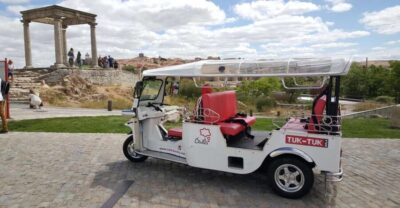 ★ 4.4Tour Guiado En Tuk Tuk Recorre Avila De La Forma Mas ComodaFrom $10235 reviews
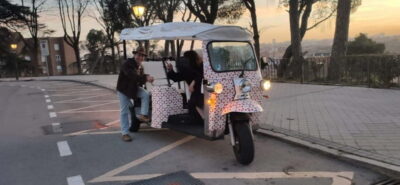 ★ 4.6City Tours – 6 seats private ecological tuk tukFrom $53230 reviews
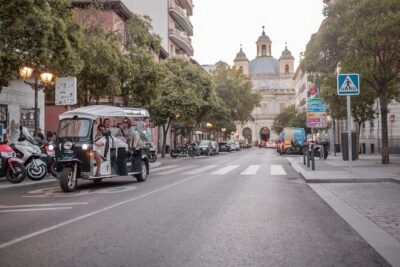 ★ 5.0Madrid Expert Tour with Local Guide in Eco Tuk Tuk PrivateFrom $28220 reviews
Browse the lists this tour appears in