
REVIEW · HISTORICAL TOURS
Roots and Resistance: A Black History Tour of Madrid
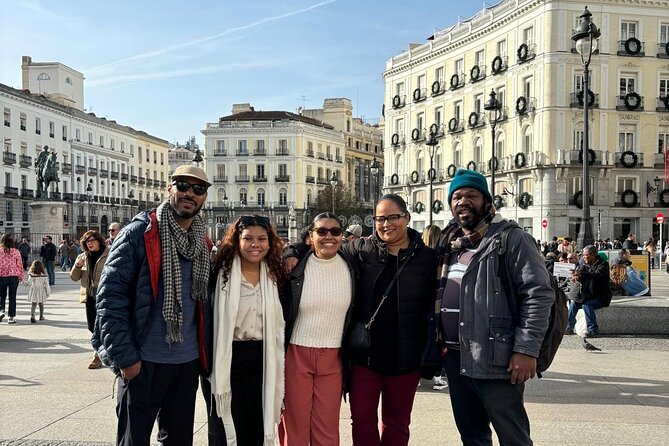
Walking Madrid with Kwame changes what you see. This 2-hour English tour traces Black presence in Spain through major landmarks, from Plaza de Isabel II to Puerta del Sol, using the city’s layout as evidence. You leave with a different lens for the streets you thought you already understood.
I especially like two things: the storytelling is grounded in careful research, and you see it in context inside some of Madrid’s most famous buildings, not just from a curb. The route is tight enough to stay focused, yet varied enough that each stop adds something new to the bigger picture.
One consideration: the subject matter can feel emotionally heavy since you’re dealing with slavery and exploitation. If you’re up for honest reflection and comfortable walking shoes, you’ll get a lot out of this.
In This Review
- Key reasons this tour earns its 5-star score
- Where the story starts: Plaza de Isabel II to get your bearings fast
- Teatro Real: the city’s “slave history” signs in plain view
- Royal Palace of Madrid and the House of the Blacks
- Almudena Cathedral: permissions, congregations, and faith tied to slavery
- Iglesia de San Ginés: an old church with layers of Madrid underneath
- Plaza Mayor and Puerta del Sol: where public life and commerce met
- Price and value: what $42.10 actually buys you
- Timing, pace, and how to plan your Madrid day
- Who this tour suits best (and who might want a different plan)
- Should you book Roots and Resistance in Madrid?
- FAQ
- How long is Roots and Resistance: A Black History Tour of Madrid?
- Is the tour private, and is it offered in English?
- Where does the tour start and where does it end?
- What admissions are included during the tour?
- Are drinks included with the tour?
- Can I cancel for a full refund?
Key reasons this tour earns its 5-star score
- A focused route with big payoff: you connect multiple landmarks to one theme instead of bouncing around randomly.
- Inside stops, not only street scenes: you’ll spend time in major sites tied to Madrid’s religious and political world.
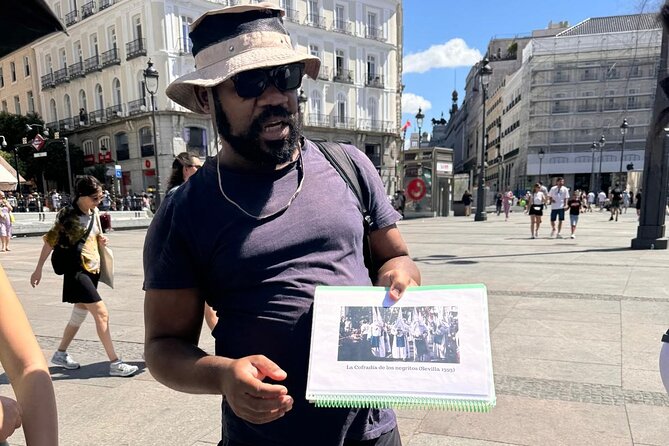
- Thoughtful guidance from Kwame: praised for patient explanations and clear links to the African diaspora.
- Hidden references in everyday places: the tour shows how slave-trade influence can be embedded in city design and landmark symbolism.
- A strong “starter tour” choice: it sets context fast for the rest of your Madrid day.
Further into the old Madrid
- Madrid Essential: Historic Center, Plaza Mayor & Royal Palace★ 5.0 · 6,416 reviews
- Madrid Tapas & Taverns Small Group Food & History Tour★ 5.0 · 2,664 reviews
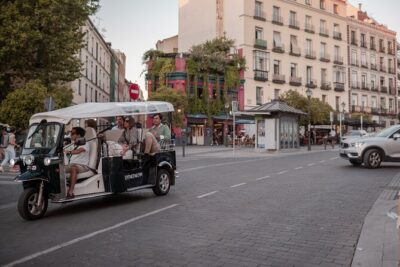
- Madrid Historical Tour with Local Guide in Eco Tuk Tuk Private★ 5.0 · 876 reviews
- Madrid Historic Centre Food Tour with Authentic Tapas & Wines★ 5.0 · 814 reviews
Where the story starts: Plaza de Isabel II to get your bearings fast
Madrid is famous for its grand squares and royal grandeur. This tour starts in Plaza de Isabel II, and that choice matters. The tour doesn’t treat the city like a postcard. It treats it like evidence—showing how older street patterns and major monuments can carry traces of exploitation and Black presence long before you’d expect.
This is also a practical setup for your day. You begin near a central area, and the tour ends at Puerta del Sol, which is easy to reach again after the walk. Since this is a private tour for your group only, you’re not squeezed into a big crowd where questions get lost.
You’ll be in good shape if you like guided walking tours that use what’s around you. You’ll also get a mobile ticket, so you can keep things simple and avoid rummaging for paper.
Teatro Real: the city’s “slave history” signs in plain view
The first major stop is Teatro Real, and the tour frames it as more than architecture and opera culture. You start by looking at Plaza de Isabel II, then you follow the thread toward Puerta del Sol, where the guide connects the configuration of Madrid to what the city’s older economy was built on.
A big part of what makes this stop hit is how specific the tour gets about places you already know by name. You’ll hear about Calle Alcalá and its role in the transatlantic slave trade. You’ll also be pointed to the area around Puerta del Sol and the famous connections between that central network of streets and the commerce that once flowed through it.
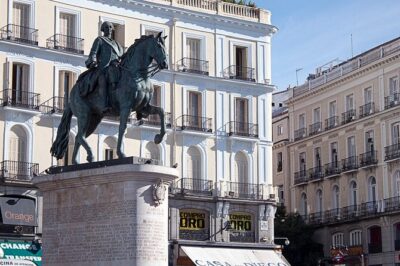
Even the mention of the equestrian statue of Carlos III becomes a teaching moment. The tour links his legacy to Spain’s relationship with slavery, including the claim that he owned more than 20,000 enslaved people. That kind of detail can feel jarring, but that’s the point: the tour asks you to look at power structures as part of history, not just as decoration.
Finally, the walk sets up Plaza Mayor as well. You’re essentially being trained to notice: markets, routes, and central squares were not neutral spaces. They were stages where cruelty could be normalized—and the city still bears those imprints.
What I like here: the way the guide uses landmarks you’d pass anyway, then turns them into a map of meaning.
What to consider: you may want a moment to mentally reset if you’re not expecting a slavery-focused opening.
Royal Palace of Madrid and the House of the Blacks
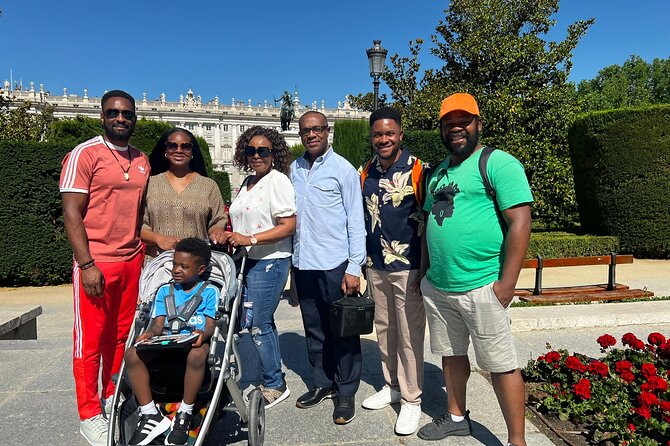
Next you step toward the Royal Palace of Madrid, one of Europe’s best-preserved palaces. The tour describes it as spanning more than 135,000 square metres and notes it as the largest royal palace in Western Europe, one of the largest in the world.
But the palace stop isn’t treated like a beauty contest. It’s treated like a lens for who lived beside power and how Black presence is connected to the elite history of the Iberian Peninsula. The tour specifically points out the House of the Blacks inside the palace—an important detail because it reframes what you might assume about who mattered in Spanish court life.
You’ll get about 15 minutes here, with admission ticket information listed as free. In other words, you’re not paying extra to get inside for the most famous monuments on the route. This is one of the values of the tour: it packs a major cultural site into a short time window while keeping the theme clear.
Royal palaces can be a lot of time-consuming grandeur if you’re doing it unguided. With this tour, you move through it with purpose. You’re less likely to treat it like a museum of gold and more likely to understand it as an institution tied to people whose lives were exploited.
My tip for this stop: be ready to pause and look slowly. The point is not speed. The point is seeing how the story fits into what your eyes already recognize.
Almudena Cathedral: permissions, congregations, and faith tied to slavery
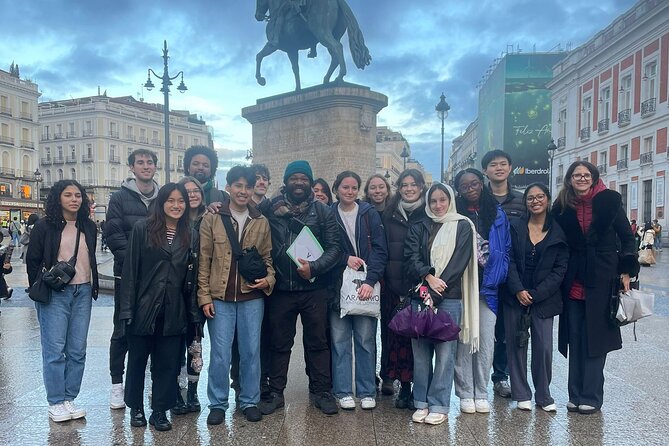
The tour then moves to Catedral de Santa María la Real de la Almudena. Here, the theme shifts from royal power and street networks to religious organization and community action.
The tour explains that construction began on 22 December 1868, tied to a congregation called the Congregation of Slaves of the Virgin of Almudena. It also notes that permission was requested from the Archbishop of Toledo to build another church dedicated to the Virgin of Almudena after a previous church was demolished in the revolution of 1868.
This stop is powerful because it shows something most people don’t expect: slavery-era structures weren’t only economic. They were also interwoven with religious life. You get the sense that institutions could absorb contradictions—where faith and exploitation could exist in the same world.
You’ll spend about 25 minutes here, and admission is listed as included. That time window is long enough to hear the story and still have a minute to take in the interior without feeling rushed.
If you’re the type who likes context: this stop will satisfy you. It’s not a quick name-drop. It’s a timeline: a date, a request for permission, a congregation, and an outcome.


Iglesia de San Ginés: an old church with layers of Madrid underneath
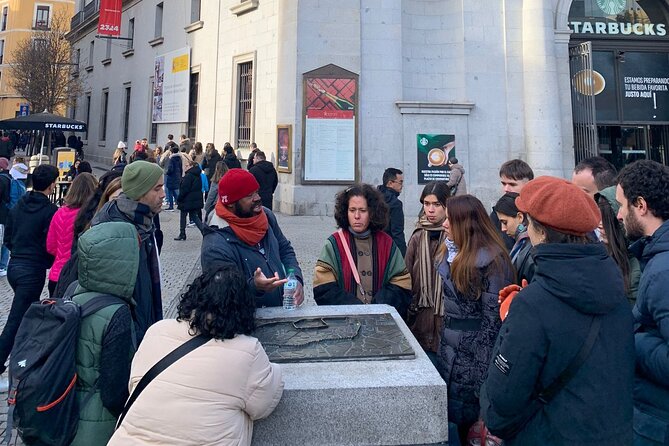
After the cathedral, the tour heads to Iglesia de San Ginés on Arenal Street. This church is dedicated to the French saint San Ginés de Arles, and the tour highlights that it dates to 1645, built on the remains of what’s believed to have been a Mozarabic hermitage.
What matters for your experience is how the tour uses older buildings to show that history keeps stacking. You’re not only learning about slavery. You’re learning how Madrid’s deeper layers—Mozarabic traces, then 17th-century religious construction—became the physical foundation for later eras.
This stop runs around 15 minutes, with admission listed as included. Short, but purposeful. It works as a bridge between grand public institutions and the more intimate setting of older religious spaces.
Practical thought: if you tend to get “church fatigue,” focus on listening first and only then scanning details with your eyes. The guide’s narrative makes it easier to pay attention.
Plaza Mayor and Puerta del Sol: where public life and commerce met
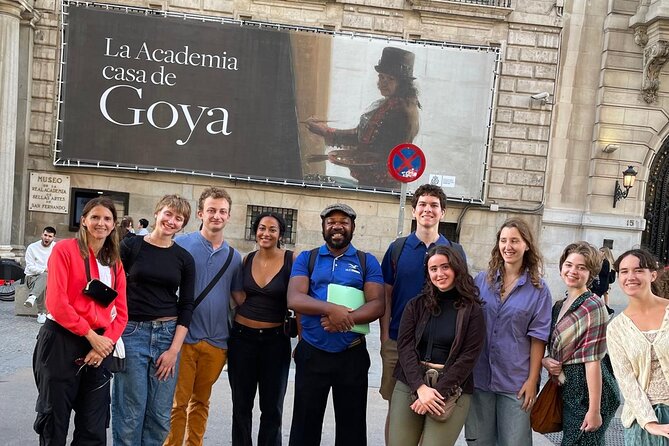
The tour then returns to civic life at Plaza Mayor, Madrid’s grand central square. You’re in the oldest part of the city, and the tour frames Plaza Mayor as a natural place to begin a stroll through Madrid’s charming districts—while also grounding that charm in what used to happen there.
The key point the tour makes is that the surrounding area is not just scenic. It’s historically tied to the slave market. So you’re standing in the middle of what used to be big public attention, where trade and authority could concentrate.
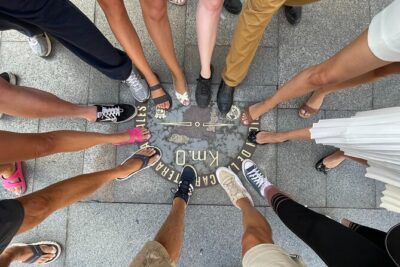
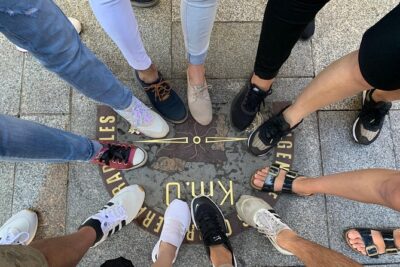
Then you move to Puerta del Sol, the tour’s ending point. Puerta del Sol is central Madrid’s most famous junction, with a semi-circular layout and multiple major street connections. It’s also described as the start of the radial road network in Spain, and it’s listed as the centre (Km 0).
The tour again links the concept of Puerta del Sol to Spanish families associated with the slave trade. That’s another “wait, really?” moment—because when you’re standing under familiar signs, you don’t automatically think of centuries-old trade networks shaping street geometry.
You’ll spend about 15 minutes at each of these open-air stops. That timing is realistic: it keeps you moving, lets you absorb the meaning, and still gets you out at a perfect location to continue your day.
My favorite part of the ending: you finish where you can instantly connect this tour’s themes to your later walking. It turns your next hours into a continuation of the lesson.
Price and value: what $42.10 actually buys you
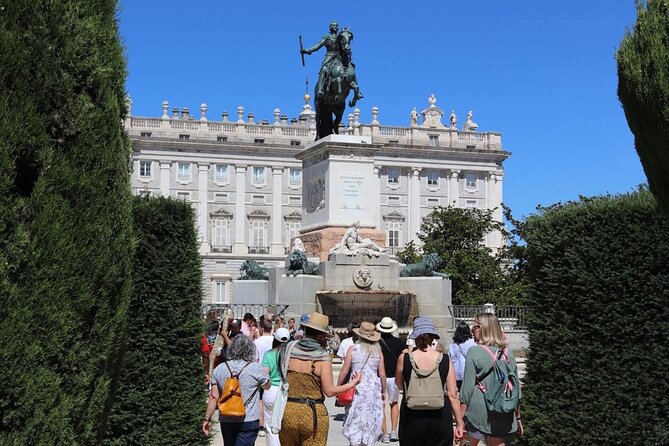
At $42.10 per person for roughly 2 hours, this tour is priced to feel fair for a theme-focused walking experience with multiple significant stops. Where the value shows up is in the combination:
- Guide services included for a compact route with clear thematic continuity.
- Mobile ticket for easy logistics.
- Admission support for several key sites (with some stops explicitly marked as ticket included or ticket free).
It’s also booked about 24 days in advance on average, which suggests demand for this specific type of tour. That usually means you’re not just paying for a stroll—you’re paying for a structured interpretation that you’re unlikely to get from a general sightseeing route.
What you might want to mentally budget for: the tour data lists no soda/pop drinks included. So bring water or plan to buy something nearby. A tour like this gets you thinking and walking, and you’ll appreciate having a drink break on your schedule.
Timing, pace, and how to plan your Madrid day
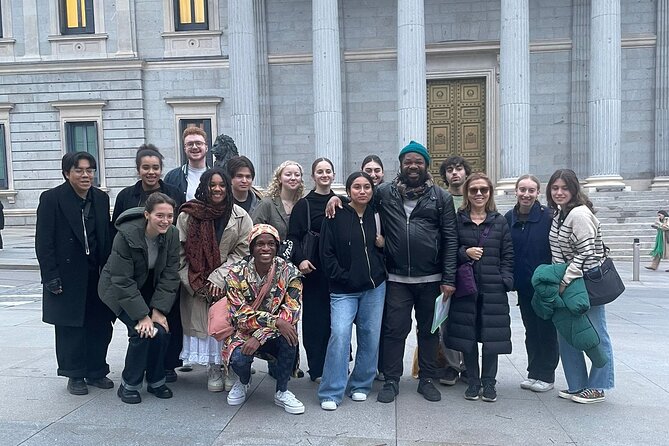
The tour runs about 2 hours. The stop times are split into short segments: roughly 20 minutes at Teatro Real, 15 at the Royal Palace, 25 at Almudena Cathedral, 15 at San Ginés, plus about 15 minutes at Plaza Mayor and 15 at Puerta del Sol.
That pacing works well if you want a guided start without burning half a day. It’s also a good match for people who can handle short indoor transitions and outdoor walking. Since this is a private tour for your group only, your guide can adjust to your pace better than in a large group format.
The day-planning trick is simple. Do this tour early enough that it colors the rest of your Madrid. When you later see a monument or square, you’ll automatically start asking who benefited, who paid the cost, and how the city made that possible.
You finish at Puerta del Sol, one of the best places to re-orient and choose your next steps. From there, you can connect to other sights, shopping streets, or a longer meal.
Who this tour suits best (and who might want a different plan)
This is a strong fit if you want:
- a Black History Tour Madrid that ties local landmarks to slavery-era systems,
- a guided narrative that connects Iberian history to the wider African diaspora,
- an experience where the route has a message, not just a checklist of famous sites.
It may feel less suited if you prefer purely light, entertainment-focused sightseeing. The tour is about slavery and Black presence in Spain across centuries, so the tone is likely reflective and serious. If that’s not your travel style, you might prefer a more general architecture or royal history tour.
That said, the reviews highlight the way the guide’s explanations make the material understandable and emotionally grounded. So if you want clarity more than shock, this format is built for you.
Should you book Roots and Resistance in Madrid?
If you care about seeing Madrid in a fuller way, I think you should book it. This tour gives you a focused, well-paced route where major landmarks become teaching tools. You’ll likely come away with better questions for every square you walk into afterward.
Book it especially if you’re the kind of traveler who hates vague history. This tour tries to be specific: dates, places, institutions, and the idea that influence can be visible in the city’s plan, not just in books.
Only skip it if you want a casual sightseeing hour with minimal emotional weight. If you’re ready for honest history and you’ll wear comfortable shoes, Roots and Resistance is one of the most meaningful ways to spend two hours in Madrid.
FAQ
How long is Roots and Resistance: A Black History Tour of Madrid?
The tour lasts about 2 hours.
Is the tour private, and is it offered in English?
Yes. It’s a private tour/activity, and it is offered in English.
Where does the tour start and where does it end?
It starts at Plaza de Isabel II and ends at Puerta del Sol (Km 0), the tour’s finishing point.
What admissions are included during the tour?
Admission ticket information is included for several stops on the route, including Teatro Real and Catedral de Sta Maria la Real de la Almudena. The Royal Palace stop is listed as admission ticket free, and admission is listed as included for additional stops as well.
Are drinks included with the tour?
No. Soda/pop is not included.
Can I cancel for a full refund?
Yes. You can cancel up to 24 hours in advance for a full refund. Cancellation changes made less than 24 hours before the start time are not refunded.
The Old Capital, Toured Properly
- Madrid Essential: Historic Center, Plaza Mayor & Royal Palace
★ 5.0 · 6,416 reviews - Madrid Tapas & Taverns Small Group Food & History Tour
★ 5.0 · 2,664 reviews - Madrid Historical Tour with Local Guide in Eco Tuk Tuk Private
★ 5.0 · 876 reviews - Madrid Historic Centre Food Tour with Authentic Tapas & Wines
★ 5.0 · 814 reviews - Madrid Historical Walking Tour
★ 5.0 · 721 reviews - Madrid in a Day Tour:Royal Palace, Historic Center & Prado Museum
★ 5.0 · 628 reviews
More Tours in Madrid
- Madrid: Tour Bernabéu Entry Ticket
★ 4.5 · 21,573 reviews - Madrid: Panoramic Route City Tour
★ 4.1 · 12,259 reviews - Avila & Segovia Tour with Tickets to Monuments from Madrid
★ 5.0 · 9,762 reviews - Madrid: Royal Palace Expert Guided Tour with Skip-the-Line
★ 4.7 · 8,407 reviews - Madrid: Segovia and Toledo Tour, Alcazar, and Cathedral
★ 4.7 · 7,797 reviews - Toledo Tour from Madrid: Cathedral, Synagogue & St. Tome’s Church
★ 5.0 · 6,784 reviews
More Tour Reviews in Madrid
- Madrid: Tour Bernabéu Entry Ticket
★ 4.5 · 21,573 reviews - Madrid: Prado Museum Entry Ticket
★ 4.6 · 20,699 reviews - Madrid: “Emociones” Live Flamenco Performance
★ 4.8 · 12,866 reviews - Madrid: Panoramic Route City Tour
★ 4.1 · 12,259 reviews - Madrid: Live Flamenco Show with Food and Drinks Options
★ 4.5 · 9,901 reviews - Avila & Segovia Tour with Tickets to Monuments from Madrid
★ 5.0 · 9,762 reviews
Just Added: New Madrid Tour Reviews


Historical Tours, compared.
 ★ 5.0Madrid Essential: Historic Center, Plaza Mayor & Royal PalaceFrom $36,416 reviews
 ★ 5.0Madrid Tapas & Taverns Small Group Food & History TourFrom $952,664 reviews
 ★ 5.0Madrid Historical Tour with Local Guide in Eco Tuk Tuk PrivateFrom $28876 reviews
 ★ 5.0Madrid Historic Centre Food Tour with Authentic Tapas & WinesFrom $78814 reviews
 ★ 5.0Madrid Historical Walking TourFrom $3721 reviews
 ★ 5.0Madrid in a Day Tour:Royal Palace, Historic Center & Prado MuseumFrom $119628 reviews
 ★ 5.0Madrid Local’s Tapas Tour Dinner with a side of HistoryFrom $114530 reviews
 ★ 5.0Guided Tour of Madrid of the Austrias and the Historic CenterFrom $2520 reviews
Browse the lists this tour appears in