
REVIEW · MADRID GUIDED WALKING TOURS
Madrid Historical Walking Tour
Madrid grabs you fast, and this walk helps. In about 2 hours 20 minutes, you’ll move through the city’s power points and food stops with an English local guide, plus printed tools that make the stories click. I especially love the route’s mix: iconic plazas like Puerta del Sol and Plaza Mayor, then very Madrid food landmarks like Sobrino de Botín and Mercado San Miguel. One thing to consider: several major sights along the way are viewed from outside, so entries aren’t included, meaning your experience depends on what you want to pay for later.
What makes this tour work is that it gives you a clean first pass through Madrid Centro without swallowing your whole day. You’ll learn what the landmarks mean, not just what they look like, and the pacing is generally built for people who want an overview plus practical next-step recommendations. I also like that the guide sticks with you after the walk through a link to personalized ideas, and even after your tour (yes, that’s part of the offering). A small drawback: since it’s weather-dependent, you should plan for some outdoor time, even if the day turns gray or drizzly.
In This Review
- Key highlights at a glance
- Why this Madrid Centro walk is such a good first move
- Puerta del Sol in 25 minutes: Km 0, Tio Pepe, and the Bear
- Plaza Mayor in 20 minutes: food institutions and Felipe III
- Sobrino de Botín: the stop that makes the history taste real
- Mercado San Miguel in 10 minutes: the quick route to local cravings
- Plaza de la Villa: medieval facades and the quieter Madrid angle
- Almudena Cathedral museum area: what you’ll see without entry
- Royal Palace and Teatro Real: two royal edges to end the walk
- Price and value: what $3.62 really buys you in Madrid
- How guides shape this tour (and why names show up often)
- Timing, weather, and walking comfort for your 2h20
- Who should book this Madrid Historical Walking Tour
- Should you book this Madrid Historical Walking Tour?
- FAQ
- What’s the duration of the Madrid Historical Walking Tour?
- What language is the tour offered in?
- Is the tour free?
- Are entrance tickets included for the sites?
- Where does the tour start and end?
- How big is the group?
- Is the tour good for first-time visitors?
- Does the tour require specific weather?
- Are service animals allowed?
Key highlights at a glance
- Puerta del Sol to Teatro Real: a compact loop through the historic core, ending at Isabel II Square
- Food stops in smart order: Sobrino de Botín and Mercado San Miguel keep the history from getting heavy
- Landmark details you’ll remember: Km 0, Tio Pepe, and the Bear and the Madroño show up early
- Guides are often praised by name: Glenn, Jean, Marta, Thomas, Javier, and others get singled out for energy and storytelling
- Most entrances are optional: you’ll see key sites, but you’re not paying for entry fees on the walk
- Small group feel: up to 25 travelers, with room for questions and interaction
The centre on foot, other ways round
- Madrid Tapas & Wine Tasting Walking Tour – Small Group Local Bars★ 5.0 · 3,644 reviews
- Madrid Welcome Tour with Local Guide in Eco Tuk Tuk Private★ 5.0 · 2,936 reviews
- Madrid Walking Tour from Puerta del Sol to Retiro Park★ 5.0 · 2,285 reviews
- Madrid Old Town & Royal Palace Walking Tour Skip the Line Ticket★ 4.5 · 1,829 reviews
Why this Madrid Centro walk is such a good first move
If you’re arriving in Madrid and wondering where to start, this tour gives you an instant map in your head. You begin at Puerta del Sol, the city’s famous center point, then sweep through plazas tied to royal authority and old trade. The route doesn’t feel random. It’s organized so each stop adds a layer: symbols of Madrid, the power centers, then the places locals actually use for food and daily life.
The big value here is focus. You’re not trying to cram in museums or long lines. Instead, you get short, clear explanations and built-in context—exactly what helps you later when you’re deciding where to return for a deeper visit. The “free tour” style also means the platform price is modest, while the real experience lives in the guide and the stories.
There’s a practical upside too: you’re walking a manageable distance at a pace designed for a mixed group. You’ll have plenty of chances to ask questions, and the best guides keep things lively even when the weather isn’t perfect.
Puerta del Sol in 25 minutes: Km 0, Tio Pepe, and the Bear
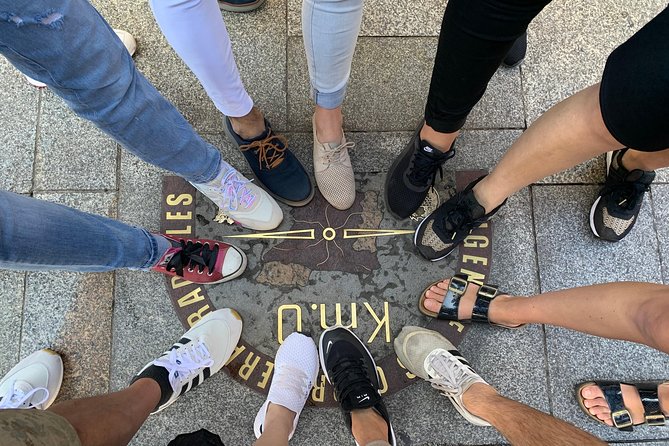
Puerta del Sol is where Madrid likes to declare its identity. You start here for a reason: it’s packed with visual cues that you can’t really understand from a bus window. This stop includes the Royal Post Office, the Bear and the Madroño, the Tio Pepe sign, a statue of Carlos III, and—crucially—Km 0.
Here’s why this matters for you as a visitor. Once you’ve heard what those elements represent, you’ll start noticing them in everything else you see. Km 0 is the “starting point” idea that connects Madrid’s roads and geography. The Bear and the Madroño is a symbol you’ll recognize later in souvenirs and local references. And Tio Pepe isn’t just a photo spot—it’s a piece of commercial Madrid history that shows how advertising and identity blend.
You’ll likely spend the most time absorbing the storytelling because the guide can point at details directly in front of you. That’s the kind of “look closer” moment that makes a walking tour feel worth it, even when you’re tired from travel.
Plaza Mayor in 20 minutes: food institutions and Felipe III
Next comes Plaza Mayor, one of Madrid’s most photogenic squares—and also one of the most meaningful when you understand who used it and why. You’ll see elements like the Bakery House and Butcher’s House, the Felipe III statue, and the nearby Toledo Street area.
What I like about this stop is how it links politics with everyday life. Madrid didn’t build grand squares just for ceremonies. Places like this also functioned around practical needs: food supply, commerce, and civic life. The guide’s job is to connect those dots so Plaza Mayor stops being only scenery and becomes a “this is how the city worked” moment.
There’s also a subtle strategy at play: Plaza Mayor is a great place to orient your sense of direction. From here, you can better visualize how the city’s old center is stitched together.
Sobrino de Botín: the stop that makes the history taste real

Sobrino de Botín is short on time here, but huge on impact. You’re standing near what’s often described as the oldest restaurant in the world, and that alone makes it different from a typical monument stop.
Even if you don’t eat right then, the guide can use the restaurant as a doorway into Madrid’s long continuity—how traditions survive, how neighborhoods keep their character, and why certain locations stay important across centuries. In other cities, old restaurants can feel like tourist traps. Here, the story helps you see it as part of Madrid’s stubborn sense of continuity: the past isn’t sealed behind glass.
This is also the kind of stop where you’ll likely get practical food guidance. You’ll remember it later when you’re trying to decide where to eat that first night.
The capital on foot, other routes to try




Mercado San Miguel in 10 minutes: the quick route to local cravings
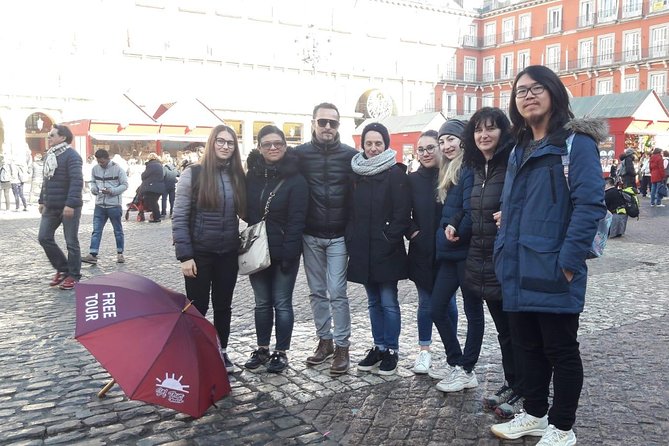
Mercado San Miguel is a fast stop, but it’s one of the most effective ones on the whole walk. You’ll get the idea behind the market—described as a gastronomic temple—with emphasis on staples like Iberian hams and fresh seafood.
Ten minutes won’t let you sample everything, but that’s not the goal. The goal is to help you understand what the market is best for so you don’t walk in hungry with no plan. When you know what to look for, you can choose one or two things and enjoy the atmosphere without turning it into a time sink.
If you’re the kind of traveler who likes to snack your way through a city, this stop pays off immediately. You’ll also get better context for the rest of your Madrid food experiences. Markets teach you how locals talk about ingredients, portions, and what’s worth paying for.
Plaza de la Villa: medieval facades and the quieter Madrid angle
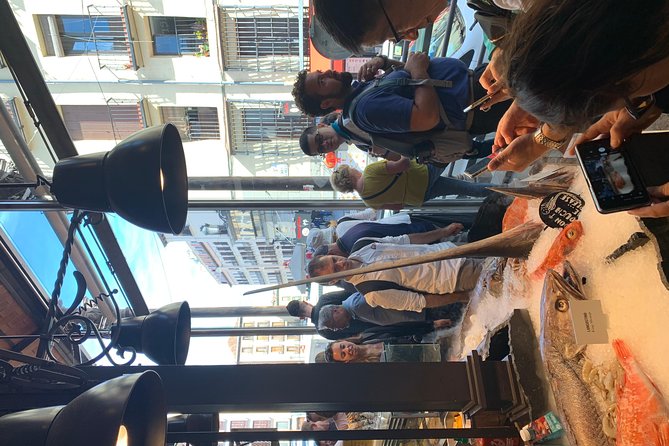
Plaza de la Villa is a shorter pause, but it gives you a useful contrast. Instead of the big, flashy center-square energy, you’re focused on main facades of medieval buildings.
This works well after Plaza Mayor and the restaurant stop, because it slows you down just enough to see how the old city wasn’t one style forever. The facade details are also the kind of thing you can later recognize from across a street. In other words, this stop teaches you how to “read” Madrid visually.
Even in a brief window, you’ll likely notice that the architecture feels older and more textured than the surrounding areas. The guide’s notes help you anchor that feeling in names, eras, and civic purpose.
Almudena Cathedral museum area: what you’ll see without entry
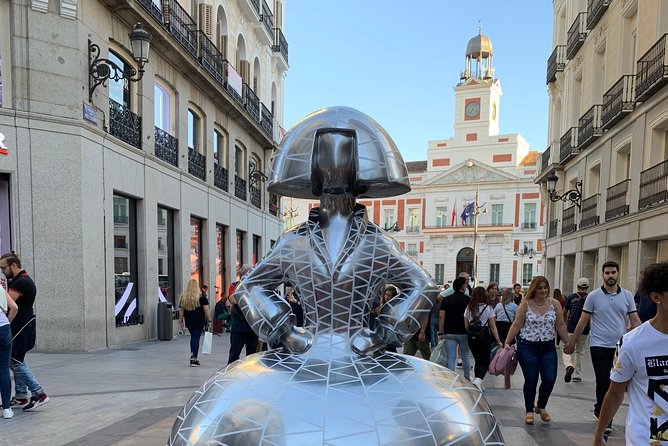
You’ll stop near the Museo de la Catedral de la Almudena and the Almudena Cathedral. Importantly, the entry isn’t included, so you’re not expecting to go inside on this tour.
Still, it’s a smart stop. Almudena Cathedral is a major landmark, and seeing it from the outside helps you decide if you want to schedule a longer visit later. If you love cathedrals, you’ll get enough orientation to know you should come back. If you’re less into interiors, you still walk away with context for why this spot matters in Madrid’s story.
Think of this as a planning stop. It’s there to help you build a short list for the rest of your trip.
Royal Palace and Teatro Real: two royal edges to end the walk
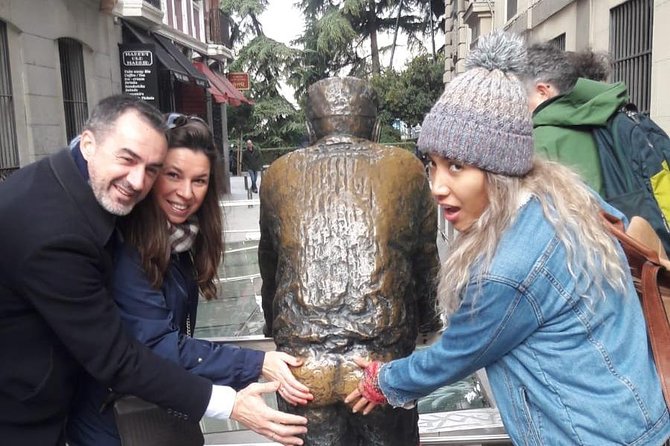
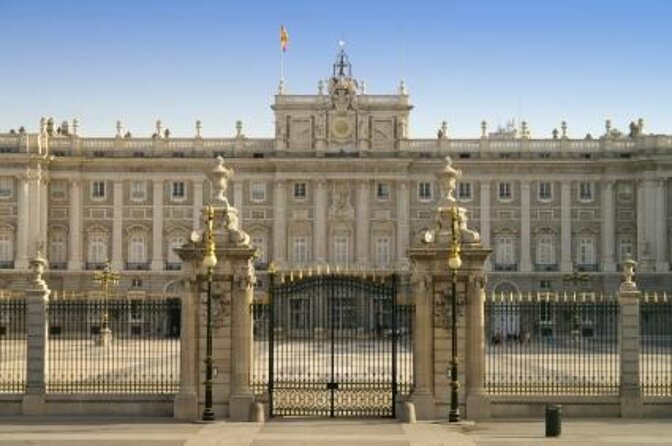
After the cathedral area, the tour continues toward the Royal Palace of Madrid. As with Almudena, entry isn’t part of the walk here. You’ll get a focused look at the Royal Palace and the sense of scale that makes it a defining landmark.
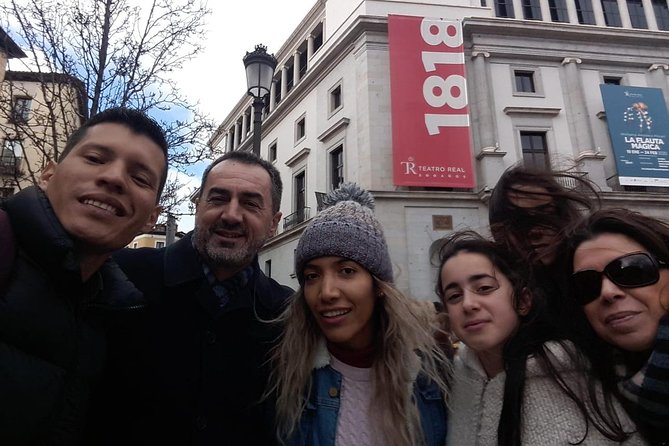
Then you finish at Teatro Real, in and around Isabel II Square. This is a nice way to close, because the royal-themed walk doesn’t end with another stone wall. It lands at a working cultural venue, which helps you shift from “Madrid as history” to “Madrid as a living city.”
Many guides are praised for how they pace these final stops. You should expect clear talking points and enough time to take pictures without feeling rushed out the door. And since Teatro Real sits in a very central spot, the end location is convenient for your next steps—dinner plans, a metro connection, or continuing by foot.
Price and value: what $3.62 really buys you in Madrid
The listed price is low—$3.62 per person—and that changes how you should think about value. You’re not buying museum entry. You’re buying time with a local guide, route structure, and interpretation. In a city where it’s easy to get overwhelmed by monuments, that’s a bargain.
What you get that matters:
- A local guide who controls the pacing and explains what to notice
- Printed materials and teaching tools so the route stays easy to follow
- A link to personalized recommendations for what to do in Madrid after the tour
- Personalized attention after the walk (described as lasting)
What you don’t get:
- Tips to the guide (separate)
- Site entries (not required because you don’t enter during the tour)
Since the format is essentially free-tour style, it’s worth planning ahead for tipping. Some of the best-rated experiences mention a typical range like 15–20 euros per person at the end if you felt the guide delivered well. You don’t have to guess on whether tipping matters—just plan to have some euros ready if you appreciate the work.
Net result: even if you later decide to pay for one or two entries on your own, you still come out ahead because you start with a better plan.
How guides shape this tour (and why names show up often)
A walking tour lives or dies by the guide’s energy. In the feedback, multiple guides are named again and again for making the tour fun, never dull, and easy to follow. Glenn and Jean show up often with comments about humor, interaction, and strong explanations. Marta and Javier also get praise for clarity and enthusiasm. Thomas and Mirka are mentioned for how they present each stop.
A few themes repeat across guide stories:
- The best guides use anecdotes, not just dates
- They answer questions and adjust pacing when needed
- Some use visual aids like photo albums to make history easier to picture
- They keep things moving, though one experience noted too much time paused at a single point
That last point is the only real caution I’d carry into your expectations: if you prefer fast movement and lots of walking, you might want to request a quicker pace when the group seems to stall. Most guides can handle small adjustments if you communicate calmly.
Timing, weather, and walking comfort for your 2h20
The tour runs about 2 hours 20 minutes, roughly. It’s also described as requiring good weather, so expect it to be outdoors for most of the time.
Here’s how to prep so it feels great:
- Wear comfortable shoes. This is a center-city walk where stopping for explanations can still mean lots of steps.
- Bring a light layer. Even in comfortable months, you can get wind or sudden rain in central streets.
- If it’s rainy, good guides can adapt, but you’ll still want grip underfoot.
One more detail that helps: the group size max is 25, which typically makes it easier to hear and easier to keep track of where you are. Still, arrive a bit early at the start so you don’t stress about meeting time.
Who should book this Madrid Historical Walking Tour
This is a strong fit if:
- You’re visiting Madrid for the first time and want a clean overview fast
- You like your history with street-level context and a few jokes along the way
- You want food-related landmarks without turning the day into an all-food day
- You prefer asking questions in a group rather than wandering alone with a map
It might be less ideal if:
- You’re only interested in interior museum time and don’t want outside viewing
- You hate pausing for short explanations and want nonstop walking
- Your schedule is tight for later entries, since the walk stops short of site entry
Should you book this Madrid Historical Walking Tour?
Yes, if you want a high-value orientation tour that helps you understand what you’re seeing in Madrid Centro. The route hits major symbols and major food anchors in a compact format, and the guide experience is consistently praised for energy and clarity.
Before you book, match expectations: you’re not paying for entrances, and you’re not doing a museum marathon. You’re getting a guided framework so you can choose what to revisit. If that’s your style, this tour is an easy yes. If you want deep interior access on day one, you may want to pair it with separate tickets later.
FAQ
What’s the duration of the Madrid Historical Walking Tour?
It runs about 2 hours 20 minutes.
What language is the tour offered in?
The tour is offered in English.
Is the tour free?
It’s described as a free-tour style experience. The platform price corresponds to the platform rate, and tips for the guide are separate.
Are entrance tickets included for the sites?
No. Entries to the sites are not included. The stops are done so you do not need to enter.
Where does the tour start and end?
It starts at Puerta del Sol (Centro, Madrid) and ends at Teatro Real, Plaza de Isabel II.
How big is the group?
The maximum group size is 25 travelers.
Is the tour good for first-time visitors?
Yes. It’s designed as an overview walk through Madrid’s historic center and major highlights.
Does the tour require specific weather?
Yes. It requires good weather. If it’s canceled due to poor weather, you’ll be offered a different date or a full refund.
Are service animals allowed?
Yes, service animals are allowed.
More Tours in Madrid
- Madrid: Tour Bernabéu Entry Ticket
★ 4.5 · 21,573 reviews - Madrid: Panoramic Route City Tour
★ 4.1 · 12,259 reviews - Avila & Segovia Tour with Tickets to Monuments from Madrid
★ 5.0 · 9,762 reviews - Madrid: Royal Palace Expert Guided Tour with Skip-the-Line
★ 4.7 · 8,407 reviews - Madrid: Segovia and Toledo Tour, Alcazar, and Cathedral
★ 4.7 · 7,797 reviews - Toledo Tour from Madrid: Cathedral, Synagogue & St. Tome’s Church
★ 5.0 · 6,784 reviews
More Tour Reviews in Madrid
- Madrid: Tour Bernabéu Entry Ticket
★ 4.5 · 21,573 reviews - Madrid: Prado Museum Entry Ticket
★ 4.6 · 20,699 reviews - Madrid: “Emociones” Live Flamenco Performance
★ 4.8 · 12,866 reviews - Madrid: Panoramic Route City Tour
★ 4.1 · 12,259 reviews - Madrid: Live Flamenco Show with Food and Drinks Options
★ 4.5 · 9,901 reviews - Avila & Segovia Tour with Tickets to Monuments from Madrid
★ 5.0 · 9,762 reviews
Walk the Heart of Madrid
- Madrid Tapas & Wine Tasting Walking Tour – Small Group Local Bars
★ 5.0 · 3,644 reviews - Madrid Welcome Tour with Local Guide in Eco Tuk Tuk Private
★ 5.0 · 2,936 reviews - Madrid Walking Tour from Puerta del Sol to Retiro Park
★ 5.0 · 2,285 reviews - Madrid Old Town & Royal Palace Walking Tour Skip the Line Ticket
★ 4.5 · 1,829 reviews - Madrid: Welcome to Madrid Guided Walking Tour
★ 4.9 · 1,738 reviews - Madrid: Spanish Inquisition and Legends Evening Walking Tour
★ 4.7 · 1,396 reviews
Just Added: New Madrid Tour Reviews



Madrid Guided Walking Tours, compared.
 ★ 5.0Madrid Tapas & Wine Tasting Walking Tour – Small Group Local BarsFrom $933,644 reviews
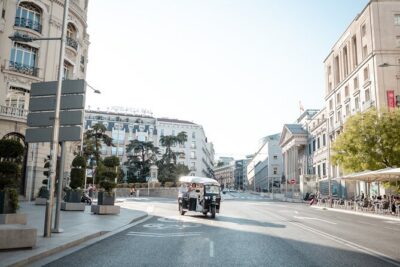 ★ 5.0Madrid Welcome Tour with Local Guide in Eco Tuk Tuk PrivateFrom $282,936 reviews
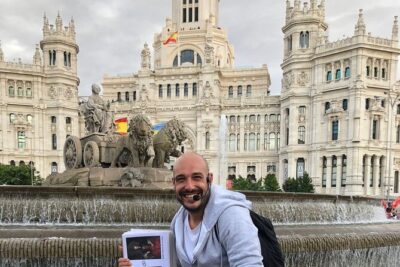 ★ 5.0Madrid Walking Tour from Puerta del Sol to Retiro ParkFrom $32,285 reviews
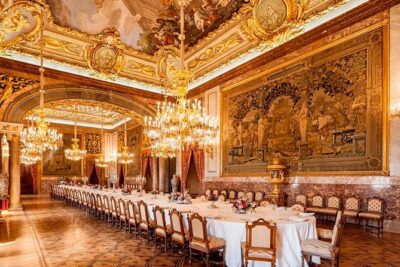 ★ 4.5Madrid Old Town & Royal Palace Walking Tour Skip the Line TicketFrom $401,829 reviews
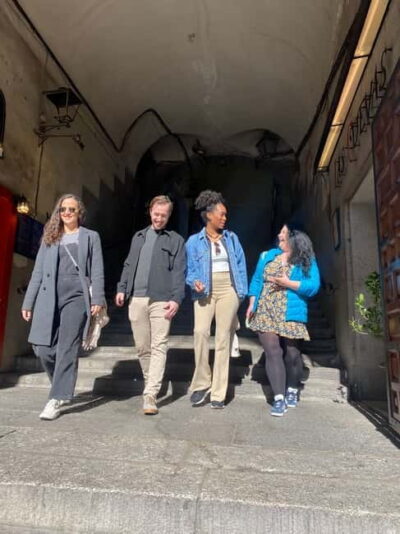 ★ 4.9Welcome to Madrid Guided Walking TourFrom $311,738 reviews
 ★ 4.7Spanish Inquisition and Legends Evening Walking TourFrom $231,396 reviews
 ★ 5.0Majestic Madrid Walking TourFrom $311,274 reviews
 ★ 5.0Guided Walking Tour of Immortal ToledoFrom $131,116 reviews
Browse the lists this tour appears in