
Madrid’s Old Town is a shortcut to the city’s pulse.
This private tour is built for real getting-around time, not museum marathons. I like how it stays focused on street-level landmarks that you can actually see, then turns them into stories you remember—especially the way the route strings together Old Madrid’s power centers from square to cathedral to palace. One small drawback: you’re mostly stopping outside, and site entries aren’t included.
I also like the guide style—engaging, funny, and participatory—whether you end up with Andrés or JP guiding your group. You get the fun bits too: a quick Flamenco stop at Tablao Flamenco Arco de Cuchilleros, plus hands-on context like the old royal-area connections suggested at La Real Botica de la Reina Madre. Consider that the schedule is tight (2 hours 15 minutes), so if you want long sits and slow photos at every stop, you may wish you had extra time.
In This Review
- Key highlights
- Where This Tour Fits in Your Madrid Plan
- Puerta del Sol: The Center of the City and the 12 Grapes Ritual
- Plaza Mayor: Power, Spectacle, and Public Life in One Square
- Arco de Cuchilleros: Old Crafts, Famous Bites, and a Taste of Flamenco
- Following the Arab Walls: Gates, Borders, and a City Changing Over Time
- La Real Botica de la Reina Madre: Why Old Pharmacies Feel Royal
- Plaza de la Villa: The First Plaza, Old City Hall, and Tight Streets
- Almudena Cathedral: A Pope’s Consecration and a Royal Wedding Setting
- Royal Palace and the Mirador Views: The Best Payoff for the Final Stretch
- Price and Group Value: Why It Can Be a Smart Buy
- Included vs Not Included: What You Should Plan For
- Pace, Timing, and How to Make It Feel Like More Than 2 Hours 15 Minutes
- Should You Book Madrid Essential Old Town?
- FAQ
- How much does the Private Tour Madrid Essential Old Town cost?
- How long is the tour?
- Is this tour private and what language is it in?
- Where does the tour start and end?
- What’s included in the price?
- Are entrance tickets included for the sites?
- What is the cancellation policy?
Key highlights
- A private group up to 15, so the pace can fit your crew
- Puerta del Sol starts the day with the New Year 12 grapes tradition
- Plaza Mayor stories that connect bullfighting, the Inquisition, and carnivals
- Arco de Cuchilleros stops with food-and-craft legends and a quick Flamenco moment
- Royal Palace hill views at the end, with a Mirador-style payoff
- No entrance fees needed, since the route focuses on what you see from the streets
Sol, the arches and the tangle of old streets
- Madrid Essential: Historic Center, Plaza Mayor & Royal Palace★ 5.0 · 6,416 reviews
- Madrid Walking Tour from Puerta del Sol to Retiro Park★ 5.0 · 2,285 reviews
- Madrid Old Town & Royal Palace Walking Tour Skip the Line Ticket★ 4.5 · 1,829 reviews
- Madrid Historic Centre Food Tour with Authentic Tapas & Wines★ 5.0 · 814 reviews
Where This Tour Fits in Your Madrid Plan
This is an Old Town route designed like a smart orientation walk. If you’re in Madrid for a short trip, it helps you build a mental map fast: where the city’s official power used to be, where crowds gathered, and which neighborhoods grew around royal and religious sites.
The value here is partly about what you avoid. You don’t spend your time hunting ticket lines or trying to figure out what matters most. The tour stays at the human scale—squares, gates, and front-of-building moments—then a guide explains why those corners mattered.
Price is listed as $307.70 per group (up to 15) for about 2 hours 15 minutes. That means you’re paying for shared guide time. It can be a good deal if you’re traveling as a group of a few people, since that per-person cost drops quickly compared with small-group tours.
Who is this best for? First-timers who want the essentials without getting lost. Also good for families or mixed-age groups who still want culture but don’t want heavy scheduling. If you’re a deep-archive history person who loves long indoor visits, you might want to pair this with an extra paid museum or palace time later.
Puerta del Sol: The Center of the City and the 12 Grapes Ritual
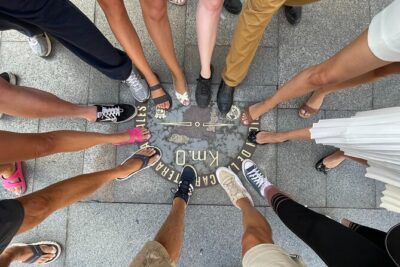
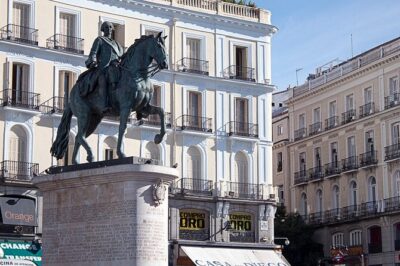
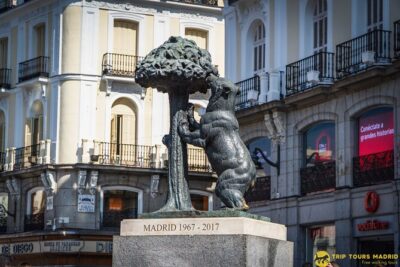
Most Madrid days start with this square for a reason. The tour begins at Puerta del Sol, the kind of place that instantly teaches you Madrid’s rhythm: meeting points, public energy, and major traditions that feel shared even if you’re just passing through.
One of the most memorable moments here is the New Year tradition of eating 12 grapes—one grape for each chime. Even if you’re not there on December 31, the guide’s explanation gives the ritual context so it doesn’t feel like a random quirky fact. You’ll also get a sense of why Puerta del Sol became the city’s public nerve center.
You’ll spend about 20 minutes here. That’s enough time to take in the space, ask questions, and get oriented without turning the morning into a standstill.
Tip for you: pause for photos from a couple angles. The square can feel flat until you notice where the streets funnel out from it. After Puerta del Sol, the rest of the walk starts to feel logical.
Plaza Mayor: Power, Spectacle, and Public Life in One Square
Next comes Plaza Mayor, one of Madrid’s big outdoor rooms. Think of it as a stage for big events—religious tensions, political drama, and sheer crowd spectacle.
Here’s what makes this stop more than pretty stone: the guide connects the square with moments like bullfighting, the Spanish Inquisition, and carnival celebrations. When you hear how the space hosted those realities, the square stops being just a backdrop. You start noticing details like where people would have stood, how crowds would have gathered, and why this location became the place to be seen.
You’ll get around 20 minutes at Plaza Mayor. That timing is useful. It gives you time to look up at the facades and take in the scale, then move on while the story energy is still fresh.
A practical consideration: because it’s a public square, you can’t control crowds. If you’re traveling during peak hours, plan to enjoy the atmosphere rather than expecting solitude.
Arco de Cuchilleros: Old Crafts, Famous Bites, and a Taste of Flamenco
The tour then heads to Arco de Cuchilleros, which is the kind of spot that works in layers. On the surface, it’s a walk-in historic corner. Under the surface, you get the legends: stories of some of the oldest restaurants and an old-school barbershop tradition tied to the European Union.
This stop is about 20 minutes, but the key is how the guide frames it. Instead of treating it like a single photo stop, the explanation helps you understand how craft, food, and daily life braided together in central Madrid.
Then there’s a quick pivot that makes this tour feel different from a standard Old Town walk: the Tablao Flamenco Arco de Cuchilleros stop. It’s only about 5 minutes, so you shouldn’t expect a full evening show. But it’s enough to set the scene. You get a taste of why flamenco belongs here, not just on a stage far away from the street.
If you love live performance, you’ll probably want to book a longer flamenco evening afterward. If you’re flamenco-curious, this short stop is a low-pressure introduction.
Private and unhurried, just your party

Following the Arab Walls: Gates, Borders, and a City Changing Over Time
Madrid’s history isn’t one straight line. You can see that in the section dedicated to the Arab Walls.
At this stop, you’re guided through the idea of city gates—where the Arab and Christian wall system of Madrid once stood. You’re not walking through a long preserved wall section for a full lesson. Instead, you’re using the placement of gates and boundaries as a way to understand how the city grew, changed, and defended itself.
The time here is about 10 minutes. That makes it a fast but meaningful “thread” in the tour. It helps you connect earlier Roman and medieval-era ideas you may have heard before, but here you see them translated into the geometry of streets.
Practical note: since it’s a brief segment, show up ready to look closely. The story works best when you’re paying attention to where the road turns and where walls would have directed movement.
La Real Botica de la Reina Madre: Why Old Pharmacies Feel Royal
Next is La Real Botica de la Reina Madre, framed by the tour as an old, long-running business in Madrid. What makes it interesting is the way it’s explained: the guide points you toward the idea of connections to the Royal Palace, including a mention of a tunnel linked to it.
This stop is short—about 5 minutes—so it’s not about a long, indoor visit. But it can be surprisingly memorable if you like the “how did this work?” side of history. A royal connection transforms the place from just another old building into a hint of logistics: how people, goods, and influence moved.
If you enjoy architecture and function more than dates, this is the kind of moment that sticks.
A consideration: because the stop is brief, you’ll likely want to jot down the name so you can look it up later if you want deeper detail.
Plaza de la Villa: The First Plaza, Old City Hall, and Tight Streets
Plaza de la Villa is one of those places that tells you Madrid got good at using space long before modern design. The tour frames it as the first plaza of the city, plus a home for old city hall and jail functions.
There’s also a fun contrast in the area: you’ll hear about the narrowest street among what’s nearby. That detail matters because it gives you a tactile feeling for the old city layout. It’s not all grand squares. Real Madrid also had cramped corridors where daily life happened fast and close.
You’ll spend around 15 minutes here. That’s enough to understand why the area mattered administratively and socially, without rushing.
If you’re a photographer, this is a good stop to pause and experiment with angles. Narrow streets can look awkward straight-on, but they often reward a slight step sideways.
Almudena Cathedral: A Pope’s Consecration and a Royal Wedding Setting
Now you reach Catedral de Sta Maria la Real de la Almudena. The tour highlights it as a majestic cathedral consecrated by Pope John Paul II, and also as a place tied to royal weddings.
This stop is about 5 minutes, so you’re mostly absorbing what you see from the outside and letting the guide connect the building to Madrid’s ceremonial life. Even short cathedral moments can be powerful because cathedrals create gravity. You slow down without forcing it.
If you’re the type who likes to read architectural cues, this is worth your attention. The key is not trying to “finish” the cathedral in five minutes. The goal is to understand what the guide wants you to notice.
Royal Palace and the Mirador Views: The Best Payoff for the Final Stretch
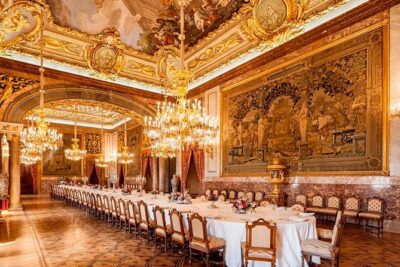
The tour ends with Royal Palace of Madrid time, including a climb to a Mirador for some of the best views of the city. This is a longer stop at about 30 minutes, which makes sense because it’s the grand finale.
What I like about ending here is the payoff. The stories earlier in the day explain authority and public life. Then the guide points you toward the view. From a height, you can better grasp why a palace site and royal institutions sat where they did.
Be ready for some walking and a hill climb. The tour is short overall, but this final bit is where your legs notice it.
Practical move: when you reach the Mirador, spend a few minutes looking before you start snapping photos. The view can feel like a postcard until you take a slow look and identify major streets and landmarks.
Price and Group Value: Why It Can Be a Smart Buy
At $307.70 per group up to 15, the cost isn’t about squeezing one visitor into a crowded schedule. It’s about renting a guide’s time and explanation for your group size.
Here’s the value math that helps you decide: if you’re traveling as a small group, you share that group price across multiple people. If you’re traveling solo, it may be less of a deal versus individual options—but it can still work if you want the flexibility of a private group format and a tailored experience.
Also, consider what’s included: you get a local guide plus printed material and teaching tools along the route, and a link to personalized recommendations for what to do in Madrid. On top of that, there’s personalized attention of your guide after the tour—the idea is that you don’t just get dumped back on the street.
The big “value” angle is that entries aren’t required for the sites on this route. You avoid paywalls during your walk. That doesn’t mean you miss everything; it means you’re seeing the essentials first, then deciding later what you want to pay to go inside.
Included vs Not Included: What You Should Plan For
Included:
- A local guide
- Printed material and teaching tools during the route
- A link to personalized recommendations for what to do in Madrid
- Personalized attention from your guide after the tour
Not included:
- Tips
- Food or drink
- Entry tickets to the sites (not required since the tour doesn’t rely on entrances)
This matters because you should plan your day around walking and standing. If you’re hungry, build a snack or coffee stop on your own time. The tour won’t take care of meals, and the route won’t slow down to include long breaks.
If you’re trying to keep costs predictable, you can treat it as a guided orientation plus quick cultural moments. Then later you can choose paid attractions based on what grabbed you most.
Pace, Timing, and How to Make It Feel Like More Than 2 Hours 15 Minutes
Total time is listed as about 2 hours 15 minutes. That’s a good format for people who don’t want a whole morning or afternoon locked up.
Stops are mostly around 5 to 20 minutes, with the Royal Palace getting 30 minutes. In practice, that means you’ll move frequently, but not so fast that you can’t follow the guide’s explanations.
To get the most out of it, do two things:
- Bring curiosity, not checklists. Ask why the tour connects places the way it does.
- Save your deepest questions for the guide when you pause. Mid-walk is the best time to ask, because you’re in the right spot to compare what you’re hearing with what you’re seeing.
If your travel style is slow and lingering, you may find yourself wanting extra time at Plaza Mayor or Puerta del Sol. That’s okay. Use this tour as the framework, then return later on your own with more time.
Should You Book Madrid Essential Old Town?
I’d book this tour if you want a private, guided Old Town overview that mixes major squares with quick culture hits like a Flamenco stop and a Royal Palace viewing payoff. It’s also a good fit if you like a guide who can keep things fun and engaging, not stiff.
Pass on it—or at least pair it with another plan—if you’re hoping for lots of long indoor visits. Since entrance fees aren’t included and entries aren’t the point, this is a see-it-first kind of tour, not a ticket-heavy day.
If you’re short on time, this one helps you leave Madrid with the basics sorted: where things are, why they mattered, and what you’ll want to revisit after you’ve got your bearings.
FAQ
How much does the Private Tour Madrid Essential Old Town cost?
The price is listed as $307.70 per group, for a group size of up to 15 people.
How long is the tour?
The tour lasts about 2 hours 15 minutes.
Is this tour private and what language is it in?
Yes, it’s private, meaning only your group participates. The tour is offered in English.
Where does the tour start and end?
It starts at Puerta del Sol, Centro, Madrid, Spain and ends at C. de Requena, 3, Centro, 28013 Madrid, Spain.
What’s included in the price?
Included are a local guide, printed material and teaching tools during the route, a link to personalized recommendations for what to do in Madrid, and personalized attention from the guide after the tour.
Are entrance tickets included for the sites?
No. Entries to the sites are not included, and they’re not required for this route.
What is the cancellation policy?
You can cancel for free up to 24 hours in advance for a full refund.
More Tour Reviews in Madrid
- Madrid: Tour Bernabéu Entry Ticket
★ 4.5 · 21,573 reviews - Madrid: Prado Museum Entry Ticket
★ 4.6 · 20,699 reviews - Madrid: “Emociones” Live Flamenco Performance
★ 4.8 · 12,866 reviews - Madrid: Panoramic Route City Tour
★ 4.1 · 12,259 reviews - Madrid: Live Flamenco Show with Food and Drinks Options
★ 4.5 · 9,901 reviews - Avila & Segovia Tour with Tickets to Monuments from Madrid
★ 5.0 · 9,762 reviews
Private Days in the Capital
- Madrid: Private City Tour by Eco Tuk Tuk
★ 4.9 · 3,465 reviews - Madrid Welcome Tour with Local Guide in Eco Tuk Tuk Private
★ 5.0 · 2,936 reviews - Madrid Historical Tour with Local Guide in Eco Tuk Tuk Private
★ 5.0 · 876 reviews - Toledo Private Tour with Licensed Guide and Driver from Madrid
★ 5.0 · 637 reviews - Madrid Private Segway tour. Retiro Park – Centro Historico
★ 4.9 · 636 reviews - Madrid Express Tour with Local Guide in Eco Tuk Tuk Private
★ 5.0 · 413 reviews
Old Madrid on Foot
- Madrid Essential: Historic Center, Plaza Mayor & Royal Palace
★ 5.0 · 6,416 reviews - Madrid Walking Tour from Puerta del Sol to Retiro Park
★ 5.0 · 2,285 reviews - Madrid Old Town & Royal Palace Walking Tour Skip the Line Ticket
★ 4.5 · 1,829 reviews - Madrid Historic Centre Food Tour with Authentic Tapas & Wines
★ 5.0 · 814 reviews - Madrid in a Day Tour:Royal Palace, Historic Center & Prado Museum
★ 5.0 · 628 reviews - Guided Tour of Madrid of the Austrias and the Historic Center
★ 5.0 · 520 reviews
Just Added: New Madrid Tour Reviews



Plaza Mayor & Old Town Tours, compared.
 ★ 5.0Madrid Essential: Historic Center, Plaza Mayor & Royal PalaceFrom $36,416 reviews
 ★ 5.0Madrid Walking Tour from Puerta del Sol to Retiro ParkFrom $32,285 reviews
 ★ 4.5Madrid Old Town & Royal Palace Walking Tour Skip the Line TicketFrom $401,829 reviews
 ★ 5.0Madrid Historic Centre Food Tour with Authentic Tapas & WinesFrom $78814 reviews
 ★ 5.0Madrid in a Day Tour:Royal Palace, Historic Center & Prado MuseumFrom $119628 reviews
 ★ 5.0Guided Tour of Madrid of the Austrias and the Historic CenterFrom $2520 reviews
 ★ 5.0Old Madrid Tapas and Fine Wine Small Group TourFrom $101415 reviews
 ★ 4.2From Madrid: Old Town Toledo Tour with Optional ActivitiesFrom $32403 reviews
Browse the lists this tour appears in