
REVIEW · MADRID BUS & PANORAMIC TOURS
Madrid: Private Tuk Tuk Tour with Expert Guide and Panoramic Views
Madrid in motion feels like magic. This private electric tuk-tuk tour strings together Royal Palace views, old-town squares, and modern city viewpoints, with live commentary as you roll. I love the photo-stop pacing and how the live guide narrative keeps the city making sense fast.
The main thing to remember is that the clock is real. With a 1 to 3 hour window and lots of famous stops, you’ll mostly get exterior views and quick moments, not long museum hours or deep interior time.
If you want a guide who can handle real-life conversation (including kids), there’s a good chance you’ll meet a friendly pro like Rafael—praised for humor and keeping people engaged in English or Spanish.
In This Review
- Key things I’d plan around
- Electric Tuk-Tuk Comfort: Why This Ride Makes Madrid Click
- Meeting Point to Puerta del Sol: How the Tour Gets You Oriented
- Teatro Real to the Royal Palace Area: First Views That Set the Tone
- Photo Stops by the Palace Gates: Campo del Moro to the Segovia Bridge
- La Villa and the Old Squares: Plaza de la Villa, San Miguel, and Plaza Mayor
- La Latina and Literary Streets: Calle Cava Baja to Plaza de Santa Ana
- Congress, Museums, and the Atocha Corridor: Culture in a Tight Loop
- San Jerónimo el Real to the Spanish Royal Academy: Royal Spiritual and Academic Stops
- Retiro Park and Puerta de Alcalá: A Breath of Green and Iconic Stone
- Gran Vía and Plaza de España: Big-Boulevard Madrid
- Las Ventas to Bernabéu: Madrid’s Stadium Energy From the Road
- Rosaleda del Parque del Oeste and Temple of Debod: Sunset That Feels Made for Photos
- Price Value at $45: What You’re Really Paying For
- Who Should Book This Private Tuk-Tuk Tour
- Should You Book This Private Tuk-Tuk Tour?
- FAQ
- How long is the Madrid private tuk-tuk tour?
- What languages are offered for the live guide?
- Is this tour private, and how many people can join?
- What’s included in the price?
- Are tickets to enter monuments included?
- Where do I meet and where do I get dropped off?
- Is the tour wheelchair accessible and pet-friendly?
Key things I’d plan around
- Electric, comfortable ride: easier than walking between far-apart sights, especially if you want a panoramic feel.
- Live commentary with photo timing: you stop when the views are worth it, not when you’re just tired.
- Language options that matter: Arabic, English, French, Italian, Portuguese, and Spanish are available.
- Top Madrid sights in one loop: Royal Palace area, Plaza Mayor and San Miguel, Prado/Reina Sofía, plus Retiro and Temple of Debod.
- A guide who works the group: the vibe is relaxed and private, and guides will prompt for photos.
- Cold-weather comfort: in winter you’ll get wind and rain protection plus blankets.
Buzz the old centre by tuk tuk
- Madrid: Private City Tour by Eco Tuk Tuk★ 4.9 · 3,465 reviews
- Madrid Historical Tour with Local Guide in Eco Tuk Tuk Private★ 5.0 · 876 reviews
- Madrid Express Tour with Local Guide in Eco Tuk Tuk Private★ 5.0 · 413 reviews
- Madrid: Highlights City Tour by Electric Tuk Tuk★ 4.7 · 346 reviews
Electric Tuk-Tuk Comfort: Why This Ride Makes Madrid Click
Madrid is a city of layers. You’ve got royal grandeur, medieval alleys, big museums, and then wide boulevards that feel very 21st century. A tuk-tuk is a practical way to move through all of it without turning your first day into a sprint.
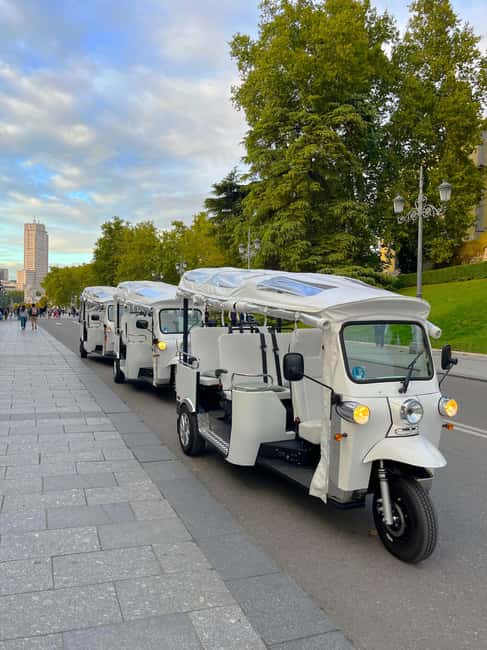
This tour uses an electric tuk-tuk, which keeps things quieter and more comfortable than you’d expect. You sit in a way that makes street-level views and skyline angles easy to enjoy, and you still get expert narration instead of just pressing play on a phone.
I also like the fact that the tour is private with a max capacity of 4 people. That matters in Madrid, where crowds can swallow your patience. In a small group, you can actually hear your guide and ask quick questions without feeling like you’re interrupting a bus tour.
Meeting Point to Puerta del Sol: How the Tour Gets You Oriented
You meet at Calle de Vergara 1, between the Starbucks in Plaza de Isabel II and Calle de Carlos III. Dropping you back in central Madrid (Puerta del Sol) is smart, because it leaves you close to transport and dinner options right after the tour.
The tour is designed as a flexible loop. If street closures or protests slow things down, the route can change, and the total time adjusts for delays (and if delays get too big, the tour can be canceled without a refund). That’s the reality of any street-heavy city plan, but the operator builds in adjustments rather than forcing a rigid script.
One practical note: the tuk-tuk doesn’t have a trunk. So if you’re traveling with bulky luggage, this is better suited to people who can travel light.
Teatro Real to the Royal Palace Area: First Views That Set the Tone
Right away, you’re in the theater-and-palace zone. The tour starts around Teatro Real, a famous opera house area where you get an easy first glimpse of Madrid’s grand public spaces from the road.
Then come the royal big hitters: the Royal Palace of Madrid exterior area and nearby viewpoints. Even if you don’t go inside, these photo stops matter because Madrid’s royal architecture is made for wide angles and dramatic lines.
Next you’ll swing by Almudena Cathedral for another classic skyline moment. The cathedral’s position gives you a different architectural mood than the palace, and it’s a good reminder that Madrid’s identity isn’t one style—it’s a mix.
From there, the tour touches the Arab Wall (a photo stop). This is one of those moments that helps you understand that Madrid’s story started long before modern tourism infrastructure.
You also pass through the Campo del Moro area, which works well for a short guided orientation. It’s green, scenic, and it gives you a break from pure stone-and-squares sightseeing.
Photo Stops by the Palace Gates: Campo del Moro to the Segovia Bridge
A highlight of the ride is how it uses Madrid’s topography. You’ll go by Puerta de Sant Vicent and then into the views around the Segovia Bridge (Puente de Segovia).
Seeing a bridge area from a vehicle viewpoint is underrated. You catch the scale without climbing stairs, and it sets up the next river-and-hill perspectives near Manzanares.
From there, the route heads toward the Casa de Campo zone, with a short photo stop that can be great for quick “I’m really in Madrid” pictures. Then you’ll reach Viaducto de Segovia, where the old-meets-monumental feel comes through fast.
The tour also includes a viewpoint photo stop, and that small pause is where the entire day starts to feel like a story instead of a checklist. If you care about photos, this is the part you’ll thank yourself for later.
The headline sights from the top deck


La Villa and the Old Squares: Plaza de la Villa, San Miguel, and Plaza Mayor
Once you’re out of the palace-and-river segment, the tour shifts into old-city Madrid energy. You’ll pass Plaza de la Villa, an area that helps explain why Madrid’s historic core keeps pulling people back.
Then you reach Mercado de San Miguel (San Miguel Market). This stop works even if you don’t plan to eat. It’s about atmosphere and layout, and your guide can point you toward what to try without turning it into a shopping marathon.
Next is Plaza Mayor, the big iconic square. From a tuk-tuk, you can take in the symmetry and the scale quickly, and the guided commentary helps you connect it to Madrid’s public-life tradition.
You’ll also stop at Sobrino de Botín, a name you’ll hear if you spend any time researching Spanish food history. This is the kind of place that’s more interesting from the street view than it is from a loud restaurant line.
La Latina and Literary Streets: Calle Cava Baja to Plaza de Santa Ana
This is where the tour leans into neighborhoods. You’ll head through Calle Cava Baja in the La Latina area, then continue toward Royal Basilica of Saint Francis the Great (guided exterior views). These are spots where the vibe is built by stone, steep streets, and the rhythm of locals moving through the day.
Then you’ll see Puerta de Toledo from the road. City gates like this give you a “this place used to be a boundary” understanding that you won’t get from museum walls.
You’ll continue with Plaza Cascorro, then Iglesia de San Isidro. In guided stops like these, the value is not just what the building is, but why it matters in the city’s identity.
Next comes Plaza Tirso de Molina and then Calle de las Huertas, which is famous for its literary and classic Madrid character. Your guide can connect the dots between those street names and the feel of the area.
The route also includes Casa de Cervantes and Plaza de las Cortes, both useful for understanding how Madrid’s cultural narrative got built around institutions and famous people.
Then you reach Plaza de Santa Ana for another quick, memorable square pause. You’ll also pass Galería Canalejas—more modern in feel—so you can sense the city’s shift as the day progresses.
Congress, Museums, and the Atocha Corridor: Culture in a Tight Loop
The tour keeps stacking landmarks. You’ll get a view of Congreso de los Diputados (Spain’s Congress area), which is a good reality check that Madrid is also political center—not just postcard center.
Then you’ll head toward Museo Nacional Thyssen-Bornemisza, followed by Neptune Fountain. These stops matter because they give you rhythm: classic monuments, then a museum-adjacent perspective that tells you where the art energy concentrates.
After that comes Museo Nacional Centro de Arte Reina Sofía. You’ll also reach Estación Atocha, which is one of those places that feels like Madrid’s daily heartbeat. Atocha is not just “a station” here; it’s a sense of movement and scale, which your guide commentary can frame quickly.
The tour adds Royal Botanical Garden (guided). Even as a shorter stop, a garden area gives you a mental reset. It breaks the stone-and-statues pattern without leaving the cultural theme.
Then there’s Museo del Prado (photo stop plus a brief guided moment). The Prado is the kind of museum where you can lose an entire day. Here, you’re meant to catch the exterior significance and orient yourself, so you can decide later if you want a full visit with tickets.
San Jerónimo el Real to the Spanish Royal Academy: Royal Spiritual and Academic Stops
The route continues with San Jerónimo el Real and Spanish Royal Academy (each with photo stop and guided time). These are the quieter prestige stops that help you understand Madrid’s “learning and authority” side.
If you like when a tour explains why buildings were placed where they were, these are strong stops. Even if you’re not reading every detail, the commentary makes the layout feel logical.
You’ll also pass other nearby royal-area monuments as the tour threads through central Madrid. The trick is that the tuk-tuk keeps things moving, so you don’t get stuck in one neighborhood too long.
Retiro Park and Puerta de Alcalá: A Breath of Green and Iconic Stone
Next up is Retiro Park, with guided exploration and scenic views. Retiro is Madrid’s reminder that the city isn’t only architecture and museums. It’s also space to slow down, even for a short while.
Then you’ll reach Puerta de Alcala for a classic photo-and-guided stop. This is one of those Madrid icons that looks impressive from almost any angle, and a tuk-tuk viewpoint helps you avoid the worst congestion on foot.
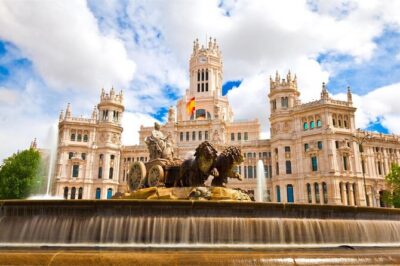
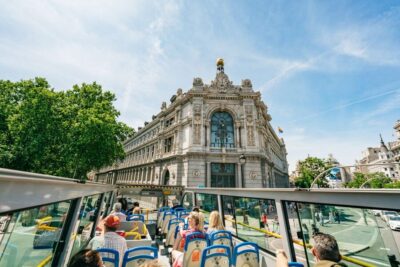
The day also includes Cibeles Fountain and Palacio de Cibeles, plus Bank of Spain nearby. This cluster is great for perspective because it shows different “power” styles: monumental fountain art, civic palace, and finance-era grandeur.
Gran Vía and Plaza de España: Big-Boulevard Madrid
You’ll travel through Gran Vía with guided scenic stops, then continue to Plaza de España. These are wide, open spaces compared to the Old City lanes, so it’s a noticeable shift in atmosphere.
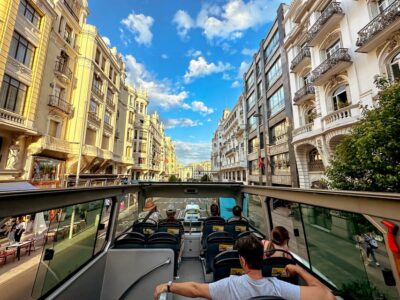
If you’re the kind of person who needs a visual break between historic areas, these boulevard segments help. You’ll also pass points along Paseo de la Castellana and Calle Serrano, which give you a clear sense of where Madrid’s modern business and luxury edges are.
The route also includes Plaza Colón and the National Library of Spain. That’s a nice move: it keeps the story going from royal education and institutions into a more modern Madrid identity.
Las Ventas to Bernabéu: Madrid’s Stadium Energy From the Road
One of the more fun segments is the stop-and-photo rhythm around sports and spectacle. You’ll hit Las Ventas (photo stop with guided context) and then Santiago Bernabéu Stadium (photo stop).
These aren’t “let’s go inside” stops in this format, so think of them as quick iconic recognition. Still, it’s great if you want the full Madrid picture, not just palaces and plazas.
Then you’ll continue along central stretches, including Calle Serrano and more views toward the city’s modern centers. Your guide commentary helps connect the stadium locations to broader Madrid geography, so you’re not just collecting famous names.
Rosaleda del Parque del Oeste and Temple of Debod: Sunset That Feels Made for Photos
If you can manage your energy, this is the payoff. You’ll pass Parque del Oeste with the Rosaleda photo stop, then head toward Temple of Debod.
The tour includes a Visit at Temple of Debod and adds guided time plus a sunset stop. That timing is the kind of detail that turns a tour from facts into memories. Debod is famous for views, and the tuk-tuk approach means you arrive without the legwork.
This final stretch also helps you end in the right mood. After hours of monuments, sunset light softens everything and makes your photos look like you knew what you were doing.
Price Value at $45: What You’re Really Paying For
At $45 per person, the value is in the mix: private electric transportation, a live guide, and multiple curated photo stops across very different Madrid zones. In 1 to 3 hours, you’re paying for efficiency plus guidance, not for museum ticket time.
The tour also includes “less visible” value: dining tips and restaurant suggestions, plus recommendations for entertainment. That can save you the awkward first-night guesswork, especially if you’re trying to pick where to eat after the tour.
Tickets are not included, and the itinerary is built around outdoor visits and photo stops. If you want interiors, you’ll likely need to plan those separately. Still, the tour can set you up so you choose the right places later, instead of wasting time wandering.
Who Should Book This Private Tuk-Tuk Tour
This is a strong fit if you want:
- First-time Madrid orientation without long walks.
- A small-group experience where questions are welcome.
- A guide-led day even if your Spanish is limited, since multiple languages are supported.
- A family-friendly pace that can work for teens (guides have been praised for getting people to actually pose for photos).
It also works for people who appreciate outdoor sightseeing in bad weather. The tuk-tuks run in all weather conditions except extreme safety-compromising conditions, and in winter they come with wind/rain protection and blankets.
If you’re traveling with mobility needs, note that the tour is wheelchair accessible based on the activity details. If you’re traveling with bulky luggage, plan to keep gear minimal since there’s no trunk.
Should You Book This Private Tuk-Tuk Tour?
I’d book it if you want to get your bearings fast, see Madrid’s biggest hits, and end with a shortlist of what to revisit. The private size, live commentary, and repeated photo-stop rhythm make it feel like a guided day with control, not a rushed bus ride.
I’d skip (or shorten) it if your goal is hours inside museums or deep cathedral time. This tour is designed for motion, views, and understanding the city’s layout—then using your next day to go deeper on your own terms.
FAQ
How long is the Madrid private tuk-tuk tour?
The duration is listed as 1 to 3 hours, depending on the option you choose and availability.
What languages are offered for the live guide?
Live commentary is available in Arabic, English, French, Italian, Portuguese, and Spanish.
Is this tour private, and how many people can join?
It’s a private group with maximum capacity of 4 people.
What’s included in the price?
The tour includes an elegant electric tuk-tuk ride with comfort and safety, live commentary, photo stops, outdoor visits to monuments and landmarks, recommendations for places to interest and entertainment, and dining tips.
Are tickets to enter monuments included?
No. Tickets to get into monuments are not included.
Where do I meet and where do I get dropped off?
You meet at Calle de Vergara 1, and there are drop-off locations including Madrid, Puerta del Sol.
Is the tour wheelchair accessible and pet-friendly?
Yes. The activity is wheelchair accessible and it is listed as pet-friendly.
Private Days in the Capital
- Madrid: Private City Tour by Eco Tuk Tuk
★ 4.9 · 3,465 reviews - Madrid Welcome Tour with Local Guide in Eco Tuk Tuk Private
★ 5.0 · 2,936 reviews - Madrid Historical Tour with Local Guide in Eco Tuk Tuk Private
★ 5.0 · 876 reviews - Toledo Private Tour with Licensed Guide and Driver from Madrid
★ 5.0 · 637 reviews - Madrid Private Segway tour. Retiro Park – Centro Historico
★ 4.9 · 636 reviews - Madrid Express Tour with Local Guide in Eco Tuk Tuk Private
★ 5.0 · 413 reviews
Madrid From the Open Top
- Madrid: Panoramic Route City Tour
★ 4.1 · 12,259 reviews - Madrid Panoramic City Bus Tour
★ 3.5 · 3,118 reviews - Madrid: Panoramic Open-Top Bus Day or Night Tour with Guide
★ 4.2 · 916 reviews - Madrid: Open-Top Big Bus Sightseeing Tour with Live Guide
★ 4.2 · 838 reviews - “Madrid: The Panoramic Vistas Tour”
★ 4.8 · 287 reviews - Big Bus Madrid Panoramic City Tour
★ 4.0 · 244 reviews
Tuk Tuk Around the Middle
- Madrid: Private City Tour by Eco Tuk Tuk
★ 4.9 · 3,465 reviews - Madrid Welcome Tour with Local Guide in Eco Tuk Tuk Private
★ 5.0 · 2,936 reviews - Madrid Historical Tour with Local Guide in Eco Tuk Tuk Private
★ 5.0 · 876 reviews - Madrid Express Tour with Local Guide in Eco Tuk Tuk Private
★ 5.0 · 413 reviews - Madrid: Highlights City Tour by Electric Tuk Tuk
★ 4.7 · 346 reviews - Madrid: City Highlights Tuk Tuk Tour
★ 4.4 · 334 reviews
Just Added: New Madrid Tour Reviews




Madrid Bus & Panoramic Tours, compared.
 ★ 4.1Panoramic Route City TourFrom $3912,259 reviews
 ★ 4.2Panoramic Open-Top Bus Day or Night Tour with GuideFrom $28916 reviews
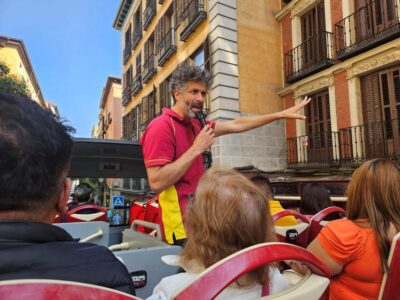 ★ 4.2Open-Top Big Bus Sightseeing Tour with Live GuideFrom $33838 reviews
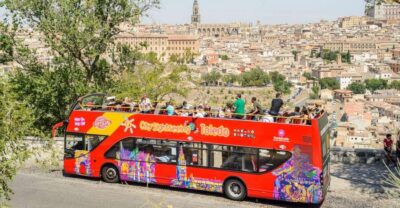 ★ 4.3Toledo: City Sightseeing Hop-On Hop-Off Bus Tour & ExtrasFrom $28683 reviews
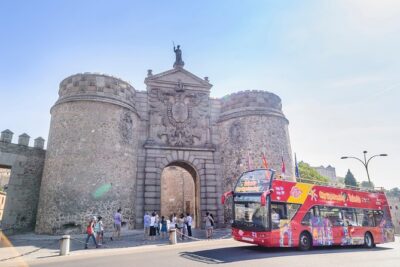 ★ 4.5City Sightseeing Toledo Hop-On Hop-Off Bus TourFrom $28439 reviews
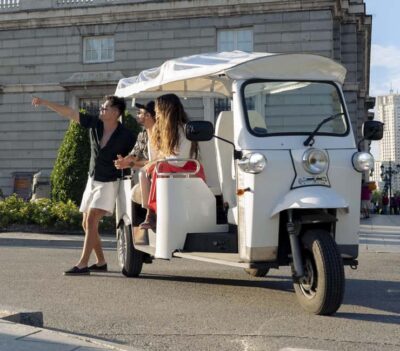 ★ 4.8“Madrid: The Panoramic Vistas Tour”From $59287 reviews
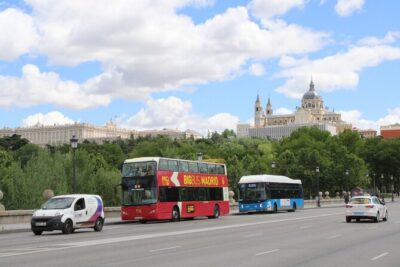 ★ 4.0Big Bus Madrid Panoramic City TourFrom $28244 reviews
 ★ 5.0Private tour in Toledo with train station pick-up and panoramic taxi tourFrom $151228 reviews
Browse the lists this tour appears in