
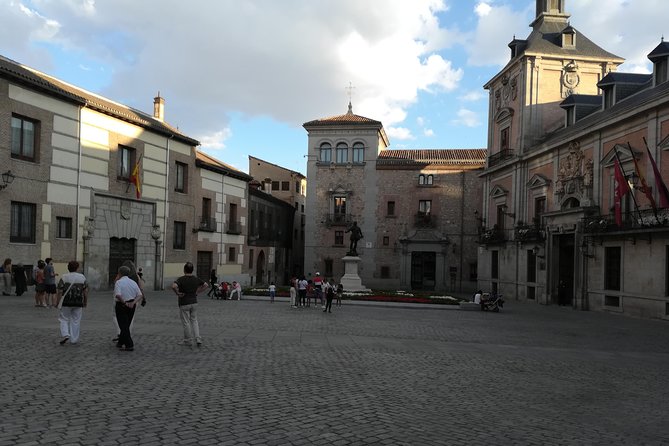
REVIEW · PLAZA MAYOR & OLD TOWN TOURS
Madrid Old Town Private Walking Tour
Madrid’s Old Town makes more sense fast. This 90-minute small-group walk connects major stops from Plaza de Isabel II to Puerta del Sol with stories about monarchy, churches, and how the city changed over time. It’s the kind of tour that helps you move through central Madrid with confidence instead of guessing.
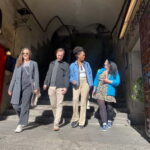
I also like the teaching style. Guides such as María and Stefania often explain what you’re actually looking at, and they use helpful visuals (including photos) to make the scenes stick. You’ll come away with names, dates, and the “why it matters” behind the landmarks.
The only catch is basic: it’s walking. If you want lots of long rests or prefer to skip the streets between sights, you may feel a little compressed in 1 hour 30 minutes.
In This Review
- Key highlights worth your attention
- What a Madrid Old Town walk is really for
- Plaza de Isabel II to Puerta del Sol: a route that keeps paying off
- Isabel II: the start of the monarchy stories
- Behind the walls: understanding the monarchy’s center
- Cathedral viewpoints and a stop for St. Nicholas
- The Army’s Cathedral and a square full of drama
- Architecture changes you can see, not just facts you hear
- Theatre, marketplace, and the bullring: old Madrid in one loop
- The 15th-century message wall (yes, it’s the social-media vibe)
- Finishing at Puerta del Sol: turn the tour into a day plan
- Price and value: is $77.89 worth it?
- Who this tour fits best
- Should you book this Old Town walk?
- FAQ
- FAQ
- How long is the Madrid Old Town private walking tour?
- How much does the tour cost?
- Where does the tour start and where does it end?
- What time does the tour start?
- Is the tour offered in English?
- How many people are in the group?
- Do I need a printed ticket?
- Are service animals allowed?
- Is there free cancellation?
- Is it booked far in advance?
Key highlights worth your attention
- Up to 10 travelers keeps things conversational and easier to ask questions.
- English-guided with professional explanation, built for first-timers and return visitors alike.
- Isabel II to Puerta del Sol route gives you a clean start and a great place to continue exploring.
- Cathedral viewpoints and old churches help you “read” Madrid’s buildings instead of just passing by them.
- Architecture across centuries shows how the city evolved from the 15th century onward.
- Common extras from guides include food and drink recommendations after the tour (when timing allows).
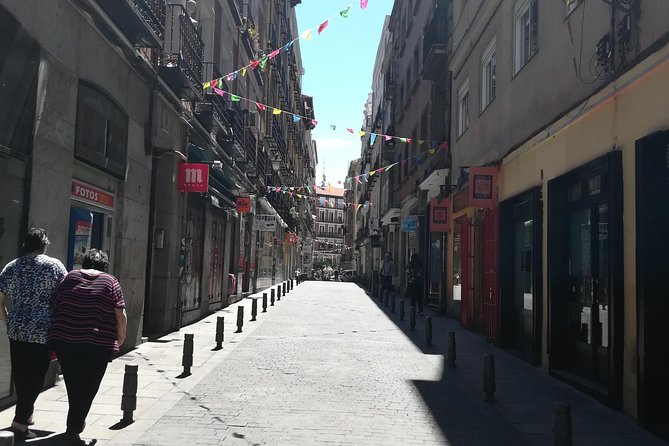
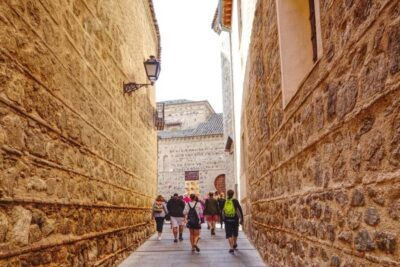
Sol, the arches and the tangle of old streets
- Madrid Essential: Historic Center, Plaza Mayor & Royal Palace★ 5.0 · 6,416 reviews
- Madrid Walking Tour from Puerta del Sol to Retiro Park★ 5.0 · 2,285 reviews
- Madrid Old Town & Royal Palace Walking Tour Skip the Line Ticket★ 4.5 · 1,829 reviews
- Madrid Historic Centre Food Tour with Authentic Tapas & Wines★ 5.0 · 814 reviews
What a Madrid Old Town walk is really for
This tour is less about checking boxes and more about getting your mental map straight. Old Madrid can feel like a maze at first. Within a short window, you’re guided through key landmarks and the stories that link them together, so you stop seeing isolated sights and start seeing a city.
You’ll also get a useful rhythm. The tour moves at a pace that still lets you absorb details—enough time to look closely at façades, squares, and viewpoints, without turning the whole thing into a history lecture where everyone’s legs fall asleep.
If you’re the type who likes to wander afterward, this is a smart setup. When the tour ends near Puerta del Sol, you’re positioned right where lots of Madrid life happens—so you can keep going while the information is fresh.
Plaza de Isabel II to Puerta del Sol: a route that keeps paying off
You start at Plaza de Isabel II at 10:00 am, and you finish at Puerta del Sol. That ending matters. Puerta del Sol is one of the easiest central hubs to pivot from, whether you want to head for shopping streets, cafés, or more sightseeing on your own.
Because the tour is a walking format, the route is designed to build momentum. You begin with “this is who matters in Spain’s monarchy” type context, then you move into religious landmarks and public squares. By the time you reach the final stretch, you’re ready to recognize patterns in the architecture and the stories attached to each place.
It’s also near public transportation, which is helpful if you’re juggling timing. And since the tour uses a mobile ticket, you avoid the classic scramble of printed vouchers and last-minute PDF hunts.
Isabel II: the start of the monarchy stories
One of the earliest stops sets the tone with Isabel II, a “peculiar queen” who ruled Spain from 1833 to 1868. This isn’t presented as dry background. The point is to give you a human entry point so the later “monarchy heart of Spain” references land with meaning.
You’ll hear how the monarchy shaped the country’s image and power—and how that influence still shows up in Madrid’s visible landmarks. If you’ve ever looked at a grand building and wondered who actually benefited from all that marble, this tour nudges you in the right direction.
The value here is orientation. You’ll walk away with a timeline feeling, not just a list of names. That makes your next stops feel connected, instead of random.
Behind the walls: understanding the monarchy’s center
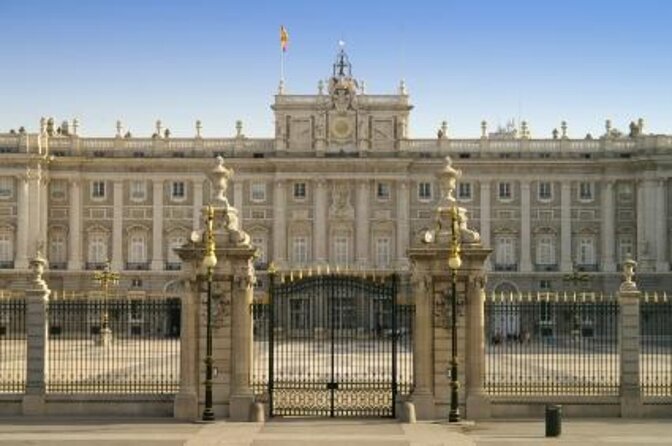
After the Isabel II setup, the tour pivots to what’s described as the heart of the Spanish Monarchy, with “significant stories behind its walls.” Even without stepping deep into interiors during a walking tour, the guide uses the exterior setting to explain why this area matters.
This part works well if you want context for future visits. Madrid’s royal story isn’t confined to one building. It spreads across squares, churches, and the city’s layout, and you start to see those connections while you’re still in motion.
The guide’s job is to translate architecture into narrative. You’ll get explanations that help you picture how people lived, performed power, and staged public moments in a place like this—then you’ll notice those same themes when you look at other historic sites later in the day.
The centre on foot, other ways round




Cathedral viewpoints and a stop for St. Nicholas
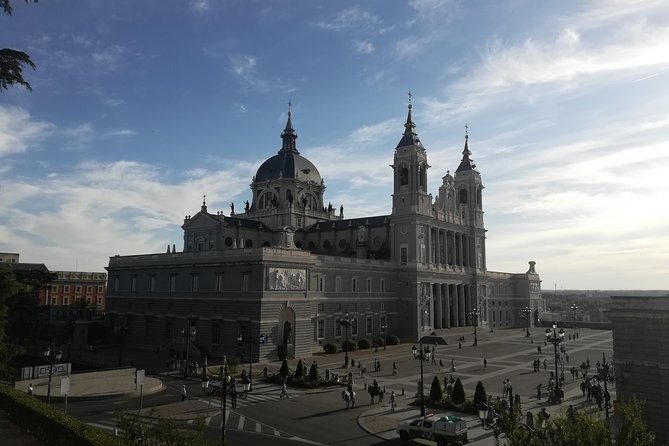
Next comes one of the tour’s practical pleasures: the “best possible view of the Cathedral.” You’re not just told where to look—you’re positioned so you can actually see what makes that cathedral’s presence so dominant in the old center.
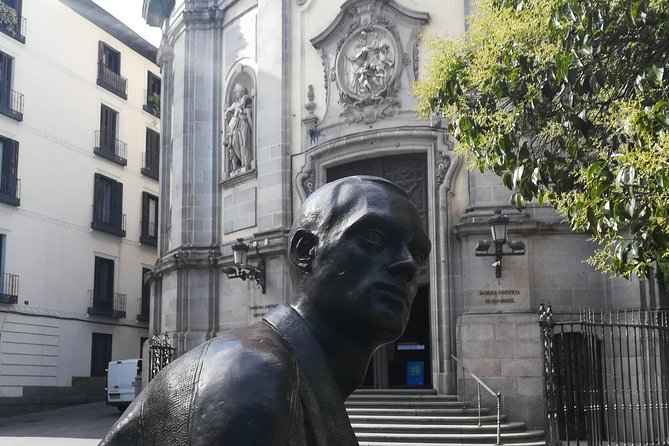
From there, you’ll encounter an older church connection: one of the oldest churches in Madrid, with St. Nicholas as the anchor. If you’re the kind of traveler who likes to know the “real person behind the name,” this stop is aimed at that. The guide ties St. Nicholas to the place, so it’s not just a label on a façade.
What I like most about stops like this is how they train your eyes. After this, you’ll start noticing how church design supports the role of religion in public life. And you’ll also understand why certain buildings are treated like landmarks of identity, not just tourist scenery.
The Army’s Cathedral and a square full of drama
The tour then highlights the Army’s Cathedral. There’s a strong emphasis on the surrounding square and the stories connected to it—accounts involving murder, kings, and queens.
This is where the tour becomes more than sightseeing. Madrid’s old squares aren’t neutral spaces. They’re stages—political, social, and sometimes dark. When your guide connects the drama to the physical setting, you stop thinking of these places as “pretty backdrops” and start reading them as history in public space.
If you enjoy political intrigue (even the watered-down, guide-friendly version), you’ll likely find this portion a standout. Even if you don’t care about every date, the guide’s storytelling keeps the details coherent.
Architecture changes you can see, not just facts you hear
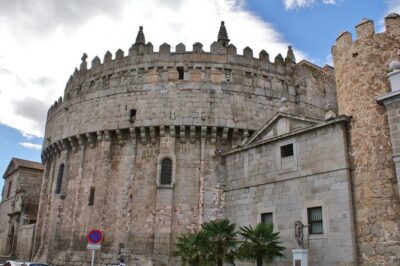
One stop is built around contemplation—specifically, how Madrid’s architecture has been changing since the 15th century. This isn’t a vague “look at the buildings” moment. The guide points out the way styles and materials reflect shifting eras and influences.
That’s useful because it gives you a tool for self-guided exploring. Once you’ve been taught how to compare layers of design, you’ll start doing it naturally while you’re walking. You’ll notice what looks older, what got updated, and what looks like it belongs to a later wave of restoration or influence.
This is also a great segment for photos, but not the “snap and move” kind. You’ll get a reason to pause and look closely, then keep your eyes sharp for the next turns.
Theatre, marketplace, and the bullring: old Madrid in one loop
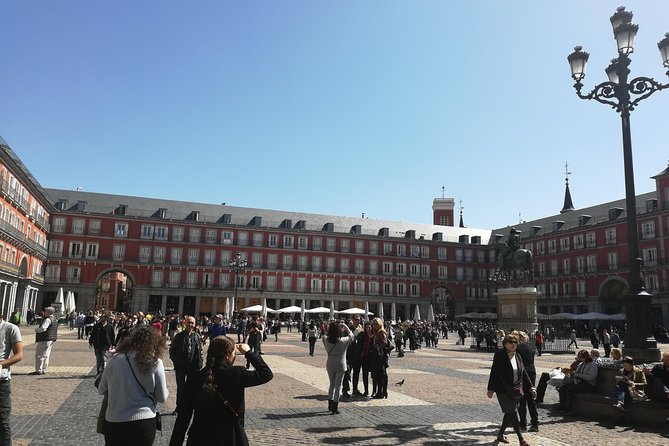
The tour expands beyond monarchy and churches with a stop covering “the theatre, the marketplace… even the bullring.” That mix is the clever part. It reminds you that old Madrid wasn’t only ceremonies and power. It was also entertainment, commerce, and public gatherings.
Even if you’re only visiting for a few days, understanding that everyday life and big events share the same geography helps you feel less like you’re in a museum. This city was built for people to live in, argue in, buy in, and watch in.
This segment also helps you connect what you see today with what used to happen here. A modern street corner might have been a buzzing public square for centuries. Your guide helps bridge that jump.
The 15th-century message wall (yes, it’s the social-media vibe)
One of the most memorable stops comes with a comparison you’ll probably remember: no Facebook back then. The “wall” of the 15th century is framed as a place for public notices and messages—communication before phones, before feeds, before curated posts.
It’s a fun hook, but the payoff is practical. It shows how information traveled in old Madrid and why walls and public spaces mattered for community life. You stop thinking of the old center as purely architectural and start seeing it as a system that carried news and social signals.
If you like history that feels like it connects to modern behavior, this part lands well. It also breaks up the heavier monarchy and church material, keeping the tour from turning into a single-topic march.
Finishing at Puerta del Sol: turn the tour into a day plan
By the time you reach the end at Puerta del Sol, you’re well placed to continue. The tour doesn’t just drop you off in a busy spot. It sets up Puerta del Sol as the central “place” you’ll use as a reference point for the rest of your Madrid day.
This is also where your guide’s practical side can be useful. In the reviews you’ll see people mention solid tips for food and drink, and that kind of recommendation is gold when you’re hungry and deciding quickly.
If you’re wondering what to do next, your best move is simple: pick one direction and explore. With your mental map refreshed by the tour, you’ll spend less time backtracking and more time noticing the old details that make central Madrid so rewarding.
Price and value: is $77.89 worth it?
At $77.89 per person for about 1 hour 30 minutes, this isn’t an ultra-cheap throwaway walk. But for Madrid’s old center, the value tends to come from three places: the guide, the pacing, and the fact that you’re seeing the connections.
First, this is described as a professional-guided experience with a maximum group size of 10. Smaller groups usually mean less waiting and more conversation. Reviews also highlight that guides like María, Stefania, Belén, Alex, and Fernando were clear, friendly, and strong in English, which matters if you want the story details without translation gaps.
Second, you get a focused route. Starting at Plaza de Isabel II and ending at Puerta del Sol is efficient. It means you’re not wasting time figuring out where things are when you’re new to the city.
Third, you get context you can’t easily pull from a phone in the moment. The tour’s blend of monarchy stories, cathedral views, church references like St. Nicholas, and public-square drama helps you interpret what you see afterward.
So yes, I’d call it good value—especially if you’re visiting for the first time or you want to get oriented before wandering on your own.
Who this tour fits best
This works especially well if you:
- Want a guided overview before you explore independently
- Like history told through real places and public spaces
- Prefer small groups over large bus-style tours
- Enjoy learning practical context (architecture shifts since the 15th century, monarchy stories, and how public squares functioned)
It might be less ideal if you:
- Have very limited mobility or need frequent long breaks
- Want zero walking between stops
- Prefer to read guidebooks alone without a live storyteller
Also, it’s booked with some consistency—on average around 65 days in advance. If your dates are set, I’d book earlier rather than waiting.
Should you book this Old Town walk?
If you want to understand central Madrid fast, I think this is a smart buy. The route makes sense, the time is tight but not frantic, and the small-group size helps the guide stay connected with the group.
My advice: book it early in your stay, so you can use what you learn right away. Then, after Puerta del Sol, do one extra hour of self-guided wandering with a little patience. You’ll be amazed how much more you notice when you’ve been taught what to look for.
FAQ
FAQ
How long is the Madrid Old Town private walking tour?
It runs for about 1 hour 30 minutes.
How much does the tour cost?
The price is $77.89 per person.
Where does the tour start and where does it end?
It starts at Plaza de Isabel II and ends at Puerta del Sol.
What time does the tour start?
The start time listed is 10:00 am.
Is the tour offered in English?
Yes, it’s offered in English.
How many people are in the group?
The maximum group size is 10 travelers.
Do I need a printed ticket?
You can use a mobile ticket.
Are service animals allowed?
Yes, service animals are allowed.
Is there free cancellation?
Yes. You can cancel up to 24 hours in advance for a full refund.
Is it booked far in advance?
On average, it’s booked about 65 days in advance, so earlier booking can help if your dates are popular.
Private Days in the Capital
- Madrid: Private City Tour by Eco Tuk Tuk
★ 4.9 · 3,465 reviews - Madrid Welcome Tour with Local Guide in Eco Tuk Tuk Private
★ 5.0 · 2,936 reviews - Madrid Historical Tour with Local Guide in Eco Tuk Tuk Private
★ 5.0 · 876 reviews - Toledo Private Tour with Licensed Guide and Driver from Madrid
★ 5.0 · 637 reviews - Madrid Private Segway tour. Retiro Park – Centro Historico
★ 4.9 · 636 reviews - Madrid Express Tour with Local Guide in Eco Tuk Tuk Private
★ 5.0 · 413 reviews
Walk the Heart of Madrid
- Madrid Tapas & Wine Tasting Walking Tour – Small Group Local Bars
★ 5.0 · 3,644 reviews - Madrid Welcome Tour with Local Guide in Eco Tuk Tuk Private
★ 5.0 · 2,936 reviews - Madrid Walking Tour from Puerta del Sol to Retiro Park
★ 5.0 · 2,285 reviews - Madrid Old Town & Royal Palace Walking Tour Skip the Line Ticket
★ 4.5 · 1,829 reviews - Madrid: Welcome to Madrid Guided Walking Tour
★ 4.9 · 1,738 reviews - Madrid: Spanish Inquisition and Legends Evening Walking Tour
★ 4.7 · 1,396 reviews
Old Madrid on Foot
- Madrid Essential: Historic Center, Plaza Mayor & Royal Palace
★ 5.0 · 6,416 reviews - Madrid Walking Tour from Puerta del Sol to Retiro Park
★ 5.0 · 2,285 reviews - Madrid Old Town & Royal Palace Walking Tour Skip the Line Ticket
★ 4.5 · 1,829 reviews - Madrid Historic Centre Food Tour with Authentic Tapas & Wines
★ 5.0 · 814 reviews - Madrid in a Day Tour:Royal Palace, Historic Center & Prado Museum
★ 5.0 · 628 reviews - Guided Tour of Madrid of the Austrias and the Historic Center
★ 5.0 · 520 reviews
Just Added: New Madrid Tour Reviews



Plaza Mayor & Old Town Tours, compared.
 ★ 5.0Madrid Essential: Historic Center, Plaza Mayor & Royal PalaceFrom $36,416 reviews
 ★ 5.0Madrid Walking Tour from Puerta del Sol to Retiro ParkFrom $32,285 reviews
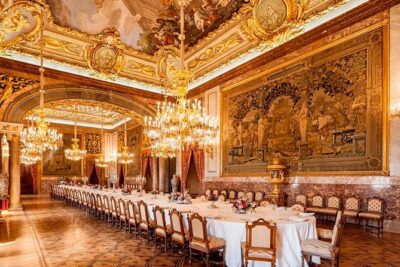 ★ 4.5Madrid Old Town & Royal Palace Walking Tour Skip the Line TicketFrom $401,829 reviews
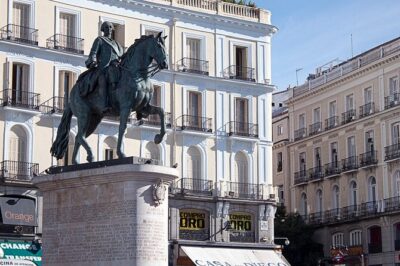 ★ 5.0Madrid Historic Centre Food Tour with Authentic Tapas & WinesFrom $78814 reviews
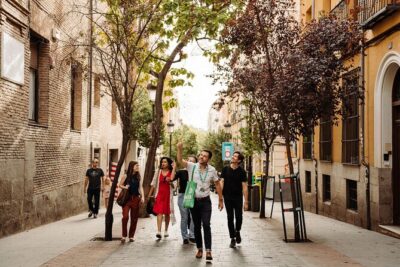 ★ 5.0Madrid in a Day Tour:Royal Palace, Historic Center & Prado MuseumFrom $119628 reviews
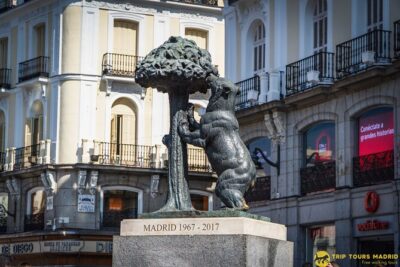 ★ 5.0Guided Tour of Madrid of the Austrias and the Historic CenterFrom $2520 reviews
 ★ 5.0Old Madrid Tapas and Fine Wine Small Group TourFrom $101415 reviews
 ★ 4.2From Madrid: Old Town Toledo Tour with Optional ActivitiesFrom $32403 reviews
Browse the lists this tour appears in