
REVIEW · TOLEDO DAY TRIPS FROM MADRID
Guided Tour of Toledo Underground
Toledo hides a second city underground. I like this tour for its five underground sites that are only accessible with an official accredited guide, and for how the story connects the day-to-day lives of the city’s Muslims, Jews, and Christians. The big thing to consider is practical: the tour is not suitable for wheelchair users or people with mobility impairments, since you’ll be moving through underground spaces.
My favorite part is the way the guide makes each stop feel like a living place, not a display case. If you get Mónica, the groups I saw described her as clear-voiced and professional, with a strong talent for turning facts into a narrative you can actually follow.
You should expect a focused walk through history layers, not a casual stroll with lots of free time to wander off. If you want slow pacing, this isn’t that kind of tour.
In This Review
- Key highlights you’ll care about
- Entering the Toledo Underground world: how this tour feels
- Meeting at Plaza de Zocodover: timing and meeting point reality
- Posada de la Hermandad: Middle Ages dungeons and the Holy Brotherhood
- Baños árabes del Cenizal: 10th-century hammam routines
- Plaza del Salvador and Pozo del Salvador: water systems under drought pressure
- Casa del Judío: the 14th-century mikvah and Jewish community life
- Roman Baths of Toletum: one of the largest in Hispania
- Price and value: what $15 buys in real access
- Who this tour suits best (and who should skip)
- Should you book the Guided Tour of Toledo Underground?
- FAQ
- How long is the Guided Tour of Toledo Underground?
- Where does the tour start and end?
- What underground sites are included?
- What language is the tour guide?
- Can I record audio during the tour?
- Is the tour accessible, and can I cancel if plans change?
Key highlights you’ll care about
- Official-access underground spaces you can’t visit on your own
- Arab, Jewish, and Roman sites explained as real routines, not just names
- Holy Brotherhood dungeons tied to the preserved prison spaces of Toledo
- Baños del Cenizal hammam with hygiene, ritual, and social life themes
- Pozo del Salvador explaining wells vs. cisterns and water during drought
- Roman baths of Toletum noted as one of the largest in Hispania
South to Toledo, more ways to make the run
- Guided Walking Tour of Immortal Toledo★ 5.0 · 1,116 reviews
- Toledo Private Tour with Licensed Local Guide★ 5.0 · 884 reviews
- Toledo: City Sightseeing Hop-On Hop-Off Bus Tour & Extras★ 4.3 · 683 reviews
- Madrid: Full-Day Guided Tour of Toledo with Cathedral Visit★ 4.6 · 647 reviews
Entering the Toledo Underground world: how this tour feels
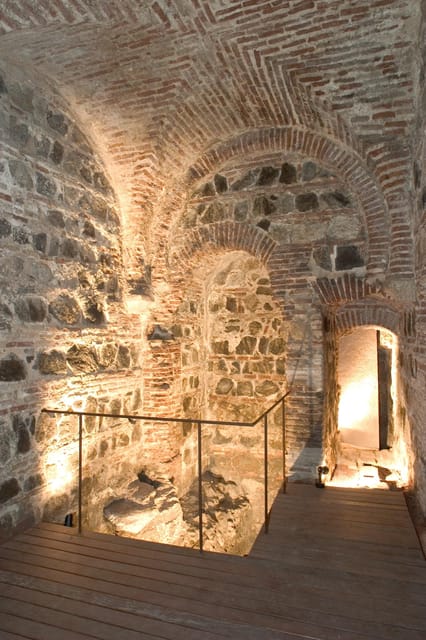
Toledo is one of those cities where the surface looks like a postcard, then you look down and realize the real action is under your feet. This guided walk is built around that idea: you move through five different underground areas, each representing a different layer of Toledo’s past.
What makes it work is the structure. You’re not handed a list of sites and left to connect the dots. You get a guided narrative that connects everyday life—hygiene practices, water systems, religious rituals, and punishment—to the stonework you’re standing in. The result is that you leave with a mental map of how people lived, not just what they owned or built.
The format is also practical. The tour lasts 2 hours, with guided time at each stop, so you’re kept moving and you don’t get stuck at one location for too long. It’s well suited to people who want history without spending half a day underground.
And yes, you’ll be underground a lot. If you’re sensitive to tight spaces or uneven ground, take that seriously. This is part of why the tour specifically doesn’t fit wheelchair users or people with mobility impairments.
Meeting at Plaza de Zocodover: timing and meeting point reality
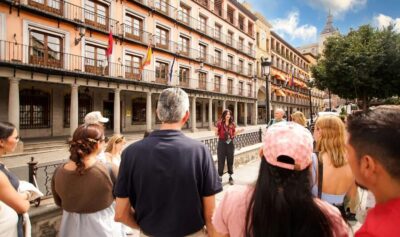
The meeting point is Plaza de Zocodover. You’ll recognize the group by a GREEN FLAG, and you should arrive about 15 minutes early. That buffer matters because everyone needs to be accounted for before you head down into the sites.
The tour is guided in Spanish (live guide), and some of the content may be shown in its original language. If Spanish isn’t your comfort zone, you’ll still get a lot from visuals and context, but you’ll want to be honest with yourself about how much you can follow.
Because this is an official-access tour, punctuality isn’t just etiquette—it helps you keep the flow through controlled spaces. Arriving late can mean you slow down the group, and that’s the opposite of what you want from a 2-hour plan.
Posada de la Hermandad: Middle Ages dungeons and the Holy Brotherhood
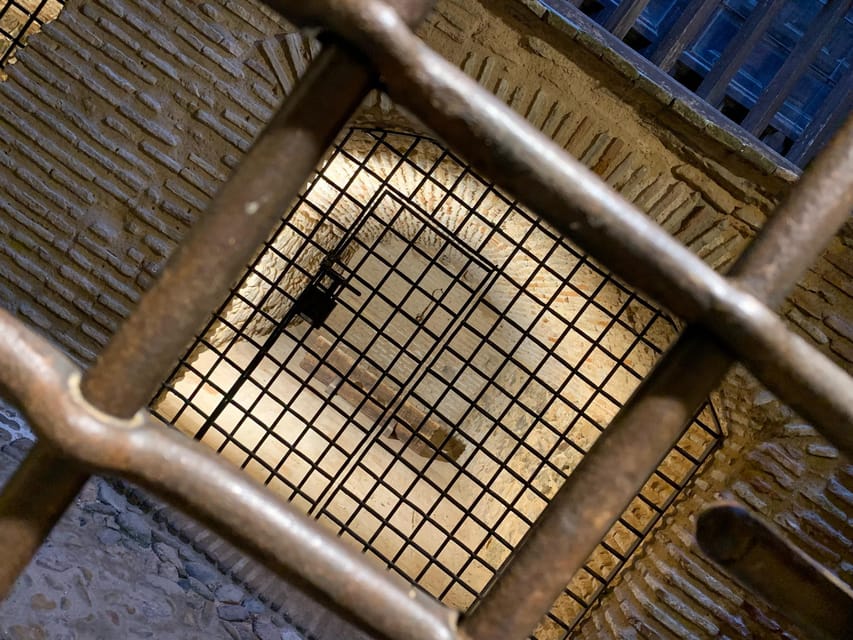
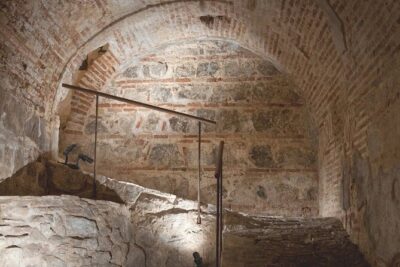
The first stop is Posada de la Hermandad, and this is where the tour turns darker. You’ll step into the Middle Ages dungeons of the Holy Brotherhood, described as the only ones still preserved in Toledo.
This part isn’t only about walls and chains. The guide focuses on prisoner daily life and the human side of confinement—how people were held, how routine worked, and what power looked like underground. You’ll also meet Mangas Verdes, the famous jailers associated with this story. That name matters because it makes the setting feel less like an abstract historical concept and more like a remembered world.
The practical angle: dungeon spaces can feel more restrictive than the brighter sites above. If you prefer open-air views, plan to steel yourself for a heavier mood here. The payoff is that it gives you contrast. Without this stop, the later Roman and ritual sites can start to feel like disconnected “things to see.” The dungeons help unify the tour around how daily life was controlled and structured.
Baños árabes del Cenizal: 10th-century hammam routines
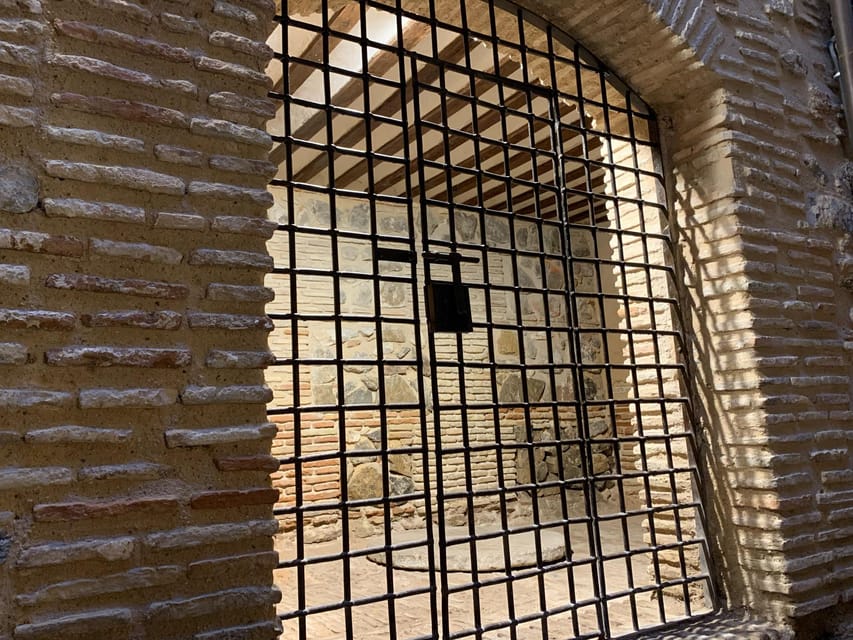
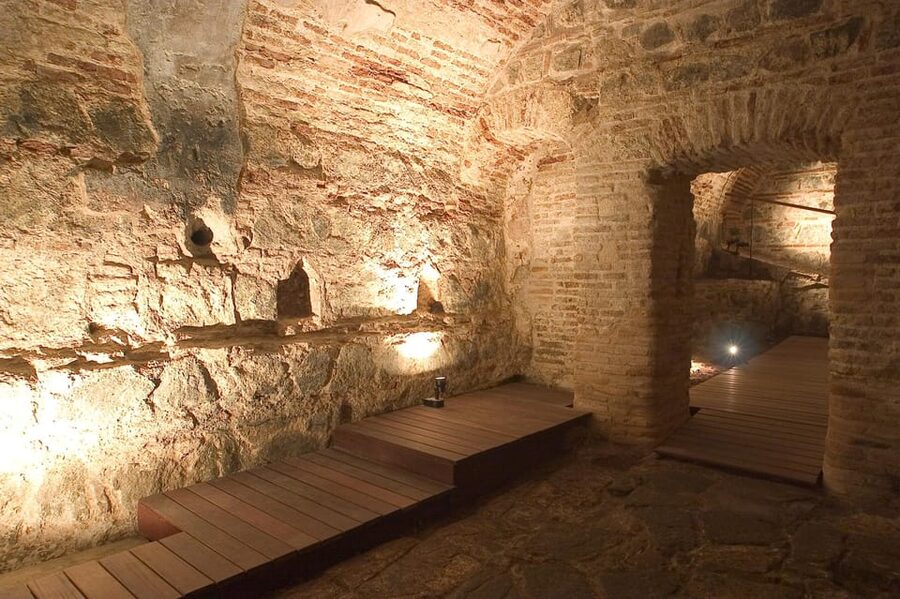
Next come the Baños árabes del Cenizal, tied to Tulaytula, Toledo from the Muslim era. This is one of the tour’s strongest “you can picture it” stops, because hammams weren’t just bathing spots. They were places for hygiene practices, religious rituals, and social life.
You’ll get guided access to the authentic hammam space and hear how bathing worked as a routine with meaning. The tour frames it as a practical system: washing wasn’t only cleanliness, it was also part of how people prepared for their day and for spiritual obligations.
There’s also a good reason this stop is so central to understanding Toledo’s “Three Cultures.” When you see a place designed around hygiene and ritual, you understand that coexistence wasn’t only about big politics. It was also about real habits—what people did with their bodies, their time, and their community.
A small consideration: because it’s underground and designed for bathing and ceremony, the environment can feel damp or dim compared to the street. Dress and expect accordingly.
A local guide takes the strain



Plaza del Salvador and Pozo del Salvador: water systems under drought pressure
Then you shift from ritual and routine to the city’s survival math: water. At Plaza del Salvador, you visit the Pozo del Salvador, and the guide explains the difference between a well and a cistern—two tools for getting drinking water to the top of the Toledo rock.
This is the kind of stop that turns history into something you can actually understand. Instead of thinking only about art or architecture, you’re thinking about supply. During droughts, the city had to deal with scarcity, and the tour shows how water storage and access were part of everyday planning.
Why I think this section is valuable: it gives context to why people built and maintained underground systems. You stop treating underground as “mysterious” and start treating it as essential infrastructure.
Also, it’s a great mental reset after the hammam. The dungeons are about control, the baths are about ritual and community, and then the water stop grounds everything in practical needs.
Casa del Judío: the 14th-century mikvah and Jewish community life
The tour’s Jewish Quarter stop centers on Casa del Judío and its mikvah, dating from the 14th century. A mikvah is not a decorative detail; it’s connected to ritual purity and community life. Here, the tour blends legend and history to help you understand how the space functioned for the Jewish community at the time.
What I like about this part is the tone. Instead of presenting Judaism as a list of dates, the guide talks about daily rhythms and the meaning of ritual spaces. You get the sense that the community had its own infrastructure underground, just as others did in their own cultural spheres.
If you’re the type who enjoys “small places with big significance,” this stop will fit you well. You’re not looking at a massive monument. You’re looking at a space with a job. That’s often where the most human understanding comes from.
And because it’s one of the controlled-access underground sites, you’re seeing more than what you’d likely find just walking by. The accredited guide keeps you oriented and makes sure the legends and history connect to what you’re standing in.
Roman Baths of Toletum: one of the largest in Hispania
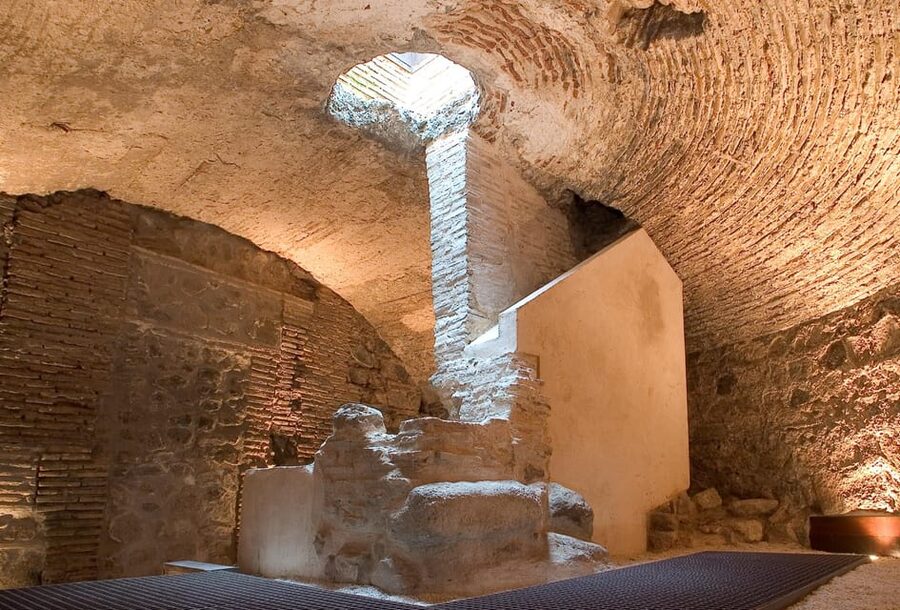
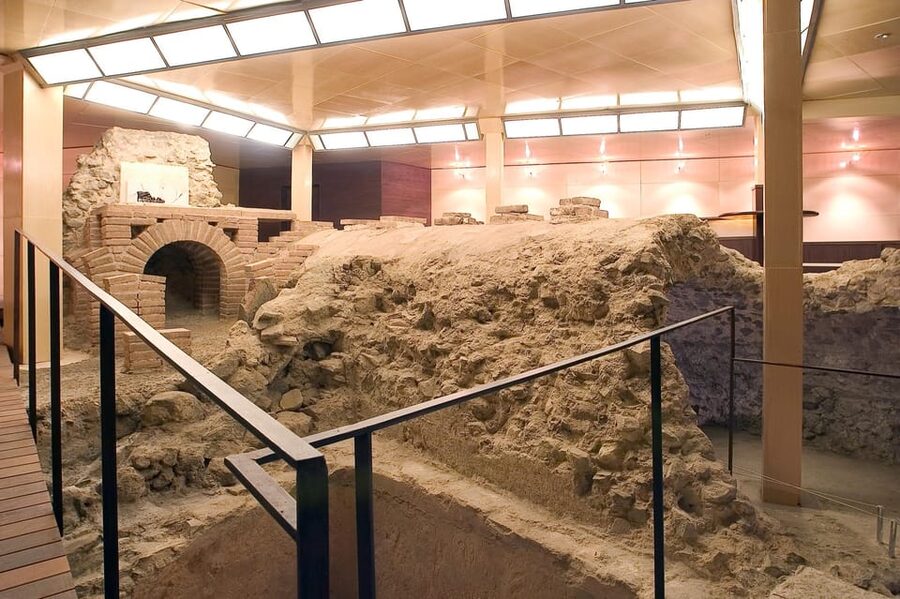
You’ll finish with the Roman baths of Toletum, at Termas Romanas. The tour calls them impressive and notes they were one of the largest in Hispania. That’s not a throwaway detail. It tells you you’re not just looking at leftover fragments. You’re looking at scale.
Roman baths were social and functional spaces—part bathing, part meeting place, part civic routine. With the guide’s help, you can start to imagine the daily flow: people using these facilities, the sense of public life mixed with personal care, and the power of Roman engineering underground.
This final stop is a smart choice for the tour’s overall pacing. The earlier sites cover Muslim-era baths, Jewish ritual water, medieval imprisonment, and municipal water storage. Dropping Roman baths at the end gives you a long historical echo: different cultures, different rules, but the same basic reality that people needed places for care and daily life.
You’ll end at Plaza Amador de los Ríos. That means you get a natural return to street level after stepping through layers of the city.
Price and value: what $15 buys in real access
At $15 per person for a 2-hour guided tour, you’re paying for two things: expert guidance and access to spaces that are otherwise hard or impossible to see without credentials.
A simple way to judge value here is to count what’s included. You’re not paying for one attraction. You’re paying for five underground sites, with guided time at each, plus storytelling that ties it all together. That’s a lot of “credit” for the money—especially if you’re trying to do more than the surface highlights of Toledo.
There’s also a practical benefit: the accredited guide helps you understand what you’re seeing fast. Underground sites can look confusing at first glance. When someone explains the function—hammam routines, mikvah ritual, water storage, dungeon life, Roman bath purpose—you save time and you leave with meaning.
The only potential mismatch is personal preference. If you only want open-air views, this may feel like too much underground for the time. But for anyone who likes history with function, this is strong value.
Who this tour suits best (and who should skip)
This is a good fit for you if you:
- Enjoy comparing different eras in one walk
- Like guided storytelling that connects daily life to architecture
- Want controlled access to underground spaces
It may not be your best choice if you:
- Need wheelchair access or have mobility limitations (this tour isn’t suitable)
- Want audio recording permission (audio recording is not allowed)
- Prefer tours fully in English (the live guide is Spanish, with some content in original language)
One more “think ahead” note: because it’s Spanish-language guided, bring a bit of patience. Even if your vocabulary is limited, the guide’s job is to make the sites understandable through explanation and what you see in front of you.
Should you book the Guided Tour of Toledo Underground?
If you’re in Toledo for a short time and you want more than surface sights, book it. This is one of those tours where the ticket price starts to make sense the minute you realize you’re stepping into multiple sites that normally require an accredited guide.
I’d especially recommend it if you like how the tour threads together the “Three Cultures” idea through everyday routines: bathing, ritual water, water storage, punishment, and Roman civic life. That approach is what makes the underground feel like a real city, not just a set of tunnels.
But if underground spaces are a problem for your body, skip it. And if you need an English-led experience or you rely on audio recording to learn, plan a different activity.
FAQ
How long is the Guided Tour of Toledo Underground?
It lasts about 2 hours.
Where does the tour start and end?
It starts at Plaza de Zocodover and finishes at Plaza Amador de los Ríos.
What underground sites are included?
You’ll visit five underground stops: Posada de la Hermandad (dungeons of the Holy Brotherhood), Baños árabes del Cenizal (Arab baths), Pozo del Salvador (well-cistern water site), Casa del Judío (mikvah), and Termas Romanas (Roman baths).
What language is the tour guide?
The live tour guide speaks Spanish, and some content may be shown in its original language.
Can I record audio during the tour?
No. Audio recording is not allowed.
Is the tour accessible, and can I cancel if plans change?
The tour is not suitable for people with mobility impairments or wheelchair users. For flexibility, it requires a minimum of 4 people to operate, and you can cancel up to 24 hours in advance for a full refund. There’s also a reserve now & pay later option available.
More Tours in Toledo
- Guided Walking Tour of Immortal Toledo
★ 5.0 · 1,116 reviews - Toledo Private Tour with Licensed Local Guide
★ 5.0 · 884 reviews - Toledo: City Sightseeing Hop-On Hop-Off Bus Tour & Extras
★ 4.3 · 683 reviews - Madrid: Full-Day Guided Tour of Toledo with Cathedral Visit
★ 4.6 · 647 reviews - Toledo: Three Cultures English Tour
★ 4.7 · 468 reviews - Night Guided Tour of Magical Toledo
★ 4.5 · 459 reviews
More Tour Reviews in Toledo
- Guided Walking Tour of Immortal Toledo
★ 5.0 · 1,116 reviews - Toledo Private Tour with Licensed Local Guide
★ 5.0 · 884 reviews - Toledo: City Sightseeing Hop-On Hop-Off Bus Tour & Extras
★ 4.3 · 683 reviews - Madrid: Full-Day Guided Tour of Toledo with Cathedral Visit
★ 4.6 · 647 reviews - Toledo: Tourist Bracelet with Entry to 7 Attractions
★ 4.3 · 597 reviews - Toledo: Three Cultures English Tour
★ 4.7 · 468 reviews
Down to Toledo for the Day
- Guided Walking Tour of Immortal Toledo
★ 5.0 · 1,116 reviews - Toledo Private Tour with Licensed Local Guide
★ 5.0 · 884 reviews - Toledo: City Sightseeing Hop-On Hop-Off Bus Tour & Extras
★ 4.3 · 683 reviews - Madrid: Full-Day Guided Tour of Toledo with Cathedral Visit
★ 4.6 · 647 reviews - Toledo: Tourist Bracelet with Entry to 7 Attractions
★ 4.3 · 597 reviews - Toledo: Three Cultures English Tour
★ 4.7 · 468 reviews
Just Added: New Toledo Tour Reviews


Toledo Day Trips from Madrid, compared.
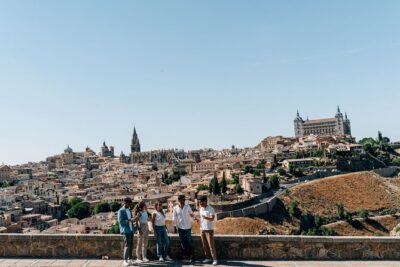 ★ 5.0Three Cities in One Day: Segovia, Avila and Toledo from MadridFrom $1268,402 reviews
 ★ 4.7Segovia and Toledo Tour, Alcazar, and CathedralFrom $487,797 reviews
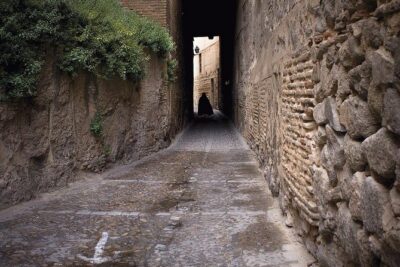 ★ 5.0Toledo Tour from Madrid: Cathedral, Synagogue & St. Tome’s ChurchFrom $816,784 reviews
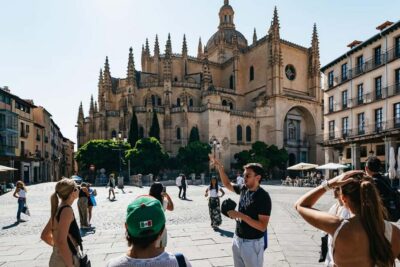 ★ 4.6Toledo & Segovia Tour w/ Cathedral, Alcazar & LunchFrom $465,846 reviews
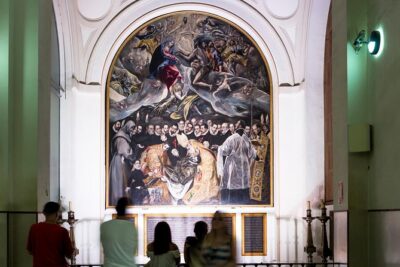 ★ 4.5Toledo Half or Full Day Tour with Optional Lunch from MadridFrom $645,807 reviews
 ★ 4.1From Madrid: Guided Day Trip to Toledo by BusFrom $405,280 reviews
 ★ 4.5Toledo & Segovia Tour with Cathedral and Alcazar Tickets & LunchFrom $454,046 reviews
 ★ 4.3From Madrid: Toledo Guided Day TripFrom $323,501 reviews
Browse the lists this tour appears in