
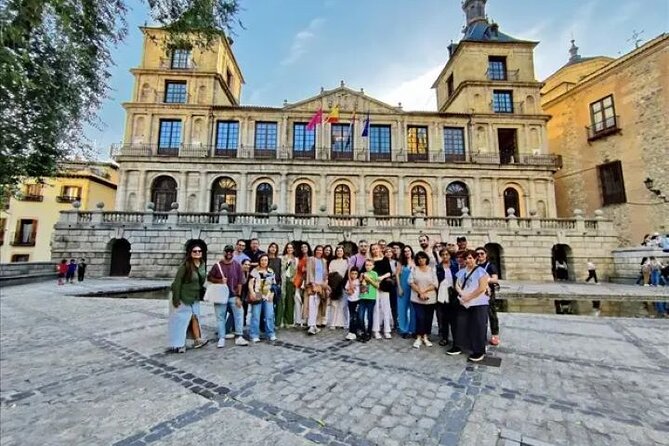
REVIEW · TOLEDO DAY TRIPS FROM MADRID
Guided English walking tour to the monuments of Toledo
Toledo doesn’t waste your time. In about 1 hour 45 minutes, this English walking tour links the city’s big sights with clear, street-level stories. I especially like the fast orientation it gives you, and the way stops are set up so you can keep exploring on your own afterward. One thing to consider: the route includes uphill walking, so comfy shoes matter.
I’ve also found this style of guided walk is a smart value in a city where everything feels close but still takes time to reach. With guides such as Paola or Carlos (and others who lead the tour), the best parts are the explanations that turn landmarks into something you can actually picture. The possible drawback is timing: if participation is low, the tour can be rescheduled or canceled, so last-minute changes can happen.
In This Review
- Key highlights at a glance
- A Fast Way to Understand Toledo’s Layout and Power
- Starting at Plaza de Zocodover: Your Toledo “Reset Button”
- Alcázar de Toledo: History in a Fortified Shape
- Plaza de la Magdalena and Toledo’s Trampantojos
- Mezquita de Tornerías: One of Toledo’s Oldest Mosque Stories
- Posada de la Hermandad: A Prison With a Past
- Plaza del Ayuntamiento: The Cathedral Area and the Three-Power Idea
- Santo Tomé and the Jewish Quarter: Stories You Can Walk Through
- Mirador de la Virgen de Gracia: View the Quarter From Above
- The University Quarter: How Learning Fits Into Toledo
- Plaza de San Vicente and the Church Story That Anchors the Area
- Iglesia de San Ildefonso (Jesuit Style) and Saint Ildefonso
- Casa Rodrigo de la Fuente: A 15th-Century Courtyard You Can Imagine
- Price and Logistics: Why This Costs What It Costs
- Pace, Walking Conditions, and What to Bring
- Who This Tour Fits Best
- Should You Book This English Monuments Tour?
- FAQ
- What is the duration of the Guided English walking tour to the monuments of Toledo?
- How much does the tour cost?
- Is the tour offered in English?
- Where does the tour start?
- Where does the tour end?
- What are some of the stops on the tour?
- Are monument entrances included in the tour price?
- Does the tour provide a mobile ticket?
- Is there a limit on group size?
- What is the cancellation policy?
Key highlights at a glance
- Plaza de Zocodover orientation in the first minutes, so you instantly get your bearings
- Mezquita de Tornerías as an easy stop that points you to Toledo’s layered past
- Posada de la Hermandad connects architecture to power and punishment
- Mirador de la Virgen de Gracia gives you a high payoff view of the Jewish quarter
- Courtyard at Casa Rodrigo de la Fuente shows a 15th-century Toledo you can feel in one glance
The centre on foot, other ways round
- Guided Walking Tour of Immortal Toledo★ 5.0 · 1,116 reviews
- Toledo City Walking Tour★ 4.5 · 125 reviews
- Toledo: Guided Walking Tour with Cathedral Ticket and Tour★ 4.2 · 98 reviews
- Private Jewish Walking Tour in Toledo★ 5.0 · 95 reviews
A Fast Way to Understand Toledo’s Layout and Power
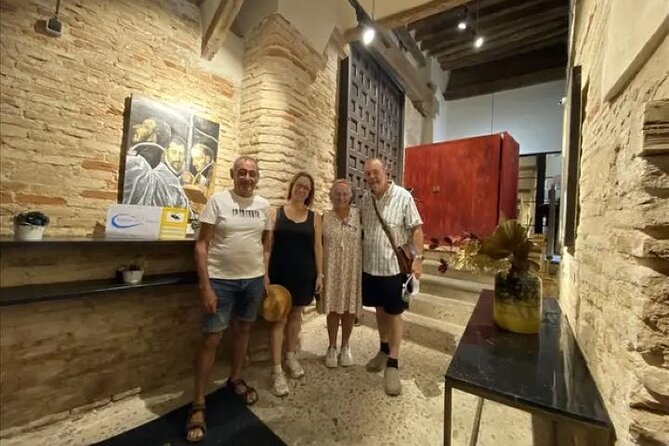
Toledo is one of those cities where you can wander for hours and still feel a bit lost. This tour solves that with a tight route that hits the main zones and the historical junctions. You start near the center of the action, then you move through key public spaces and religious landmarks that explain how the city organized itself.
The structure is simple. Short stop, key story, quick move to the next place. That pacing works well because it matches how Toledo is built: lots of stone lanes, small viewpoints, and sudden openings to plazas. In under two hours, you’ll have a mental map that makes the rest of your day easier.
Also, the tour is English-only, which matters here. You’ll be walking in a dense historic area where signs aren’t enough. If you prefer asking questions, this format gives you those chances at multiple stops.
Starting at Plaza de Zocodover: Your Toledo “Reset Button”
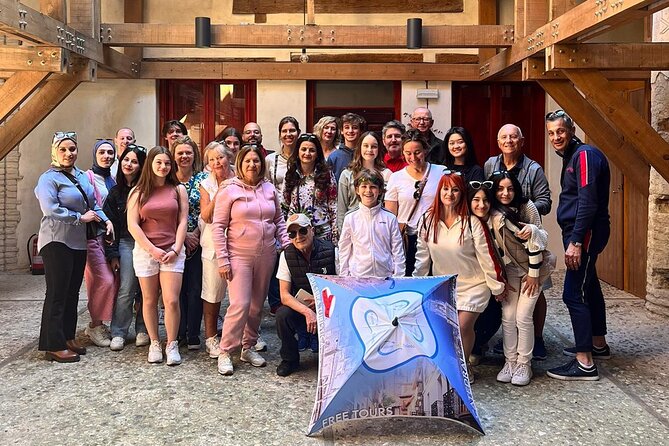
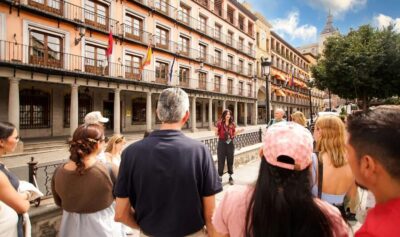
Most great Toledo days begin at Plaza de Zocodover, and this one does too. You’ll arrive at the main square and get a feel for why it’s stayed important from past social life to present-day gathering.
What I like about this start: it’s not just a pretty plaza. It’s your orientation tool. From here, the city’s layers start making sense—where power showed up, where people waited, and where different communities kept interacting.
It’s also a smart warm-up. The tour begins with an easy introduction before the more specific monuments kick in. Your guide can set the tone and explain what you’ll be seeing next, which helps you avoid that blank stare that sometimes happens when you reach a new city too fast.
Alcázar de Toledo: History in a Fortified Shape
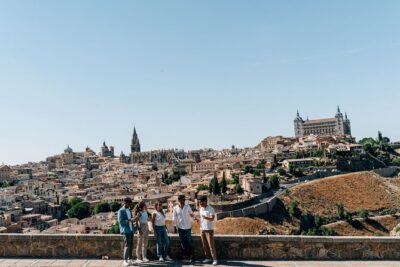
Next comes the Alcázar de Toledo. Even if you don’t go deep inside (monument entry isn’t included), the stop gives you a strong visual anchor. The Alcázar dominates the skyline and helps you understand why Toledo has always been a strategic place—high ground, strong walls, and a city that had to defend itself.
This is a useful stop if you want more than postcard photos. Your guide’s story at the Alcázar ties the site to the bigger sweep of Toledo’s history, so the building stops being a generic “castle” and starts behaving like a piece of the city’s logic.
Drawback to keep in mind: the time here is short. If you’re the type who wants to read every label and linger in every room, treat this as orientation plus context. You can always return later for a deeper visit on your own with a ticket.
Plaza de la Magdalena and Toledo’s Trampantojos
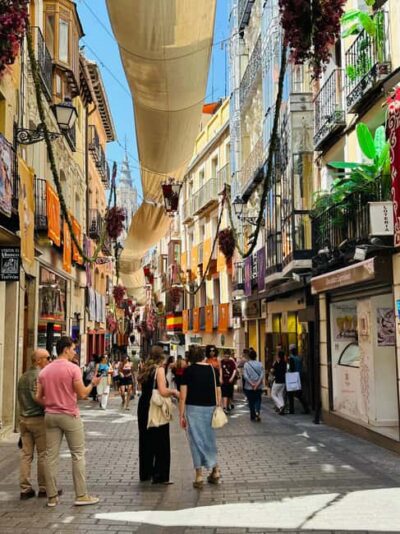
Plaza de la Magdalena is a quick stop, but it’s the kind that makes Toledo feel playful. You’ll encounter trampantojos, which are the illusion-style tricks that create visual moments you’d swear are something they aren’t.
In a tour built for history, this matters because it adds texture. Toledo isn’t only about war, faith, and power. It’s also about clever design and the way people shaped perception in public spaces.
Even in just a couple of minutes, you get an example of why Toledo’s streets feel theatrical. After the tour, you’ll start noticing similar details on your own: perspectives, painted effects, and the way architecture guides your eye.
South to Toledo, more ways to make the run




Mezquita de Tornerías: One of Toledo’s Oldest Mosque Stories
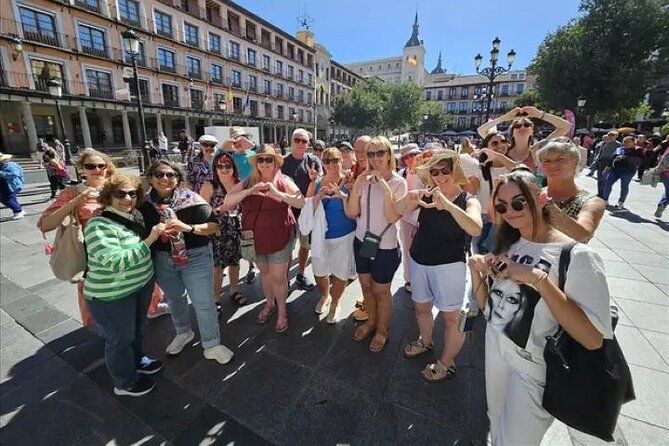
Then you’ll shift to Mezquita de Tornerías, described as one of the oldest mosques in the city. This stop is important because it shows Toledo’s multi-faith layers without making the walk feel like a textbook.
You’re given time to appreciate the building and the context. And if you decide you want to go further inside, you’ll need to plan that separately since entrance to monuments isn’t included as part of the tour price.
The value here is the framing. Many visitors see a historic structure and move on. A guided stop helps you connect the mosque to the city’s broader timeline and the physical space it occupies in the old town.
Posada de la Hermandad: A Prison With a Past
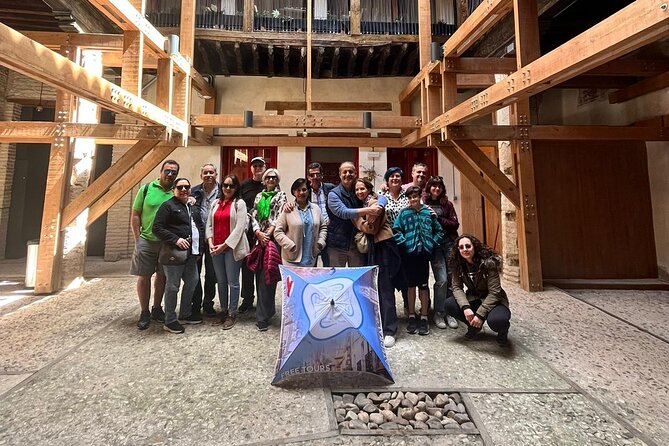
Next up is Posada de la Hermandad, presented as the prison of the Catholic Monarchs. That description changes how you see the place. It stops being just another old building and becomes a clue about how authority worked in Toledo—where power gathered, where rules were enforced, and how the city functioned day to day.
The stop is brief, but it lands a strong idea: different sites had different jobs. Squares held public life. Religious buildings shaped spiritual authority. Fortresses and prisons represented political control.
If you like tours that explain what a place was used for—not only what it looks like—this is one of the moments that sticks.
Plaza del Ayuntamiento: The Cathedral Area and the Three-Power Idea
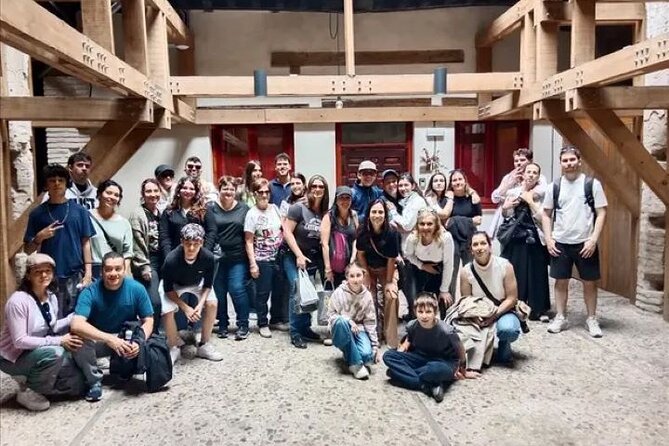
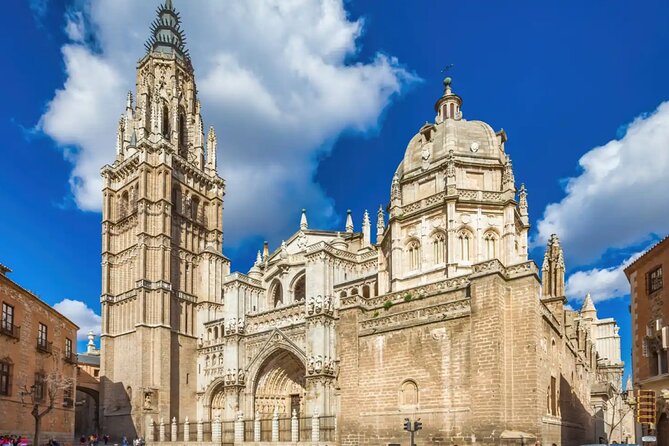
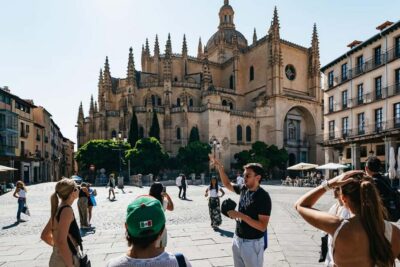
At Plaza del Ayuntamiento, the tour steers you toward Toledo’s most famous landmark: the Cathedral. This is the part of the walk where the city’s “center of gravity” becomes obvious. You’re in a square tied to civic life, and the Cathedral dominates the scene.
Your guide connects the symbolism in a memorable way: the tour points to how the city’s political, justice, and Christian power are all united in this area. That’s a strong lens for understanding why plazas and major buildings weren’t just decoration—they were the public scoreboard of who held authority.
Time here is about letting you absorb the layout and understand how Toledo’s big institutions relate to each other in space. If you want cathedral views, plan to come back later, because the walk-time isn’t built for a long interior visit.
Santo Tomé and the Jewish Quarter: Stories You Can Walk Through
Santo Tomé is part of the Jewish neighborhood focus on this route. From there, you’ll continue with the area’s history and move toward a viewpoint that makes the geography of the quarter feel real.
This section works especially well if you want Toledo beyond the main monuments. You’ll start noticing the small-scale street pattern—the way the city folds in on itself—and you’ll understand how neighborhoods held identity while still living close together.
The tour doesn’t ask you to memorize names. It gives you enough context to recognize the Jewish quarter when you pass through it on your own later.
Mirador de la Virgen de Gracia: View the Quarter From Above
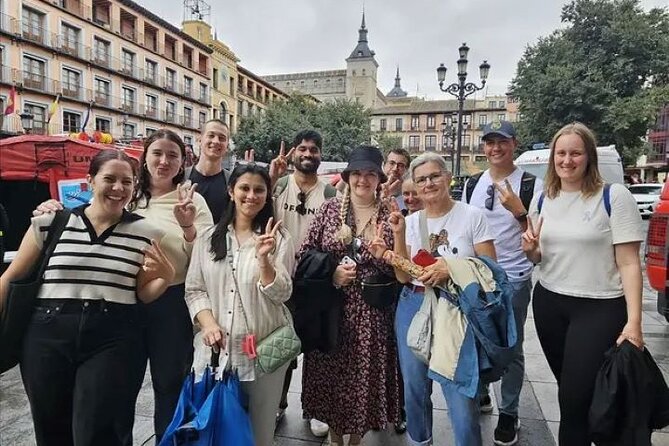
Then you reach Mirador de la Virgen de Gracia, where you can see a large part of the Jewish quarter. This is the high payoff moment. You get perspective without needing to hunt for it.
What makes a mirador stop valuable on a short tour is simple: you’re seeing the city’s shape. When you’ve been weaving through narrow lanes, a viewpoint helps your brain stitch things together into one picture.
If you want to take photos, this is the time. If you want to understand the city, this is the time too. Either way, it’s one of those stops that makes the next hour feel easier.
The University Quarter: How Learning Fits Into Toledo
You’ll also hear about the history of the university as you move through this part of town. The key benefit of adding this kind of stop is that it broadens the city’s story beyond churches and forts.
Toledo isn’t only about buildings. It’s about roles: thinkers, teachers, institutions. When your guide connects learning to the city’s physical spaces, you’ll start looking at old streets differently—like they’re part of a system, not random bends in stone.
Because the time here is short, think of it as a “direction finder.” It helps you decide what you want to research more once you’re on your own.
Plaza de San Vicente and the Church Story That Anchors the Area
At Plaza de San Vicente, the focus is the history of the Church of San Vicente. This is one of the stops that helps you slow down for a moment. Instead of treating churches like scenery, you’re given a reason to care about them in context.
This is also a nice reset point in the walk. The tour keeps moving, but you get another small window to connect architecture to the kind of community life that clustered around it.
If you enjoy walking tours where each stop adds a new layer of meaning, you’ll probably find this section one of the more satisfying ones, even if it’s not the biggest named monument on the route.
Iglesia de San Ildefonso (Jesuit Style) and Saint Ildefonso
Next is Iglesia de San Ildefonso Jesuitas, tied to the story of Saint Ildefonso. This is where the tour highlights patronage and identity—how religious figures and institutions shaped what people built and celebrated.
Even with limited time, you’ll get a sense of what this place represented. The stop is designed to connect a name you might have heard with the physical building you’re standing next to.
Practical note: because monument entry isn’t included, expect your time to be focused on the exterior and your guide’s explanation. If you want an interior visit, you’ll need to add it separately.
Casa Rodrigo de la Fuente: A 15th-Century Courtyard You Can Imagine
The final major architectural moment is Casa Rodrigo de la Fuente. Here, you’ll see something unique: a Toledan courtyard from the 15th century and the house connected with Rodrigo de la Fuente, described as one of the more social figures of the 16th century.
This stop is a standout because it shifts the tour from public power to private life. Courtyards tell you how people actually moved through space—light, air, and daily routines—while big monuments tell you how the city organized itself outwardly.
Even if you’re not an architecture nerd, courtyards tend to land well on short tours. They’re easy to picture, and they make Toledo feel lived-in rather than frozen in time.
Price and Logistics: Why This Costs What It Costs
At $13.30 per person for about 1 hour 45 minutes, this tour is priced for value. You’re not paying for a long museum day. You’re paying for a guide to stitch together the city’s big ideas and help you navigate the old town efficiently.
That matters in Toledo because monuments are spaced closely, but not evenly. A guide reduces wasted time. You’ll spend less energy guessing where to go next and more energy understanding what you’re seeing.
A key detail: monument entry isn’t included. So you’ll still want to budget separately if you decide to go inside the Alcázar, mosque areas, cathedral, or other interior sites on your own. The tour is best seen as context and orientation, not as an all-in ticket.
Group size is capped at 50 travelers, and that tends to keep the walk manageable. Still, this is a walking tour, so expect some waiting at stops and plan for a steady pace.
Pace, Walking Conditions, and What to Bring
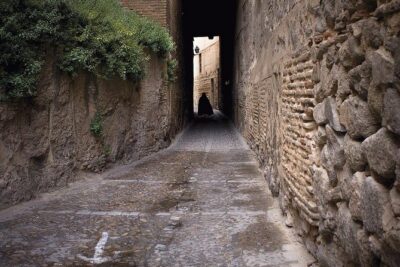
This is an old-town walk, so plan like one. Expect some uphill walking, narrow lanes, and uneven stone. The good news is that the stops are short—2 to 15 minutes depending on the location—so you get frequent little breaks built into the schedule.
Bring:
- comfortable shoes with grip
- water for warmer days
- a phone with offline maps if you want to go off-script afterward
If you’re sensitive to crowds or you prefer quieter streets, the tour format may feel busy at plazas like Zocodover and Ayuntamiento. But it’s brief, and the tradeoff is that you get a guided map of the city’s main story.
Listening matters too. One review highlighted how helpful a headset can be for hearing clearly. If you need that support, ask at the start of the tour whether a headset system is available.
Who This Tour Fits Best
This is a great match if you:
- have only a day (or a half day) in Toledo and want orientation fast
- like history explained in plain language while you walk
- want ideas for where to return later for interior visits
- prefer English guidance in a city where details can be easy to miss on your own
It may be less ideal if you:
- want a long, museum-style experience with extended time inside monuments
- need fully step-free routes (the tour says most travelers can participate, but specific mobility details aren’t spelled out)
- expect every stop to be a deep dive into interiors
Should You Book This English Monuments Tour?
Yes—if your goal is to get your bearings fast and leave Toledo with a clear sense of where to return. The big strength is how the route connects squares, faith landmarks, and neighborhoods into one understandable walk. With guides such as Paola, Carlos, Juan, Marion, Alberto, and Barbara (different dates, different guides), the stories are a big part of why the tour works.
Book it early enough that you’re not relying on last-minute timing. If you’re planning to go inside major sites afterward, check tickets in advance so the tour’s context turns into real time in the places you care about most.
FAQ
What is the duration of the Guided English walking tour to the monuments of Toledo?
It runs for about 1 hour 45 minutes.
How much does the tour cost?
The price is $13.30 per person.
Is the tour offered in English?
Yes, it is offered in English.
Where does the tour start?
You meet at C. Armas, 3, 45001 Toledo, Spain.
Where does the tour end?
It ends back at the starting meeting point.
What are some of the stops on the tour?
The tour includes Plaza de Zocodover, Alcázar de Toledo, Plaza de la Magdalena, Mezquita de Tornerías, Posada de la Hermandad, Plaza del Ayuntamiento, Santo Tomé, Mirador de la Virgen de Gracia, Plaza de San Vicente, Iglesia de San Ildefonso Jesuitas, and Casa Rodrigo de la Fuente.
Are monument entrances included in the tour price?
No, entrance to monuments is not included.
Does the tour provide a mobile ticket?
Yes, you receive a mobile ticket.
Is there a limit on group size?
Yes, the tour has a maximum of 50 travelers.
What is the cancellation policy?
Free cancellation is available up to 24 hours in advance for a full refund. If you cancel less than 24 hours before the start time, the amount you paid is not refunded.
More Tour Reviews in Toledo
- Guided Walking Tour of Immortal Toledo
★ 5.0 · 1,116 reviews - Toledo Private Tour with Licensed Local Guide
★ 5.0 · 884 reviews - Toledo: City Sightseeing Hop-On Hop-Off Bus Tour & Extras
★ 4.3 · 683 reviews - Madrid: Full-Day Guided Tour of Toledo with Cathedral Visit
★ 4.6 · 647 reviews - Toledo: Tourist Bracelet with Entry to 7 Attractions
★ 4.3 · 597 reviews - Toledo: Three Cultures English Tour
★ 4.7 · 468 reviews
Down to Toledo for the Day
- Guided Walking Tour of Immortal Toledo
★ 5.0 · 1,116 reviews - Toledo Private Tour with Licensed Local Guide
★ 5.0 · 884 reviews - Toledo: City Sightseeing Hop-On Hop-Off Bus Tour & Extras
★ 4.3 · 683 reviews - Madrid: Full-Day Guided Tour of Toledo with Cathedral Visit
★ 4.6 · 647 reviews - Toledo: Tourist Bracelet with Entry to 7 Attractions
★ 4.3 · 597 reviews - Toledo: Three Cultures English Tour
★ 4.7 · 468 reviews
Walk the Heart of Madrid
- Guided Walking Tour of Immortal Toledo
★ 5.0 · 1,116 reviews - Toledo City Walking Tour
★ 4.5 · 125 reviews - Toledo: Guided Walking Tour with Cathedral Ticket and Tour
★ 4.2 · 98 reviews - Private Jewish Walking Tour in Toledo
★ 5.0 · 95 reviews - Toledo private walking tour
★ 5.0 · 76 reviews - Toledo: Three Cultures Walking Tour in Spanish
★ 4.4 · 66 reviews
Just Added: New Toledo Tour Reviews


Toledo Day Trips from Madrid, compared.
 ★ 5.0Three Cities in One Day: Segovia, Avila and Toledo from MadridFrom $1268,402 reviews
 ★ 4.7Segovia and Toledo Tour, Alcazar, and CathedralFrom $487,797 reviews
 ★ 5.0Toledo Tour from Madrid: Cathedral, Synagogue & St. Tome’s ChurchFrom $816,784 reviews
 ★ 4.6Toledo & Segovia Tour w/ Cathedral, Alcazar & LunchFrom $465,846 reviews
 ★ 4.5Toledo Half or Full Day Tour with Optional Lunch from MadridFrom $645,807 reviews
 ★ 4.1From Madrid: Guided Day Trip to Toledo by BusFrom $405,280 reviews
 ★ 4.5Toledo & Segovia Tour with Cathedral and Alcazar Tickets & LunchFrom $454,046 reviews
 ★ 4.3From Madrid: Toledo Guided Day TripFrom $323,501 reviews
Browse the lists this tour appears in