
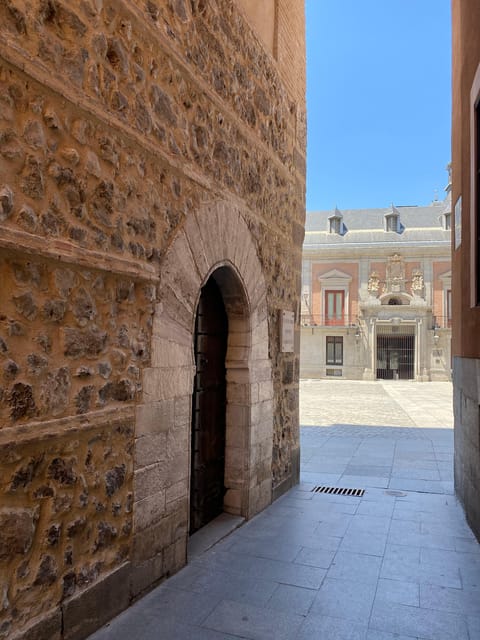
REVIEW · HISTORICAL TOURS
Architecture Tour: Old Historic Madrid with an architect
Madrid reads like a stack of eras. This architect-led tour links the urban plan to the buildings so you see why Old Madrid looks the way it does. You’ll trace the city from the time Arabs founded it in the late 9000s, through Alfonso VI’s conquest, the Habsburg-Austrias spotlight, and the Bourbon makeover.
Two things I really like: you get a clear architecture-first storyline (not just dates), and the Austrias-era areas feel unusually tangible on foot—especially around the royal core. One possible drawback: it’s not for low-mobility visitors, and you’re doing a fair bit of walking through historic streets.
If you love cities where power leaves physical fingerprints, this one clicks. The guide is local and can explain Madrid urbanism, architecture, history, and politics as one connected picture, with English or Spanish interpretation. You should still go in knowing this is about seeing and understanding, not lounging.
In This Review
- Key things worth knowing before you go
- Why old Madrid’s layers make sense in 3.5 hours
- Meeting at Teatro Real and launching into royal-Madrid context
- Plaza de Oriente to the Royal Palace: the power shift you can read
- Almudena Cathedral and San Nicolás: sacred architecture with a city pulse
- Arab Wall remnants and the Christian wall era: the city’s boundary lines
- Plaza de la Villa and San Miguel Market: where civic life meets daily energy
- Plaza Mayor at the end: the city’s public room
- Guide style: what you gain when the leader thinks like an architect
- Price and logistics: what $387 per group buys you
- So, should you book this Old Historic Madrid architecture tour?
- FAQ
- How long is the architecture tour?
- Where does the tour start?
- Is the Royal Palace interior included?
- What’s included in the price?
- What languages is the guide available in?
- Do I need to pay for drinks or snacks during the tour?
- Is the tour wheelchair accessible?
Key things worth knowing before you go
- Architect-led explanations that connect street layout to real buildings and political shifts
- Austrias-Hasburgs splendor around the royal center, framed in plain, visual terms
- Historic wall remains and the moment the city changes from Arab fortifications to Christian expansion
- Plaza de la Villa to Plaza Mayor stops that show how civic life worked before modern Madrid
- San Miguel Market as an easy, optional refresh point after walking through the old lanes
Further into the old Madrid
- Madrid Essential: Historic Center, Plaza Mayor & Royal Palace★ 5.0 · 6,416 reviews
- Madrid Tapas & Taverns Small Group Food & History Tour★ 5.0 · 2,664 reviews
- Madrid Historical Tour with Local Guide in Eco Tuk Tuk Private★ 5.0 · 876 reviews
- Madrid Historic Centre Food Tour with Authentic Tapas & Wines★ 5.0 · 814 reviews
Why old Madrid’s layers make sense in 3.5 hours
Madrid can feel like a collage until someone gives it a structure. That’s where this tour wins: it treats the city like a timeline you can physically follow. You start with the origins—Alcázar-era Madrid after Arab foundation—and then keep moving forward as ruling powers reshape the capital.
The best part is how the story stays architectural. Instead of a random sequence of monuments, you’re guided through how Madrid grew, where it tightened, and what regimes prioritized. You see why certain areas feel formal and royal, while others feel more everyday and gritty—like the old tavern lanes of Cava Baja.
And because the whole thing is about urbanism plus architecture, you end with mental maps, not just photos. Even if you’re not an architect, you’ll start noticing things like sightlines, square placement, and how walls directed movement.
Meeting at Teatro Real and launching into royal-Madrid context
The tour kicks off at the entrance of the Starbucks on a corner of the Royal Theater (Teatro Real). That’s a convenient anchor point. You’ll start in the royal cultural zone, which matters because it sets up how Madrid’s most official spaces got their gravitas.
The first scheduled stop includes a photo moment and guided time focused on the Royal Theater. The point here isn’t just the building itself; it’s the political and cultural logic behind it. Madrid’s royal core keeps reappearing as the city’s “decision center,” and the tour keeps reminding you of that.
From there, you head toward Plaza de Oriente with guided time. This square is the kind of place where architecture isn’t separate from politics. It’s a stage, and it helps you understand how power likes to be seen from specific viewpoints.
Plaza de Oriente to the Royal Palace: the power shift you can read
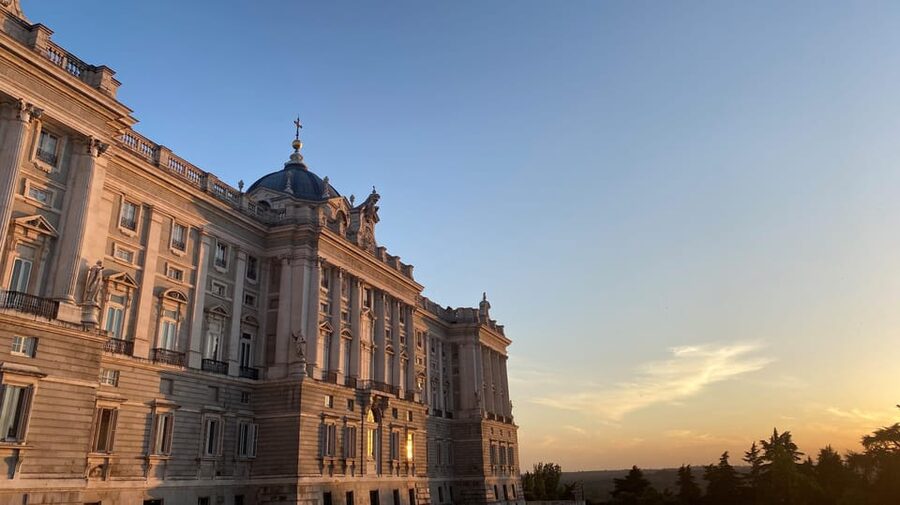
Plaza de Oriente leads naturally to the Royal Palace of Madrid (you’ll get guided time around it). One key expectation: you will not visit the interior of the Royal Palace. Still, the exterior area is enough to tell a story about how the monarchy wanted Madrid to look and function.
Here’s what makes this stop valuable: you’re not just looking at a landmark. You’re connecting a moment in history to a construction decision. The tour frames how Felipe V ordered the Royal Palace as it’s known today, after earlier phases of Madrid’s growth.
You also get a design-focused detour connected to the Royal Collections museum complex, including views toward Casa de Campo forest. The museum is noted as being designed by Tuñón and Mansilla. Even if you’re not a museum person, the viewpoint component is a smart way to show how the city relates to nearby green space.
Along the way, the architectural explanations help you notice something practical: Madrid’s official spaces aren’t random; they’re positioned for visibility, access, and ceremony. That’s the kind of “why” you’ll carry into the rest of your walk.
Almudena Cathedral and San Nicolás: sacred architecture with a city pulse
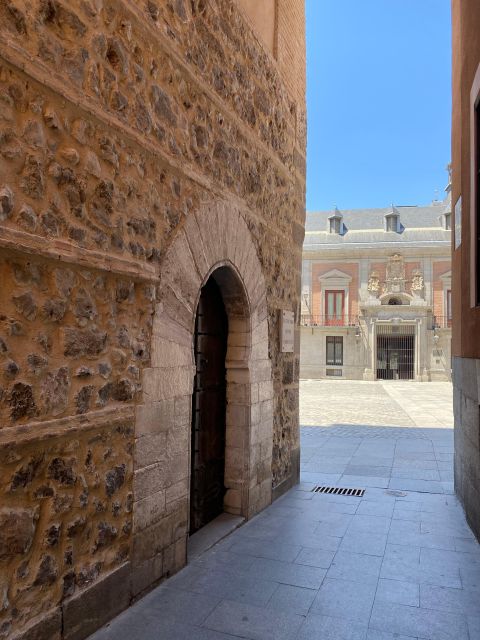
After the royal core, the tour steers toward religious landmarks, starting with a pass by Iglesia de San Nicolás. This is a shorter moment, more like a visual reference than a long stop, but it matters because it reminds you that Madrid’s architectural identity isn’t only palaces and theaters.
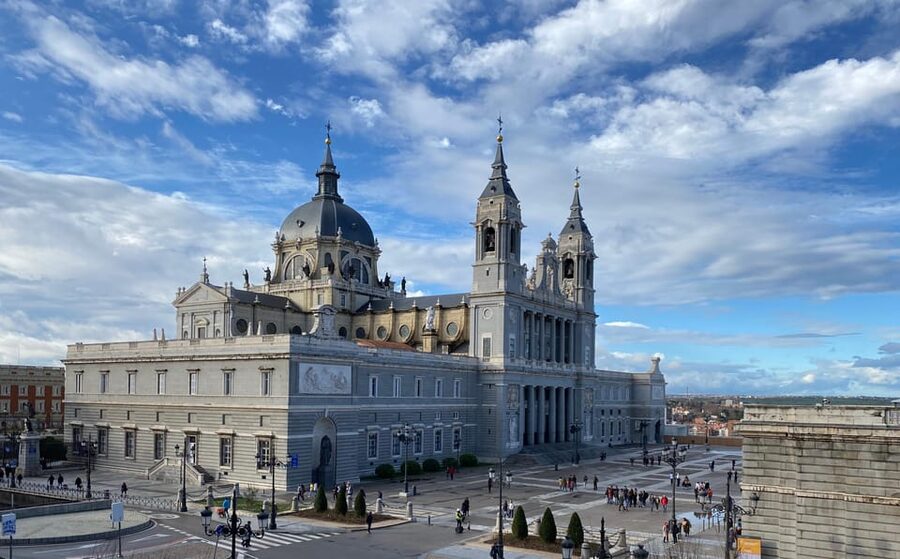
Then you move to Almudena Cathedral for guided time. The cathedral is one of those buildings that can feel like it belongs to a different version of time than the street around it. That’s why it works well inside an architect-led narrative. You’re learning how different eras expressed faith through architecture, while the city kept changing its governing priorities.
In a tour like this, churches become more than pretty stops. They’re proof of how Madrid’s social life evolved, where people gathered, and how design signaled importance.



Arab Wall remnants and the Christian wall era: the city’s boundary lines
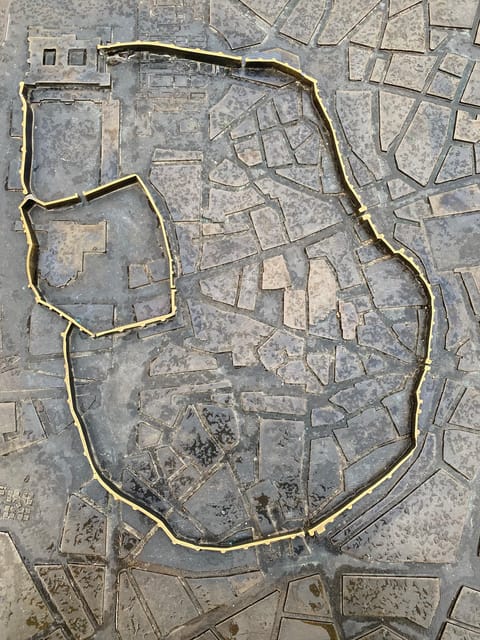
One of the most compelling moments is the Arab Wall sightseeing stop. You’ll spend guided time looking at remains that show Madrid’s earlier defensive logic. This is the kind of thing you can walk past on your own without realizing what it represents. With a guide, you start seeing the city’s boundaries as physical and political.
You then continue the story toward the remains of an SXII Christian wall era. Crossing through Cava Baja (known for old taverns) makes this part feel real instead of textbook-ish. The historic lanes help you understand the city’s transition: from fortified control to everyday street life building up along older lines.
This is also where the architecture-first approach shines. Walls aren’t just ruins; they’re the reason streets grew the way they did. Once you learn that, you’ll start noticing how areas channel pedestrian flow.
Plaza de la Villa and San Miguel Market: where civic life meets daily energy
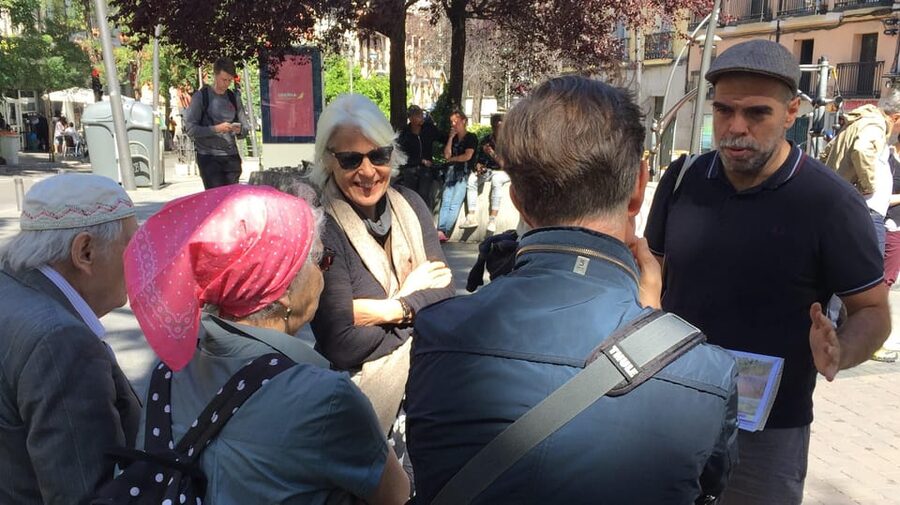
The walk includes Plaza de la Villa, with time to wander. The big value here is context. This square connects you to earlier municipal life—the old Town Hall area—which explains why certain plazas in Madrid keep acting as social and administrative centers.
You then head to Market of San Miguel for a guided stop. This is the moment where the tour turns practical. The market is a good place to take a breath and grab a drink if you want. Drinks or snacks aren’t included, but the stop makes it easy to refuel without adding an extra detour.
What I like about including this market stop is that it grounds the architecture story. It shows you how historic spaces stay useful. Madrid didn’t freeze in the past; it adapted. You’ll feel that shift without anyone needing to say it out loud.
Plaza Mayor at the end: the city’s public room
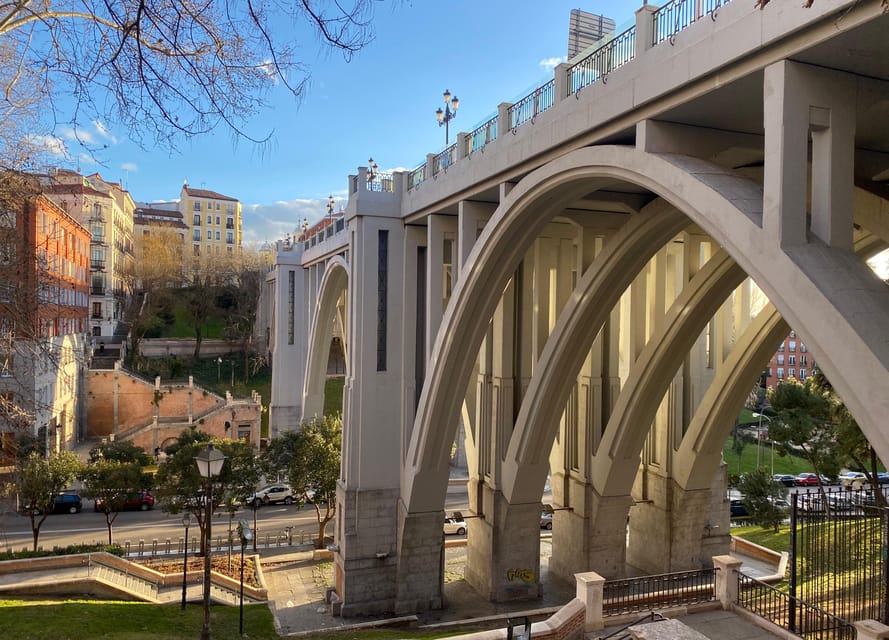
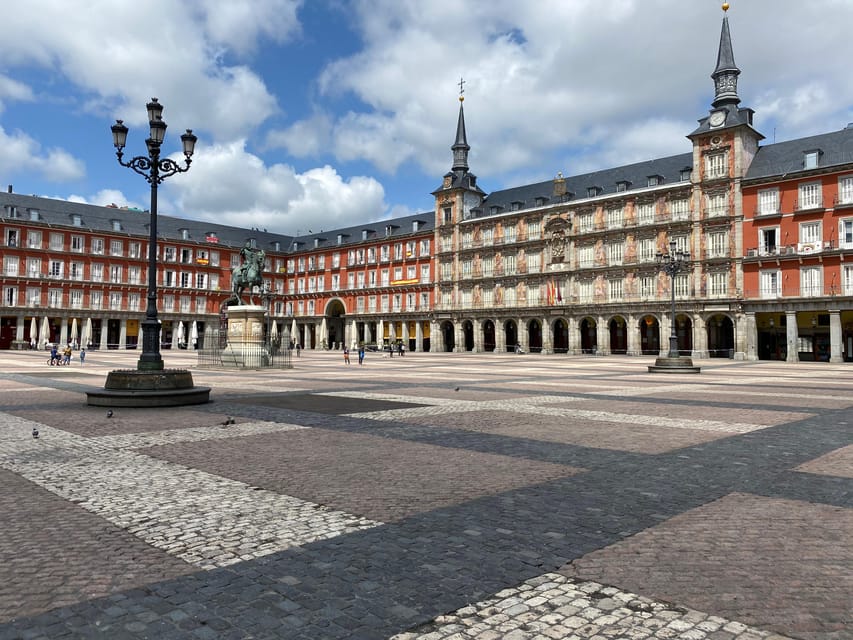
You finish back at Plaza Mayor, which gets guided time. This square is described as the main square and a center of social and commercial life in the past. That’s accurate, and it’s also why the ending works.
By the time you reach Plaza Mayor, you’ve already seen royal power spaces, sacred architecture, and defensive boundaries. Plaza Mayor ties them together through everyday life. It’s where the city met itself: commerce, gatherings, and the public rhythm of Madrid before modern routines took over.
If you’re the kind of person who likes to understand a place like a system, this ending helps you build the full picture. You’ll probably leave thinking about how streets, walls, squares, and major institutions still influence how people move today.
Guide style: what you gain when the leader thinks like an architect
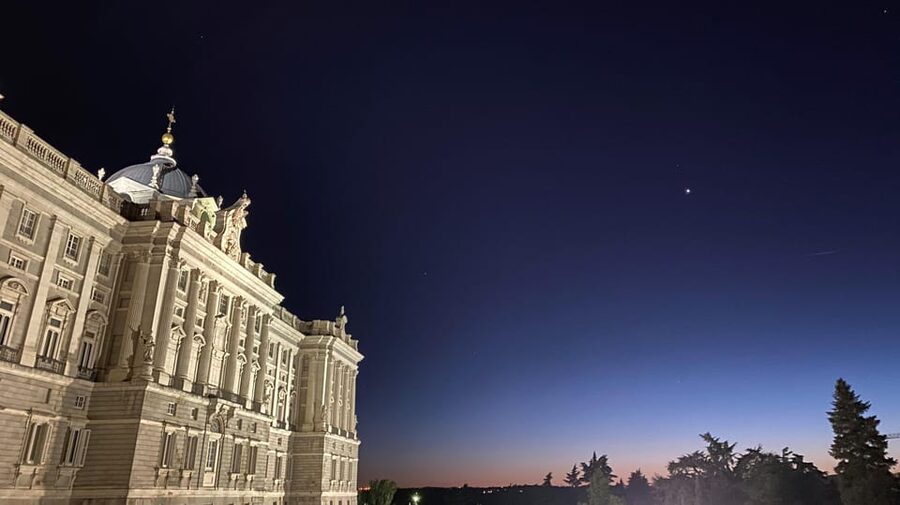
The biggest praised feature here is the guide. In particular, Emilio (one of the hosts you may encounter) is highlighted for strong historical knowledge and clear explanations. The overall takeaway is consistent: you get lots of insight, and it stays tightly focused on architecture rather than drifting into generic sightseeing.
For your benefit, that focus matters. If you’re a serious architecture lover, you’ll appreciate the attention to how different ruling periods expressed priorities in stone and space. If you’re more casual, you still won’t feel lost, because the guide frames the buildings as part of how Madrid functioned.
Also, this is a private group. That changes the vibe. You can ask direct questions about details you notice on the walk—like how a wall line affected a street, or why a certain square became important. It’s a better setting for real conversation than a big bus tour.
Price and logistics: what $387 per group buys you
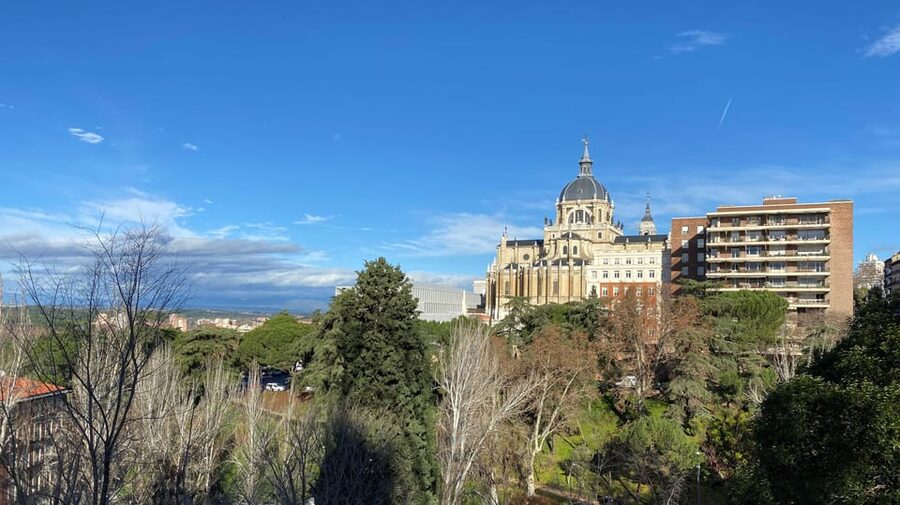
The price is $387 per group, listed as up to 1. In plain terms, you’re paying for a private, guided architecture session. If you’re going solo and want expert attention without sharing your guide with a crowd, this can feel like solid value.
What’s included is straightforward: the guide fee and entrance to churches. You’ll notice that the tour is built around stops that make sense with that inclusion—especially church interiors where allowed—while the Royal Palace interior is not part of the visit.
What’s not included is also practical: drinks or snacks, plus personal expenses. Since there’s a stop at San Miguel Market, you can choose how much to spend. If you want a full meal, plan it separately.
Duration is about 3.5 hours, so you get an efficient, concentrated sweep of the historic core. It’s long enough to learn the story, short enough not to feel like a half-day sacrifice.
Practical tip: wear shoes you trust. This isn’t described as wheelchair-friendly, so comfortable walking is the real requirement. Also bring weather gear: warm clothes in winter, and in summer sun protection like sunglasses and a hat, plus cold water.
So, should you book this Old Historic Madrid architecture tour?
I think it’s a good booking if you want Old Madrid to make sense in layers. If you care about how politics shapes the built environment—Arab beginnings, medieval walls, Habsburg-Austrias splendor, and Bourbon reworking—this tour gives you a coherent path through it all.
Skip it if you hate walking or you need wheelchair access, since it’s listed as not suitable for wheelchair users. Also skip it if you expect deep museum time, because you’re not going inside the Royal Palace and the focus stays on guided architecture and context.
If you’re an architecture fan, a history nut, or just the kind of person who studies façades for fun, this is one of the better ways to spend a few hours in Madrid. You’ll come away seeing the city as a planned argument between eras, not a pile of landmarks.
FAQ
How long is the architecture tour?
It lasts about 3.5 hours.
Where does the tour start?
The meeting point is at the entrance of the Starbucks on a corner of the Royal Theater.
Is the Royal Palace interior included?
No. The tour does not visit the interior of the Royal Palace.
What’s included in the price?
The included items are the guide fee and entrance to churches.
What languages is the guide available in?
The live tour guide is available in English and Spanish.
Do I need to pay for drinks or snacks during the tour?
Drinks and snacks are not included. There is a stop at San Miguel Market where you can have a drink if you want.
Is the tour wheelchair accessible?
No. It is not suitable for wheelchair users.
The Old Capital, Toured Properly
- Madrid Essential: Historic Center, Plaza Mayor & Royal Palace
★ 5.0 · 6,416 reviews - Madrid Tapas & Taverns Small Group Food & History Tour
★ 5.0 · 2,664 reviews - Madrid Historical Tour with Local Guide in Eco Tuk Tuk Private
★ 5.0 · 876 reviews - Madrid Historic Centre Food Tour with Authentic Tapas & Wines
★ 5.0 · 814 reviews - Madrid Historical Walking Tour
★ 5.0 · 721 reviews - Madrid in a Day Tour:Royal Palace, Historic Center & Prado Museum
★ 5.0 · 628 reviews
More Tours in Madrid
- Madrid: Tour Bernabéu Entry Ticket
★ 4.5 · 21,573 reviews - Madrid: Panoramic Route City Tour
★ 4.1 · 12,259 reviews - Avila & Segovia Tour with Tickets to Monuments from Madrid
★ 5.0 · 9,762 reviews - Madrid: Royal Palace Expert Guided Tour with Skip-the-Line
★ 4.7 · 8,407 reviews - Madrid: Segovia and Toledo Tour, Alcazar, and Cathedral
★ 4.7 · 7,797 reviews - Toledo Tour from Madrid: Cathedral, Synagogue & St. Tome’s Church
★ 5.0 · 6,784 reviews
More Tour Reviews in Madrid
- Madrid: Tour Bernabéu Entry Ticket
★ 4.5 · 21,573 reviews - Madrid: Prado Museum Entry Ticket
★ 4.6 · 20,699 reviews - Madrid: “Emociones” Live Flamenco Performance
★ 4.8 · 12,866 reviews - Madrid: Panoramic Route City Tour
★ 4.1 · 12,259 reviews - Madrid: Live Flamenco Show with Food and Drinks Options
★ 4.5 · 9,901 reviews - Avila & Segovia Tour with Tickets to Monuments from Madrid
★ 5.0 · 9,762 reviews
Just Added: New Madrid Tour Reviews


Historical Tours, compared.
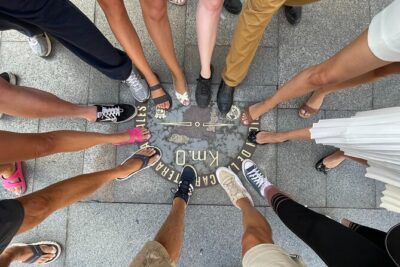 ★ 5.0Madrid Essential: Historic Center, Plaza Mayor & Royal PalaceFrom $36,416 reviews
 ★ 5.0Madrid Tapas & Taverns Small Group Food & History TourFrom $952,664 reviews
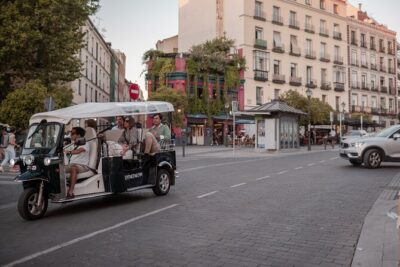 ★ 5.0Madrid Historical Tour with Local Guide in Eco Tuk Tuk PrivateFrom $28876 reviews
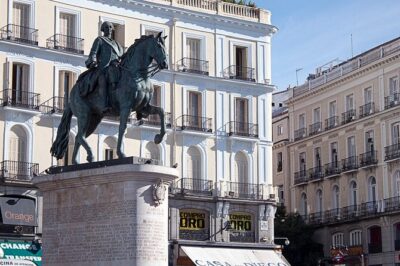 ★ 5.0Madrid Historic Centre Food Tour with Authentic Tapas & WinesFrom $78814 reviews
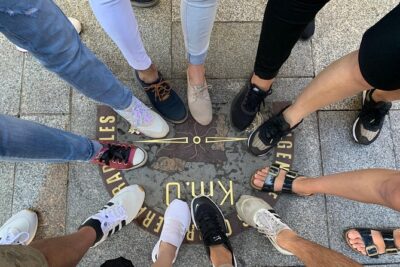 ★ 5.0Madrid Historical Walking TourFrom $3721 reviews
 ★ 5.0Madrid in a Day Tour:Royal Palace, Historic Center & Prado MuseumFrom $119628 reviews
 ★ 5.0Madrid Local’s Tapas Tour Dinner with a side of HistoryFrom $114530 reviews
 ★ 5.0Guided Tour of Madrid of the Austrias and the Historic CenterFrom $2520 reviews
Browse the lists this tour appears in