
Toledo teaches you fast, if you know where to look. This 100-minute exterior walk gives you a smart first contact with the city’s key monuments, plus the quieter corners most people skip, with Zocodover views and an official guide doing the heavy lifting. My only heads-up: it’s mostly exterior views, so if you want inside visits, you’ll still need a separate plan.
You’ll start in the center at Plaza de Zocodover, then move street by street through Toledo’s main squares, the Jewish Quarter area, and a final panoramic viewpoint at Paseo de San Cristóbal. Along the way, your guide will connect the dots between the Three Cultures and the stories people repeat in Toledo—marzipan, legends, Damasquinado, famous Toledo steel, and even odd little curiosities like the city’s smallest window.
In This Review
- Key Points at a Glance
- Why Toledo’s Three Cultures make sense in 100 minutes
- Start at Plaza de Zocodover: the Alcázar view and city nerve center
- Sillería and Alfileritos: guild streets and a legendary twist
- Cristo de la Luz Mosque exterior: how one building tells many stories
- Plaza San Vicente and Plaza Padre Juan de Mariana: convents, palaces, and “stolen streets”
- Church of the Jesuits and Plaza del Ayuntamiento: facades that show power
- Plaza del Salvador into Santo Tomé Street: the Jewish Quarter in human scale
- Plaza del Conde and the El Greco connection
- Mirador de San Cristóbal: the best picture stop and why it works
- What you learn beyond monuments: marzipan, Damasquinado, Toledo steel, and small curiosities
- Price and logistics for a short visit (and why $11 can be a smart buy)
- Who should book this Toledo exterior tour
- Should you book this city of the Three Cultures walk?
- FAQ
- How long is the tour?
- Where do I meet the guide?
- Where does the tour end?
- What language is the live guide?
- Is food or drinks included?
- Is transportation included?
- What will we see during the tour?
- Is this tour good for wheelchair users?
- How much does it cost?
- Can I get a refund if my plans change?
Key Points at a Glance
- Official Spanish guide focused on Toledo facts, legends, and crafts
- Exterior-only route that still covers the big sights and some lesser-known streets
- Jewish Quarter emphasis with Santo Tomé Street and a strong viewpoint finish
- Iconic squares in the right order so Toledo feels logical, not like a maze
- Story stops tied to legends like the Alfileritos street tale and stolen street ideas
South to Toledo, more ways to make the run
- Guided Walking Tour of Immortal Toledo★ 5.0 · 1,116 reviews
- Toledo Private Tour with Licensed Local Guide★ 5.0 · 884 reviews
- Toledo: City Sightseeing Hop-On Hop-Off Bus Tour & Extras★ 4.3 · 683 reviews
- Madrid: Full-Day Guided Tour of Toledo with Cathedral Visit★ 4.6 · 647 reviews
Why Toledo’s Three Cultures make sense in 100 minutes
Toledo is one of those places where the city layout itself feels like a history lesson. It’s not just churches and walls—it’s layers: Christian, Jewish, and Muslim influences mixed across centuries, leaving traces you can still see in streets, facades, and place names.
This tour is built for short time. In about 100 minutes, you get the big mental map—where the action is, where the Jewish Quarter sits, and what squares matter most—without the stress of doing it solo while your phone battery quietly dies.
Start at Plaza de Zocodover: the Alcázar view and city nerve center
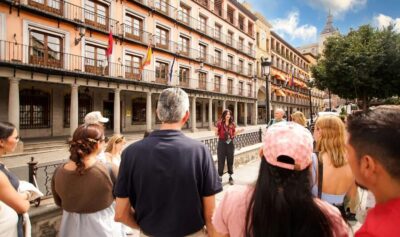
Your walk begins at Plaza de Zocodover, Toledo’s nerve center. Even if you’ve only arrived recently, this is where you orient yourself: it’s the place that helps you understand the city’s shape and flow.
One of the best early rewards is the view over toward the Alcázar. From here, Toledo stops feeling abstract and starts feeling navigable. Your guide also sets the tone by explaining why Toledo became such a magnet for different communities and crafts—so later details land with context.
Sillería and Alfileritos: guild streets and a legendary twist
Next comes Calle Sillería, a guild area. This is where you get a feel for how Toledo worked economically, not just how it looked. When you walk a street tied to trade and craftsmanship, you understand why certain things became famous—like specialized metalwork and luxury goods.
Then you move to Calle Alfileritos. This lane is famous for a legend your guide explains, and it’s the kind of story that makes a tiny street feel important. Even if you’re not the type who hunts legends, you’ll remember this one because it’s tied to Toledo’s habit of mixing real place names with big folklore.
Cristo de la Luz Mosque exterior: how one building tells many stories
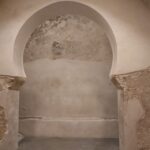
You’ll head to the exterior of the Mezquita del Cristo de la Luz. Even viewed from the outside, it’s one of those Toledo buildings that signals the Three Cultures story in a single glance.
Toledo’s strength is that its architecture often holds more than one layer at once. Seeing this mosque exterior within the context of your walk helps you notice how past faiths shaped not only worship spaces, but also the look and rhythm of neighborhoods over time.
Broader loops across the capital




Plaza San Vicente and Plaza Padre Juan de Mariana: convents, palaces, and “stolen streets”
In Plaza San Vicente, you get a sense of the city’s institutional side—places where faith and power sat close together. Your guide also points you toward the idea of the “neighborhood of convents and palaces,” which is exactly what makes this part of Toledo feel different from the main commercial lanes.
You’ll also pass by Plaza Padre Juan de Mariana, another stop that helps you connect the geography to the stories. The timing is short, but it matters: these are the kinds of squares that prevent Toledo from becoming random.
And yes, you’ll hear about what a “stolen street” is—because Toledo loves a legend that explains a real urban oddity. Once you understand the concept, you’ll start noticing small street shapes that might otherwise look like nothing.
Church of the Jesuits and Plaza del Ayuntamiento: facades that show power
Toledo’s religious architecture isn’t just spiritual; it’s visual politics. You’ll see the exterior of the Church of the Jesuits with a monumental facade that dominates the surrounding space.
From there, you move into Plaza del Ayuntamiento, where the scale jumps. This is where your eye lands immediately on the Catedral Primada, plus the Archbishop’s Palace and the Palace of Justice. Even without going inside, you learn how the city organized authority: church leadership, civil power, and public life clustered here.
If you’re the type who likes to understand a place by how it used to be governed, this stop pays off fast. It also sets you up for what comes next, because Toledo’s Jewish Quarter area is tied to these centuries of coexistence and tension.
Plaza del Salvador into Santo Tomé Street: the Jewish Quarter in human scale
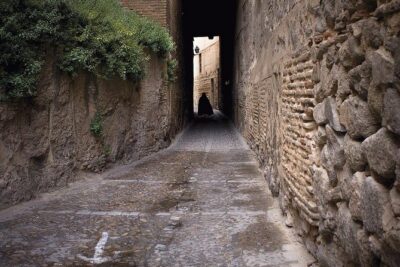
Your walk then reaches Plaza del Salvador, the start point for the Jewish Quarter area. This shift can feel like stepping into a different pace. The streets tighten, the vibe turns more local, and the city starts to feel like it’s telling its history through everyday storefronts.
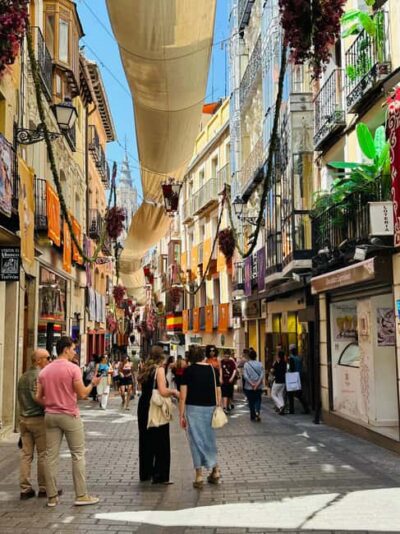
You’ll walk along alle Santo Tomé—the main artery of the Jewish Quarter. This street is busy in the right way: it’s where you find shops and places to eat, and where Toledo feels like a living city instead of an outdoor museum.
Santo Tomé Street is also perfect for absorbing context. When your guide explains coexistence and the practical reality of how communities shared a city, the walk makes more sense. Toledo isn’t just a timeline. It’s neighbors on the same streets.
Plaza del Conde and the El Greco connection
A smaller stop, but a smart one: Plaza del Conde. This is where your guide ties Toledo’s art world into the story, including mention of El Greco, one of the city’s most famous artistic names.
Even if you’re not planning an art museum visit, a quick art anchor like this helps you see Toledo as more than religious history. It’s also a place that produced cultural output—paintings, crafts, and tastes that lasted beyond the eras that created them.
Mirador de San Cristóbal: the best picture stop and why it works
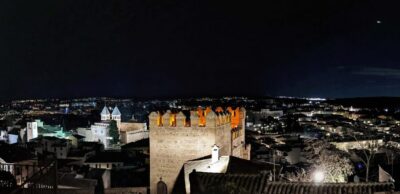
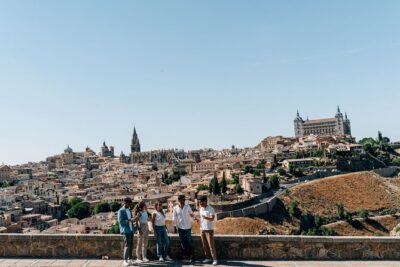
The tour ends at Paseo de San Cristóbal, a viewpoint that gives you one of the best panoramic looks back over the Jewish Quarter area and the surrounding valley.
This finish is practical, not just scenic. When you can see the city’s layers from above, you finally understand how the streets connect—why the route felt logical, and where you’d want to wander next on your own.
It’s also a good time to think about what you want to revisit. If there’s one square or street you keep remembering, you’ll know where to go because you got the mental map first.
What you learn beyond monuments: marzipan, Damasquinado, Toledo steel, and small curiosities
This tour is at its best when it turns sightseeing into story. You’ll hear explanations tied to Toledo crafts and odd facts, including:
- Why Toledo marzipan is famous
- How the coexistence of the Three Cultures played out, not just the ideal version
- The history of the fat bell of the Cathedral of Toledo
- The claim that Toledo has the smallest window in the world
- What Damasquinado is (metalwork and decorative technique)
- Why Toledano steel became known
These aren’t random fun facts. They connect to what you’re seeing on the street: Toledo’s reputation was built as much on goods and techniques as on buildings. Once you learn that, the city stops being a backdrop and starts feeling like a place with a working brain.
Price and logistics for a short visit (and why $11 can be a smart buy)
At $11 per person for about 100 minutes with an official guide, this is strong value for Toledo. The price makes sense because it’s a walking route focused on orientation plus key exteriors—no museum entries, no included transport, and no food package.
That also means you should set expectations correctly. If you’re coming to Toledo to go inside major sites, expect to plan those separately. But if you want to get oriented, hear legends, and understand what you’re looking at in real time, the guide time is the point.
A quick practical note: you need to arrive 15 minutes early at Plaza de Zocodover and look for the orange umbrellas of Pasearte Toledo. Walking tours are easiest when you’re not sprinting at the last second.
Cancellation is flexible, too. If plans change, there’s a window for full refund with early cancellation.
Who should book this Toledo exterior tour
This tour fits best if you:
- Have limited time and want your first contact with Toledo done in the right sequence
- Like guided storytelling and want legends explained in context
- Want a fast way to orient yourself before doing your own wandering later
- Appreciate craft and culture facts, not only big monument photos
It’s less ideal if you:
- Need wheelchair-friendly access (it’s not suitable for wheelchair users)
- Want a tour that includes interior visits or long museum time
Also, if you’ve been to Toledo before, this route still has value because it’s designed to connect areas you might otherwise visit out of order. One guide, Frank, has been praised for keeping the walk enjoyable and informative even for people on a second visit—exactly the kind of guide skill that matters when you’re seeing the city in a tight window.
Should you book this city of the Three Cultures walk?
Book it if you want a guided Toledo that feels organized, story-driven, and worth your time. The route hits the main squares, brings you into the Jewish Quarter area, and finishes with a viewpoint that helps you understand the city spatially—not just visually.
Skip it only if your top priority is interior access to monuments. For exterior orientation plus history and legends in 100 minutes, this is a solid deal—and a good way to make sure you don’t miss the essentials while Toledo’s streets try to turn your plans into a guessing game.
FAQ
How long is the tour?
The tour lasts about 100 minutes.
Where do I meet the guide?
Meet at Plaza de Zocodover, at the orange umbrellas of Pasearte Toledo.
Where does the tour end?
The tour finishes at Paseo de San Cristóbal.
What language is the live guide?
The live tour guide speaks Spanish.
Is food or drinks included?
No. Food and beverages are not included.
Is transportation included?
No. Transportation is not included.
What will we see during the tour?
You’ll tour the exterior of major monuments and main areas, including squares and streets such as Zocodover, Sillería, Alfileritos, the exterior of the Mezquita del Cristo de la Luz, the Jewish Quarter area around Plaza del Salvador and Santo Tomé Street, and the viewpoint at Paseo de San Cristóbal.
Is this tour good for wheelchair users?
No, it’s not suitable for wheelchair users.
How much does it cost?
The price is $11 per person.
Can I get a refund if my plans change?
Yes. You can cancel up to 24 hours in advance for a full refund.
The Capital, End to End
- Toledo: City Sightseeing Hop-On Hop-Off Bus Tour & Extras
★ 4.3 · 683 reviews - City Sightseeing Toledo Hop-On Hop-Off Bus Tour
★ 4.5 · 439 reviews - Toledo City Walking Tour
★ 4.5 · 125 reviews - Underground Toledo: Roman baths, dungeons, and secrets beneath the city
★ 4.6 · 118 reviews - Toledo: Ancient Underground City Tour in Spanish
★ 4.6 · 55 reviews - Toledo: City of the Three Cultures Guided Walking Tour
★ 4.3 · 40 reviews
More Tour Reviews in Toledo
- Guided Walking Tour of Immortal Toledo
★ 5.0 · 1,116 reviews - Toledo Private Tour with Licensed Local Guide
★ 5.0 · 884 reviews - Toledo: City Sightseeing Hop-On Hop-Off Bus Tour & Extras
★ 4.3 · 683 reviews - Madrid: Full-Day Guided Tour of Toledo with Cathedral Visit
★ 4.6 · 647 reviews - Toledo: Tourist Bracelet with Entry to 7 Attractions
★ 4.3 · 597 reviews - Toledo: Three Cultures English Tour
★ 4.7 · 468 reviews
Down to Toledo for the Day
- Guided Walking Tour of Immortal Toledo
★ 5.0 · 1,116 reviews - Toledo Private Tour with Licensed Local Guide
★ 5.0 · 884 reviews - Toledo: City Sightseeing Hop-On Hop-Off Bus Tour & Extras
★ 4.3 · 683 reviews - Madrid: Full-Day Guided Tour of Toledo with Cathedral Visit
★ 4.6 · 647 reviews - Toledo: Tourist Bracelet with Entry to 7 Attractions
★ 4.3 · 597 reviews - Toledo: Three Cultures English Tour
★ 4.7 · 468 reviews
Just Added: New Toledo Tour Reviews


Toledo Day Trips from Madrid, compared.
 ★ 5.0Three Cities in One Day: Segovia, Avila and Toledo from MadridFrom $1268,402 reviews
 ★ 4.7Segovia and Toledo Tour, Alcazar, and CathedralFrom $487,797 reviews
 ★ 5.0Toledo Tour from Madrid: Cathedral, Synagogue & St. Tome’s ChurchFrom $816,784 reviews
 ★ 4.6Toledo & Segovia Tour w/ Cathedral, Alcazar & LunchFrom $465,846 reviews
 ★ 4.5Toledo Half or Full Day Tour with Optional Lunch from MadridFrom $645,807 reviews
 ★ 4.1From Madrid: Guided Day Trip to Toledo by BusFrom $405,280 reviews
 ★ 4.5Toledo & Segovia Tour with Cathedral and Alcazar Tickets & LunchFrom $454,046 reviews
 ★ 4.3From Madrid: Toledo Guided Day TripFrom $323,501 reviews
Browse the lists this tour appears in