
REVIEW · TICKETS
Royal Monastery of the Barefoot nuns: Guided Tour + Tickets
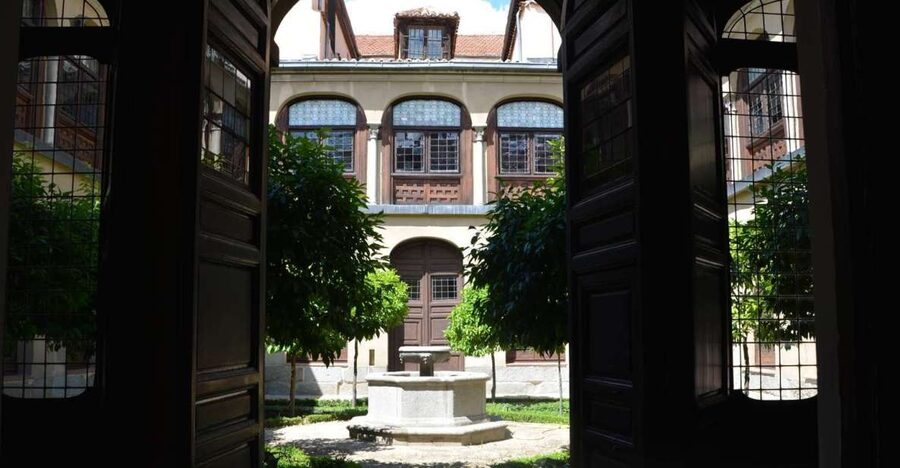
A convent trip with major art power. This guided, skip-the-line visit takes you into the Royal Monastery of Las Descalzas Reales, where the outside looks almost plain, and the inside turns into a crowded gallery of paintings, sculptures, reliquaries, and chapel detail. You’ll see major works tied to artists like Rubens, Luca Giordano, and Crecenzi, and you’ll get the story behind why this place still feels like a living religious site, not just a museum.
I especially like how the tour focuses on what you can actually spot in person: the contrast between a sober facade and an interior packed with artworks, and the way a guide helps you read what’s in front of you. You’ll also be pointed toward practical highlights like the main staircase decorated with 16th- and 17th-century murals, plus the network of chapels and the choir where nuns sing today.
One drawback to keep in mind: this experience is listed as not suitable for people with mobility impairments. The monastery is historic, and the route includes areas like the famous staircase, so the tour pace may not work for everyone.
In This Review
- Key things I’d prioritize
- Royal Monastery of Las Descalzas Reales: Why the outside is so misleading
- The official guide’s job: turning wall art into context
- Main staircase and mural rooms: the 16th–17th century showpiece
- Chapels, sculptures, reliquaries, tapestries, and the choir where nuns sing
- What the tour route really feels like over 1–2 hours
- Price and value: is $46 a fair deal?
- Logistics that matter: meeting point, what’s included, and what to bring
- Who should book this monastery tour (and who should skip it)
- Should you book Royal Monastery of the Barefoot Nuns with a guide?
- FAQ
- How long is the Royal Monastery of the Barefoot Nuns guided tour?
- Where does the tour start?
- What is the meeting point?
- What does the price include?
- Are drinks included?
- What languages is the live tour available in?
- Is hotel pickup or drop-off included?
- Is this tour suitable for people with mobility impairments?
- Is skip-the-line entry included?
Key things I’d prioritize
- Rubens and other big-name artists you can connect to the monastery’s collection
- Choir life today, because the nuns still handle the religious office
- The main staircase murals, with 16th- and 17th-century decoration
- A guided path through chapels, so you don’t miss the point of each room
- Skip-the-line tickets, saving time for a tight Madrid day
Straight past the ticket queue
- Madrid: Tour Bernabéu Entry Ticket★ 4.5 · 21,573 reviews
- Madrid: Prado Museum Entry Ticket★ 4.6 · 20,699 reviews
- Avila & Segovia Tour with Tickets to Monuments from Madrid★ 5.0 · 9,762 reviews
- Madrid: Reina Sofía Museum Entrance Ticket★ 4.5 · 8,788 reviews
Royal Monastery of Las Descalzas Reales: Why the outside is so misleading
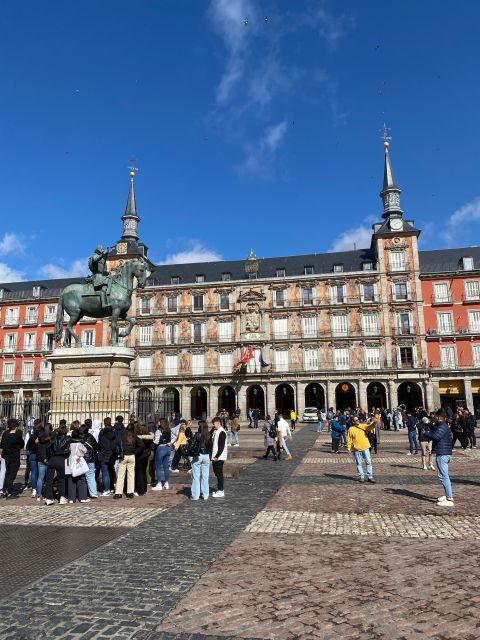
If you only judge by the exterior, you’ll underestimate this place. The monastery’s facade is comparatively sober, almost restrained, especially compared to what’s inside. That’s exactly why I think this tour is worth it: you walk in expecting a quiet church stop and end up surrounded by layers of art and devotion.
The heart of the Royal Monastery of the Barefoot nuns is its role as a continuation of convent life since its founding by Joanna of Austria. This matters because you’re not just looking at objects from the past. You’re seeing religious spaces that have been used for centuries, and the choir is still active—so the mood feels different from a standard gallery visit.
The monastery is cataloged as cultural heritage, and that label fits. You’ll notice how the building reads like a collection of eras. Murals, chapels, reliquaries, and textiles weren’t all made for one uniform purpose. Instead, the site grew into a portrait of taste, faith, and status over generations. A good guide helps you understand that you’re looking at an evolving system, not one single “theme.”
The official guide’s job: turning wall art into context
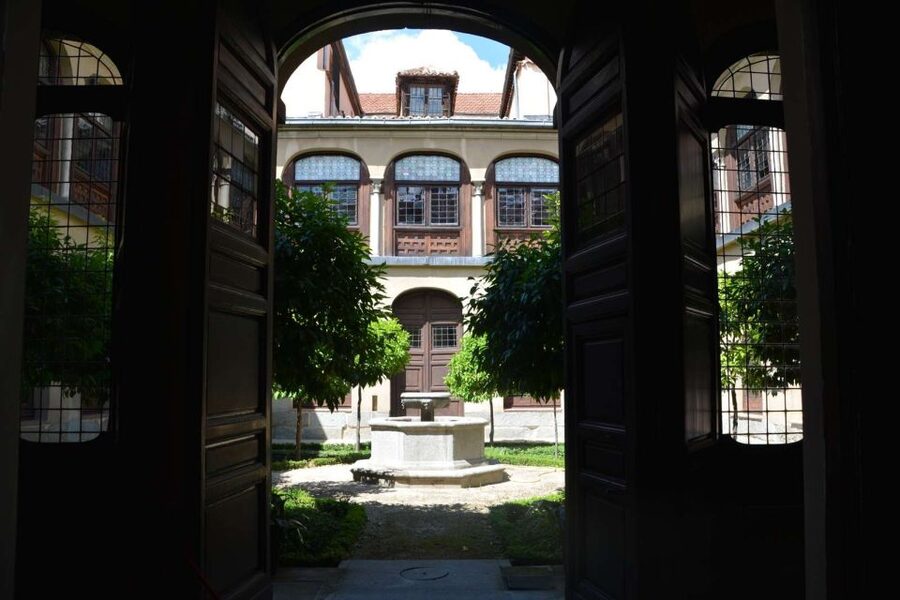
The biggest value in a guided tour here is interpretation. The monastery is full of detail, and if you’re alone, it can be easy to treat everything like “pretty stuff on walls.” With an official guide, you learn what to look at and how to connect it to the monastery’s story.
You’ll also get help naming and placing major artists. The tour highlights works associated with Rubens, Luca Giordano, and Crecenzi, and the guide’s explanations help you see beyond the names. You’re not just hearing who made it—you’re understanding why those artworks belong in this setting and what the monastery wanted them to communicate.
In the tour experience, you’ll move room to room in a way that makes the art feel organized instead of scattered. That’s especially useful with so many chapels, each with its own sculptural and painted character. A guide can also point out relationships you might otherwise miss—like how one chapel’s decoration changes your sense of the next one, or how the “palace-house” staircase connects the monastery to its broader origins.
And in case you’re trying to figure out whether this is a true art tour or just a history tour: it’s both. The explanations center on the artworks and their meanings, not only dates.
Main staircase and mural rooms: the 16th–17th century showpiece
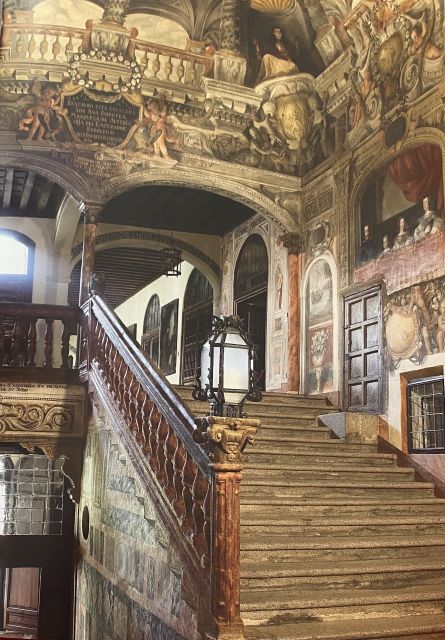
One of the most memorable parts of the monastery is the main staircase, described as one of the most important pieces in the original palace-house. It’s decorated with mural paintings from the 16th and 17th centuries, and that time window matters. It’s not just decorative. The murals help you feel how the building once functioned as a residence and how it later became a convent space.
When you’re standing there, it’s the kind of feature that makes you slow down. You’re moving through a historic interior, and the staircase acts like a visual hinge between the building’s layers of use. With a guide, you’re not just staring at paint. You’re learning how this staircase fits into the monastery’s structure and identity.
From there, you’ll keep shifting your attention to different types of religious art: painted surfaces, sculptural chapels, and objects that look like they belong to ceremonial life (reliquaries are part of the mix). The monastery’s interior is packed, so having a route helps you avoid wandering and losing the plot.
Practical note: plan on moving indoors and taking your time at key stops. This isn’t a quick photo sprint. It’s built for a steady pace where you can read the details before you’re whisked along to the next chapel.
Chapels, sculptures, reliquaries, tapestries, and the choir where nuns sing
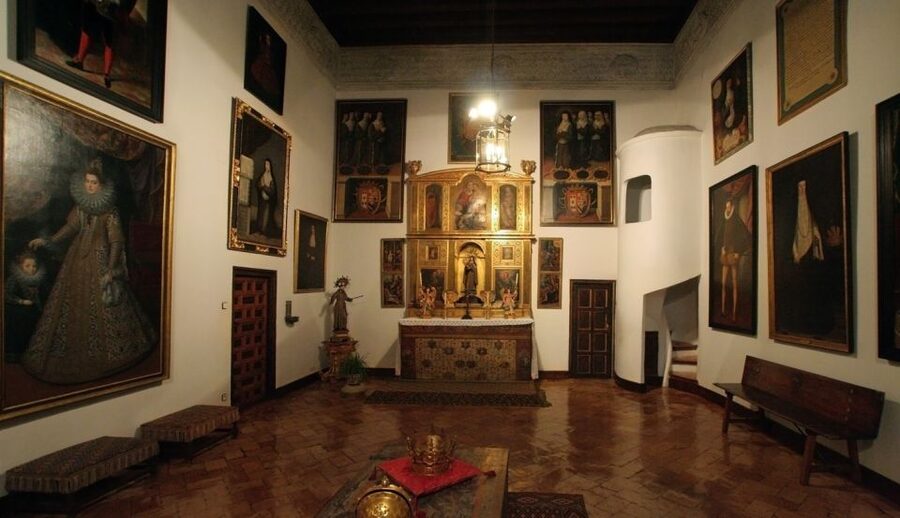
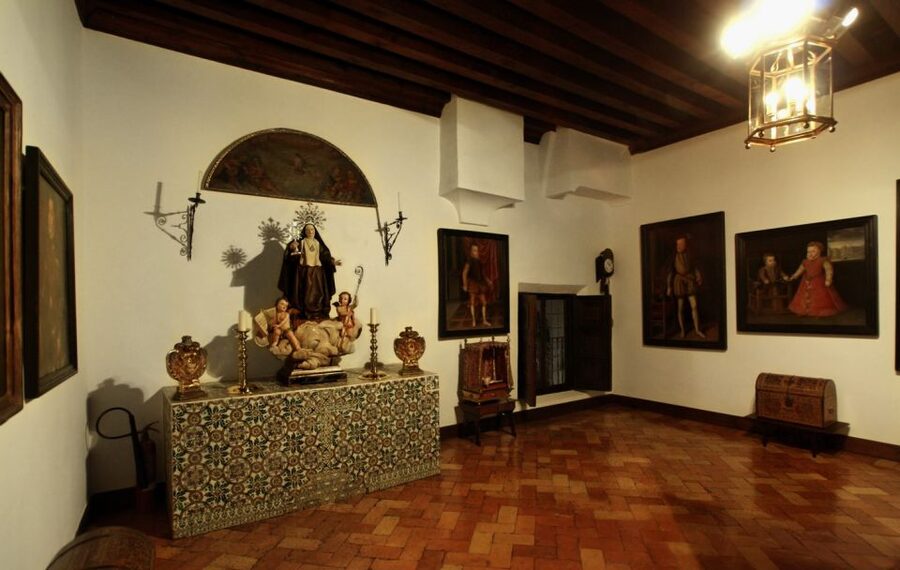
The monastery’s interior is described as rich in wall paintings, nativity scenes, reliquaries, tapestries, and many other artworks. In real terms, that means your attention won’t rest on one “main exhibit.” Instead, it will hop between types of art—paint, sculpture, and ceremonial objects—each with its own reason for existing.
The tour includes a large number of chapels, and that’s a big deal. Chapels are where you see the monastery’s personality in pieces. Some chapels feel like they’re designed to guide emotion—through the arrangement of figures, light, and sacred symbolism. Others focus more on artistry: how faces are shaped in sculpture, how paint is layered, and how scenes are staged for contemplation.
Then comes the choir, where cloistered nuns sing for the religious office of the church. That’s the point where the visit stops being only about art appreciation. You’re reminded that the monastery is still in use. Even if you’re not religious yourself, that living rhythm changes how the building feels. It stops being a backdrop and becomes a workplace for prayer.
So the tour gives you a helpful blend:
- Visual overload, but guided so it stays understandable
- Sacred spaces, but explained through the art inside them
- “Museum-like” viewing, but tied to ongoing convent life
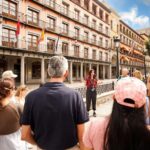
A local guide takes the strain



What the tour route really feels like over 1–2 hours
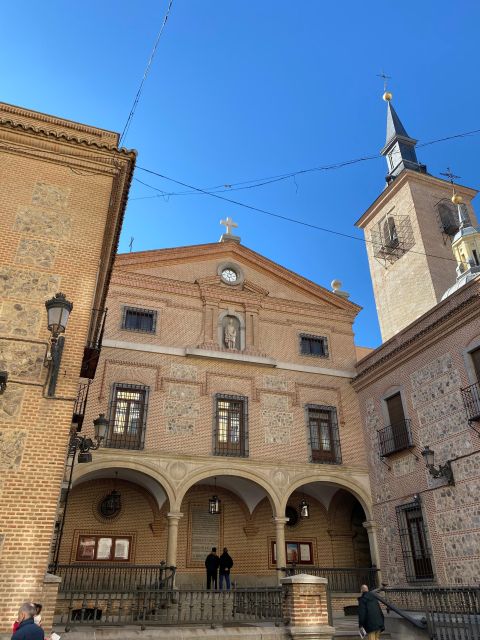
The total duration is listed as 1–2 hours, depending on the session. That’s a tight window, so the route is clearly meant to focus on the monastery’s biggest hits: the core convent spaces, the major staircase, the main chapel network, and the choir area.
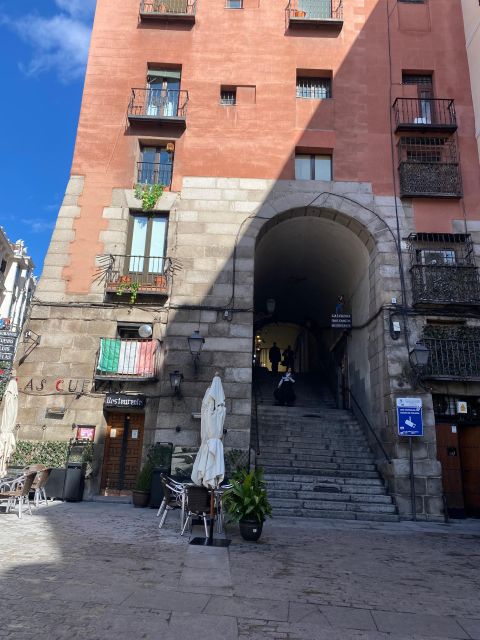
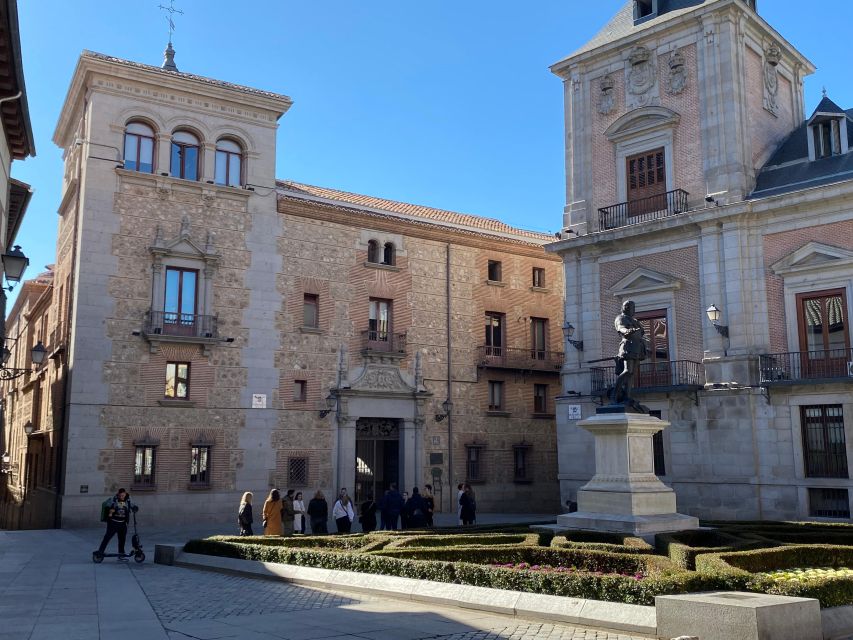
Starting at the Monasterio de las Descalzas Reales, you’ll follow a guided tour through the convent. Then the experience ends with drop-off locations including Plaza de la Villa and the Monasterio de las Descalzas Reales area. In other words: you shouldn’t expect a full day here, and you shouldn’t plan to treat the monastery as a slow, independent wander after the guide leaves.
This is also why skip-the-line tickets matter. Madrid attractions can chew up time fast, and here the visit depends on getting inside and following a set flow of rooms. With the guided format, you spend less time figuring out access and more time actually seeing.
Language options are English and Spanish with a live guide. If you prefer hearing the explanation out loud rather than reading plaques, that’s a big advantage in a space like this where the details are dense.
Price and value: is $46 a fair deal?
The price is listed at $46 per person, and it includes tickets, skip-the-line entry, and an official guide. The practical question is whether the guided component justifies the package price.
Here’s how I’d evaluate it:
- If you mainly want the artworks explained (especially names like Rubens, Luca Giordano, and Crecenzi), the guide is doing real work for you.
- If you’re a detail-reader type who loves standing still and taking in chapel after chapel, guidance helps you stay oriented.
- If you’re okay with visiting independently and you only care about a short hit list, the guided package may feel heavy.
There’s also a caution worth saying plainly. Some people get frustrated when the package price looks much higher than the on-site admission ticket. So before you commit, it’s smart to compare what you’d pay for entry alone versus what you’re paying for guided interpretation. If the difference makes you feel uneasy, decide based on your priorities: explanation and art context cost extra, plain entry does not.
The good news is that the tour is built to deliver value within 1–2 hours. You’re not paying for time spent in transit or waiting around.
Logistics that matter: meeting point, what’s included, and what to bring
Meeting point is at the door where the guide will wait with a Rutas Madrid sign. That detail sounds small, but in a monastery entrance it can save you from circling at the wrong door.
Included in the experience:
- Tickets included
- Skip the ticket line
- Official live guide
Not included:
- Hotel pickup and drop-off
- Drinks
So you’ll want to handle getting there on your own and show up ready to walk indoors. Wear comfortable shoes; even though you’re not outside all day, you’ll still be moving through historic spaces and spending time at multiple areas.
Also, it’s specifically listed as not suitable for people with mobility impairments. If that’s part of your planning, don’t assume an easy workaround—confirm accessibility details before booking.
Finally, you get two language options (English and Spanish). If you’re traveling as a mixed-language group, check that the session language matches your needs when you reserve.
Who should book this monastery tour (and who should skip it)
This guided visit is a strong fit if you:
- Love art inside real historic religious spaces
- Want help understanding what you’re seeing (especially chapels and major works tied to Rubens and others)
- Prefer a structured route over reading at your own pace for 1–2 hours
It’s less ideal if you:
- Need a mobility-friendly route (the tour is listed as not suitable)
- Only want a simple ticket and don’t care about guide interpretation
- Are trying to cram this into the same hour as several other indoor stops; the monastery rewards a slower pace even when the tour is timed
If you’re in Madrid for a short trip, this can be a top “high art, small footprint” stop. It’s not massive in terms of time, but it’s packed with things to look at and understand.
Should you book Royal Monastery of the Barefoot Nuns with a guide?
I’d book this tour if your goal is to see more than what your eyes catch on the first pass. The monastery is dense with art types—paintings, reliquaries, nativity scenes, tapestries, sculptures—and a guide helps you connect it all to the convent’s continuing story from Joanna of Austria’s founding to today.
I’d think twice if you’re purely price-sensitive and happy to visit independently. If the package cost feels steep compared with the on-site ticket, choose based on whether you want the “who/why/what am I looking at” layer.
For many visitors, the sweet spot is simple: you’re paying $46 for your time to be used wisely—skip the line, follow a focused route, and leave with a clearer picture of how the artwork belongs to this still-active convent.
FAQ
How long is the Royal Monastery of the Barefoot Nuns guided tour?
The duration is listed as 1–2 hours, depending on availability and starting times.
Where does the tour start?
The starting location is Monasterio de las Descalzas Reales.
What is the meeting point?
The guide waits at the door with a Rutas Madrid sign.
What does the price include?
The activity includes tickets, skip-the-line entry, and an official guide.
Are drinks included?
No, drinks are not included.
What languages is the live tour available in?
The live guide is listed in English and Spanish.
Is hotel pickup or drop-off included?
No, hotel pickup and drop-off are not included.
Is this tour suitable for people with mobility impairments?
No. It is listed as not suitable for people with mobility impairments.
Is skip-the-line entry included?
Yes, skip the ticket line is included.
Straight In, No Queue
- Madrid: Tour Bernabéu Entry Ticket
★ 4.5 · 21,573 reviews - Madrid: Prado Museum Entry Ticket
★ 4.6 · 20,699 reviews - Avila & Segovia Tour with Tickets to Monuments from Madrid
★ 5.0 · 9,762 reviews - Madrid: Reina Sofía Museum Entrance Ticket
★ 4.5 · 8,788 reviews - Madrid: Avila and Segovia Day Trip with Tickets to Monuments
★ 4.6 · 4,568 reviews - Toledo & Segovia Tour with Cathedral and Alcazar Tickets & Lunch
★ 4.5 · 4,046 reviews
More Tours in Madrid
- Madrid: Tour Bernabéu Entry Ticket
★ 4.5 · 21,573 reviews - Madrid: Panoramic Route City Tour
★ 4.1 · 12,259 reviews - Avila & Segovia Tour with Tickets to Monuments from Madrid
★ 5.0 · 9,762 reviews - Madrid: Royal Palace Expert Guided Tour with Skip-the-Line
★ 4.7 · 8,407 reviews - Madrid: Segovia and Toledo Tour, Alcazar, and Cathedral
★ 4.7 · 7,797 reviews - Toledo Tour from Madrid: Cathedral, Synagogue & St. Tome’s Church
★ 5.0 · 6,784 reviews
More Tour Reviews in Madrid
- Madrid: Tour Bernabéu Entry Ticket
★ 4.5 · 21,573 reviews - Madrid: Prado Museum Entry Ticket
★ 4.6 · 20,699 reviews - Madrid: “Emociones” Live Flamenco Performance
★ 4.8 · 12,866 reviews - Madrid: Panoramic Route City Tour
★ 4.1 · 12,259 reviews - Madrid: Live Flamenco Show with Food and Drinks Options
★ 4.5 · 9,901 reviews - Avila & Segovia Tour with Tickets to Monuments from Madrid
★ 5.0 · 9,762 reviews
Just Added: New Madrid Tour Reviews


Tickets, compared.
 ★ 4.5Tour Bernabéu Entry TicketFrom $4121,573 reviews
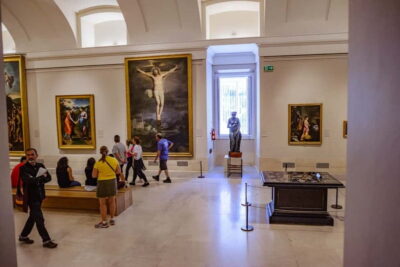 ★ 4.6Prado Museum Entry TicketFrom $2120,699 reviews
 ★ 5.0Avila & Segovia Tour with Tickets to Monuments from MadridFrom $819,762 reviews
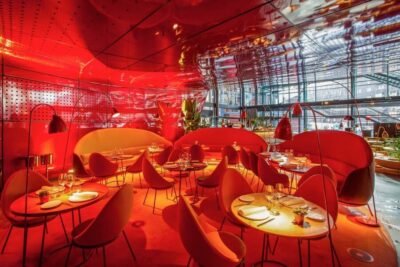 ★ 4.5Reina Sofía Museum Entrance TicketFrom $148,788 reviews
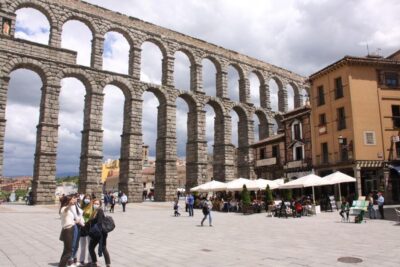 ★ 4.6Avila and Segovia Day Trip with Tickets to MonumentsFrom $744,568 reviews
 ★ 4.5Toledo & Segovia Tour with Cathedral and Alcazar Tickets & LunchFrom $454,046 reviews
 ★ 4.8La Cueva de Lola Flamenco Show Tickets with DrinkFrom $382,567 reviews
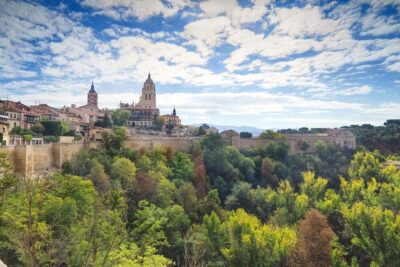 ★ 4.3From Madrid: Segovia & Avila Day Trip with Optional TicketsFrom $592,161 reviews