
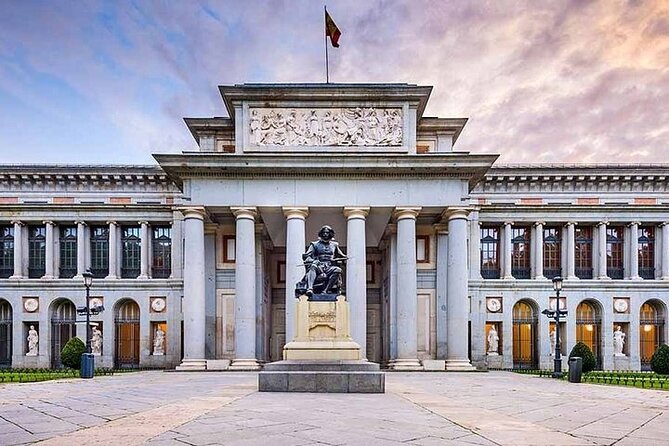
REVIEW · PRADO MUSEUM TOURS
Paseo del Arte: Prado, Reina Sofía and Thyssen Museum
Three museums, one day of art brainpower. A small-group Paseo del Arte route links the Prado, Reina Sofía, and Thyssen so the stories behind Goya, Velázquez, and Picasso click faster, with expert guides and radio audio that keeps you hearing every detail.
I love that you get museum entry handled for all three stops, each running about 1 hour 30 minutes. The only real drawback is the day is packed, so it can feel like an 8-hour art sprint if you like to linger slowly in front of every painting.
In This Review
- Key points worth knowing
- Getting Oriented: Prado Meeting Point and a Walkable Rhythm
- Museo Nacional del Prado: From 1819 to Las Meninas in One Guided Arc
- What to watch for as you go
- Reina Sofía and Guernica: Understanding Picasso’s War Symbols
- Why the guide’s focus matters here
- Thyssen-Bornemisza: A Fast, Focused Tour Through 13th–20th Centuries
- The tour’s storyline through art movements
- The Semi-Private Size, the Radio Guides, and the Pace
- Lunch Break in Madrid: Use the Free Time Wisely
- Value and What You Actually Get for Your Time
- Who This Tour Fits Best (and Who Might Want Another Plan)
- Should You Book Paseo del Arte: Prado, Reina Sofía and Thyssen?
- FAQ
- What museums are included?
- How long is the tour?
- Are museum tickets included?
- Is the tour offered in English?
- How big is the group?
- Where does the tour start and end?
- Can I cancel for free?
Key points worth knowing
- Max 7 people keeps the tour from feeling like a moving crowd
- Tickets included for Prado, Reina Sofía, and Thyssen means less waiting and stress
- Radio guides help you catch the guide’s commentary even in busy galleries
- Big-picture art storytelling ties techniques and history to what you’re seeing
- Must-see anchors like Las Meninas and Guernica guide your attention quickly
- Time to reset in Madrid for lunch between museums and sightseeing
Still on Velazquez and Goya? A few more Prado visits
- Madrid: Prado Museum Entry Ticket★ 4.6 · 20,699 reviews
- Madrid: Small Group of Prado Museum Tour & Optional Tapas★ 4.6 · 2,437 reviews
- Madrid: Prado Museum Guided Tour with Skip-the-Line Ticket★ 4.5 · 2,018 reviews
- Madrid: Prado Museum Guided Tour With Fast Access★ 4.8 · 1,785 reviews
Getting Oriented: Prado Meeting Point and a Walkable Rhythm
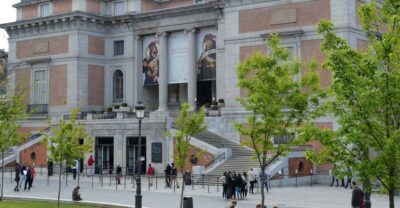
This tour starts at the Museo Nacional del Prado (Retiro, Madrid) at 10:00 am, and it ends at the Thyssen-Bornemisza National Museum on P.º del Prado, 8. You’ll move between museums on a guided walking tour, so you’re not stuck figuring out routes while your museum energy drops.
The whole experience runs about 8 hours (approx.), which is long enough to cover three top-tier museums, but short enough that you should plan on staying focused. If you like structure, this works. If you prefer to drift museum-to-museum on your own schedule, you might find the flow a bit tight.
Museo Nacional del Prado: From 1819 to Las Meninas in One Guided Arc
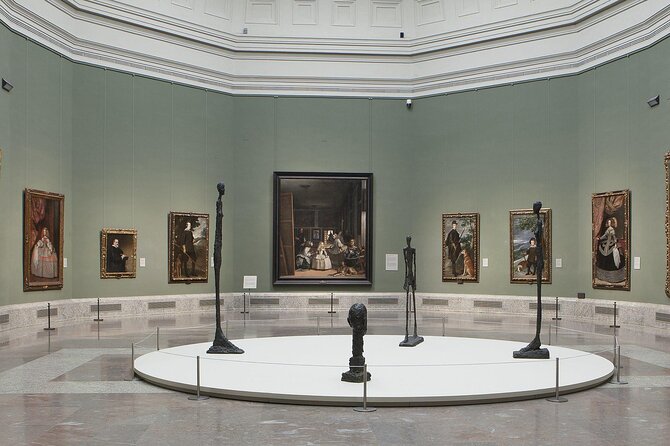
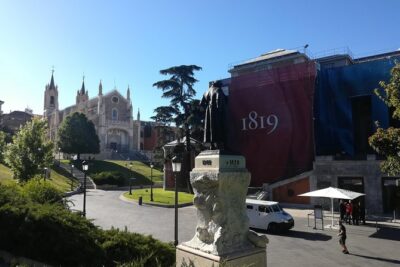
The Prado opened in 1819 and holds more than 7,000 paintings, so trying to see everything on your own would be a fantasy. What this guided format does instead is pick the works and ideas that help you decode the collection fast. You end up understanding not just what you’re looking at, but why painters chose certain techniques and how Spanish society shaped the art.
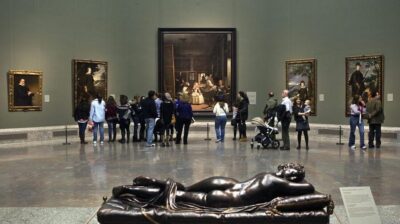
One highlight is how the guide points you toward major names like Goya and Velázquez. The magic of this museum is that it’s not only about famous faces—it’s also about the craft: composition, lighting, and how artists created depth. When you hear how perspective works, Las Meninas stops being just a famous painting and starts feeling like a puzzle with rules you can follow.
What to watch for as you go
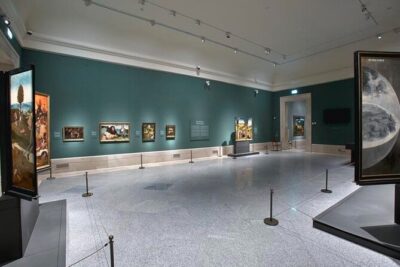
You’ll get time for a range of European styles, not only Spanish masters. The tour includes room time for Northern European painting, including the Flemish Primitives, and it also brings in major Italian and Dutch influences with artists such as El Bosco, Fra Angelico, Raphael, and Titian.
This is also where an art-history lesson becomes practical. You learn the difference in mood and method between religious works, courtly portrait traditions, and more symbolic, sometimes unsettling themes. That means when you spot details you might have missed—small figures, odd gestures, strange symbols—you’ll know what to do with them instead of just staring harder.
Reina Sofía and Guernica: Understanding Picasso’s War Symbols
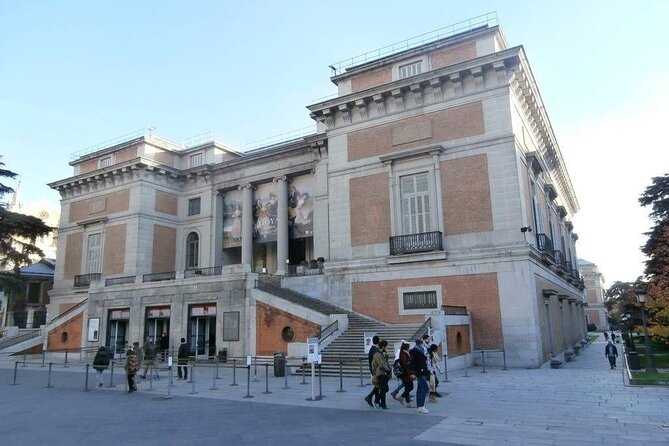
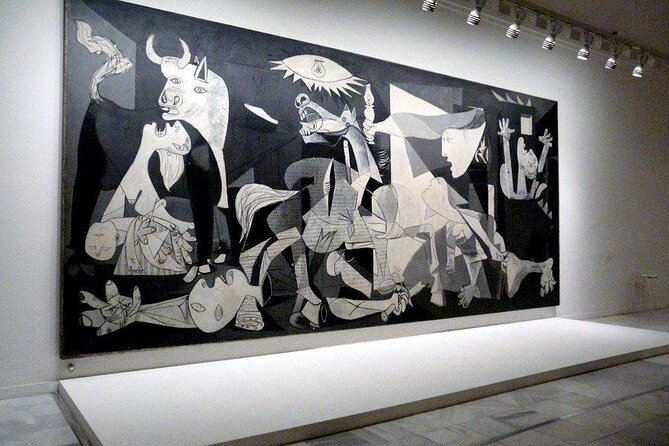
Reina Sofía is where the tone shifts from old-world court art to modern upheaval. The museum visit is built around the legacy of Pablo Picasso, with special attention on his masterpiece Guernica and the story behind it. The center of gravity here is the idea that paintings can function like history you can’t walk away from.
Guernica was painted in Paris between May and June 1937, and the title connects directly to the April 26, 1937 bombing of Guernica during the Spanish Civil War. The tour explains why the painting became such an international icon, and it also covers the practical journey of the artwork: it reached Spain in 1981, was first exhibited at the Casón del Buen Retiro, and has been on permanent display at Reina Sofía since 1992.
Guernica and the moderns, another look

Why the guide’s focus matters here
Guernica is famous, but it can also feel like too much. The real value of a guided approach is that you get a framework for looking: what the symbols suggest, why the imagery is arranged the way it is, and how the painting’s process connects to its impact. With a timed stop of about 1 hour 30 minutes, you don’t have to study every corner for hours to still come away with a clear understanding of what you just saw.
And this museum stop has another advantage: it gives you emotional context without turning the visit into a lecture. You still get to stand in front of the painting and react. The difference is that now your reaction has words attached to it.
Thyssen-Bornemisza: A Fast, Focused Tour Through 13th–20th Centuries
If Prado is about depth in one tradition and Reina Sofía is about the shock of modern history, Thyssen-Bornemisza is about variety. The collection includes close to a thousand works spanning the 13th to the 20th centuries, and the museum is known for international artists as well as key Spanish names.
You’ll see big reference points across periods: Titian, Rubens, Rembrandt, Caravaggio, Manet, Renoir, Van Gogh, Gauguin, Kandinsky, Hopper, plus Picasso. That’s an impressive range, and the guided format keeps it from turning into a checklist. Instead of bouncing from one random masterpiece to the next, you get a sense of how tastes and styles shifted over time.
The tour’s storyline through art movements
Thyssen helps you make connections between schools that might feel separate if you visit alone. You’ll encounter works related to the Italian and Flemish primitives, Renaissance breakthroughs, and Impressionism with artists like Monet and Degas, plus later Impressionist-to-post-Impressionist bridges such as Van Gogh and Gauguin.
Then the tour moves into the 20th century with avant-garde movements such as Fauvism, Expressionism, Surrealism, Abstraction, and Pop Art. And yes, you’ll also get Spanish anchors, including Picasso and Dalí, which help you close the loop back to the themes you saw earlier in Madrid.
The Semi-Private Size, the Radio Guides, and the Pace
This is not a huge group tour. It’s semi-private, with a maximum of 7 travelers, and that size matters more than you’d think in art museums. You’re close enough to hear the guide easily, but there’s space to ask questions or get the kind of attention that helps you understand what you’re looking at.
The tour also uses high-quality radio guides, which is a big deal in rooms where people cluster and voices carry weirdly. Instead of straining to catch key points, you can stay focused on the art. It also means the guide can keep moving in a structured way without losing the group to sound-distance.
The trade-off is time pressure. Each museum stop is about 1 hour 30 minutes, and you’re looking at three major institutions in one day. If you’re the type who wants to spend 45 minutes on one painting, plan to come back to at least one museum after this tour so you can slow down. If you want clarity and context, this pacing does its job.
Lunch Break in Madrid: Use the Free Time Wisely
After the three museum stops, you get 1 hour 30 minutes of free time for lunch. The idea is simple: take a break, eat something, and reset your attention before your brain turns the inside of your skull into a slideshow.
You can include lunch so you don’t have to worry about where to eat. If you keep it flexible, you can also use the break to wander a bit around the museum area and get a feel for Madrid’s everyday energy between big sights.
Value and What You Actually Get for Your Time
This tour’s value is strongest in what it includes, not what it leaves out. You get expert guidance throughout, tickets included for Prado, Reina Sofía, and Thyssen-Bornemisza, plus a walking transfer between museums. That combination saves you from the two biggest friction points of museum days: managing entry logistics and losing context while you search for the right rooms.
It also helps you avoid the most common first-time museum problem: seeing a lot without learning how to look. Here, the guide’s job is to connect technique to story—like how perspective reshapes what you think you’re seeing in Las Meninas, or how Guernica’s symbols tie back to the bombing and the Spanish Civil War.
And because the group is small, you’re more likely to get attention when something confuses you. Art museums are full of moments where you ask, What am I missing? This tour is built to answer that question in real time.
Who This Tour Fits Best (and Who Might Want Another Plan)
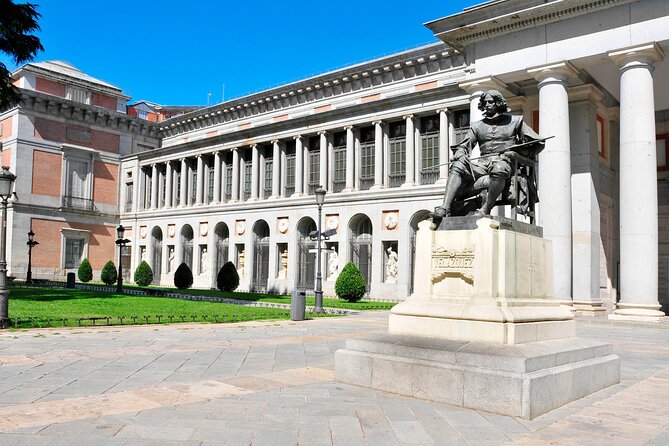
This tour is a great match if you want an art-history foundation without having to build one yourself. You’ll especially like it if you’re a first-time Madrid visitor and you want the main masterpieces covered with context, not just photos.
It also fits well if you care about learning how paintings are put together—composition, technique, and how symbols communicate ideas. You’ll get that sense of structure at the Prado, the historical stakes at Reina Sofía, and the style shifts across centuries at the Thyssen.
If you prefer slow museum wandering with zero schedule pressure, you might find the pace tough. In that case, consider visiting just one museum later on your own, after this tour gives you the mental map.
Should You Book Paseo del Arte: Prado, Reina Sofía and Thyssen?
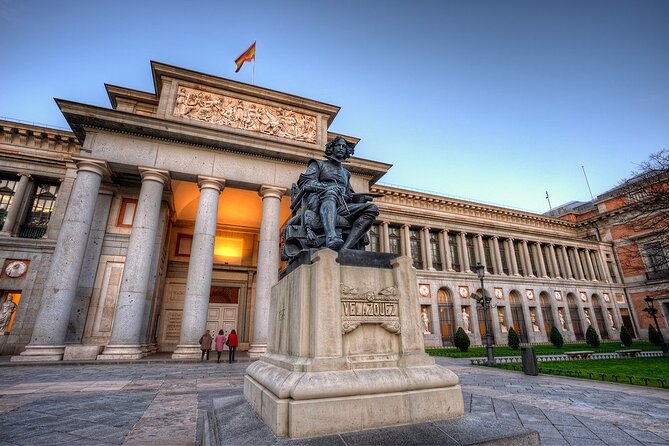
Book it if you want three world-class museums in one day with a clear guide-led storyline, small-group comfort, and tickets included for all stops. It’s also a smart choice if you’ve been worried that doing Madrid’s art trio alone will leave you with memories but no understanding—this tour is set up to prevent that.
Don’t book it if your ideal museum day is hours in front of one painting. The structure is designed to cover a lot, and that can feel like a rush for slow-looking types.
If you’re on the fence, here’s an easy decision rule: if you want to leave Madrid able to explain what you saw and how the pieces connect, this is the right plan. If you want to only stare quietly until you feel ready, swap the tour for self-guided time.
FAQ
What museums are included?
The tour includes the Museo Nacional del Prado, Museo Nacional Centro de Arte Reina Sofía, and Museo Nacional Thyssen-Bornemisza.
How long is the tour?
The duration is about 8 hours (approx.), including time at each museum and a lunch break.
Are museum tickets included?
Yes. Tickets for the Prado, Reina Sofía, and Thyssen-Bornemisza are included.
Is the tour offered in English?
Yes, it’s offered in English.
How big is the group?
It’s a semi-private tour with a maximum of 7 travelers.
Where does the tour start and end?
It starts at Museo Nacional del Prado (Retiro, 28014 Madrid) and ends at Thyssen-Bornemisza National Museum (P.º del Prado, 8, Centro, 28014 Madrid).
Can I cancel for free?
Yes, free cancellation is available. You can cancel up to 24 hours in advance for a full refund.
The Thyssen, Room by Room
- Museo Nacional Thyssen-Bornemisza with Skip the line ticket
★ 4.5 · 435 reviews - Madrid: Museo Nacional Thyssen-Bornemisza Entry Ticket
★ 4.7 · 181 reviews - Madrid: Thyssen Museum Guided Tour with Skip-the-Line Entry
★ 4.5 · 165 reviews - Madrid: Thyssen-Bornemisza Museum Guided Tour & Entry Ticket
★ 4.6 · 70 reviews - Madrid Thyssen Museum Small Group Guided Tour
★ 5.0 · 59 reviews - Madrid Thyssen Museum Guided Tour with Small Group
★ 4.9 · 56 reviews
Reina Sofia, Beyond Guernica
- Madrid: Reina Sofía Museum Entrance Ticket
★ 4.5 · 8,788 reviews - Madrid: Reina Sofía Museum Guided Tour
★ 4.3 · 659 reviews - Spanish Civil War start of 2 World War, Guernica Franco
★ 5.0 · 462 reviews - Reina Sofia Museum Small Group Tour -6 people maximum-
★ 5.0 · 433 reviews - Madrid: Guided Tour of Reina Sofía Museum with Entry Ticket
★ 4.9 · 363 reviews - Madrid: Reina Sofia and Prado Museum Tickets and Guided Tour
★ 4.6 · 342 reviews
Inside the Prado: More to See
- Madrid: Prado Museum Entry Ticket
★ 4.6 · 20,699 reviews - Madrid: Small Group of Prado Museum Tour & Optional Tapas
★ 4.6 · 2,437 reviews - Madrid: Prado Museum Guided Tour with Skip-the-Line Ticket
★ 4.5 · 2,018 reviews - Madrid: Prado Museum Guided Tour With Fast Access
★ 4.8 · 1,785 reviews - Prado Museum Small Group Tour with Skip the Line Ticket
★ 5.0 · 1,738 reviews - Royal Palace & Prado Museum Skip the Line Guided Tour
★ 4.5 · 1,347 reviews
Just Added: New Madrid Tour Reviews
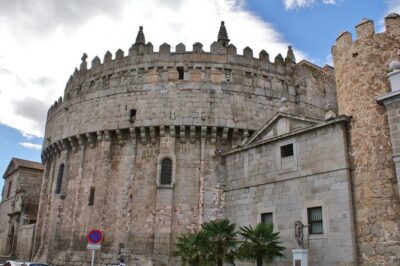





Prado Museum Tours, compared.
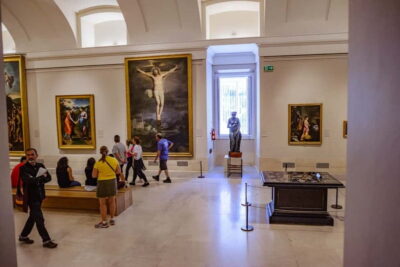 ★ 4.6Prado Museum Entry TicketFrom $2120,699 reviews
 ★ 4.6Small Group of Prado Museum Tour & Optional TapasFrom $532,437 reviews
 ★ 4.5Prado Museum Guided Tour with Skip-the-Line TicketFrom $462,018 reviews
 ★ 4.8Prado Museum Guided Tour With Fast AccessFrom $281,785 reviews
 ★ 5.0Prado Museum Small Group Tour with Skip the Line TicketFrom $541,738 reviews
 ★ 4.5Royal Palace & Prado Museum Skip the Line Guided TourFrom $821,347 reviews
 ★ 3.6Prado Museum Ticket with In-App Audio GuideFrom $351,154 reviews
 ★ 4.5Prado Museum Guided Tour with Skip-the-Line TicketFrom $451,146 reviews
Browse the lists this tour appears in