
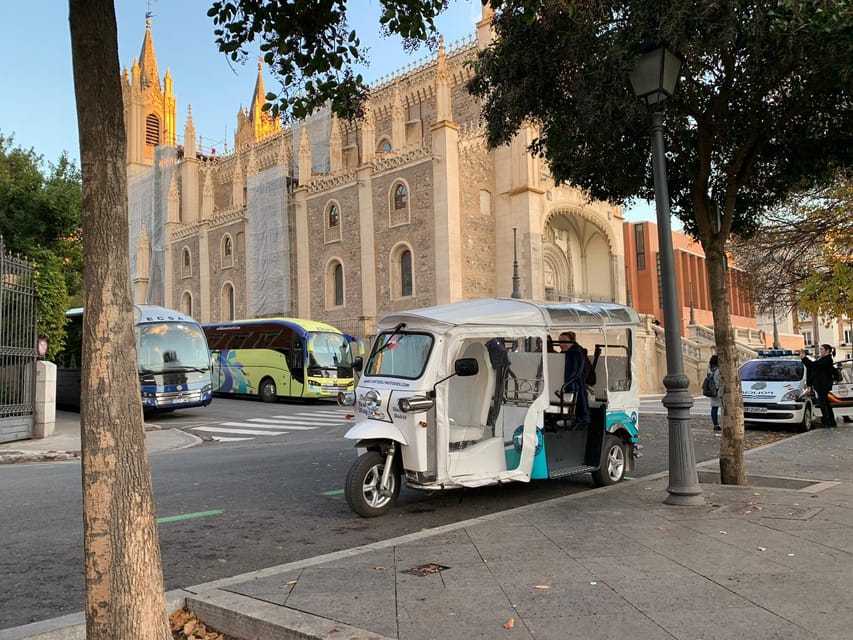
REVIEW · MADRID TUK TUK TOURS
Madrid Tuk Tuk Welcoming Tour
Madrid can feel big on your first day. This 2-hour tuk tuk welcome ride helps you get your bearings fast, with short stops at the city’s key sights plus a few side streets that make it feel lived-in. The route centers on classic Madrid anchors like Calle Mayor and then fans out to parks, markets, and the royal zone.
What I like most is how the timing is built for photos and orientation. You’re not stuck watching one long attraction; instead you collect memorable viewpoints quickly, from Puerta del Sol area landmarks to views toward Retiro and beyond. I also like the human factor: you’re with a live guide who can explain what you’re seeing in the moment, and I’ve seen guide mentions like Yonnathan for clear, attentive storytelling and Miguel for a great guiding style.
One possible drawback to plan for: language and sound quality can be hit-or-miss depending on the guide and the day. A couple of experiences point to issues with hearing the commentary and with the requested language, so I’d treat your guide language choice as something to double-check when you book.
In This Review
- Key Points Worth Noting
- First Stops: From Calle Mayor to San Miguel and Calle’s Real Street Life
- Sobrino de Botín and Cava Baja: Eating History Meets Nightlife Vibes
- Royal Basilica of San Francisco el Grande, Toledo Gateway, and the Big-City View Ahead
- Atocha Station: Why One Transport Hub Explains Madrid
- Buen Retiro Park and Alcála Gate: The City’s Classic Pause Spot
- Las Ventas and Bernabéu: Madrid’s Sporting and Show-Culture Side
- Paseo de la Castellana, Gran Vía, and Plaza de Callao: Madrid Gets Modern
- Temple of Debod to the Royal Palace: Sunset-Friendly Ancient Meets Royal Power
- Ópera, Almudena Cathedral, and Why This Finish Matters
- Price and Value: Is $187 for a Private Tuk Tuk Worth It?
- Language, Audio, and Getting On/Off: Smart Ways to Avoid Headaches
- Should You Book This Madrid Tuk Tuk Welcoming Tour?
- FAQ
- How long is the Madrid Tuk Tuk Welcoming Tour?
- What is the price and group size?
- Where do we meet for the tour?
- What languages are available for the live guide?
- What places does the tour include?
- Is the tour wheelchair accessible?
- What’s included in the tour price?
Key Points Worth Noting
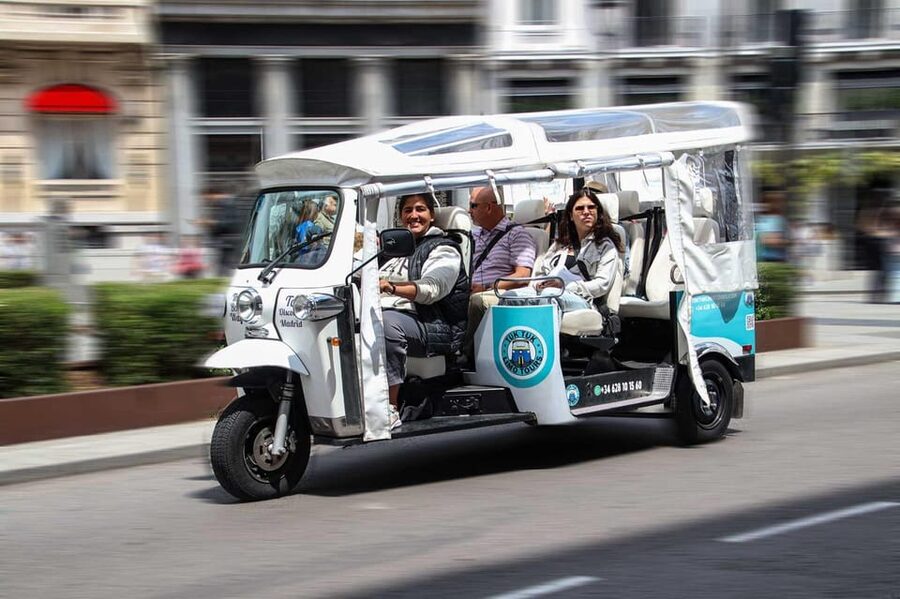
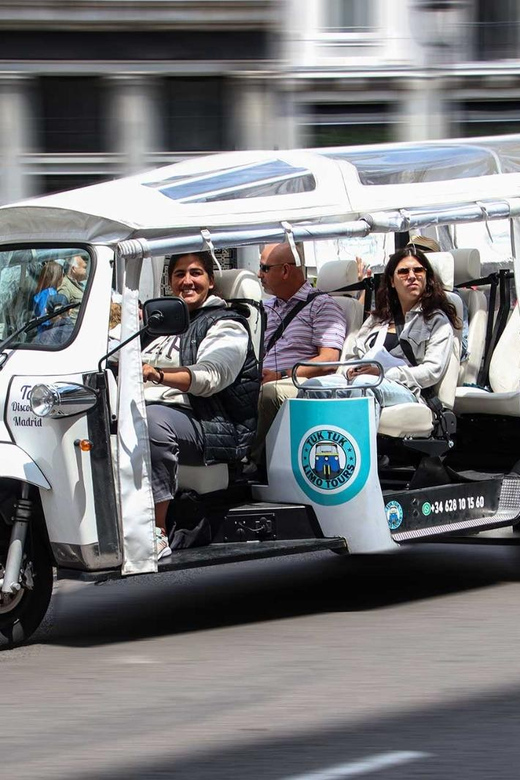
- Private group (up to 4) for a set price, so you’re not negotiating a crowd schedule.
- Electric tuk tuk makes short-city hops easy, ideal for first-day orientation.
- Photo-stop pacing: quick visits at big hitters like Retiro, Las Ventas, the Royal Palace area, and Almudena.
- Old Madrid to modern Madrid in one loop: Calle Mayor, San Miguel, Cava Baja, then Gran Vía and Bernabéu.
- Guide stories matter: named guides you’ll see praised include Yonnathan and Miguel.
- Potential hearing/language issues: plan to sit where you can hear best and confirm language needs up front.
Buzz the old centre by tuk tuk
- Madrid: Private City Tour by Eco Tuk Tuk★ 4.9 · 3,465 reviews
- Madrid Historical Tour with Local Guide in Eco Tuk Tuk Private★ 5.0 · 876 reviews
- Madrid Express Tour with Local Guide in Eco Tuk Tuk Private★ 5.0 · 413 reviews
- Madrid: Highlights City Tour by Electric Tuk Tuk★ 4.7 · 346 reviews
First Stops: From Calle Mayor to San Miguel and Calle’s Real Street Life
The tour starts where Madrid feels instantly old-school: C. Mayor 90. Meeting near the Cripta de Almudena area is a smart move because it puts you close to the royal/church corridor without forcing you to start deep in the tourist crush. From there, you move into the idea of Madrid as a “walkable story”—street, building, and legend all in one.
Calle Mayor is more than a pretty street. You get a photo-and-look stop tied to playwright Pedro Calderón de la Barca, which gives you a hook beyond the usual signage and stonework. In practical terms, it’s the kind of stop that helps you spot why certain neighborhoods feel important even when you’re just passing through.
Then you swing into the orbit of Puerta del Sol and the Mercado de San Miguel area. This is where you get that classic Madrid rhythm—food, noise, people, and the sense that the city runs on small, everyday pleasures. Even if you don’t snack, you’ll understand why this part of town became such a meeting point.
Sobrino de Botín and Cava Baja: Eating History Meets Nightlife Vibes
One of the most charming parts of the route is how it mixes food heritage with the atmosphere of the streets around it. You’ll stop at Sobrino de Botín, founded in 1725, noted as the oldest restaurant in the world. Whether or not you eat there, this is a powerful context cue: Madrid doesn’t treat tradition like museum glass—it treats it like routine.
Right after that comes Cava Baja, a historic lane connected to Moorish-era stories and later repurposed into a corridor you’ll recognize today for bars, traditional restaurants, hostels, and flamenco bars. For me, this is where “Madrid culture” becomes real. The tour isn’t just pointing at monuments; it’s showing you how neighborhoods evolve while keeping recognizable shapes.
A practical tip: this is the moment where you’ll want to think about how you’ll explore later. If Cava Baja feels like your pace, you can plan a nighttime return on foot, since the tour gives you the sense of the vibe without locking you into one long stop.
Royal Basilica of San Francisco el Grande, Toledo Gateway, and the Big-City View Ahead
The religious and architectural stop at Royal Basilica of Saint Francis the Great (La Latina area) gives you a breather from street-level life. You’re told the church history reaches back to the 13th century, which helps you understand why Madrid’s center isn’t just “modern capital”—it’s layers stacked over centuries.
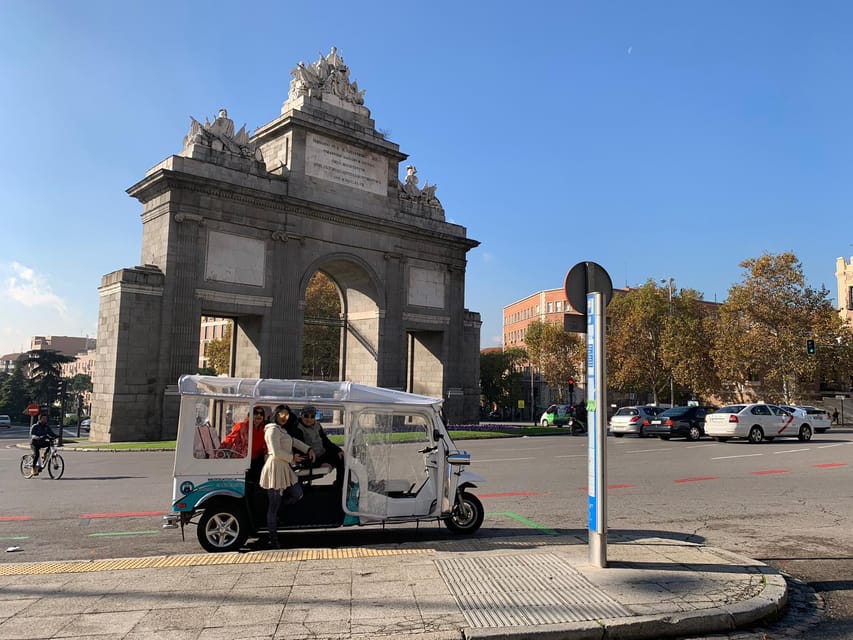
From there, you’ll go toward the Glorieta de Toledo viewpoint and the Puerta de Toledo. The gateway dates to the 19th century, and it’s the type of structure that suddenly makes a city map feel less abstract. It’s also a great “orientation anchor”—standing there, you can start mentally connecting Retiro-side routes with the center rather than treating them as separate worlds.
Even on a fast tour, these two stops together work well. One is the deep past (the basilica). The other is the city’s expansion and identity shift (the gate). You get both without needing museum tickets or a full-day commitment.
Atocha Station: Why One Transport Hub Explains Madrid
One of the most useful stops is Atocha Railway Station. The tour notes it serves about 90 million passengers annually. That number matters. It tells you Madrid is a hub city—people move through it like a system, not just a destination.
Even if you don’t ride a train, a quick look at Atocha helps you plan. You’ll start to see how easy it is to day-trip from Madrid and how much of the city’s energy is connected to movement. It’s a rare “practical culture” moment—transport becomes part of the story.
If your trip includes trains or you’re thinking about a quick excursion, this stop can change your plan. You’ll better understand where your logistics sit relative to the sights.



Buen Retiro Park and Alcála Gate: The City’s Classic Pause Spot
Next comes Buen Retiro Park, one of the best “slow down” zones in Madrid. The tour points you toward the park’s pond, monuments, and the Crystal Palace, with references to the reigns of Philip IV and Charles III. This is the park as a royal-era stage, not just a place for jogging.
A short stop here can still pay off because you get a sense of scale. Retiro is large enough that photos from the wrong angle can make it look generic. But with a guide pointing out what to look for, you’ll leave with a stronger mental image of where the interesting corners are.
Then you’ll see the Alcalá Gate, built in 1778 and once Madrid’s main entrance. This kind of stop is pure orientation value. It’s a reminder that Madrid has always had major “arrival points,” and the city grew around those gateways.
Practical drawback to remember: a park stop is only five minutes in this format. If you’re the type who wants to linger by the water or explore paths, consider using the tour to get your bearings and then come back later for a longer Retiro walk.
Las Ventas and Bernabéu: Madrid’s Sporting and Show-Culture Side
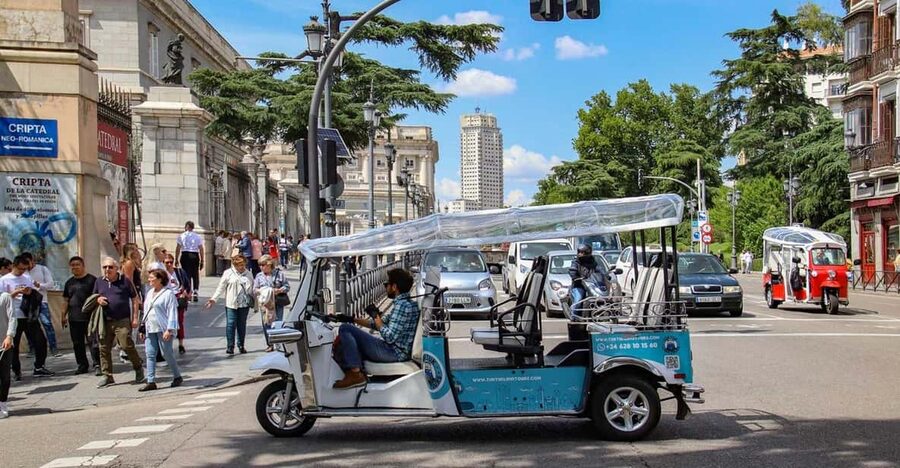
The tour includes Las Ventas, widely described as the world’s most important bullring. Even if bullfighting isn’t your thing, the building itself is a big statement in architecture and crowd culture. It’s a good stop for understanding why Spain’s traditions can be both controversial and deeply cultural.
Then you roll to Santiago Bernabéu Stadium, home to Real Madrid since 1947. If you’re a football fan, this is an instant emotional hook. If you’re not, it still shows you a different Madrid energy—this is the city’s modern identity exported worldwide.
A small reality check: these are photo-stop type moments rather than long stadium tours. So, if you’re hoping for a stadium tour experience, plan a separate outing. This route gives you the “where it is and why it matters” layer.
Paseo de la Castellana, Gran Vía, and Plaza de Callao: Madrid Gets Modern
The mid-to-late portion of the ride turns toward “city-in-motion” Madrid. Paseo de la Castellana is the major thoroughfare lined with historic mansions and now housing embassies and cultural centers, plus the Museum of Public Art. It’s a change of pace from old streets—more boulevard, more institutional Madrid.
Then comes Gran Vía, the iconic avenue associated with the city’s modernization and early skyscrapers. You’ll get a short photo stop that helps you see the avenue as a turning point: Madrid isn’t only crowned in old stone; it learned to build up and forward.
Plaza de Callao is another quick hit with art deco theater-and-cinema energy, and Plaza de España adds the famous Cervantes Monument at the intersection of Gran Vía and Princesa streets. These are the kind of squares you’ll recognize later when you’re walking around and suddenly thinking, I’ve seen this angle already.
If you’re trying to understand how Madrid’s streets connect for real—this is your “map in your eyes” segment.
Temple of Debod to the Royal Palace: Sunset-Friendly Ancient Meets Royal Power
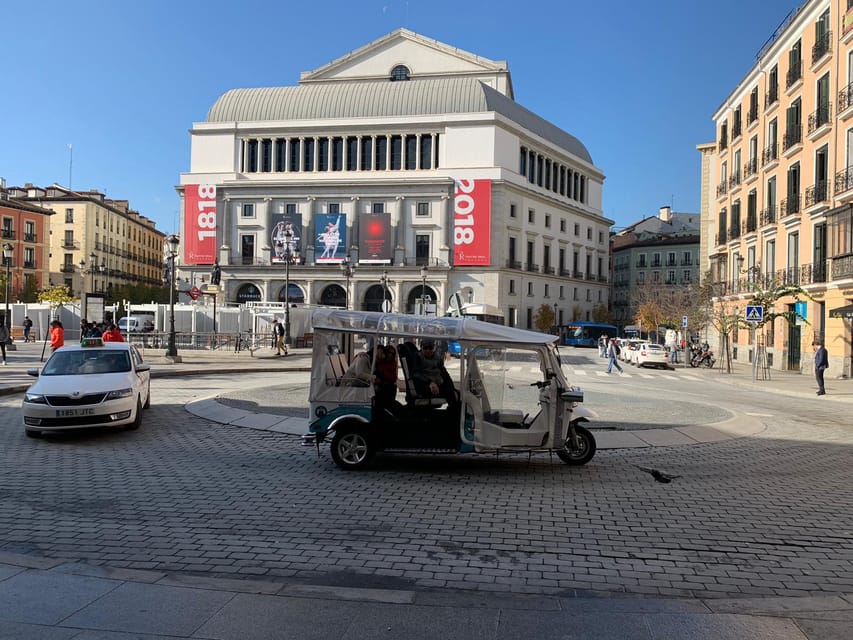
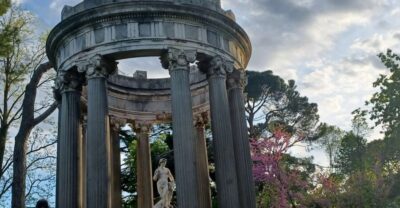
The route includes the Temple of Debod, an ancient Egyptian temple from the 2nd century BC that was relocated to Madrid in Cuartel de la Montaña Park. Even with a brief stop, it’s memorable because it breaks the expected pattern. Madrid has a surprise element here that feels like a travel plot twist: Egypt in the middle of a European capital.
Then you move into the royal zone with the Royal Palace of Madrid and Plaza de Oriente. Plaza de Oriente sits right by the palace and offers a pedestrian square with gardens and statues. This pairing helps you understand the palace not just as a building, but as part of a designed ceremonial space.
One note on expectations: you’ll be stopping for photos and short looks, not doing a full museum-style visit. If you want extended interior time, you’ll likely want a separate timed-entry plan later.
Ópera, Almudena Cathedral, and Why This Finish Matters
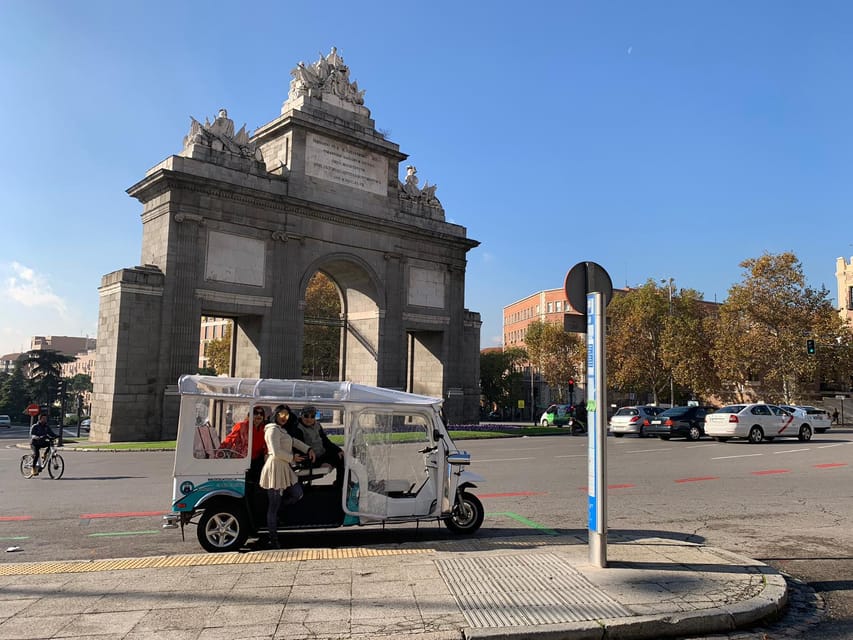
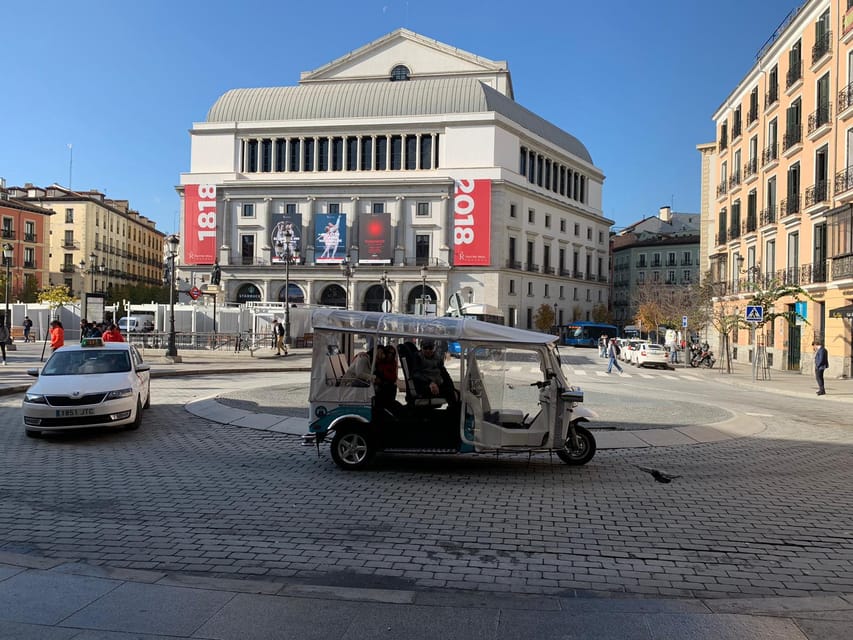
The tour also reaches Ópera Station, placed in Plaza de Isabel II with access to Teatro Real and the Royal Palace area. Even if you don’t ride the metro, this matters for future planning. You’ll know where the cultural center cluster sits relative to your next day.
Then the ride rounds out with Catedral de Almudena, completed in 1993 but with a history reaching over a century. It’s described as offering stunning architectural views, which fits how this tour ends: you want one final “wow” stop that makes the whole route feel coherent.
Finally, you return to C. Mayor 90 near the starting area. That loop—old core, royal zone, then back—helps you avoid the feeling of being dropped somewhere far from where you started.
Price and Value: Is $187 for a Private Tuk Tuk Worth It?
At $187 per group (up to 4) for about 2 hours, this tour can be good value—if your group size and priorities match.
Here’s how I’d think about it:
- If you have two to four people, you’re paying as a unit. That often beats the “solo price times four” feeling you get with many city tours.
- You’re buying transport + a live guide + multiple photo stops. The electric tuk tuk cost adds up if you would otherwise take taxis or do multiple rides back-to-back.
- The real value is the first-day orientation. When a tour reduces confusion and prevents you from missing key areas, it’s saving mental energy, not just money.
When it might not be the best fit: if you’re the type who wants slow, in-depth time inside major sights, this isn’t built for that. Think of it as an efficient introduction—then choose what to revisit on foot or with a longer guided tour.
Also remember the “language and audio” consideration from the feedback. If clear commentary matters to you, confirm your guide language preference and consider bringing a backup plan (like being comfortable reading signage at your stops).
Language, Audio, and Getting On/Off: Smart Ways to Avoid Headaches
The tour lists multiple languages: English, French, German, Italian, Portuguese, Slovenian, and Spanish. The idea is excellent—Madrid is international, and you want the guide to explain what you’re seeing in a way you can follow comfortably.
But there have been complaints about mismatch between the booked language and what the guide actually spoke. There have also been mentions of hearing difficulty, even when the tour audio was turned up. So I’d treat this like a small checklist before you roll:
- Pick a seat position where the guide’s voice (and any audio system) is easiest to hear.
- If you booked a specific language, double-check it in your confirmation and be ready to manage expectations if the day changes.
- If anyone in your group has mobility or balance concerns, ask the operator how boarding works. One piece of feedback noted that getting in and out wasn’t easy for some riders.
None of this means the tour is a gamble. It means you’ll get better results if you prepare a little and choose your seating with intention.
Should You Book This Madrid Tuk Tuk Welcoming Tour?
I’d book this tour if you want a fast, fun first look at Madrid that mixes classic sights with real neighborhood flavor. It’s especially good for a small group who wants comfort, photo stops, and a guide to connect dots—Calle Mayor to markets, retuning from Retiro to sports landmarks, then closing with the royal-and-cathedral area.
I’d hesitate if you need long interior visits, or if your group depends on perfect audio and a specific language on the dot. In that case, consider pairing it with one more targeted experience where you can control the format, time, and language environment.
If you’re flexible and you want to start your Madrid trip with momentum, this is the kind of tour that helps you hit the ground running. You’ll leave with a mental map of where you want to linger later—and where you definitely want to return for a longer walk.
FAQ
How long is the Madrid Tuk Tuk Welcoming Tour?
It lasts 2 hours (about 120 minutes).
What is the price and group size?
The price is $187 per group, with a limit of up to 4 people.
Where do we meet for the tour?
Meet at C. Mayor, 90 (Cripta de Almudena, Madrid). Look for Tuk Tuk Limo Tour branded tuktuks.
What languages are available for the live guide?
The live guide is available in English, French, German, Italian, Portuguese, Slovenian, and Spanish.
What places does the tour include?
You’ll make short stops for photos and visits at major sights such as Calle Mayor, Mercado de San Miguel, Sobrino de Botín, Cava Baja, Royal Basilica of Saint Francis the Great, Atocha Station, Buen Retiro Park, Alcalá Gate, Las Ventas, Santiago Bernabéu Stadium, Gran Vía, Plaza de España, Temple of Debod, Royal Palace, Plaza de Oriente, Ópera Station, and Almudena Cathedral.
Is the tour wheelchair accessible?
Yes, it is listed as wheelchair accessible.
What’s included in the tour price?
Included: an electric tuk tuk, a driver/guide, insurance, and the guide’s stories about Madrid. The tour also notes skip the ticket line support.
More Tours in Madrid
- Madrid: Tour Bernabéu Entry Ticket
★ 4.5 · 21,573 reviews - Madrid: Panoramic Route City Tour
★ 4.1 · 12,259 reviews - Avila & Segovia Tour with Tickets to Monuments from Madrid
★ 5.0 · 9,762 reviews - Madrid: Royal Palace Expert Guided Tour with Skip-the-Line
★ 4.7 · 8,407 reviews - Madrid: Segovia and Toledo Tour, Alcazar, and Cathedral
★ 4.7 · 7,797 reviews - Toledo Tour from Madrid: Cathedral, Synagogue & St. Tome’s Church
★ 5.0 · 6,784 reviews
More Tour Reviews in Madrid
- Madrid: Tour Bernabéu Entry Ticket
★ 4.5 · 21,573 reviews - Madrid: Prado Museum Entry Ticket
★ 4.6 · 20,699 reviews - Madrid: “Emociones” Live Flamenco Performance
★ 4.8 · 12,866 reviews - Madrid: Panoramic Route City Tour
★ 4.1 · 12,259 reviews - Madrid: Live Flamenco Show with Food and Drinks Options
★ 4.5 · 9,901 reviews - Avila & Segovia Tour with Tickets to Monuments from Madrid
★ 5.0 · 9,762 reviews
Tuk Tuk Around the Middle
- Madrid: Private City Tour by Eco Tuk Tuk
★ 4.9 · 3,465 reviews - Madrid Welcome Tour with Local Guide in Eco Tuk Tuk Private
★ 5.0 · 2,936 reviews - Madrid Historical Tour with Local Guide in Eco Tuk Tuk Private
★ 5.0 · 876 reviews - Madrid Express Tour with Local Guide in Eco Tuk Tuk Private
★ 5.0 · 413 reviews - Madrid: Highlights City Tour by Electric Tuk Tuk
★ 4.7 · 346 reviews - Madrid: City Highlights Tuk Tuk Tour
★ 4.4 · 334 reviews
Just Added: New Madrid Tour Reviews

Madrid Tuk Tuk Tours, compared.
 ★ 4.9Private City Tour by Eco Tuk TukFrom $283,465 reviews
 ★ 5.0Madrid Welcome Tour with Local Guide in Eco Tuk Tuk PrivateFrom $282,936 reviews
 ★ 5.0Madrid Historical Tour with Local Guide in Eco Tuk Tuk PrivateFrom $28876 reviews
 ★ 5.0Madrid Express Tour with Local Guide in Eco Tuk Tuk PrivateFrom $28413 reviews
 ★ 4.7Highlights City Tour by Electric Tuk TukFrom $28346 reviews
 ★ 4.4City Highlights Tuk Tuk TourFrom $94334 reviews
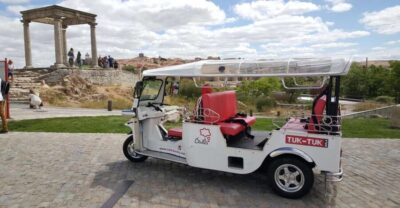 ★ 4.4Tour Guiado En Tuk Tuk Recorre Avila De La Forma Mas ComodaFrom $10235 reviews
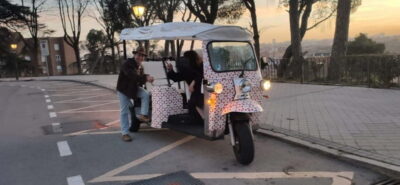 ★ 4.6City Tours – 6 seats private ecological tuk tukFrom $53230 reviews
Browse the lists this tour appears in