
Madrid turns eerie when you follow Inquisition footsteps. I love the stop at the Royal Monastery of La Encarnación and how the tour unpacks the Black Legend, the Inquisition’s infamous foreign image. One thing to consider: you won’t get a horror show; expect mostly street-and-building context and clear explanations rather than graphic reenactments.
The good part is how real Madrid feels while you’re learning. Guides such as Sebastian, Enrique, John, and Lexi H are repeatedly praised for fast storytelling and strong historical context, which matters here because the subject is heavy. It’s a walking tour in the center of town, and it uses location like a textbook—only darker.
In This Review
- Key highlights to look for
- Why the Spanish Inquisition still feels present in Madrid
- Plaza Mayor to the trial sites: the route that turns streets into evidence
- Monastery of La Encarnación: the jail part of a Royal stop
- How the Inquisition worked: from religious orthodoxy to organized repression
- The Black Legend: how propaganda traveled faster than facts
- Price and value: what $31 buys in a 2-hour experience
- What group size and guide style feels like in practice
- Practical tips for a smoother walk in central Madrid
- Who should book this Spanish Inquisition walking tour
- Should you book it? My decision guide
- FAQ
- How long is the Madrid Spanish Inquisition walking tour?
- Where do I meet the guide?
- What’s included in the price?
- Is the tour wheelchair accessible?
- What language is the tour in?
- Is it free for children?
Key highlights to look for
- Plaza Mayor start with a simple landmark meeting point near Sol
- Mass trial site viewing in the city center, tied to how the tribunal worked
- Royal Monastery of La Encarnación visit including a jail space used in Inquisition times
- Origins and enforcement: what started as religious control and became repression
- The Black Legend and how foreign propaganda shaped what people think they know
- Storytelling that keeps pace even when you hit uncomfortable topics
The darker corners of old Madrid, retold
- Madrid: Spanish Inquisition and Legends Evening Walking Tour★ 4.7 · 1,396 reviews
- Madrid Oscuro: Torture, Ghosts, Crimes and Legends★ 5.0 · 1,363 reviews
- Madrid: Entry Ticket to Legends The Home of Football Museum★ 4.7 · 856 reviews
- Madrid: The Spanish Inquisition Walking Tour★ 5.0 · 399 reviews
Why the Spanish Inquisition still feels present in Madrid
This tour is built around an idea you’ll probably feel in your gut: power doesn’t just happen in history books. It leaves habits in cities—where people gathered, who had authority, and what buildings were designed to control fear.
You’ll learn how the Spanish Inquisition began with the goal of protecting Catholic orthodoxy and moral order, and how that aim quickly hardened into an oppressive system. The tour also stresses consequences: the tribunal’s reputation is not just about punishment, but about how long it lasted and how far its reach went through Spain.
And since you’re in Madrid—rather than an abstract museum setting—you get a different kind of impact. The streets and buildings don’t look like a gothic set, which makes the history feel sharper. You’ll be staring at normal urban space while your guide explains why it once carried terror.
Plaza Mayor to the trial sites: the route that turns streets into evidence
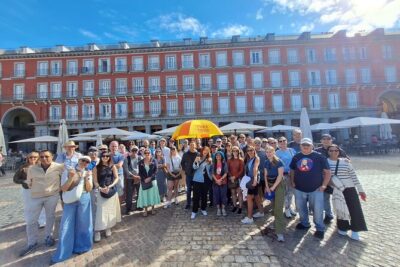
Most of the experience happens on foot in Madrid’s central area, and you’ll start at the Tourist Information Center on Plaza Mayor. Metro is easy: take lines 1, 2, or 3 to Sol, then walk about 400 meters to the meeting point.
From there, the walking portion links several key urban areas connected to Inquisition activity, including the site of a mass trial. That stop matters because it puts you right in the flow of public life—exactly where a tribunal would want attention. You’re not just learning what was done; you’re learning how it was staged, witnessed, and remembered.
A practical note: the exact path can vary depending on what your guide thinks is best for the group. That flexibility is usually good on a walking tour like this, but it also means you should plan for a classic city-center pace—short segments, frequent turning, and time spent listening on the move.
If you’re expecting lots of inside access, keep it realistic. One theme that comes through strongly is that many references are visible in plain sight, but not every spot turns into a fully entered site. So bring the right mindset: this is more about interpretation than sightseeing checklists.
Monastery of La Encarnación: the jail part of a Royal stop
The tour’s signature included visit is the Royal Monastery of La Encarnación. This is where the story gets physical. Your guide brings you to a jail used during the Inquisition, and you see how punishment lived alongside religion and prestige.
What makes this stop especially useful is contrast. A monastery feels like devotion, architecture, and order. Then your guide reframes it as a place tied to confinement and interrogation. Even without sensational details, that mental switch is powerful, because it shows how normalized the system became.
You might find that some areas feel dim or hard to see clearly depending on the day and lighting conditions, since parts of the convent areas can be closed off or less than bright. If you want to take photos, plan to keep your expectations flexible—and lean more on what your guide explains than on what you can visually capture.
This is also one reason the tour works well as a standalone experience. You leave the streets and end up at a place where the building itself supports the narrative. It’s not just “Madrid today.” It’s Madrid with an older layer pulled back.
How the Inquisition worked: from religious orthodoxy to organized repression
A good Inquisition tour can get stuck in either shock value or vague statements. This one aims at mechanisms—why the Inquisition existed, who ran it, and how it justified its power.
You’ll be walked through the idea that it started as an attempt to safeguard the sanctity of the Catholic church and enforce moral conformity. Then it shifts from intention to enforcement: torture, repression, and banishment are part of what your guide explains as the system spread.
The tour also highlights numbers in a careful way: it mentions more than 3,000 people killed over roughly four centuries. That figure isn’t there to turn the experience into statistics theater. Instead, it gives you scale so the conversation about fear, control, and institutional persistence doesn’t feel like a single brutal chapter—it feels like a long shadow.
If you’re the type who likes cause-and-effect, this angle is for you. You’ll come away with a better grip on what makes an institution endure: legal structure, public demonstration, and the way ideology can be treated like procedure.
The centre on foot, other ways round



The Black Legend: how propaganda traveled faster than facts
One of the most interesting parts of the tour is the conversation about the Inquisition’s reputation abroad—especially the myth often linked to the Black Legend.
Your guide explains how this broader narrative influenced perceptions outside Spain, shaping what people thought they knew about the Inquisition long after the events passed from active history. In other words, the story isn’t only about what happened in Madrid. It’s also about how Europe and other places interpreted Spain through moral panic, politics, and rumor.
This matters because it changes how you read what you see. If you only take the story at face value, you miss the full lesson: societies don’t just persecute people. They also market themselves—sometimes by exaggeration, sometimes by selective storytelling.
You’ll likely find yourself leaving with a more careful habit: separating the reality of repression from the later mythology built around it. That’s useful even for day-to-day travel, because it teaches you how narratives get powered by repetition.
Price and value: what $31 buys in a 2-hour experience
At $31 per person for about 2 hours, this isn’t one of the cheapest walking tours in Madrid, but it also isn’t overpriced for what you get.
Here’s the real value math:
- You’re paying for a live local guide who turns urban locations into context.
- You’re getting an included Royal Monastery of La Encarnación visit, which adds substance beyond “just walking past buildings.”
- You’re not depending on audio-only storytelling or an unstructured route.
Could it be more expensive if it included lots of entry tickets? Sure. But the structure you’re buying is interpretation plus one meaningful stop. For many people, that’s the sweet spot: you cover major ideas in a short window and you don’t waste half a day waiting in lines.
Also, there’s no hotel pickup or drop-off included, so you’ll start on your own at Plaza Mayor. The upside is you keep it simple and centralized; the tradeoff is you should plan to arrive a few minutes early.
What group size and guide style feels like in practice
Even though this is presented as a small-group walking tour, the energy can shift depending on how many people show up. Some bookings end up small enough that the guide can keep conversations flowing and adjust to questions on the spot.
You’ll see this pattern reflected in how guides like John and Enrique are praised for pacing and for connecting history to Spanish culture. Others, like Lexi H and Joaquin, get credit for keeping attention tight and explaining complicated nuance in clear English.
So if you want a more direct Q&A style, arrive curious and ready to ask. If you’re nervous about the topic, the best guides handle it with clarity and care—no sensationalism, just firm historical framing.
Practical tips for a smoother walk in central Madrid
This tour is wheelchair accessible, and your itinerary can vary based on what works best for the group. Still, expect walking. Wear comfortable shoes and plan for the normal pace of Madrid streets—uneven pavement, turns, and listening time.
Also, bring a light layer if you’re going in colder months or later in the day. A jacket suggestion shows up for night tours, because you’ll be outside for the walking portion before and after the monastery stop.
If you’re the kind of person who likes water, bathrooms, and not rushing, it helps to know that guides often build in small breaks. You can also ask your guide where you’ll have a chance during the walk.
Finally, arrive at the meeting point early enough to find your guide. The cue is straightforward: a guide wearing a red T-shirt and holding a red umbrella.
Who should book this Spanish Inquisition walking tour
Book this if:
- you want a Madrid-focused Inquisition story instead of a generic history lecture
- you like tours that connect ideology to real locations, not just dates
- you’re curious about how reputations formed abroad through the Black Legend
You might skip it if:
- you only want graphic or visual depictions (this is structured around historical context)
- you dislike emotionally heavy topics—torture, repression, and banishment are discussed plainly, even if the tone stays educational
It also fits families with older kids. Children under 13 go free with a valid ID, and one reason the tour works with teenagers is that it explains cause-and-effect in a way that can spark real questions.
Should you book it? My decision guide
I’d book this if you want your Madrid to feel layered—street life plus institutional history—done in a tight 2-hour format with a real stop at La Encarnación. The price feels fair because you’re paying for a guide and a specific included site, not just a wandering route.
If you’re on the fence, ask yourself one question: do you enjoy understanding how systems of power operate? If yes, this tour delivers. If no, consider a lighter neighborhood walk instead.
FAQ
How long is the Madrid Spanish Inquisition walking tour?
It lasts about 2 hours.
Where do I meet the guide?
Meet your guide in front of the Tourist Information Center on Plaza Mayor. From Sol station, walk about 400 meters.
What’s included in the price?
The tour includes a walking tour, a local guide, and a visit to the Royal Monastery of La Encarnación.
Is the tour wheelchair accessible?
Yes, it’s wheelchair accessible.
What language is the tour in?
The live tour guide speaks English.
Is it free for children?
Children under 13 go free with a valid ID.
More Tour Reviews in Madrid
- Madrid: Tour Bernabéu Entry Ticket
★ 4.5 · 21,573 reviews - Madrid: Prado Museum Entry Ticket
★ 4.6 · 20,699 reviews - Madrid: “Emociones” Live Flamenco Performance
★ 4.8 · 12,866 reviews - Madrid: Panoramic Route City Tour
★ 4.1 · 12,259 reviews - Madrid: Live Flamenco Show with Food and Drinks Options
★ 4.5 · 9,901 reviews - Avila & Segovia Tour with Tickets to Monuments from Madrid
★ 5.0 · 9,762 reviews
Walk the Heart of Madrid
- Madrid Tapas & Wine Tasting Walking Tour – Small Group Local Bars
★ 5.0 · 3,644 reviews - Madrid Welcome Tour with Local Guide in Eco Tuk Tuk Private
★ 5.0 · 2,936 reviews - Madrid Walking Tour from Puerta del Sol to Retiro Park
★ 5.0 · 2,285 reviews - Madrid Old Town & Royal Palace Walking Tour Skip the Line Ticket
★ 4.5 · 1,829 reviews - Madrid: Welcome to Madrid Guided Walking Tour
★ 4.9 · 1,738 reviews - Madrid: Spanish Inquisition and Legends Evening Walking Tour
★ 4.7 · 1,396 reviews
The Legends and Ghosts of Madrid
- Madrid: Spanish Inquisition and Legends Evening Walking Tour
★ 4.7 · 1,396 reviews - Madrid Oscuro: Torture, Ghosts, Crimes and Legends
★ 5.0 · 1,363 reviews - Madrid: Entry Ticket to Legends The Home of Football Museum
★ 4.7 · 856 reviews - Madrid: The Spanish Inquisition Walking Tour
★ 5.0 · 399 reviews - Evening Walking Tour: Spanish Inquisition & Legends of Old Madrid
★ 4.5 · 311 reviews - Inquisition, The Executioner, Witches, Expulsion Jews and Muslims
★ 5.0 · 85 reviews
Just Added: New Madrid Tour Reviews



Madrid Ghost & Legend Tours, compared.
 ★ 4.7Spanish Inquisition and Legends Evening Walking TourFrom $231,396 reviews
 ★ 5.0Madrid Oscuro: Torture, Ghosts, Crimes and LegendsFrom $31,363 reviews
 ★ 4.7Entry Ticket to Legends The Home of Football Museum856 reviews
 ★ 5.0The Spanish Inquisition Walking TourFrom $31399 reviews
 ★ 4.5Evening Walking Tour: Spanish Inquisition & Legends of Old MadridFrom $24311 reviews
 ★ 4.7Toledo: Mysteries and Secrets Tour in SpanishFrom $14106 reviews
 ★ 5.0Inquisition, The Executioner, Witches, Expulsion Jews and MuslimsFrom $385 reviews
 ★ 4.52-Hour Tour of the Madrid of MysteriesFrom $1475 reviews
Browse the lists this tour appears in