
REVIEW · MADRID GHOST & LEGEND TOURS
Inquisition, The Executioner, Witches, Expulsion Jews and Muslims
Madrid has a dark paper trail. This walking tour strings together Spanish Inquisition stories—trials, “false” accusations, and the grim machinery of punishment—across real churches and plazas, then lands at the end of the era with modern echoes like the garrote vil. You’ll hear how Christianity, Islam, and Judaism got pulled into the same conflict web.
What I really like is the stop-by-stop structure: each location comes with clear context, so you don’t leave with a jumble of names. And the guide matters a lot—on past departures, people specifically praised performers like Jackie and David Onion for keeping the story easy to follow and engaging the group.
One possible drawback: this is heavy material (accusations, torture, executions). If you’re sensitive to that, plan your mental pacing—and because it’s a walking route, you’ll want to dress for the weather.
In This Review
- Key Highlights You’ll Care About
- Why the Spanish Inquisition Story Works Best in Madrid’s Real Spaces
- The Route: 2 Hours 15 Minutes From Plaza Mayor to Plaza de la Armería
- Stop 1: Iglesia de Santa Cruz and the Three-Religion Framing
- Stop 2: Plaza de La Provincia and How Confessions Were Forced
- Stop 3: Casa de la Carnicería and the Cultural Memory of Trial
- Stop 4: Basilica de San Miguel and the Logic of False Accusations
- Stop 5: Casa Cisneros and the Cisneros vs Torquemada Contrast
- Stop 6: Plaza de la Cruz Verde and Execution Methods (Including Garrote Vil)
- Stop 7: Catedral de Santa María la Real de la Almudena and the Inquisition’s End
- Stop 8: Plaza de la Armería and Modern Religious Conflicts
- Price and Value: Why This Tour Can Be a Bargain
- The Guide Makes (or Breaks) It: What to Expect From the Storytelling
- Who This Tour Is Best For
- Should You Book This Tour? Quick Decision Guide
- FAQ
- Where does the tour start and end?
- How long is the tour?
- Is the tour offered in English?
- Do I need to pay entry fees for the sites?
- Do I receive a mobile ticket?
- How many people are on the tour?
- Is this tour priced per person or per group?
- Do I need to tip?
- Can I cancel and get a refund?
Key Highlights You’ll Care About
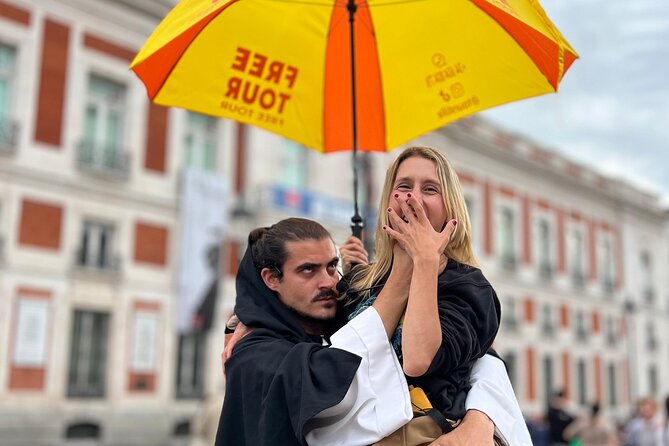
- A tight 2h15 route with frequent photo-friendly stops, starting at Plaza Mayor and ending at Plaza de la Armería
- Execution and trial context at the spots where people were investigated, tortured, and sentenced
- Edicts of Faith and accusation logic explained at Basilica de San Miguel
- Major historical figures in brief form at Casa Cisneros versus Torquemada
- Execution methods explained in plain language at Plaza de la Cruz Verde
- The “end of the Inquisition” conversation with modern religious legacies at Almudena and Plaza de la Armería
The darker corners of old Madrid, retold
- Madrid: Spanish Inquisition and Legends Evening Walking Tour★ 4.7 · 1,396 reviews
- Madrid Oscuro: Torture, Ghosts, Crimes and Legends★ 5.0 · 1,363 reviews
- Madrid: Entry Ticket to Legends The Home of Football Museum★ 4.7 · 856 reviews
- Madrid: The Spanish Inquisition Walking Tour★ 5.0 · 399 reviews
Why the Spanish Inquisition Story Works Best in Madrid’s Real Spaces
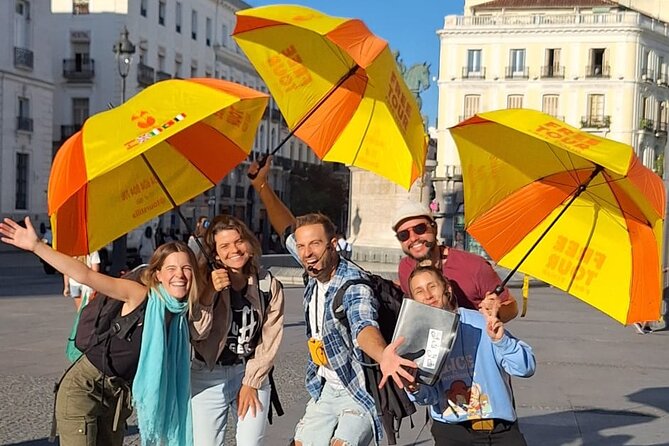
The Spanish Inquisition can feel like a textbook topic—until you stand in the geography of it. On this walk, Madrid’s streets and stone landmarks turn into evidence boards. You’re not just hearing that trials happened; you’re seeing the kinds of spaces where investigations, public proclamations, and punishments were discussed and carried out.
I like that the tour doesn’t treat this as one religion talking to itself. It frames the conflict around the three monotheistic traditions—Christianity, Islam, and Judaism—and explains why conversion, suspicion, and accusations were so entangled. That matters, because the real story isn’t only about one doctrine. It’s about power, fear, and how communities got labeled.
The Route: 2 Hours 15 Minutes From Plaza Mayor to Plaza de la Armería
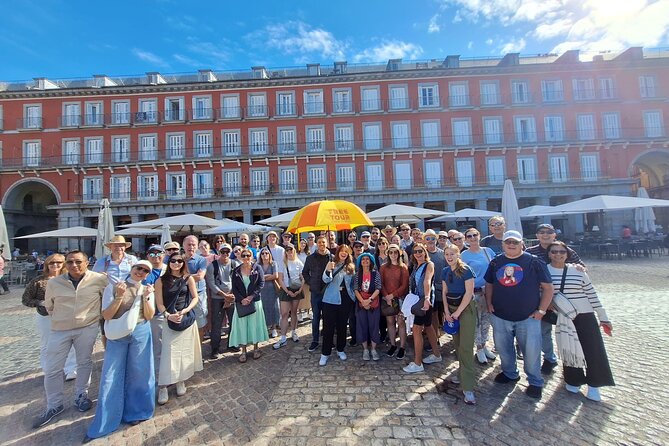
You’ll walk a compact route for about 2 hours 15 minutes. It’s offered in English, with a maximum group size of 30 travelers (and the price is listed per group up to 15). The meeting point is Plaza Mayor (Centro, Madrid), and the walk finishes at Plaza de la Armería, which is about 10 minutes walk from Plaza Mayor and around 3 minutes from Metro Opera.
This is a good format if you want history without committing to a half-day of museum time. You’ll also get printed material and teaching tools along the way, plus a link to personalized recommendations for what to do in Madrid after the tour.
Practical tip: this is mostly a walking tour with short stops (often 10–20 minutes). Comfortable shoes help. Also, keep your expectations realistic: a walking tour can explain a lot, but it moves fast enough that you’ll want to take notes if this topic matters to you.
Stop 1: Iglesia de Santa Cruz and the Three-Religion Framing
The tour opens at Iglesia de Santa Cruz, and it sets the theme immediately: how the Inquisition connected to Christianity, Islam, and Judaism. This first stop is crucial because it gives you the vocabulary the rest of the route uses—terms like suspicion, identity, and the logic of “purity” and faith classification.
What’s valuable here is the setup. When you know the tour’s question—how these religions got pulled into the same conflict—you’ll understand the later stops about accusations and “false” believers as more than shock stories. They become part of a system.
One thing to consider: because this is a historical tour dealing with religious persecution, the conversation may feel intense even at the start. If you want a gentle entry, give yourself a minute before the topic shifts into investigation details.
Stop 2: Plaza de La Provincia and How Confessions Were Forced
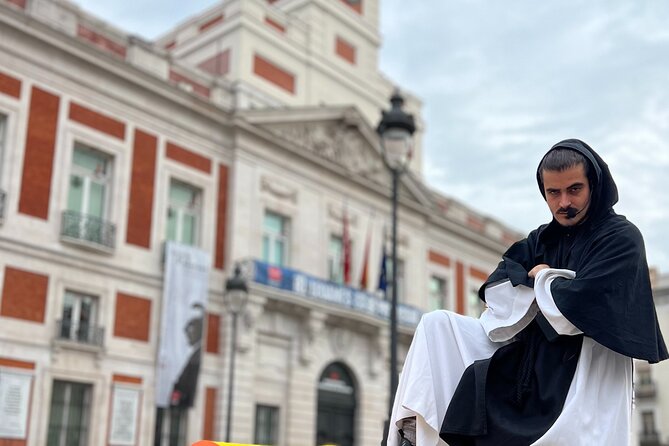
Next comes Plaza de La Provincia, where you’ll hear about the executioner and the Inquisition’s investigation process. This stop focuses on the chain of events—how cases were pursued, how torture figured in the system, and how confessions were obtained.
In my view, this is where the tour turns from “who believed what” into “how power worked.” Even if you already know the broad history of the Inquisition, the value is in hearing it explained as a procedure: investigation → pressure → confession → punishment.
The downside of this kind of stop: it’s emotionally heavy. But if you want the historical reality instead of a sanitized version, this is one of the places you shouldn’t skip mentally.


Stop 3: Casa de la Carnicería and the Cultural Memory of Trial
At Casa de la Carnicería, the story shifts from procedures to imagery and public memory. You’ll hear about the idea of the autos de fe (often described as “cars of faith” in tour wording), and you’ll connect it to the “big trial” atmosphere.
The stop also points you toward the most famous painting tied to this kind of public religious spectacle. That’s useful because art is part of how the public understood the Inquisition—sometimes accurately, sometimes through a heavy dose of propaganda and drama.
If you’re an “I learn best with visuals” person, this one helps. If you prefer strict documents over imagery, you’ll still get context, but you may want to pace yourself so the story doesn’t blur into emotional spectacle.
Stop 4: Basilica de San Miguel and the Logic of False Accusations
Now you hit Basilica de San Miguel, and the tour gets very specific about accusations. You’ll hear about questions like how to identify a false Jew or a false Moorish, and how things were tied to proclamations like the Edicts of Faith—plus examples of false allegations.
This is one of the stops where the tour’s framing can do real work for you. You’re not just hearing “people were accused.” You’re seeing how the accusation logic was treated as a kind of social and religious identification system. That’s important for understanding how ordinary people could get swept into violent outcomes.
A caution: this stop deals with labeling and persecution. If that kind of language hits you hard, mentally note that you’re reading historical classifications from a grim period, not endorsing them.
Stop 5: Casa Cisneros and the Cisneros vs Torquemada Contrast
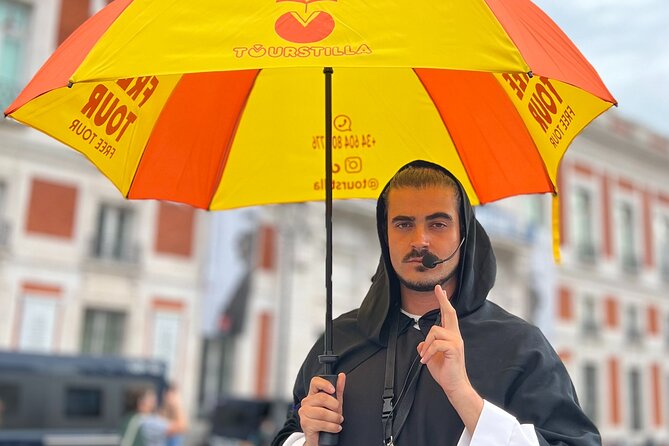
At Casa Cisneros, the tour presents a historical character matchup: Cisneros versus Torquemada. This stop is shorter (around 10 minutes), but it gives you names that often show up later in Spanish religious history.
Even in a brief stop, a contrast like this is useful. Torquemada is commonly associated with the Inquisition, but the tour’s inclusion of Cisneros helps you see that historical figures aren’t just one-note villains. The tension between approaches and power is part of the story.
If you love history that includes personalities, you’ll likely appreciate this quick dose. If you’re mostly here for the street-level “what happened,” treat it as an anchor for later reading.
Stop 6: Plaza de la Cruz Verde and Execution Methods (Including Garrote Vil)
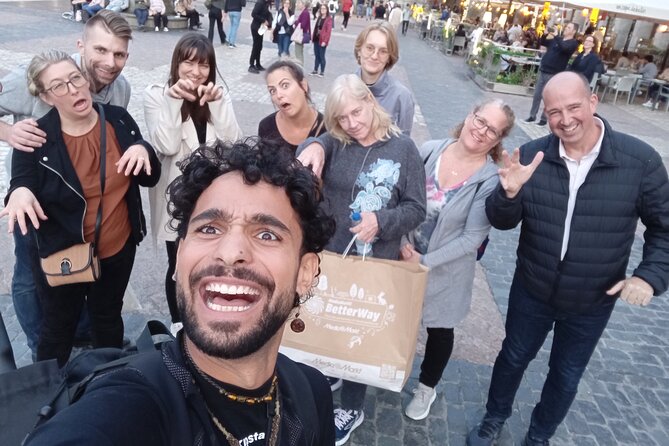
At Plaza de la Cruz Verde, the tour points to a symbol of the Inquisition, then moves directly into punishment methods: the gallows, beheading, garrote vil, and burning at the stake. The tour also makes note of “Bruges” as part of how execution methods get discussed.
This is the most graphic-feeling section of the walk. The value is that the guide explains how the system carried out sentences rather than leaving you with vague horror. You’ll also get a sense of how the public nature of punishment reinforced fear and compliance.
If you go into this expecting only history, you’ll probably be shocked by the specificity. If you go in expecting explanations, it becomes sobering rather than chaotic.
Stop 7: Catedral de Santa María la Real de la Almudena and the Inquisition’s End
Then you reach Catedral de Sta Maria la Real de la Almudena, and the tone shifts from machinery of punishment to institutional closure. The tour covers the mention of Vatican Archives, and it connects the Church’s role to a later moment with John Paul II and the Pardon of the Catholic Church.
You’ll hear about the end of the Inquisition and the “last execution” discussion tied to 1974 and garrote vil. The tour also points to the legacies of Jews in Spain and Muslims in Spain, which brings the historical story into the present day in a way that feels less like a closed chapter and more like a long shadow.
This stop is where I think the tour earns its balance. It doesn’t only say, “That happened.” It asks what’s still living in culture, memory, and identity.
Stop 8: Plaza de la Armería and Modern Religious Conflicts
The walk finishes at Plaza de la Armería, where the guide ties the story to today: current religious conflicts, ideas like holy wars, and how legacies continue. You also get a closing reflection.
This final stop matters because it prevents the tour from becoming a museum of brutality with no meaning. The goal isn’t to turn you into a political expert in two hours. It’s to help you notice how old narratives can linger, and how societies keep repeating patterns when fear and identity get tangled.
Price and Value: Why This Tour Can Be a Bargain
The listed price is $3.61 per group (up to 15), and the tour lasts about 2 hours 15 minutes. There’s a local guide, teaching tools, printed material, and personalized recommendations afterward.
Crucially, entries to the sites are not required. That lowers friction. You get the context right where the story happened without spending your day paying add-on admission fees.
Also, the guide experience seems to be the main driver of satisfaction. Past participants gave top marks to guides like Jackie and David Onion for making the story easy to follow and entertaining without turning it into a cartoon. One review also praised a no-pressure approach to tips, with a tactful explanation of tipping procedure at the end.
So you’re paying for explanation and structure more than for museum access. If that matches how you like to learn, you’ll probably feel you got your money’s worth fast.
The Guide Makes (or Breaks) It: What to Expect From the Storytelling
This tour’s success depends heavily on the guide’s delivery. In past departures, people singled out guide performance that used dramatic flair while staying clear and organized. Names like Jackie and David Onion came up in that praise, and that pattern tells you something: the operator invests in presentation, not just facts.
That matters for this topic because it has lots of moving parts—religious identity, investigation methods, public proclamations, and later institutional responses. A good guide helps you keep the timeline straight and makes the walking route feel like one connected lesson instead of eight separate stops.
Who This Tour Is Best For
I’d recommend it if:
- You want street-level history tied to real Madrid locations.
- You’re curious about how the Inquisition intersected with Christianity, Islam, and Judaism.
- You like guided storytelling that’s energetic but still focused.
- You’d rather learn with a structure and handouts than wander alone.
I’d think twice if:
- You’re very sensitive to stories involving torture and execution.
- You prefer only neutral, document-heavy history with zero emotional emphasis.
- You’re hoping for a lightweight “spooky sights” walk. This one is a serious historical explanation of persecution.
Should You Book This Tour? Quick Decision Guide
Yes, you should book if you’re the type who learns best when a guide turns places into a narrative, and you want a compact walk that covers the trial system, edicts, and execution methods without ticket headaches. The route is short, the pacing is built around key sites, and the guide storytelling seems to be the biggest strength.
Hold off if you know you’ll struggle with intense, graphic themes. Also, if your schedule is tight, watch for last-minute operational issues—one past experience was canceled at the last minute—so having a flexible day helps.
If you do book, go in with a respectful mindset. This is a history of persecution, and the payoff is understanding how those beliefs and systems shaped real human lives in Madrid.
FAQ
Where does the tour start and end?
It starts at Plaza Mayor (Centro, Madrid) and ends at Plaza de la Armería (near Metro Opera).
How long is the tour?
It runs for about 2 hours 15 minutes.
Is the tour offered in English?
Yes, it’s offered in English.
Do I need to pay entry fees for the sites?
No. Entries to the sites are not required.
Do I receive a mobile ticket?
Yes. The tour includes a mobile ticket.
How many people are on the tour?
The tour lists a maximum of 30 travelers.
Is this tour priced per person or per group?
It’s priced at $3.61 per group (up to 15).
Do I need to tip?
The guide explains the usual procedure for tipping at the end, and reviews describe it as tactful with no hustle for tips.
Can I cancel and get a refund?
Yes. You can cancel up to 24 hours in advance for a full refund.
More Tour Reviews in Madrid
- Madrid: Tour Bernabéu Entry Ticket
★ 4.5 · 21,573 reviews - Madrid: Prado Museum Entry Ticket
★ 4.6 · 20,699 reviews - Madrid: “Emociones” Live Flamenco Performance
★ 4.8 · 12,866 reviews - Madrid: Panoramic Route City Tour
★ 4.1 · 12,259 reviews - Madrid: Live Flamenco Show with Food and Drinks Options
★ 4.5 · 9,901 reviews - Avila & Segovia Tour with Tickets to Monuments from Madrid
★ 5.0 · 9,762 reviews
The Legends and Ghosts of Madrid
- Madrid: Spanish Inquisition and Legends Evening Walking Tour
★ 4.7 · 1,396 reviews - Madrid Oscuro: Torture, Ghosts, Crimes and Legends
★ 5.0 · 1,363 reviews - Madrid: Entry Ticket to Legends The Home of Football Museum
★ 4.7 · 856 reviews - Madrid: The Spanish Inquisition Walking Tour
★ 5.0 · 399 reviews - Evening Walking Tour: Spanish Inquisition & Legends of Old Madrid
★ 4.5 · 311 reviews - Madrid: The Spanish Inquisition Walking Tour
★ 4.8 · 281 reviews
Just Added: New Madrid Tour Reviews


Madrid Ghost & Legend Tours, compared.
 ★ 4.7Spanish Inquisition and Legends Evening Walking TourFrom $231,396 reviews
 ★ 5.0Madrid Oscuro: Torture, Ghosts, Crimes and LegendsFrom $31,363 reviews
 ★ 4.7Entry Ticket to Legends The Home of Football Museum856 reviews
 ★ 5.0The Spanish Inquisition Walking TourFrom $31399 reviews
 ★ 4.5Evening Walking Tour: Spanish Inquisition & Legends of Old MadridFrom $24311 reviews
The Spanish Inquisition Walking TourFrom $31281 reviews
★ 4.5Evening Walking Tour: Spanish Inquisition & Legends of Old MadridFrom $24311 reviews
The Spanish Inquisition Walking TourFrom $31281 reviews
 ★ 4.7Toledo: Mysteries and Secrets Tour in SpanishFrom $14106 reviews
 ★ 4.52-Hour Tour of the Madrid of MysteriesFrom $1475 reviews
Browse the lists this tour appears in