
REVIEW · REINA SOFÍA MUSEUM TOURS
Madrid: Small Group Guided Tour of the Reina Sofía Museum
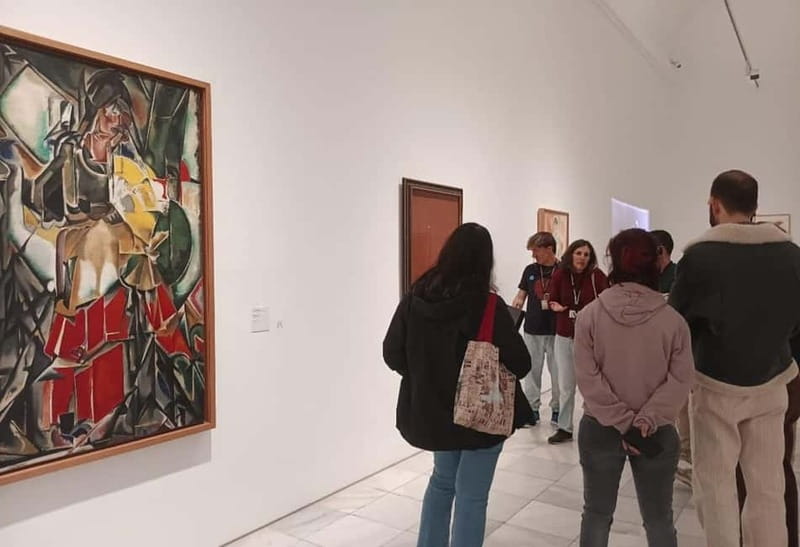
One museum, one big goal: make the Reina Sofía feel doable. This small-group guided tour is a fast, focused way to see major Spanish modern art in about 1.5 hours, and you’ll get help tying it all together. I like that it’s built around famous names you already know, but with a guide who explains what you’re looking at so it clicks instead of becoming a blur.
Two things I really like: first, you’ll go straight to the museum’s headline works, including Guernica by Picasso and key pieces by Dalí and Miró. Second, you’re not just walking room to room on your own—you’ll learn the museum’s history and get context for the artworks you’re seeing. One possible drawback is simple: at this length, you won’t have time to linger. If you want to study every corner or chase every temporary exhibition detail, you may feel a little time-pressed.
In This Review
- Key takeaways before you go
- Why a 1.5-hour Reina Sofía tour makes sense
- Meeting at the Reina Sofía Museum entrance (and getting your bearings fast)
- The museum’s mission: what you’re really seeing
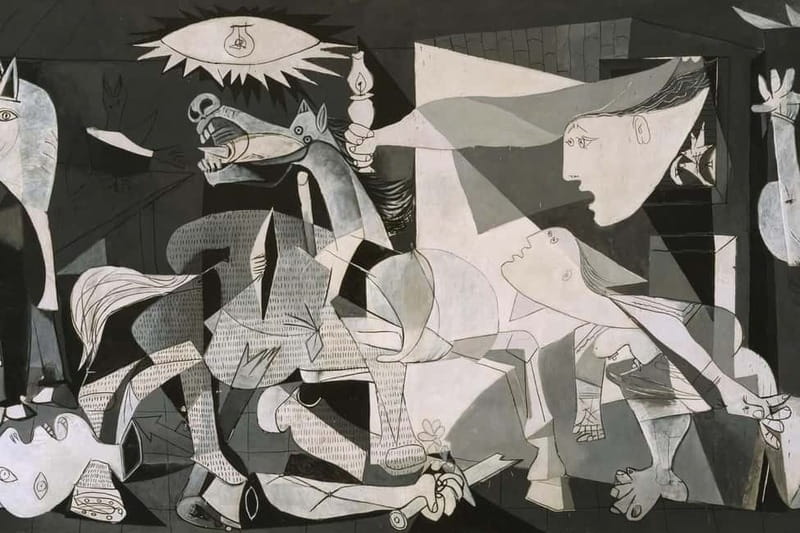
- Picasso’s impact on the route: El Guernica as a centerpiece
- Dalí’s famous face: Rostro del gran masturbador
- Juan Gris and the middle ground between styles
- Miró’s jump toward color and form: Pintura – Caracol…
- What the guide does (that matters more than you think)
- Included entry and access to what you might want next
- Price and value: is $38 worth it?
- Who this tour is best for
- Possible hiccups to consider before you commit
- Should you book this Reina Sofía guided tour?
- FAQ
- Where do I meet the guide for the Reina Sofía tour?
- How long is the guided tour?
- What does the tour cost?
- Is the museum entrance included?
- Which languages are offered for the live guide?
- What famous artworks will I see during the tour?
- Does the tour include permanent and temporary exhibitions?
- Is hotel pickup and drop-off included?
- Is this experience wheelchair accessible?
- What’s the cancellation and rebooking flexibility?
Key takeaways before you go
- Picasso plus the rest of the Spanish 20th-century story, not just one highlight stop
- Dalí and Miró included, so the tour covers more styles and moods than a basics-only route
- You get museum entry and access to both permanent and temporary exhibitions
- Short and small-group friendly, with a guided pace that suits most visitors
- Meeting is at the Reina Sofía entrance, so it’s easy to find before you start
Guernica and the moderns, another look
- Madrid: Reina Sofía Museum Entrance Ticket★ 4.5 · 8,788 reviews
- Madrid: Reina Sofía Museum Guided Tour★ 4.3 · 659 reviews
- Spanish Civil War start of 2 World War, Guernica Franco★ 5.0 · 462 reviews
- Reina Sofia Museum Small Group Tour -6 people maximum-★ 5.0 · 433 reviews
Why a 1.5-hour Reina Sofía tour makes sense
The Reina Sofía can feel overwhelming. It’s one of Madrid’s most important art museums, and it draws big crowds because it’s home to major Spanish modern and contemporary work. In a place like that, a timed tour is practical. You get structure, you get priorities, and you don’t waste your limited sightseeing energy guessing where to start.
This tour targets what most people want most quickly: the core works by big Spanish artists of the 20th century. You’ll see Picasso, Salvador Dalí, and Joan Miró, plus you’ll also encounter works by artists such as Juan Gris. The result is that you leave with a clearer mental map of what the museum is trying to say—rather than a list of names you forget the next day.
And you’re not only getting a rundown. The tour is explicitly designed to teach you about the museum’s background and the artworks on display. That matters because modern and contemporary art often rewards explanation. Even if you’re not an expert, a good guide can help you notice details you’d otherwise sail past.
Meeting at the Reina Sofía Museum entrance (and getting your bearings fast)
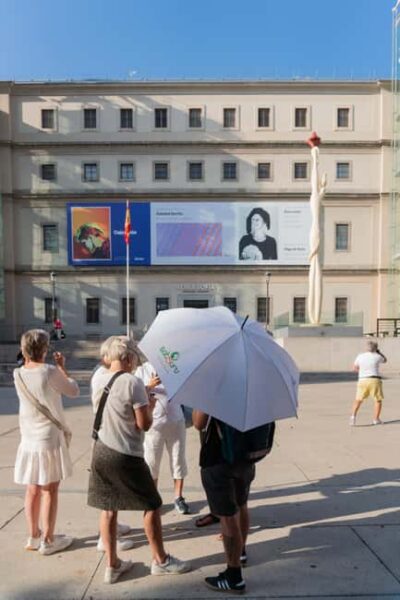
You’ll meet your guide at the entrance of the Reina Sofía Museum. That’s a helpful detail because it removes one common stress point: finding the exact meeting spot inside a huge museum complex. Once you’re in, the guided portion starts right away.
Since the tour is 1.5 hours, I recommend you treat the first few minutes as your “getting oriented” phase. Arrive a bit early, do a quick look around, and settle in. If you’re traveling with kids, bringing a wheelchair, or just wanting an efficient museum visit without decision fatigue, this is the kind of setup that works.
The tour also runs with live interpretation in Spanish and English, which is a plus if you don’t want to rely on a printed audio guide. A real person can adjust on the fly—answer questions, slow down when people look confused, and keep the group moving when everyone’s ready to move on.
The museum’s mission: what you’re really seeing
This museum opened its doors in 1992 to house a significant collection of Spanish contemporary art. That detail is more than trivia. It tells you why the Reina Sofía feels the way it does: the focus is on later 20th-century art that helped shape modern Spanish culture and artistic directions.
During your guided time, you’ll learn about the museum and the works. In practical terms, that means your guide will connect the famous pieces to the larger collection, so it feels like one conversation instead of random masterpieces pinned to the wall.
You also get access to both permanent and temporary exhibitions as part of the experience. That matters because it gives you flexibility. Even within the same 90 minutes, you’re not limited to only the permanent highlights.
Picasso’s impact on the route: El Guernica as a centerpiece
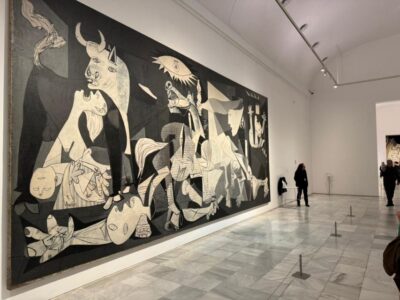
The tour highlights major Picasso work, including El Guernica. This is the kind of painting that can dominate a museum visit—if you’re ready for it. If you’re not, you can end up standing there longer than planned, or you miss the bigger point because you’re stuck trying to figure out what you’re supposed to notice.
A guided route helps here. Your guide’s job is to help you understand what you’re looking at and how it fits into the broader Spanish modern-art story. The goal isn’t to give you an art class. It’s to help you make sense of why this work keeps pulling attention and why it belongs in the Reina Sofía collection.
Because your tour time is limited, you’ll likely get the highlight in a way that’s designed for absorption rather than overwhelm. Think of it as: see the painting clearly, hear the key context, then move on while everything’s still fresh.
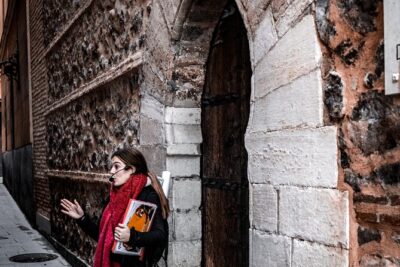
A local guide takes the strain




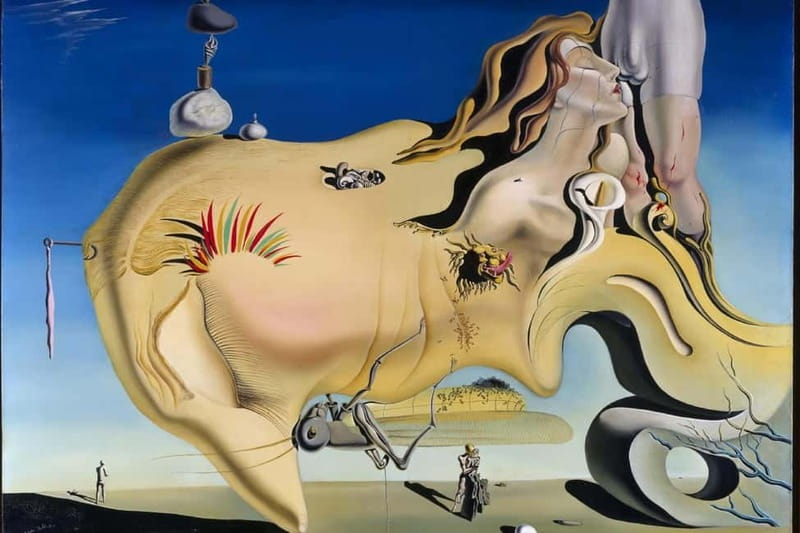
Dalí’s famous face: Rostro del gran masturbador
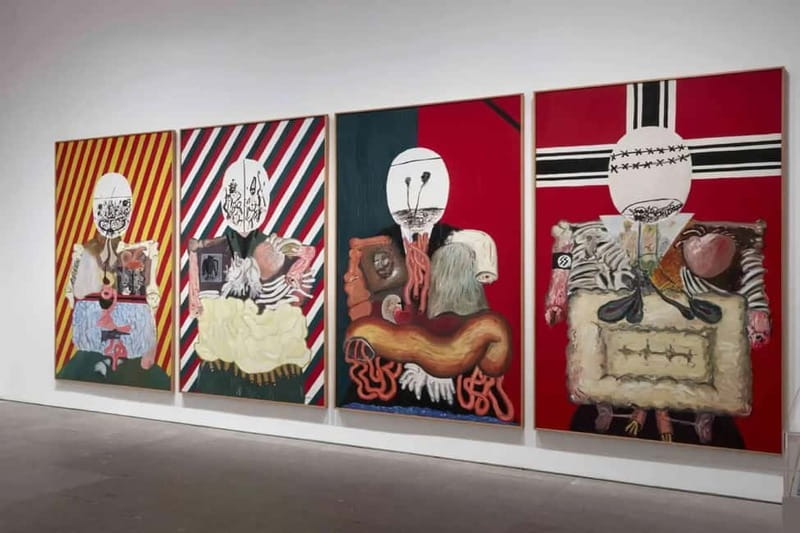
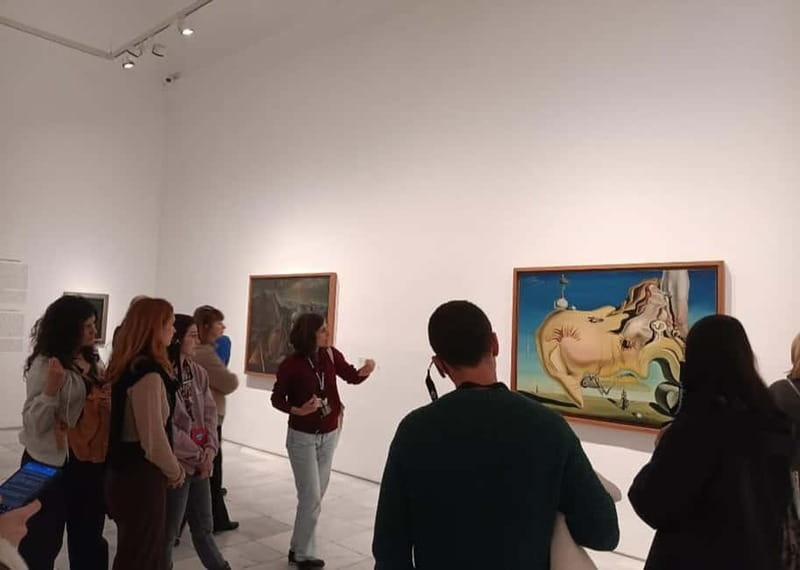
You’ll also see Salvador Dalí’s Rostro del gran masturbador. This is one of those works that can feel oddly specific at first glance—so having a guide is helpful. Even if you already recognize Dalí’s name, this piece can be a moment where you go from knowing the label to actually understanding the significance of the artwork within the museum’s Spanish-20th-century framework.
What I like about including a piece like this on a short tour is that it prevents the visit from becoming predictable. Picasso is expected. Dalí often is, too. But including a specific Dalí work on the route signals that the tour isn’t just about the biggest titles—it’s about showing range within that era.
You’ll also benefit from hearing the guide explain what you’re seeing. The tour doesn’t ask you to figure it out alone.
Juan Gris and the middle ground between styles
Another stop that gives the tour depth is Juan Gris’s La mesa del músico. This is a smart choice for a guided experience because it sits in a different visual world than the most famous Picasso and Dalí works.
If you’re trying to understand Spanish modern art as a progression of ideas—not just one or two artists—then Gris helps. It’s the kind of work where explanation can guide your eye. And on a group tour, the guide can keep the momentum going without leaving you stuck in front of one piece while the rest of the group moves on.
In other words: Gris helps the tour feel like a collection visit, not only a celebrity checklist.
Miró’s jump toward color and form: Pintura – Caracol…
You’ll also see Joan Miró’s Pintura – Caracol, mujer, flor, estrella. Miró’s work often changes the emotional temperature of a museum route. A good guide will help you slow down just enough to notice how this painting’s forms and symbols connect with the broader Spanish modern-art vibe.
For many people, Miró is where the museum starts to feel less intimidating. After you’ve seen the heavier, more famous magnet works, Miró can feel like a release valve—still modern, still challenging, but sometimes more playful in how it engages the viewer.
This matters in a short tour because it affects how you remember the visit afterward. You’re not just collecting names; you’re collecting feelings and visual impressions in the right order.
What the guide does (that matters more than you think)
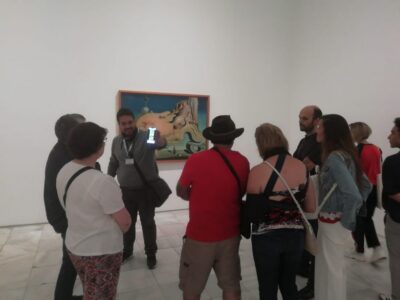
The biggest value here is the human layer. The tour is described as including a professional guide, and that’s exactly what makes a short museum visit work. In practice, the guide’s pacing and explanations can decide whether you feel like you “did” the museum or whether you actually learned something.
A small-group setting also helps. With fewer people, it’s easier for the guide to keep the group at the right pace—answer questions, manage attention, and avoid the feeling that you’re being herded through rooms you didn’t choose.
From the feedback pattern on this tour, the experience tends to be praised for being well-prepared and organized, and for pitching the level correctly for the group. That’s important: you don’t want a guide who talks only like a textbook, and you don’t want one who skips context entirely. Here, the structure aims for that middle space where you can enjoy the art and still leave with real understanding.
Included entry and access to what you might want next
This tour includes entrance to the Reina Sofía Museum and access to both permanent and temporary exhibitions. That’s a meaningful value point, because it means your ticket cost is already baked into the tour price.
It also gives you a little freedom in your planning. Even if your 1.5 hours are guided and focused, you still have access to keep exploring in your own direction afterward—especially if you’re the type who wants to return to a favorite artwork for another look.
Just keep expectations realistic. The guided portion is short. The tour is a guided route through key works and context, not a full museum coverage plan.
Price and value: is $38 worth it?
At $38 per person for a 1.5-hour small-group guided visit, I think the value depends on what you want from a museum day.
If you plan to do only a quick highlights sweep, you may feel tempted to skip a guided tour and go on your own. But when you factor in the included entrance and the guided explanations, the math starts to make sense. You’re paying for:
- a professional guide,
- museum entry,
- and access to permanent and temporary exhibitions,
- plus a structured visit centered on major works.
Also, consider opportunity cost. In Madrid, you’re always trading time against other sights. A guided route can help you avoid wasting an hour trying to figure out where to go and what matters most. For many visitors, that’s the difference between leaving “impressed” and leaving feeling informed.
Who this tour is best for
This is a good fit if:
- You want the Reina Sofía highlights without spending your whole day inside
- You’re more interested in understanding what you’re seeing than in reading every label yourself
- You like small groups and a guided pace
- You want English or Spanish interpretation from a live guide
- You need a wheelchair-accessible option (the museum is wheelchair accessible)
It may be less ideal if you’re the kind of visitor who wants long, quiet time with each artwork and plans to roam multiple exhibition areas on your own. This tour is meant to focus. You can still explore on your own afterward, but the guided portion is intentionally time-limited.
Possible hiccups to consider before you commit
Most trips go smoothly, but you should know one thing: plan changes can happen. In at least one documented case, a guided visit was cancelled and no replacement was provided at the same door, though the expectation was that the amount would be refunded.
I’d treat that as a reminder to keep your day flexible and to double-check updates before you head out. With museum tours, that kind of small administrative surprise is rare, but it’s smart to be ready.
Should you book this Reina Sofía guided tour?
If you’re visiting Madrid and you want a short, structured way to experience one of the city’s top art stops, I’d book this. The price is reasonable for what you get: guided context, included entry, and a route that covers major Spanish artists and specific highlighted works. It’s also a strong choice if you don’t want to spend your vacation time sorting out where to start.
If you already know you want to linger in multiple sections for hours, you might do better with independent museum time. But if you want to walk in, see the big names and key works, and come out with a clearer story in your head, this tour does that job well.
FAQ
Where do I meet the guide for the Reina Sofía tour?
You meet the guide at the entrance of the Reina Sofía Museum.
How long is the guided tour?
The tour lasts 1.5 hours.
What does the tour cost?
The price is $38 per person.
Is the museum entrance included?
Yes. Entrance to the Reina Sofía Museum is included.
Which languages are offered for the live guide?
The live guide is available in Spanish and English.
What famous artworks will I see during the tour?
The tour includes Picasso’s El Guernica and Salvador Dalí’s Rostro del gran masturbador, along with works such as Juan Gris’s La mesa del músico and Joan Miró’s Pintura – Caracol, mujer, flor, estrella.
Does the tour include permanent and temporary exhibitions?
Yes. You get access to both permanent and temporary exhibitions.
Is hotel pickup and drop-off included?
No. Hotel pickup and drop-off are not included.
Is this experience wheelchair accessible?
The museum is wheelchair accessible, and the tour notes wheelchair accessibility.
What’s the cancellation and rebooking flexibility?
There is free cancellation up to 24 hours in advance for a full refund, and there’s also a reserve now & pay later option to keep plans flexible.
More Tours in Madrid
- Madrid: Tour Bernabéu Entry Ticket
★ 4.5 · 21,573 reviews - Madrid: Panoramic Route City Tour
★ 4.1 · 12,259 reviews - Avila & Segovia Tour with Tickets to Monuments from Madrid
★ 5.0 · 9,762 reviews - Madrid: Royal Palace Expert Guided Tour with Skip-the-Line
★ 4.7 · 8,407 reviews - Madrid: Segovia and Toledo Tour, Alcazar, and Cathedral
★ 4.7 · 7,797 reviews - Toledo Tour from Madrid: Cathedral, Synagogue & St. Tome’s Church
★ 5.0 · 6,784 reviews
More Tour Reviews in Madrid
- Madrid: Tour Bernabéu Entry Ticket
★ 4.5 · 21,573 reviews - Madrid: Prado Museum Entry Ticket
★ 4.6 · 20,699 reviews - Madrid: “Emociones” Live Flamenco Performance
★ 4.8 · 12,866 reviews - Madrid: Panoramic Route City Tour
★ 4.1 · 12,259 reviews - Madrid: Live Flamenco Show with Food and Drinks Options
★ 4.5 · 9,901 reviews - Avila & Segovia Tour with Tickets to Monuments from Madrid
★ 5.0 · 9,762 reviews
Reina Sofia, Beyond Guernica
- Madrid: Reina Sofía Museum Entrance Ticket
★ 4.5 · 8,788 reviews - Madrid: Reina Sofía Museum Guided Tour
★ 4.3 · 659 reviews - Spanish Civil War start of 2 World War, Guernica Franco
★ 5.0 · 462 reviews - Reina Sofia Museum Small Group Tour -6 people maximum-
★ 5.0 · 433 reviews - Madrid: Guided Tour of Reina Sofía Museum with Entry Ticket
★ 4.9 · 363 reviews - Madrid: Reina Sofia and Prado Museum Tickets and Guided Tour
★ 4.6 · 342 reviews
Just Added: New Madrid Tour Reviews



Reina Sofía Museum Tours, compared.
 ★ 4.5Reina Sofía Museum Entrance TicketFrom $148,788 reviews
 ★ 4.3Reina Sofía Museum Guided TourFrom $38659 reviews
 ★ 5.0Spanish Civil War start of 2 World War, Guernica FrancoFrom $3462 reviews
 ★ 5.0Reina Sofia Museum Small Group Tour -6 people maximum-From $59433 reviews
 ★ 4.9Guided Tour of Reina Sofía Museum with Entry TicketFrom $59363 reviews
 ★ 4.6Reina Sofia and Prado Museum Tickets and Guided TourFrom $68342 reviews
 ★ 4.0Prado Museum with Reina Sofia Museum Guided TourFrom $81311 reviews
 ★ 4.3Reina Sofía Guided Tour with Skip-the-Line TicketsFrom $44293 reviews
Browse the lists this tour appears in