
Madrid’s Jewish story lands fast. A private walking tour guided by Yuliia-style storytelling makes the street-level symbols actually mean something, and I love that she connects small details to the Sephardic past. I also love the stop at the Sephardic Jewish Center of Spain, where you can see how memory is kept through a museum and library. The one drawback to plan for: not every chapter has big, physical remains to point at, so you need to be ready for explanation over archaeology.
You’ll spend about 3 hours on foot in the historic center, with a route built around major landmarks like Plaza Mayor, the Royal Palace area, Sol, and Cibeles Fountain plus a couple of shorter “what is that?” detours. It’s private and can be tailored, and it works well for families too—just bring comfortable shoes and a head covering or kippah.
In This Review
- Key Highlights You Should Know Before You Go
- Why This Private Jewish Heritage Tour Works in Madrid
- From Monument of Don Quijote to Plaza de España: Start Smart
- Plaza Mayor and the Royal Palace Area: Public Power Meets Private Life
- Sol, Short Detours, and the Art of Noticing Symbols
- The Sephardic Jewish Center of Spain: The Stop That Gives Everything Context
- Cibeles Fountain and the Final Stretch: Seeing How the Pieces Fit
- How the Guide Shapes the Experience (Especially If You Ask Questions)
- Practical Stuff That Makes or Breaks a 3-Hour Walk
- Price and Value: Is $194 Worth It?
- Who Should Book This Madrid Jewish Heritage Tour
- FAQ
- How long is the Madrid Jewish Heritage private walking tour?
- Where do I meet the guide?
- What’s included in the tour price?
- Is the Sephardic Jewish Center of Spain part of the tour?
- What language options are available?
- What should I bring?
- Is food included?
- What are the rules during the tour?
- FAQ
- Is the tour suitable for wheelchair users?
- What is the cancellation policy?
Key Highlights You Should Know Before You Go
- Yuliia-led guidance energy: warm, patient explanations with flexibility and a sense of humor
- Sephardic Jewish Center of Spain visit: museum and library focused on preservation after 1492
- Street symbols and inscriptions: you’ll learn what to look for instead of walking past clues
- Historic-center landmarks in context: Plaza Mayor, Royal Palace area, Sol, and Cibeles Fountain
- Private and customizable pacing: ask questions, linger where you want, move on when you’re done
- Family-friendly for curious kids: a story-focused walking tour, not a lecture in a room
The centre on foot, other ways round
- Madrid Tapas & Wine Tasting Walking Tour – Small Group Local Bars★ 5.0 · 3,644 reviews
- Madrid Welcome Tour with Local Guide in Eco Tuk Tuk Private★ 5.0 · 2,936 reviews
- Madrid Walking Tour from Puerta del Sol to Retiro Park★ 5.0 · 2,285 reviews
- Madrid Old Town & Royal Palace Walking Tour Skip the Line Ticket★ 4.5 · 1,829 reviews
Why This Private Jewish Heritage Tour Works in Madrid
Madrid can feel like one of those cities where you’re constantly “almost” in the right place for history. This tour helps you get past that frustration. You walk through the historic center, yes, but the main point is learning how Jewish life showed up in the city through names, symbols, and references that you might miss on your own.
What I like most is that the guide doesn’t treat Jewish heritage as one fixed museum stop. Instead, you’re guided to connect different pieces: the big public spaces where history happened, the quieter side streets where meaning is hidden in plain sight, and the cultural center that keeps Sephardic traditions alive.
There’s also a practical benefit for you: with a private guide, you can steer the conversation. If you want more on Sephardic Jews and post-1492 life, you can focus there. If you’d rather understand how Madrid absorbed different communities over time, you can ask for that angle. For a topic this specific, that control matters.
From Monument of Don Quijote to Plaza de España: Start Smart
The meeting point is the Monument of Don Quijote, and you’ll then head into the historic center area. That first movement is more than logistics. It gets you oriented with what you’re looking at, and it helps you understand how Madrid’s layout shapes the stories you’ll hear.
You’ll also get a short viewpoint moment early on (about 15 minutes), which is ideal for resetting your eyes. Rather than forcing you to absorb everything at once, the tour uses a quick “look around” pause so the later stops feel connected, not random.
One small planning tip: bring water and wear shoes you trust. This is a walking tour, and the route includes multiple city-center segments across busy pedestrian areas.
Plaza Mayor and the Royal Palace Area: Public Power Meets Private Life
A big chunk of the experience happens around central Madrid—think Plaza Mayor and the Royal Palace area. These are the kinds of places where you’d expect history to shout. The guide’s job is to make it more complicated and more interesting than that.
Here’s what you’re really doing during this section: you’re learning the difference between what was official and what was lived. Plaza Mayor is a natural anchor because it’s public-facing and visible. The Royal Palace area gives you the sense of power and administration. Then the tour reframes that backdrop by connecting it to the Jewish community and the ways people navigated identity, law, and daily reality in a major European capital.
If you like tours that help you read a city like a text—street by street—this is the part that clicks.
Sol, Short Detours, and the Art of Noticing Symbols
Sol is one of those places you can walk through a dozen times and still never fully see. On this tour, you slow down. You’re guided through another stretch of the center (about half an hour here), and the focus shifts toward smaller clues: signs, marks, inscriptions, and references that reveal what came before.
This is also where your expectations need a slight adjustment. Madrid doesn’t present a neat route of intact Jewish buildings. Instead, you’ll learn how history lingers in indirect ways. The benefit is that it trains your eye. Once you know what a symbol or inscription is pointing to, you start noticing similar hints elsewhere in the city.
There are also shorter segments along the way—around a 10-minute “secret stop” and a 30-minute section aimed at a surprise corner in the historic area. Since the exact spots can vary in feel, treat these segments as your guide’s “spotlight moments.” They’re time boxes where the story gets focused and specific, so you’ll want to be paying attention rather than drifting off into your phone screen.
Private and unhurried, just your party
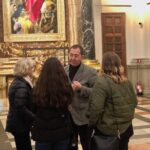




The Sephardic Jewish Center of Spain: The Stop That Gives Everything Context
If you care about the Sephardic story, this is the core reason to book. The Sephardic Jewish Center of Spain visit gives you context for what you’ve been hearing outside on the streets.
You’ll explore the center with a museum and library component, and you’ll learn how Sephardic Jews carried traditions forward after their expulsion from Spain in 1492. That year isn’t just a date on a timeline. It becomes a lens through which the guide explains what was lost, what was changed, and what survived through learning, community practice, and cultural memory.
This is also where the tour’s value becomes practical: walking history is great, but it can stay abstract. The center turns the abstraction into something you can see—documents, materials, and preservation efforts that make the story feel grounded.
If you’re interested in Jewish cultural continuity, you’ll likely appreciate the emphasis on ongoing efforts to preserve Sephardic heritage. And if you like research-minded spaces (quiet rooms, books, and references), this stop is your payoff.
Cibeles Fountain and the Final Stretch: Seeing How the Pieces Fit
Near the end, you’ll reach Cibeles Fountain for roughly 35 minutes. This part can feel like a breather, but it’s not a throwaway.
A major square like Cibeles helps you do a final mental synthesis. You’ve been learning about community life, identity, and clues embedded in the city’s fabric. Now you stand in a bright, iconic Madrid landmark and look at how the city’s public face overlays older layers.
You also get one last guided block (after the shorter secret stop), which helps keep the pace from feeling abrupt. It’s a good structure for a 3-hour tour: story, context, noticing details, then a final “place it all together” segment.
How the Guide Shapes the Experience (Especially If You Ask Questions)
The guide matters a lot on this kind of tour. The name Yuliia comes up as a standout in the experience’s reputation, with a style that’s warm, intelligent, and patient. That last part is huge: Jewish history in Madrid can be detailed, and you might have follow-up questions about what you’re seeing.
You’ll also benefit from the guide’s flexibility. Since the tour can be customized to your preferences, you’re not stuck with a one-size-fits-all script. If you’re more interested in Sephardic traditions, you can steer there. If you want more focus on the city-center clues and how to interpret them, you can ask for that too.
And yes, there’s humor in the mix. Not silly humor—more like the kind that keeps the tone human when the subject matter gets heavy.
Practical Stuff That Makes or Breaks a 3-Hour Walk
For a walking tour, small preparation steps pay off.
Bring:
- Comfortable shoes
- Head covering or kippah
- Water
Know what to expect:
- No smoking
- No flash photography
What’s included vs not:
- You get a 3-hour walking tour with a local expert.
- You get the history focus around Sephardic Jews.
- An optional visit to the Center for Sephardic Studies may be available.
- Optional kosher lunch reservation is possible, but food and drinks are not included.
One note to double-check if you have mobility concerns: the tour information says wheelchair accessible, but it also indicates it’s not suitable for wheelchair users. If that matters for you, it’s worth contacting the provider directly before you go.
Kids:
Children are welcome, and this tour is a good fit if your kids can handle walking and enjoy stories with a sense of mystery.
Languages:
The tour guide offers English, Spanish, Ukrainian, and Russian.
Price and Value: Is $194 Worth It?
The price is listed as $194 per group up to 1 for a 3-hour private walking tour. That sounds steep if you think “walking tour.” But you’re not just paying for movement—you’re paying for a specialist guide, a private format, and the center visit that anchors the whole experience.
Private tours cost more because your guide’s attention is not shared. If you’re going solo (and the group size is effectively one in this pricing model), you get full flexibility: you can ask questions, change emphasis, and slow down where you personally want more detail.
You also avoid some typical hidden costs: the tour includes the guided experience and history focus, while entrance tickets are not included. That means you should plan time for the center visit but confirm any specific entry fees if they come up during your tour.
The value is strongest if you:
- care about Jewish heritage beyond quick photo stops
- want interpretation of symbols and inscriptions, not just facts
- like private guiding for sensitive or complex topics
- want Sephardic context that links street-level clues to a cultural center
Who Should Book This Madrid Jewish Heritage Tour
Book it if you want a guided, story-led way to understand Madrid’s Sephardic legacy—especially if you’re excited by symbols you can actually spot on the streets and by a museum/library stop that explains what happened after 1492.
You might skip it if you’re only after a simple checklist of surviving Jewish sites, because this tour leans toward interpretation and meaning rather than a trail of intact buildings. It’s also best if you’re comfortable walking for about three hours and navigating a busy central area.
If your goal is to leave Madrid with the city’s Jewish chapters feeling readable instead of vague, this private tour is a strong choice. And if you appreciate guides who stay patient when you ask, well, that’s exactly the style highlighted here.
FAQ
How long is the Madrid Jewish Heritage private walking tour?
It’s a 3-hour walking tour.
Where do I meet the guide?
You meet at the Monument of Don Quijote.
What’s included in the tour price?
The tour includes a 3-hour guided walking tour with a local expert and a history-focused visit tied to Sephardic Jews in Spain. An optional visit to the Center for Sephardic Studies may be included, and an optional kosher lunch reservation may be arranged.
Is the Sephardic Jewish Center of Spain part of the tour?
Yes. The tour includes a visit to the Sephardic Jewish Center of Spain, with time to explore its museum and library.
What language options are available?
The guide can conduct the tour in English, Spanish, Ukrainian, and Russian.
What should I bring?
Bring comfortable shoes, a head covering or kippah, and water.
Is food included?
No. Food and drinks are not included, though an optional kosher lunch reservation may be available.
What are the rules during the tour?
Smoking is not allowed, and flash photography is not allowed.
FAQ
Is the tour suitable for wheelchair users?
The info includes both that it is wheelchair accessible and that it is not suitable for wheelchair users. If you use a wheelchair or have mobility needs, check with the provider before booking.
What is the cancellation policy?
Free cancellation is available up to 24 hours in advance for a full refund.
More Tour Reviews in Madrid
- Madrid: Tour Bernabéu Entry Ticket
★ 4.5 · 21,573 reviews - Madrid: Prado Museum Entry Ticket
★ 4.6 · 20,699 reviews - Madrid: “Emociones” Live Flamenco Performance
★ 4.8 · 12,866 reviews - Madrid: Panoramic Route City Tour
★ 4.1 · 12,259 reviews - Madrid: Live Flamenco Show with Food and Drinks Options
★ 4.5 · 9,901 reviews - Avila & Segovia Tour with Tickets to Monuments from Madrid
★ 5.0 · 9,762 reviews
Private Days in the Capital
- Madrid: Private City Tour by Eco Tuk Tuk
★ 4.9 · 3,465 reviews - Madrid Welcome Tour with Local Guide in Eco Tuk Tuk Private
★ 5.0 · 2,936 reviews - Madrid Historical Tour with Local Guide in Eco Tuk Tuk Private
★ 5.0 · 876 reviews - Toledo Private Tour with Licensed Guide and Driver from Madrid
★ 5.0 · 637 reviews - Madrid Private Segway tour. Retiro Park – Centro Historico
★ 4.9 · 636 reviews - Madrid Express Tour with Local Guide in Eco Tuk Tuk Private
★ 5.0 · 413 reviews
Walk the Heart of Madrid
- Madrid Tapas & Wine Tasting Walking Tour – Small Group Local Bars
★ 5.0 · 3,644 reviews - Madrid Welcome Tour with Local Guide in Eco Tuk Tuk Private
★ 5.0 · 2,936 reviews - Madrid Walking Tour from Puerta del Sol to Retiro Park
★ 5.0 · 2,285 reviews - Madrid Old Town & Royal Palace Walking Tour Skip the Line Ticket
★ 4.5 · 1,829 reviews - Madrid: Welcome to Madrid Guided Walking Tour
★ 4.9 · 1,738 reviews - Madrid: Spanish Inquisition and Legends Evening Walking Tour
★ 4.7 · 1,396 reviews
Just Added: New Madrid Tour Reviews





Madrid Guided Walking Tours, compared.
 ★ 5.0Madrid Tapas & Wine Tasting Walking Tour – Small Group Local BarsFrom $933,644 reviews
 ★ 5.0Madrid Welcome Tour with Local Guide in Eco Tuk Tuk PrivateFrom $282,936 reviews
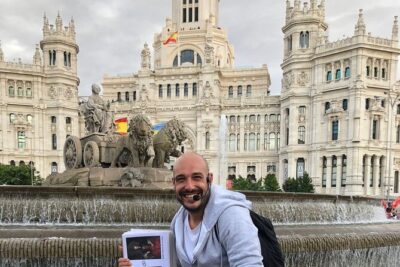 ★ 5.0Madrid Walking Tour from Puerta del Sol to Retiro ParkFrom $32,285 reviews
 ★ 4.5Madrid Old Town & Royal Palace Walking Tour Skip the Line TicketFrom $401,829 reviews
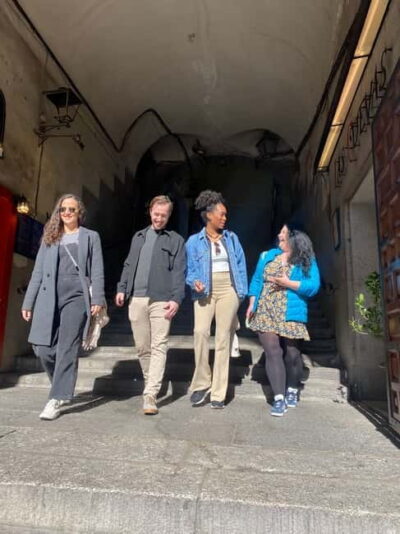 ★ 4.9Welcome to Madrid Guided Walking TourFrom $311,738 reviews
 ★ 4.7Spanish Inquisition and Legends Evening Walking TourFrom $231,396 reviews
 ★ 5.0Majestic Madrid Walking TourFrom $311,274 reviews
 ★ 5.0Guided Walking Tour of Immortal ToledoFrom $131,116 reviews
Browse the lists this tour appears in