
REVIEW · PLAZA MAYOR & OLD TOWN TOURS
Madrid Historic with an architect : Arabs, Austrias and Bourbons
Madrid’s architecture tells stories fast. That’s what makes this walk so satisfying: an architect guide connects the dots from Arab-era traces to Austrias and Bourbons, using what you can see—facades, towers, squares, and remnants—plus plans and historical photos that make the city feel like it has chapters.
I especially like two things. First, you’re not just looking at pretty buildings—you’re getting the why behind the changes, explained by someone who thinks like an architect. Second, the route is packed but practical: most stops are free to enter, and you finish in the center where you can keep exploring on foot.
One possible drawback: this is history + architecture together, not pure ornament-spotting. If you wanted a step-by-step catalog of materials and details only, you may want extra time on your own afterward. Also, the Royal Palace stop focuses on the exterior; the interior is not included.
In This Review
- Key highlights to expect
- Madrid’s Architecture as a Timeline: Arabs, Austrias, Bourbons
- Starting at Pl. de Isabel II: a good meeting point for first-timers
- Teatro Real: architecture with a built-in “big stage” mindset
- Plaza de Oriente: the city’s layout shaped over centuries
- Royal Palace (exterior only): why facades matter
- Ramales, Velázquez, and the church-and-artist layer
- Santiago y San Juan Bautista: a small stop, a big name
- San Nicolás de los Servitas: the oldest church plus a Mudejar tower
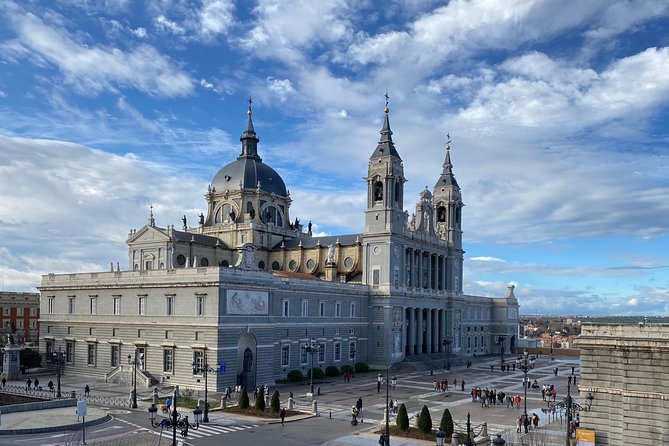
- Museo de la Catedral de la Almudena: views and cathedral context
- Arab Wall remnants: the 9th-century spine you can still see
- Plaza de la Villa: civic power around Casa de Cisneros and Casa de los Lujanes
- Mercado de San Miguel: steel structure and a tapas break
- Plaza Mayor to Puerta del Sol: finishing where Madrid crowds gather
- Price and value: what you’re paying for (and what you’re not)
- Who this tour suits best
- A few practical tips for a smoother walk
- Should you book this architecture walk?
- FAQ
- How long is the tour?
- What does the tour cost?
- Is the tour private?
- Is it offered in English?
- Where do I meet and where does it end?
- Are tickets included for all stops?
- Is the Royal Palace interior included?
- What if the weather is bad or I need to cancel?
Key highlights to expect
- Architect-led explanations tied to urban planning and political change
- Plans and historical photos to visualize how Madrid evolved
- Mostly free admissions, so you’re paying for guidance, not ticket stacking
- Arab Wall + Mudejar tower for early Madrid details you might miss alone
- A route that ends at Puerta del Sol, with easy next steps for food and wandering
Sol, the arches and the tangle of old streets
- Madrid Essential: Historic Center, Plaza Mayor & Royal Palace★ 5.0 · 6,416 reviews
- Madrid Walking Tour from Puerta del Sol to Retiro Park★ 5.0 · 2,285 reviews
- Madrid Old Town & Royal Palace Walking Tour Skip the Line Ticket★ 4.5 · 1,829 reviews
- Madrid Historic Centre Food Tour with Authentic Tapas & Wines★ 5.0 · 814 reviews
Madrid’s Architecture as a Timeline: Arabs, Austrias, Bourbons
Madrid can feel like one big city—until you walk it with someone who reads the shapes. This tour does that. You start near the Theater Square zone, then steadily move through power points: royal buildings, church complexes, civic squares, and the market that anchors daily life. Over about 3 to 3.5 hours, the guide frames Madrid as a city rebuilt again and again.
The fun part is how the style shifts aren’t treated like trivia. You’ll connect them to who held power and what they wanted from the city—protection, prestige, administration, or public space. One review feedback point that matters for your planning: the emphasis is still architecture, but the explanation includes the surrounding historical and sociological context. The logic is simple—without that context, it’s hard to understand why a certain form appears where it does.
Starting at Pl. de Isabel II: a good meeting point for first-timers
The meeting point is Pl. de Isabel II, 4, in central Madrid. It’s an easy place to find, and it’s also close to public transportation (so you’re not budgeting time for a long commute). The tour ends at Plaza Mayor, which is a smart finish because it keeps you near the most walkable core.
A practical tip: because this is a guided walk (not a bus tour), wear shoes that handle uneven pavement and crowds. Madrid’s center can get slippery and busy, especially if the day is rainy. One of the nice things you’ll likely notice on the ground is that the guide keeps the pace thoughtful; you’ll have time to stop, look up, and ask questions rather than getting rushed past everything.
Teatro Real: architecture with a built-in “big stage” mindset
You begin at Teatro Real (Royal Theatre). The stop is short—about 10 minutes—but it’s a strong opener because it teaches you how to read a landmark as a civic statement.
Here’s what to look for: the theater’s role in Madrid’s cultural identity, and how major public projects tend to reflect the ambition of their era. The admission for this stop is free, so you can spend your money on meals later instead of tickets right away.
Even if you don’t care about opera, think of it like this: theaters are about architecture plus choreography. The building has to impress from the outside, control movement, and create a sense of occasion. That’s a useful way to understand the rest of the route.
Plaza de Oriente: the city’s layout shaped over centuries
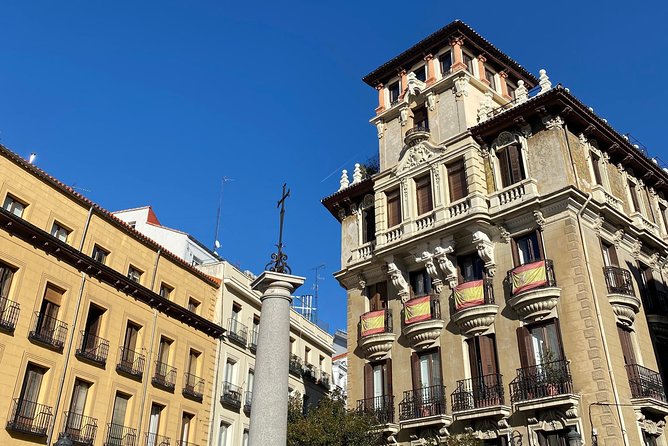
Next comes Plaza de Oriente. This is another 10-minute stop, and it’s built for urban-structure thinking. You’ll learn how the square’s development connects earlier eras through today—starting from the Arab period and moving forward.
This is where the tour’s “architect lens” really helps. Instead of treating squares as just pretty open space, you’ll understand them as stage sets designed for power, views, and flow. Even a brief stop can make you start noticing axes, sight lines, and how buildings frame a public square.
Further into the old Madrid


Royal Palace (exterior only): why facades matter
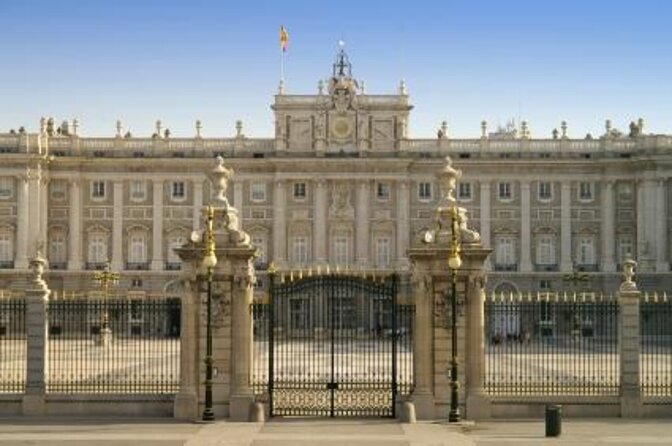
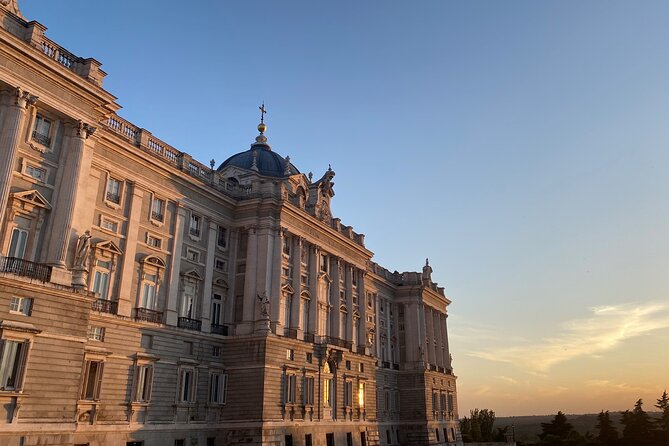
The Royal Palace of Madrid stop is focused on the exterior. You’ll admire different facades and learn about the architects and kings involved. The interior visit is explicitly not included.
That choice can be a plus. Palace interiors can be amazing, but they also come with long lines and time pressure. Here, you get what matters for this specific theme: the buildings as an architectural message—how rulers wanted to be seen.
One practical consideration: there’s an admission ticket not included for the Royal Palace. Even if you don’t plan to enter, check how your time and energy match up. If you’d like to see the inside, you may want to add a separate visit later when lines are lighter.
Ramales, Velázquez, and the church-and-artist layer
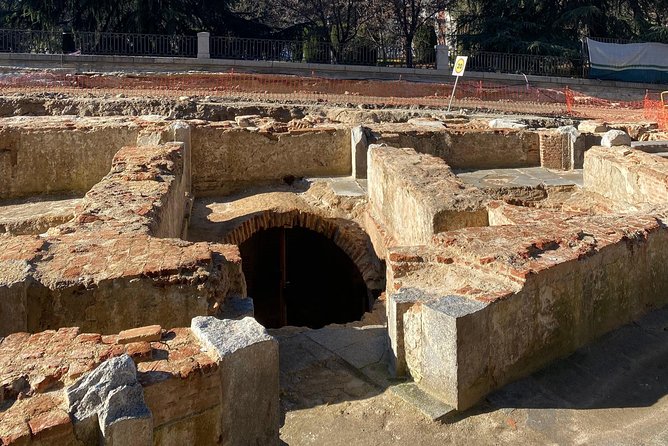
At Plaza de Ramales, you’ll see the ruins of the Church of San Juan, where the painter Velázquez was buried, plus the Church of Santiago. This stop is short (about 10 minutes), but it adds a “memory layer” to architecture.
Why it’s worth your attention: ruins can look like leftover rubble until someone explains what was here before. You start to grasp that Madrid isn’t just built—it’s also layered, revised, and occasionally destroyed, with important lives still connected to those places.
If you’re the type who likes quick but meaningful stories, this is one of the stops that delivers.
Santiago y San Juan Bautista: a small stop, a big name
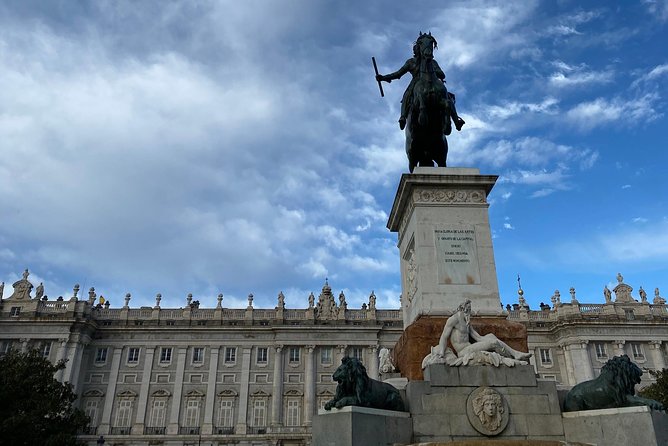
You’ll then head to the Real Iglesia Parroquial de Santiago y San Juan Bautista, dedicated to the apostle Santiago. It’s about 5 minutes and free.
Short stops are easy to underappreciate. But church architecture is a great way to understand how religious power and community life shaped the city. Even in a quick visit, the guide can point out why certain forms or placements keep showing up across Madrid.
San Nicolás de los Servitas: the oldest church plus a Mudejar tower
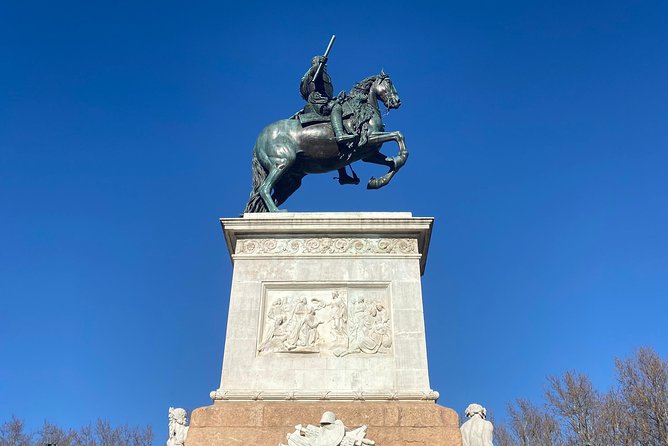
Next is San Nicolas de las Servitas (San Nicolás), described as the oldest church in Madrid. You’ll focus on its Mudejar tower with horseshoe-arch details.
This is the kind of stop where you should slow down. A Mudejar-style tower isn’t just decorative; it’s a visual reminder that Arab architectural language remained influential even after later Christian rule. Horseshoe arches, geometric energy, and the feel of a tower designed for longevity—these are the reasons architecture tours get fans.
This stop is also about 5 minutes and free, which makes it a strong value moment. If the day is tight, don’t skip the looking-up part here.
Museo de la Catedral de la Almudena: views and cathedral context
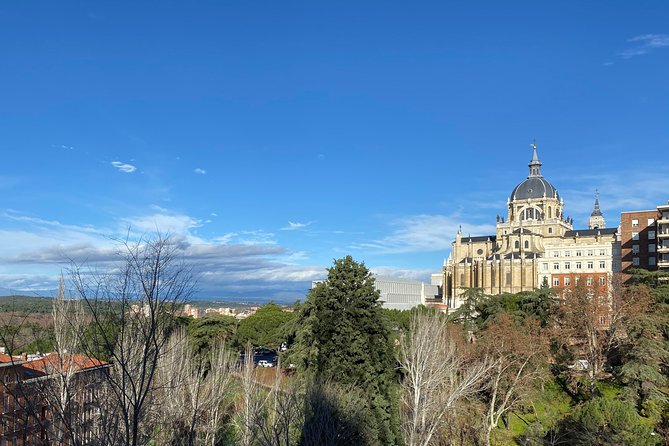
You’ll make a stop at the Museo de la Catedral de la Almudena, with an emphasis on the history of La Almudena, plus a “seaview” perspective as described.
The practical point: museums and cathedrals can be hit-or-miss on guided walks, mainly because they’re sometimes too much for too little time. Here, the guide uses this stop to set context—how the cathedral fits into the city’s longer story and how people might have related to it.
Expect explanation more than roaming. If you’re the type who wants to linger, you can always circle back after the tour, since you’re in central Madrid.
Arab Wall remnants: the 9th-century spine you can still see
The Arab Wall stop is one of the most memorable, partly because it’s physical proof of an older city. You’ll see the only remains of the old Arab walls built in the 9th century.
This is a “stop and stare” moment. Modern Madrid can feel fully planned, fully rebuilt, fully modern. Wall remnants puncture that idea. They remind you that Madrid’s core story has older roots than many people realize.
It’s also a great spot for photos and for asking the guide what you’re looking at—because walls aren’t always obvious. Even if you only get 10 minutes, those minutes can change how you see the rest of the route.
Plaza de la Villa: civic power around Casa de Cisneros and Casa de los Lujanes
Next you’ll reach Plaza de la Villa, where the focus becomes civic architecture. You’ll see the old city hall and surrounding buildings, including Casa de Cisneros and Casa de los Lujanes.
This stop is about how Madrid managed itself. Palaces scream royal ambition, but civic buildings show the machinery of daily power: who governed, how authority looked in stone, and how the city’s administration stayed near the people.
And this is a nice contrast with the earlier royal focus. You’ll likely start to notice patterns: grand forms here, religious motifs there, then pragmatic civic structure in the next block.
Mercado de San Miguel: steel structure and a tapas break
At Mercado San Miguel, the stop includes the charm of an indoor market and its distinctive steel structure, with time to grab a drink and eat tapas.
This is your built-in “energy reset.” The market stop works especially well if you’ve been walking through churches and palaces back-to-back. It turns the tour from purely informational into a lived city moment.
Worth planning: keep your order simple and fast so you don’t slow the group. You’ll get more out of the last stretch if you save room for at least one final stop and then keep walking through the center afterward.
Plaza Mayor to Puerta del Sol: finishing where Madrid crowds gather
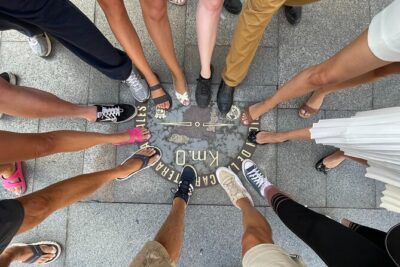
The tour ends with Plaza Mayor, described as the social and commercial center for the last 400 years, followed by Puerta del Sol at Kilometer 0.
Plaza Mayor is a perfect closing scene because it’s easy to see how a public square became a magnet for trade and gatherings. Even if you’ve seen photos, there’s a difference between a picture and standing there with the noise of real Madrid around you.
Then you finish at Puerta del Sol—short stop, about 5 minutes—where the city’s “center of gravity” feeling hits immediately. It’s not just symbolic. It’s practical: you can pivot to shopping, a museum, or dinner without needing a plan.
Price and value: what you’re paying for (and what you’re not)
At $65.89 per person for about 3 to 3.5 hours, the price can feel high or fair depending on what you expect.
Here’s why it often feels fair:
- You’re paying for a local architect guide who explains the links between periods and design choices. That kind of thinking is hard to replicate with self-guided reading.
- Many stops include free entry tickets, so you’re not stacking ticket costs on top of the tour price.
- It’s a private tour for your group, which usually means fewer time compromises and more chances to ask questions.
What’s not included: tips and the Royal Palace interior (exterior focus only on this tour). If you want the palace interior later, budget extra.
Timing matters too. This tour is booked fairly far in advance (on average 63 days), so if you’re traveling in a busy season, earlier booking is smart.
Who this tour suits best
I think this tour is best for you if you:
- love architecture but also want the story behind it
- want a guided way to understand Madrid’s growth from Arab roots through Austrias and Bourbon influences
- prefer walking routes that connect landmarks without feeling rushed
It’s also a good first “architecture lesson” in Madrid. Even if you plan to do other museum visits later, this gives you a framework for what you’ll notice afterward.
If you only care about one tiny slice—like purely decorative details or purely royal interiors—you might feel slightly unsatisfied. The tradeoff is that this tour is designed to help you read the whole city.
A few practical tips for a smoother walk
- Bring a light layer. Even in good weather, mornings and afternoons can flip.
- Expect short stops. Your job is to look up and ask questions, not to “win” the time by staring endlessly.
- If rain shows up, don’t panic. One of the recurring positives from past tours is that the guide keeps the experience running even when the weather isn’t perfect.
Should you book this architecture walk?
Yes—if you want Madrid to make sense fast. This isn’t just a checklist of buildings. It’s an architect-minded way to understand why the city looks the way it does, and it pairs that with practical pacing and mostly free entry stops.
Book it especially if you’re the kind of traveler who likes to leave a city with a mental map, not just photos. If you want palace interior access or a strictly “architecture-only” tour with zero historical framing, you may want to pair this with another more focused stop later in your trip.
FAQ
How long is the tour?
It runs about 3 hours to 3 hours 30 minutes.
What does the tour cost?
The price is $65.89 per person.
Is the tour private?
Yes. Only your group participates.
Is it offered in English?
Yes, it’s offered in English.
Where do I meet and where does it end?
You start at Pl. de Isabel II, 4, Centro, Madrid, and you finish at Plaza Mayor, Centro, Madrid.
Are tickets included for all stops?
Many stops have admission marked as free, but the Royal Palace of Madrid exterior visit does not include an admission ticket. Tips are not included.
Is the Royal Palace interior included?
No. The tour focuses on the Royal Palace facades and does not include the interior visit.
What if the weather is bad or I need to cancel?
The experience requires good weather. If it’s canceled due to poor weather, you’ll be offered a different date or a full refund. You can cancel up to 24 hours in advance for a full refund.
The Old Capital, Toured Properly
- Madrid Essential: Historic Center, Plaza Mayor & Royal Palace
★ 5.0 · 6,416 reviews - Madrid Tapas & Taverns Small Group Food & History Tour
★ 5.0 · 2,664 reviews - Madrid Historical Tour with Local Guide in Eco Tuk Tuk Private
★ 5.0 · 876 reviews - Madrid Historic Centre Food Tour with Authentic Tapas & Wines
★ 5.0 · 814 reviews - Madrid Historical Walking Tour
★ 5.0 · 721 reviews - Madrid in a Day Tour:Royal Palace, Historic Center & Prado Museum
★ 5.0 · 628 reviews
More Tour Reviews in Madrid
- Madrid: Tour Bernabéu Entry Ticket
★ 4.5 · 21,573 reviews - Madrid: Prado Museum Entry Ticket
★ 4.6 · 20,699 reviews - Madrid: “Emociones” Live Flamenco Performance
★ 4.8 · 12,866 reviews - Madrid: Panoramic Route City Tour
★ 4.1 · 12,259 reviews - Madrid: Live Flamenco Show with Food and Drinks Options
★ 4.5 · 9,901 reviews - Avila & Segovia Tour with Tickets to Monuments from Madrid
★ 5.0 · 9,762 reviews
Old Madrid on Foot
- Madrid Essential: Historic Center, Plaza Mayor & Royal Palace
★ 5.0 · 6,416 reviews - Madrid Walking Tour from Puerta del Sol to Retiro Park
★ 5.0 · 2,285 reviews - Madrid Old Town & Royal Palace Walking Tour Skip the Line Ticket
★ 4.5 · 1,829 reviews - Madrid Historic Centre Food Tour with Authentic Tapas & Wines
★ 5.0 · 814 reviews - Madrid in a Day Tour:Royal Palace, Historic Center & Prado Museum
★ 5.0 · 628 reviews - Guided Tour of Madrid of the Austrias and the Historic Center
★ 5.0 · 520 reviews
Just Added: New Madrid Tour Reviews


Plaza Mayor & Old Town Tours, compared.
 ★ 5.0Madrid Essential: Historic Center, Plaza Mayor & Royal PalaceFrom $36,416 reviews
 ★ 5.0Madrid Walking Tour from Puerta del Sol to Retiro ParkFrom $32,285 reviews
 ★ 4.5Madrid Old Town & Royal Palace Walking Tour Skip the Line TicketFrom $401,829 reviews
 ★ 5.0Madrid Historic Centre Food Tour with Authentic Tapas & WinesFrom $78814 reviews
 ★ 5.0Madrid in a Day Tour:Royal Palace, Historic Center & Prado MuseumFrom $119628 reviews
 ★ 5.0Guided Tour of Madrid of the Austrias and the Historic CenterFrom $2520 reviews
 ★ 5.0Old Madrid Tapas and Fine Wine Small Group TourFrom $101415 reviews
 ★ 4.2From Madrid: Old Town Toledo Tour with Optional ActivitiesFrom $32403 reviews
Browse the lists this tour appears in