
REVIEW · ÁVILA DAY TRIPS FROM MADRID
Ávila: Tour privado por Murallas y Casco Histórico
Ávila’s walls talk first. This private 2-hour walk is built around what you can actually see up close: Ávila’s walls and the medieval monuments that shaped the city. You also get the human side through Romanesque churches and stories tied to major figures.
I really like how the route links architecture to people, from Santa Teresa’s legacy to the civic role of the cathedral. I also love the contrast you’ll feel between the heavy exterior of the Basilica de San Vicente and the surprising interior, where you can discover areas like the crypt and the cenotaph. In a small group, that kind of attention tends to stick.
One thing to consider: cameras aren’t allowed. So if you come hoping to shoot photos everywhere, plan to experience this with your eyes instead.
In This Review
- Key things you’ll notice on this Ávila private tour
- A 2-hour private walk that keeps medieval Avila readable
- Start by the San Vicente gate and get oriented in the old town
- Admire the best-preserved European walls up close
- Basilica de San Vicente: Romanesque power, light interior, and real archaeological weight
- Catedral del Salvador and its double role: faith and defense
- Casa Natal de Santa Teresa: why this woman mattered beyond Avila
- Palacio de Polentinos: military life turned into archives and a museum
- Santa Teresa Square and the Church of San Pedro to wrap the walk
- Price and value: what $188 per group really buys you
- Who this tour is best for
- Should you book Ávila: Murallas y Casco Histórico?
- FAQ
- How long is the Ávila Murallas y Casco Histórico private tour?
- How much does the tour cost?
- Where do we meet?
- What language is the live guide?
- Is the tour wheelchair accessible?
- Are cameras allowed?
- Is the Church of San Pedro included?
- What should I bring?
Key things you’ll notice on this Ávila private tour
- Walls-first storytelling as you move past towers and wall canvases that shaped the city
- Basilica de San Vicente with a “solid outside, light inside” interior experience
- Cathedral del Salvador’s defense idea, where the tower served both faith and protection
- Santa Teresa’s sites, including the Casa Natal de Santa Teresa
- Palacio de Polentinos, tied to military life and now the General Military Archive
- Santa Teresa Square ending with the Church of San Pedro and more Romanesque beauty
Back inside the walls of Avila
- From Madrid: Segovia & Avila Day Trip with Optional Tickets★ 4.3 · 2,161 reviews
- Tour Guiado En Tuk Tuk Recorre Avila De La Forma Mas Comoda★ 4.4 · 235 reviews
- TOUR GUIADO EN TUK TUK POR AVILA 1 HORA★ 4.5 · 122 reviews
- Avila: Cathedral Entry Ticket with Audio Guide★ 4.5 · 34 reviews
A 2-hour private walk that keeps medieval Avila readable
Ávila can feel like a lot at first. Stone towers everywhere. Big church names. Wall stretches that look similar until someone puts them in order. This is the kind of tour that helps you get your bearings fast by walking the historic center with a guide who connects monuments to the people who mattered there.
The format is simple: you meet near the San Vicente area, then you move through the city center at a pace that fits a 2-hour window. Because it’s private (price is for your group, up to 4), you’re not stuck listening to a one-size-fits-all script.
Also, the guide language is Spanish. If that’s not your strongest language, you’ll want to be ready to follow along with what’s said and what’s pointed out.
Start by the San Vicente gate and get oriented in the old town
You’ll begin junto a la puerta de San Vicente, by the San Vicente gate. Starting here matters because it sets the mood: Avila’s medieval identity is literally built into its entrances and wall lines.
From the start, expect the tour to point out how the city’s walls are more than background scenery. The guide frames them as part of Avila’s identity, the way towers and wall segments (often described as wall canvases) formed both protection and presence.
If you’re the kind of person who enjoys learning by looking, this opening works well. You’ll be able to see why someone would call Avila’s defenses a standout feature.
Admire the best-preserved European walls up close
The walls are the big reason many people come to Avila, and this tour is built around them. You’ll admire the impressive towers and the long stretches that define the perimeter. And because you’re walking in a focused route, it doesn’t become a “see-it-and-forget-it” photo stop.
Here’s what you’ll learn to appreciate: these aren’t just dramatic shapes. They’re functional, and that function shows up again later in the story of the Cathedral del Salvador. Getting the wall logic first makes the rest of the sights easier to understand.
Wear comfortable shoes. Two hours is short, but you’ll still be on your feet in historic streets and near uneven stone edges.
Basilica de San Vicente: Romanesque power, light interior, and real archaeological weight
Next comes the Basilíca de San Vicente, often described as the pearl of Avila Romanesque. The tour focuses on why it feels important even before you enter.
Construction began in the 12th century, and the guide connects it to the medieval city’s religious center. You’ll also hear that the basilica sits in a place where many archaeological remains have been found in Avila. That detail matters because it explains why the site feels layered, not “just another church.”
Then comes the part people remember: the contrast between the robust exterior and the light, beautiful interior. In particular, the tour highlights areas you can discover like the crypt and the cenotaph. Even without you needing to know every architectural term, the guide’s job is to point out what to look for and why it’s meaningful.
One practical note: since cameras aren’t allowed, treat this stop as a slow-looking moment. If you rush, you’ll miss the point of what makes the interior surprising compared with the outside weight.
Catedral del Salvador and its double role: faith and defense
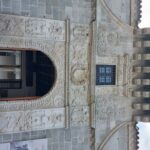
From Romanesque to Gothic, the stop at Catedral del Salvador is where Avila’s medieval thinking becomes extra clear. You’ll hear it described as the first Gothic cathedral built in Spain, and the guide focuses on the tall solitary tower.
The key idea here is the cathedral’s double function. One role is religious, as a house of God. The second is defensive, part of how the city protected itself. You’ll also notice how the famous cimorro (the distinctive element integrated with the tower) is built into the wall system, like one more defensive tower.
This is the sort of detail that makes the tour feel coherent. The walls you saw earlier don’t feel random now. They feel like the same logic carried forward into church architecture.
Casa Natal de Santa Teresa: why this woman mattered beyond Avila
Santa Teresa is central to understanding Avila, and the tour puts her in context through the Basilíca Casa Natal de Santa Teresa. You’ll learn about the figure described as the most relevant and international woman in the city, and how she influenced and transformed Ávila and Spain at the time.
Just as important, the guide connects her story beyond city limits. You’ll hear that she crossed borders and became a reference for the Catholic Church. Even if you already know the name, seeing the hometown sites through a guided lens gives you a clearer sense of why Avila claims her legacy so strongly.
This stop works especially well if you like history that’s tied to real places rather than just dates. It also pairs nicely with the previous religious architecture, since Santa Teresa’s world sat inside that kind of spiritual landscape.
Palacio de Polentinos: military life turned into archives and a museum
Next, you’ll reach Palacio de Polentinos, presented as one of the best and most beautiful examples of 16th-century palace buildings in Avila. The tour stresses how closely it was linked to military life, which is a neat twist if you expect palace stops to feel purely ceremonial.
The guide explains that this building used to be the former quartermaster academy of the army. Today, it houses the General Military Archive of Ávila. There’s also a very interesting museum of the Army, so you get a chance to connect the building’s purpose then with what it holds now.
This is a good moment to recalibrate your view of Avila. The city isn’t just medieval walls and churches. It also has a strong military institutional thread that still shows up in how the building is used.
If you’re the kind of traveler who enjoys niche corners of city identity—what people were trained to do, what institutions existed—this stop tends to land well.
Santa Teresa Square and the Church of San Pedro to wrap the walk
You’ll end in the nerve center area around Santa Teresa Square, also described as a big market meeting place for locals and visitors. That kind of ending is useful: it brings you back to a real-life part of the city rather than leaving you at an “attraction bubble.”
The tour includes a look at the Church of San Pedro, another Romanesque jewel. Finishing here gives your Romanesque theme a satisfying closure. After you’ve seen walls, Gothic defense ideas, and Santa Teresa sites, this is a reminder that Romanesque art and architecture still anchor the city’s look and feel.
It’s also a practical way to transition. Once you’re done with the guided part, you can keep exploring on your own with better context for what you’re seeing.
Price and value: what $188 per group really buys you
This tour costs $188 per group up to 4 for a 2-hour private experience. That may sound like a lot if you compare it to a bus tour. But with private guiding, the math changes fast.
If you bring a couple (2 people), you’re paying for convenience and tailored attention. If you fill all four spots, the effective cost per person is far closer to a standard guided tour rate, while still keeping the private feel. In other words, this is best value when you travel with friends or family who want the same sights.
The tour’s structure also justifies the price: it’s not only “look at monuments.” It connects wall features to cathedral defense, ties churches to medieval culture, and places Santa Teresa in a physical context. For a short stay in Avila, that kind of organization saves time and helps you remember what matters.
One more value point: the guide is live and Spanish-speaking. For many people, getting direct explanation in the local language makes the experience feel more authentic, not more simplified.
Who this tour is best for
This private tour fits best if you want a guided, coherent route through Avila’s major medieval elements without turning it into a marathon. It’s a strong pick for history-minded couples, small families, and small friend groups who can share the cost.
It also works well if you love Romanesque and are curious about how religious architecture intersects with defense. You’ll get that theme more clearly than if you just wander.
If your Spanish is limited, you might still enjoy it, but your experience will depend on how much you can follow through the guide’s explanations and pointing out details.
Should you book Ávila: Murallas y Casco Histórico?
I’d book this if you want an efficient, private introduction to Avila’s most important medieval landmarks: the walls, the Basilíca de San Vicente, the Catedral del Salvador, Santa Teresa sites, and the military-connected palace stop. The small group size up to 4 and the private guide angle help you get answers instead of rushing past plaques.
Skip it if you’re hoping for nonstop photo time. Cameras aren’t allowed, and this tour is built for looking and listening, not documenting everything. If that trade-off works for you, you’ll likely leave with a much clearer sense of how Avila’s churches, defense, and famous figures connect in one story.
FAQ
How long is the Ávila Murallas y Casco Histórico private tour?
It lasts 2 hours.
How much does the tour cost?
The price is $188 per group, up to 4 people.
Where do we meet?
You meet junto a la puerta de San Vicente.
What language is the live guide?
The live tour guide speaks Spanish.
Is the tour wheelchair accessible?
Yes, the tour is wheelchair accessible.
Are cameras allowed?
No, cameras are not allowed during the tour.
Is the Church of San Pedro included?
Yes, the tour ends at Santa Teresa Square and includes the Church of San Pedro.
What should I bring?
Wear comfortable shoes.
More Tours in Avila
- Tour Guiado En Tuk Tuk Recorre Avila De La Forma Mas Comoda
★ 4.4 · 235 reviews - TOUR GUIADO EN TUK TUK POR AVILA 1 HORA
★ 4.5 · 122 reviews - Ávila: Tour Privado Casco Histórico y Basílica San Vicente
★ 5.0 · 3 reviews
More Tour Reviews in Avila
- From Madrid: Segovia & Avila Day Trip with Optional Tickets
★ 4.3 · 2,161 reviews - Tour Guiado En Tuk Tuk Recorre Avila De La Forma Mas Comoda
★ 4.4 · 235 reviews - TOUR GUIADO EN TUK TUK POR AVILA 1 HORA
★ 4.5 · 122 reviews - Avila: Cathedral Entry Ticket with Audio Guide
★ 4.5 · 34 reviews - Ávila: Tour Privado Casco Histórico y Basílica San Vicente
★ 5.0 · 3 reviews
Behind the Walls of Avila
- From Madrid: Segovia & Avila Day Trip with Optional Tickets
★ 4.3 · 2,161 reviews - Tour Guiado En Tuk Tuk Recorre Avila De La Forma Mas Comoda
★ 4.4 · 235 reviews - TOUR GUIADO EN TUK TUK POR AVILA 1 HORA
★ 4.5 · 122 reviews - Avila: Cathedral Entry Ticket with Audio Guide
★ 4.5 · 34 reviews - Ávila: Tour Privado Casco Histórico y Basílica San Vicente
★ 5.0 · 3 reviews
Just Added: New Avila Tour Reviews
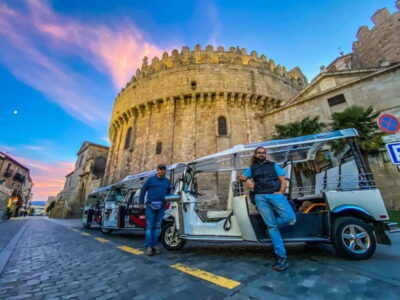

Ávila Day Trips from Madrid, compared.
 ★ 5.0Avila & Segovia Tour with Tickets to Monuments from MadridFrom $819,762 reviews
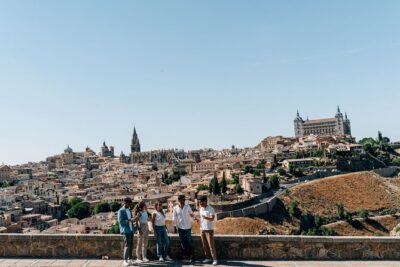 ★ 5.0Three Cities in One Day: Segovia, Avila and Toledo from MadridFrom $1268,402 reviews
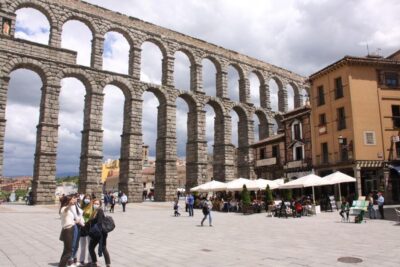 ★ 4.6Avila and Segovia Day Trip with Tickets to MonumentsFrom $744,568 reviews
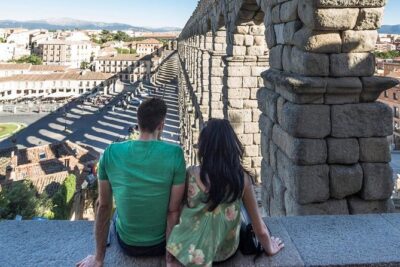 ★ 4.5Avila with Walls and Segovia with Alcazar from MadridFrom $603,293 reviews
 ★ 4.3From Madrid: Segovia & Avila Day Trip with Optional TicketsFrom $592,161 reviews
 ★ 5.0Full Day Tour to Avila & Segovia from MadridFrom $601,133 reviews
 ★ 4.6From Madrid: Avila and Segovia Full-Day TourFrom $481,052 reviews
 ★ 4.7From Madrid: Segovia, Ávila, and Toledo Guided TourFrom $991,011 reviews
Browse the lists this tour appears in