
REVIEW · ÁVILA DAY TRIPS FROM MADRID
Avila: Cathedral Entry Ticket with Audio Guide
Avila’s cathedral is a time machine. It’s the oldest Spanish Gothic cathedral, yet it still shows Romanesque muscle and medieval design choices you can actually spot. With this ticket, you follow a self-paced audio guide through the nave, chapels, and cloister, so you control the pace instead of being herded.
I like two things a lot. First, the audio guide (Spanish, English, French, Italian) helps you connect what you’re seeing to what it means, including the cathedral’s architectural shift. Second, the big visual payoff is the star-shaped cupola above the 13th-century sacristy, plus the surrounding treasury spaces and key artworks.
One thing to plan around: the route can feel a little hard to keep track of in places, and audio clarity may depend on what’s happening inside. I’d also give yourself buffer time because last access is 30 minutes before closing.
In This Review
- Key highlights to pay attention to
- Ávila’s Cathedral: Gothic pride with Romanesque leftovers
- Using the audio guide at a pace that actually works
- From city-wall roots to the nave
- Chapels of piety and conception: where the cathedral gets personal
- Chapel focus: Saint Ildefonso and Saint Teresa
- The star-shaped cupola over the 13th-century sacristy
- Art in the chapels: Pedro Berruguete and Juan de Borgoña
- Cloister finale: ribbed vaults and big Gothic-style windows
- Price and value: what $11 buys you here
- Timing tips: how to avoid feeling rushed in a cathedral
- Who this cathedral audio visit is for
- Should you book this Cathedral of Ávila ticket?
- FAQ
- Is this ticket price per person?
- What’s included with the Cathedral entry ticket?
- How long is the ticket valid?
- What languages are available on the audio guide?
- Does the ticket let me skip the ticket line?
- Is this visit wheelchair accessible?
- What’s the latest time I can enter?
- Can I take flash photography inside?
- Are pets allowed?
- Can I cancel for a full refund?
Key highlights to pay attention to
- Star-shaped cupola over the 13th-century sacristy and treasury
- Romanesque vs Gothic stones: red-and-white Romanesque blocks beside whiter Gothic work
- Chapels of Saint Ildefonso and Saint Teresa for focused stops
- Major paintings by Pedro Berruguete and Juan de Borgoña in the chapels
- Cloister calm with ribbed vaults and large Gothic-style windows
- Skip-the-line entry plus an included multi-language audio guide
Back inside the walls of Avila
- From Madrid: Segovia & Avila Day Trip with Optional Tickets★ 4.3 · 2,161 reviews
- Tour Guiado En Tuk Tuk Recorre Avila De La Forma Mas Comoda★ 4.4 · 235 reviews
- TOUR GUIADO EN TUK TUK POR AVILA 1 HORA★ 4.5 · 122 reviews
- Avila: Cathedral Entry Ticket with Audio Guide★ 4.5 · 34 reviews
Ávila’s Cathedral: Gothic pride with Romanesque leftovers
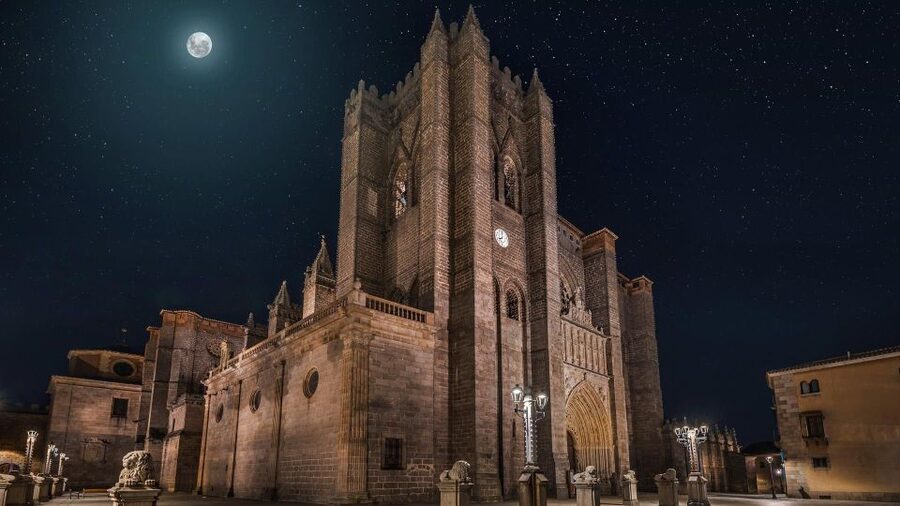
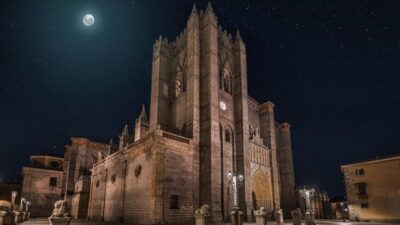
The Cathedral of Ávila is one of those buildings that doesn’t care what century you want. Gothic architecture is in charge, yes, but you can still see earlier Romanesque forms and materials working their way into the final look. That mix is the whole point of visiting slowly with interpretation in your ear.
As you move through the entry areas, you’ll notice the cathedral’s unusual “in-city” origin. It started out as part of Ávila’s city walls, so the setting feels more defensive and solid than many cathedrals you’ve seen. That context matters: when a building is tied to walls, you often get thicker, sturdier shapes and less airy drama than you expect from later Gothic.
The architecture also has a color-and-material story. You’ll see Romanesque red and white stones contrasted with whiter Gothic stone work. When the audio guide points this out, it’s easier to understand the building as an evolving project rather than one clean, single-era design.
Using the audio guide at a pace that actually works
This ticket’s appeal is practical. You get cathedral entry plus an audio guide included, and you’re not locked into a group tempo. If you like looking twice, reading details, and stepping back to reframe what you just saw, this is the right format.
Audio guide languages include Spanish, English, French, and Italian. If you’re using English, you’ll still want to keep expectations realistic: sound inside a cathedral can be tricky, and what’s happening during your visit can affect how easy it is to catch every word. I’d treat it as guidance, not a substitute for looking closely yourself.
Even better: the audio guide is designed to walk you through the sequence of key spaces. That matters because the cathedral is large, and the best parts are spaced out. With this format, you get help deciding where to look first, then where to go next, without feeling rushed.
And yes, it’s “skip the ticket line,” which is worth something in Ávila, where you can feel the day’s time crunch quickly in the historic center.
From city-wall roots to the nave
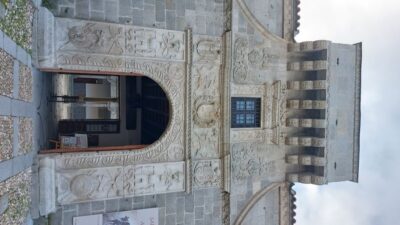
Your visit starts with arrival at the Cathedral of Ávila, originally tied to the city walls. Take a moment before going in to get your bearings. In older towns, the cathedral can feel like it grew out of the street corners, and that perspective helps you understand the building’s mass and shape.
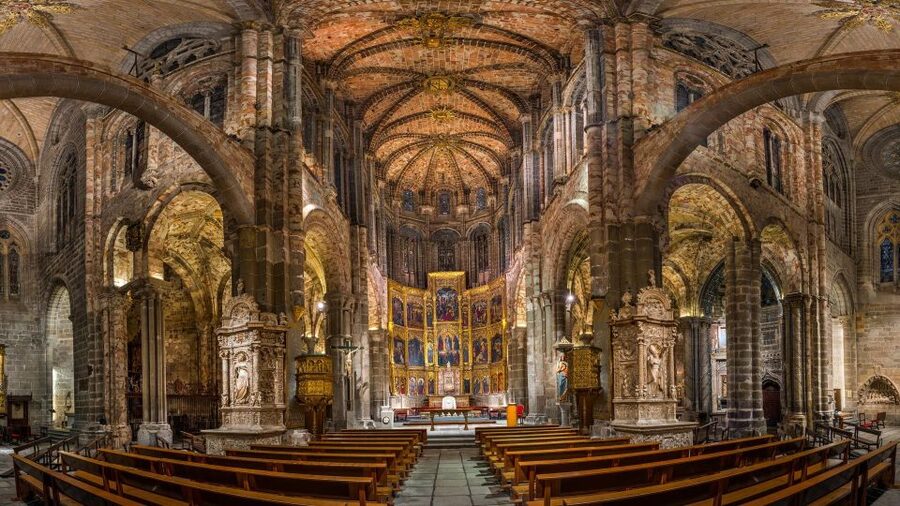
Once inside, follow the audio guide into the nave. This is where you start to feel the cathedral’s “Gothic direction,” with the overall space and rhythm pulling your eyes forward. At the same time, it’s the easiest area to miss details if you treat it like a corridor. I recommend doing the opposite: slow down and look at transitions in stonework, and at how the design changes as you move deeper into the building.
The audio guide’s structure helps here: it doesn’t just name places; it nudges you to notice the architectural shift. That’s how you turn a passive visit into one where you learn something without turning it into homework.
Chapels of piety and conception: where the cathedral gets personal
After the nave, you’ll move into chapels tied to devotion and religious themes. Two specific stops are highlighted as you follow the route: the chapels of piety and conception. These spaces tend to feel more “human-scale” than the nave, so your eyes can rest on artworks, altarpiece elements, and architectural features that frame worship.
This is also where the cathedral’s art becomes part of the experience, not just background decoration. The ticket highlights an altarpiece and paintings by major Spanish artists—Pedro Berruguete and Juan de Borgoña. When you’re in the right chapels at the right time, those names stop being trivia and start making visual sense.
The sweet spot is the combination of architecture and painting. Gothic design often creates a visual stage, and the artwork is what fills it. If you only glance and move on, you’ll miss the way the altarpiece and surrounding religious imagery are arranged to guide attention.
Chapel focus: Saint Ildefonso and Saint Teresa
One of the most memorable parts of this visit is the Chapel of Saint Ildefonso and Saint Teresa. This is where your self-paced audio route really earns its keep, because the chapel is a concentrated look at devotion, liturgical symbolism, and crafted artistic focus.
If you like getting “one main stop” experience within a larger building, this chapel is that. It’s not just another room; it’s a place where the cathedral’s spiritual purpose shows through design choices and the way art and structure work together.
Take your time here and don’t rush past it to chase the biggest headline feature. If you do, you might end up seeing the star-shaped cupola first and treating it like the only payoff. The chapel helps you understand why the cupola and treasury spaces are worth your attention when you reach them.
The star-shaped cupola over the 13th-century sacristy
Then comes the highlight people talk about for a reason: the star-shaped cupola above the 13th-century sacristy (and connected treasury areas). This is one of those details that can look confusing at first glance, because the geometry feels decorative but also intentional.
Standing under or viewing the cupola area through the route gives you a chance to connect three things at once:
- the cathedral’s architectural evolution
- how later Gothic design can still coexist with earlier construction
- how the cathedral used space to create visual impact
The audio guide’s attention here matters. If the guide tells you what you’re looking at and how it fits into the surrounding spaces, the cupola becomes more than a pretty ceiling. It turns into a “how and why” moment.
After this, the treasury and related spaces keep the sense of medieval weight and importance. You’re seeing the cathedral not only as a worship space but also as a place that stored meaning, objects, and power.
Art in the chapels: Pedro Berruguete and Juan de Borgoña
This ticket specifically points you to paintings by Pedro Berruguete and Juan de Borgoña, so plan to spend a little time reading their presence in the chapels rather than treating them as quick glances.
These artists are part of what makes the cathedral feel lived-in across centuries. Art like this doesn’t exist in a vacuum; it’s tied to the chapel’s devotional purpose and the visual hierarchy built into Gothic architecture. In other words, the architecture sets the stage, and the paintings deliver the message.
If you’re short on time, don’t skip the art stops. You’ll get more satisfaction from a focused view of paintings and the altarpiece than from rushing to every possible corner. This is the kind of monument where depth beats speed.
Cloister finale: ribbed vaults and big Gothic-style windows
Your tour ends at the peaceful cloister, which is exactly what you want after walking the nave and chapel areas. The cloister is a calmer rhythm shift, and it helps you reset your eyes.
Look up for the ribbed vaults. They’re a signature of Gothic planning: structure that doubles as visual pattern. Then check the large Gothic-style windows. Even when you don’t have dramatic light streaming in, the windows frame views and add a sense of openness that contrasts with the heavier feeling elsewhere.
I like cloisters because they make you realize how cathedrals weren’t just about grand interiors. They were also about controlled quiet, movement, and space for contemplation.
Price and value: what $11 buys you here
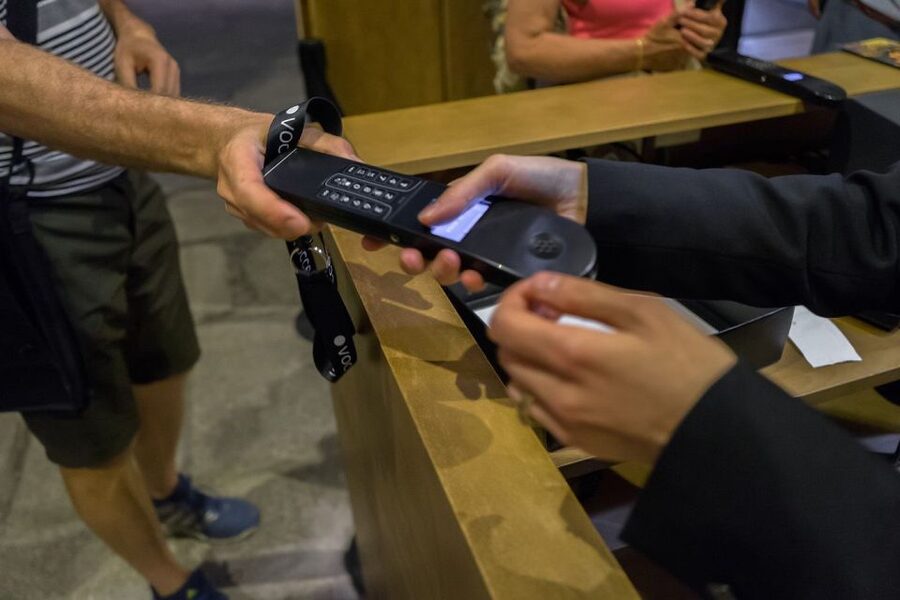
At about $11 per person, this is strong value because you’re getting more than entry. You get the cathedral ticket plus a multi-language audio guide. For a major historic site like this, that combination is usually the difference between a quick walk-through and a visit that actually sticks.
The real value is flexibility. Instead of paying more for a live guided group to rush you through, you can spend time where you care—chapels, art, or architecture—then move on when you’re done. If you’re traveling in a small group or solo, the private group format also helps keep things from feeling chaotic.
Think of it this way: you’re paying for entry and learning support at once. That’s the smart way to use your time in Ávila’s compact old center.
Timing tips: how to avoid feeling rushed in a cathedral
You’ll want to plan around two constraints. First, the schedule can change due to liturgical events, so don’t treat any rigid timetable like gospel. Second, last access is 30 minutes before closing. That’s a real cliff, not a suggestion.
To make this experience feel smooth, give yourself enough time to reach the cupola area and the cloister without sprinting. If you arrive late, you can end up skipping your favorite parts because the building still has a lot of distance between highlights.
If you’re a “see it all” type, consider arriving with time to spare. If you’re a “best parts only” type, you can still do well by prioritizing: nave, the highlighted chapels, the star-shaped cupola area, then the cloister.
Who this cathedral audio visit is for
This experience is a good fit if you:
- like self-paced sightseeing and hate being marched
- enjoy architecture that mixes styles (Romanesque and Gothic in one building)
- want specific art highlights, including works tied to Pedro Berruguete and Juan de Borgoña
- want a calmer ending in the cloister
It’s also a solid choice for people who want a focused route through a large space. If you get overwhelmed in big churches without a plan, the audio guidance helps you stay oriented.
If you’re extremely sensitive to audio clarity or you rely on spoken interpretation for everything, you may want to accept that sound conditions inside can vary. Use the guide as support, but also let your eyes do part of the learning.
Should you book this Cathedral of Ávila ticket?
I’d book it if you want an efficient, meaningful visit without the pressure of a live group schedule. For the price, the combination of skip-the-line entry and a built-in audio guide makes it easy to get value out of a major monument.
I’d think twice if you dislike self-guided routes and really need very clear signage everywhere. In that case, you may still enjoy the cathedral, but you’ll want to move more slowly and be ready to pause and refocus rather than assuming the path will feel perfectly intuitive at every turn.
FAQ
Is this ticket price per person?
Yes. The listed price is $11 per person.
What’s included with the Cathedral entry ticket?
Your ticket includes cathedral entry and an audio guide.
How long is the ticket valid?
It’s valid for 1 day.
What languages are available on the audio guide?
The audio guide is available in Spanish, English, French, and Italian.
Does the ticket let me skip the ticket line?
Yes, skip-the-line entry is included.
Is this visit wheelchair accessible?
Yes, the cathedral visit is wheelchair accessible.
What’s the latest time I can enter?
Last access is 30 minutes before closing.
Can I take flash photography inside?
No, flash photography is not allowed.
Are pets allowed?
No, pets are not allowed.
Can I cancel for a full refund?
Yes. You can cancel up to 24 hours in advance for a full refund.
Straight In, No Queue
- From Madrid: Segovia & Avila Day Trip with Optional Tickets
★ 4.3 · 2,161 reviews
More Tour Reviews in Avila
- From Madrid: Segovia & Avila Day Trip with Optional Tickets
★ 4.3 · 2,161 reviews - Tour Guiado En Tuk Tuk Recorre Avila De La Forma Mas Comoda
★ 4.4 · 235 reviews - TOUR GUIADO EN TUK TUK POR AVILA 1 HORA
★ 4.5 · 122 reviews - Ávila: Tour Privado Casco Histórico y Basílica San Vicente
★ 5.0 · 3 reviews - Ávila: Tour privado por Murallas y Casco Histórico
★ 5.0 · 3 reviews
Behind the Walls of Avila
- From Madrid: Segovia & Avila Day Trip with Optional Tickets
★ 4.3 · 2,161 reviews - Tour Guiado En Tuk Tuk Recorre Avila De La Forma Mas Comoda
★ 4.4 · 235 reviews - TOUR GUIADO EN TUK TUK POR AVILA 1 HORA
★ 4.5 · 122 reviews - Ávila: Tour Privado Casco Histórico y Basílica San Vicente
★ 5.0 · 3 reviews - Ávila: Tour privado por Murallas y Casco Histórico
★ 5.0 · 3 reviews
Just Added: New Avila Tour Reviews


Ávila Day Trips from Madrid, compared.
 ★ 5.0Avila & Segovia Tour with Tickets to Monuments from MadridFrom $819,762 reviews
 ★ 5.0Three Cities in One Day: Segovia, Avila and Toledo from MadridFrom $1268,402 reviews
 ★ 4.6Avila and Segovia Day Trip with Tickets to MonumentsFrom $744,568 reviews
 ★ 4.5Avila with Walls and Segovia with Alcazar from MadridFrom $603,293 reviews
 ★ 4.3From Madrid: Segovia & Avila Day Trip with Optional TicketsFrom $592,161 reviews
 ★ 5.0Full Day Tour to Avila & Segovia from MadridFrom $601,133 reviews
 ★ 4.6From Madrid: Avila and Segovia Full-Day TourFrom $481,052 reviews
 ★ 4.7From Madrid: Segovia, Ávila, and Toledo Guided TourFrom $991,011 reviews
Browse the lists this tour appears in