
REVIEW · PLAZA MAYOR & OLD TOWN TOURS
Madrid Old Town Donation-Based Walking Tour
Old Town starts to click when you walk it. This guided Madrid Old Town tour strings together the city’s big landmarks and small stories, from Puerta del Sol to the Teatro Real area, for a low per-person price. I like how it’s built for real street orientation, so you finish with a map in your head, not just photos. I also like the small-group feel, capped at 15.
What I really enjoy is the mix of eras in a short walk: baroque architecture at Plaza Mayor, medieval heart at Plaza de la Villa, and then a surprisingly modern cathedral. You’ll also get a standout food-history stop at Sobrino de Botín, famous as the world’s oldest restaurant (Guinness record certified). One consideration: this is mostly walking and sightseeing time, so food and drinks aren’t included even though you pass places like Mercado San Miguel.
In This Review
- Key things worth knowing before you go
- Why this Old Town route makes Madrid feel simple
- Puerta del Sol: Madrid’s famous center of gravity
- Plaza Mayor: baroque style with practical square-life context
- Sobrino de Botín: the oldest-restaurant claim you can actually see
- Mercado San Miguel: feast your senses, even if you don’t feast your budget
- Plaza de la Villa: medieval Madrid’s hard-edged center
- Almudena Cathedral: a modern cathedral with a surprising feel
- Royal Palace of Madrid: scale that hits you even in a quick view
- Plaza de Oriente and Teatro Real: monuments and Madrid’s music life
- Price and value: what $3.63 buys you (and what it doesn’t)
- Group size, pace, and comfort for a 2.5-hour walk
- Best for: first-timers, history-curious walkers, and anyone who hates aimless wandering
- Should you book this Madrid Old Town walking tour?
- FAQ
- How much does the tour cost?
- How long is the walking tour?
- Is the tour offered in English?
- What is the maximum group size?
- Where do I meet and where does it end?
- Is admission included for the sights?
- Is food or drinks included?
- Can I cancel for a refund?
Key things worth knowing before you go
- Small group size (max 15) keeps the pace human and the questions welcome
- Donation-based pricing listed at $3.63 per person makes it easy to try without overthinking
- Sobrino de Botín stop at the Guinness-certified oldest-restaurant claim
- Almudena Cathedral timing: it’s completed at the end of the 20th century, so it feels modern for a “cathedral day”
- Teatro Real finish gives you a grand ending point tied to Madrid’s music scene
Sol, the arches and the tangle of old streets
- Madrid Essential: Historic Center, Plaza Mayor & Royal Palace★ 5.0 · 6,416 reviews
- Madrid Walking Tour from Puerta del Sol to Retiro Park★ 5.0 · 2,285 reviews
- Madrid Old Town & Royal Palace Walking Tour Skip the Line Ticket★ 4.5 · 1,829 reviews
- Madrid Historic Centre Food Tour with Authentic Tapas & Wines★ 5.0 · 814 reviews
Why this Old Town route makes Madrid feel simple
Madrid Old Town is gorgeous, but it’s also easy to wander in circles. This tour helps you avoid that by linking major squares and monuments with the kind of context that makes the streets feel logical. In about 2.5 hours, you get a clean arc: start at Madrid’s most famous meeting point, move through historic civic squares, then push outward toward royalty and opera.
I also like that it’s not just “look at the building.” The guide’s job is to connect what you’re seeing to who ruled here, what people used these spaces for, and why certain places are still Madrid’s go-to landmarks. When you understand why Puerta del Sol matters or why Plaza de la Villa once held public spectacles, you’ll remember the city instead of just visiting it.
The other practical win is group size. With up to 15 people, the walking rhythm stays manageable. And if the day’s group turns smaller, you’re more likely to get the kind of back-and-forth that makes a tour feel personal rather than scripted.
Puerta del Sol: Madrid’s famous center of gravity
You begin near Puerta del Sol, at the meeting point by Tienda Orange (Puerta del Sol area). This is one of the most recognizable spots in the city, and the tour uses that fame the right way: you’re not just dropped into crowds—you get orientation fast.
Here’s what you’ll likely notice as you move through Puerta del Sol’s key landmarks:
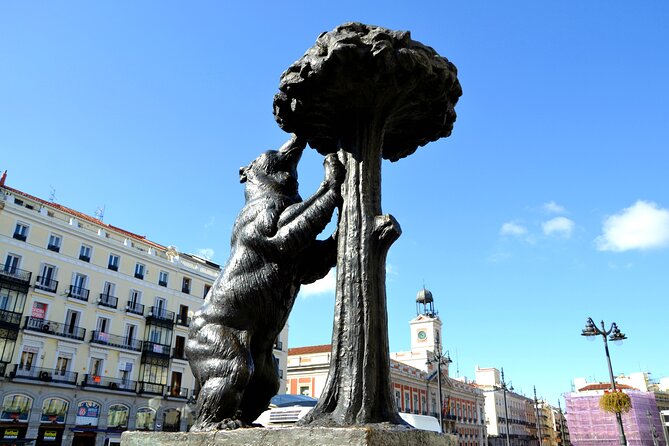
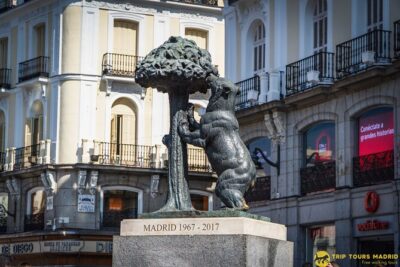
- The Oso and Strawberry Tree symbols, which are basically shorthand for Madrid identity
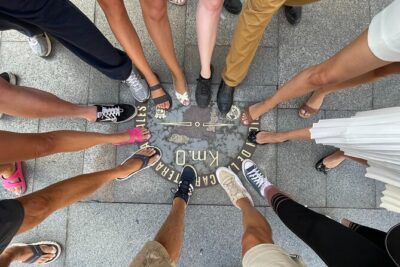
- Kilometre Zero, the point that ties Madrid’s road network to the city’s center
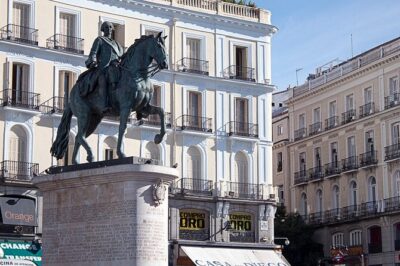
- King Charles III context, so the square isn’t just a photo stop
This is a good opening stop because Puerta del Sol gives you your bearings. Once you understand that this is the city’s “starting point” in more ways than one, the rest of the route starts to make sense.
Plaza Mayor: baroque style with practical square-life context
Next you’ll step into Plaza Mayor. The big reason this stop works is that it teaches you how to read a Spanish square. The architecture is baroque, yes, but you also learn how these places functioned as social stages—where people gathered, talked, and watched what was happening.
A square like Plaza Mayor is also a good place for the guide to pace the group. You can slow down, look around, and let the story land before you head into narrower lanes and the more “everyday” historic core.
One small drawback to keep in mind: Plaza Mayor is a famous square, so you’ll likely be in the middle of tourism energy. The tour helps you cut through that with meaning, but you still may want to watch your footing if it’s crowded and the group is trying to pause for photos.
Sobrino de Botín: the oldest-restaurant claim you can actually see
This is the stop that food lovers tend to remember long after the walk. You’ll visit Restaurante Sobrino de Botín, listed here as the Oldest Restaurant in the World with a Guinness World Record certification.
Even if you don’t plan to eat, it’s a fun reality check on history. You can stand at a place that has served generations of diners and think about how the city’s social life has changed while the location stays constant. And since this is a short stop, it doesn’t eat up your tour time with a long sit-down meal.
If you do like to snack while sightseeing, this is the part of the day where you can decide on the spot. The tour doesn’t include food, but the setting practically begs you to consider a bite.
The centre on foot, other ways round





Mercado San Miguel: feast your senses, even if you don’t feast your budget
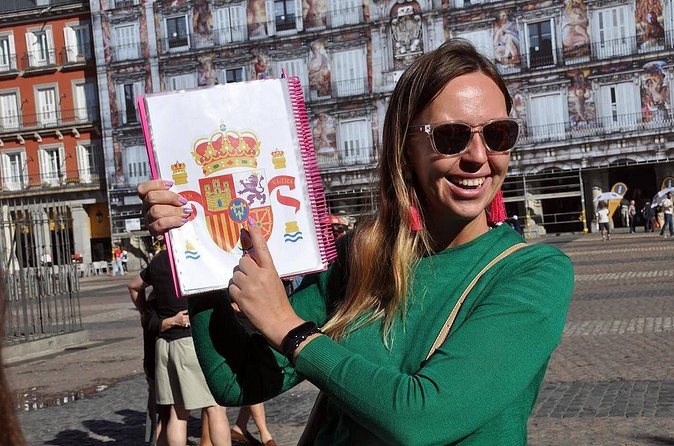
As you head toward Mercado San Miguel, you’re shifting from landmarks into lived-in market life. This is one of those places where the visuals and smells do half the guiding for you.
The tour frames it as an emblematic market, and the value here is simple: you get a chance to see how Madrid eats without turning the walking tour into a food tour. If you want to sample, you can. If you want to save money, you can still enjoy the vibe.
One consideration: markets can get busy fast. So if you’re visiting during warm hours, it helps to keep your expectations realistic. This is more about taking in the scene than leisurely wandering forever.
Plaza de la Villa: medieval Madrid’s hard-edged center
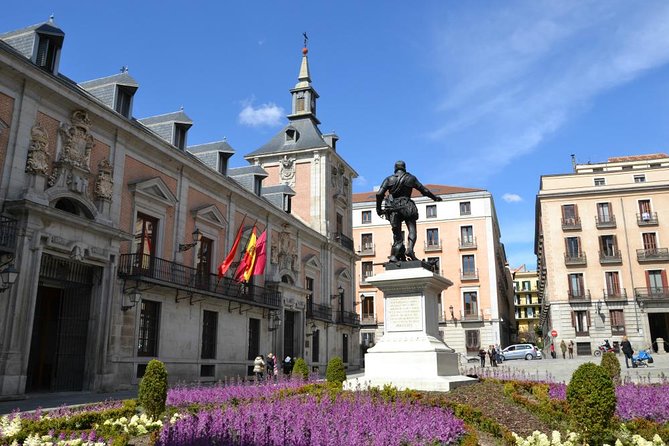
Plaza de la Villa is where the tour leans into the darker, more dramatic side of Madrid’s past. Today it looks like a charming square. But the guide’s story brings back what the space once held: public executions, religious ceremonies, and pagan festivals.
That contrast is the point. When a tour connects the current feel of a place to what it used to host, you stop treating old Madrid as a theme park. You start treating it like a real city where real people lived through real events.
This stop is also a strong “pause moment.” It helps you reset before moving to the more monumental sights that come next—Almudena Cathedral and then the Royal Palace.
Almudena Cathedral: a modern cathedral with a surprising feel
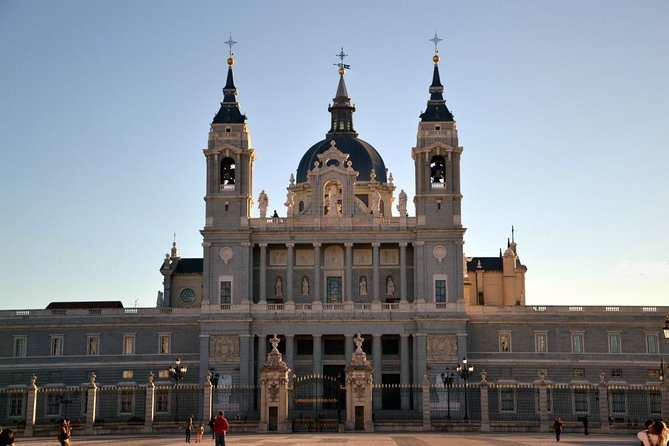
Then you’ll reach Catedral de Sta Maria la Real de la Almudena. What makes this stop interesting is the timing: it was completed at the end of the 20th century. That detail matters, because it changes how you’ll perceive the cathedral.
A lot of visitors expect cathedrals to feel like they came from centuries ago. Almudena breaks that expectation. Even if you’re not a “church architecture” person, the guide can help you notice what modern construction and design bring to a site that still feels central to Madrid’s identity.
This stop is short, so if you’re the type who likes to linger, you may want to plan extra time around the cathedral on another day. The tour gives you orientation and the big context, not a long interior visit.
Royal Palace of Madrid: scale that hits you even in a quick view
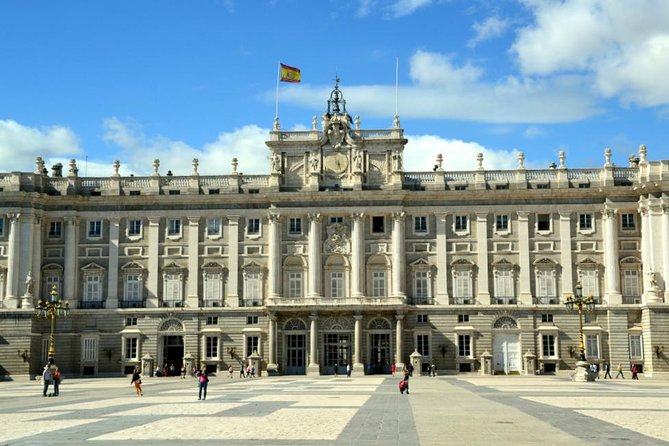
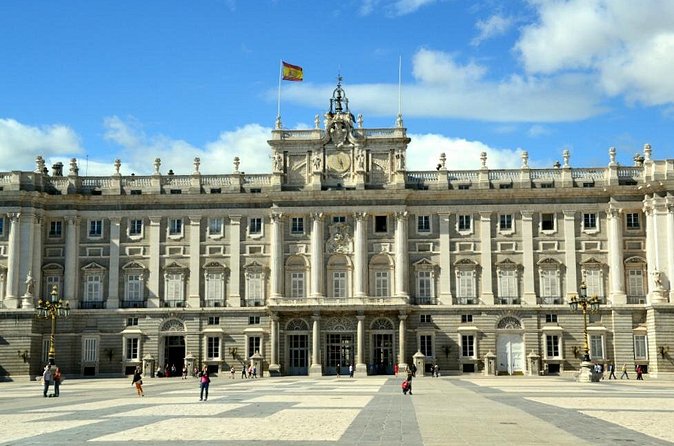
Next comes the Royal Palace of Madrid—one of the largest palaces in Europe. Here, the tour gives you the scale in a way that’s easy to grasp: more than three thousand rooms, tied to Spanish royal rule over territories reaching from America to the Philippine Islands.
That’s a big story. The practical benefit of hearing it on the walk is that the palace stops being just a massive wall you pass and starts feeling like a machine that ran empire-era life. You can look up at it and understand it as power made visible.
Time-wise, this stop is brief. If you want to go inside, you’d need separate planning. But even outside, the context helps you spot why people still treat it as a centerpiece.
Plaza de Oriente and Teatro Real: monuments and Madrid’s music life
After the palace, you’ll move to Plaza de Oriente. The key detail here is historical design and symbolism: the square was designed during the reign of Jose Bonaparte, brother of Napoleon, and you’ll admire the monument to King Felipe IV from the 17th century.
This is a smart bridge between royalty-as-building and royalty-as-legacy. You see how rulers influenced space, not just governance.
Finally, the tour ends at Teatro Real, the main opera house in Madrid. It was inaugurated in 1850 by Queen Isabel II, and the guide’s framing helps you understand it as the center of musical life in Madrid.
I like endings like this because you get a clean “capstone.” After all the stones, squares, and royal visuals, finishing at an opera house makes the city feel complete—culture as part of the same story as power and architecture.
Price and value: what $3.63 buys you (and what it doesn’t)
The listed price is $3.63 per person, and the tour is described as donation-based. That’s the kind of pricing that works well for budget-minded travelers who still want a guide for context. You’re not paying for expensive add-ons here; you’re paying for a guided walking experience with local taxes included.
Also, notice what isn’t included: hotel pickup and drop-off, plus food and drinks. That’s normal for a walking tour, but it’s worth planning for—especially if you’re tempted by Mercado San Miguel or want to grab something near Sobrino de Botín.
Value-wise, the best part is how tightly the route fits together. You’re seeing major sights in a single morning (starting at 10:45 am), and the guide turns that time into meaning. If you’ve ever done a self-guided walk and come back with lots of pictures but few facts, a tour like this is an efficient fix.
Group size, pace, and comfort for a 2.5-hour walk
This tour runs about 2 hours 30 minutes. With a max group size of 15, the pace tends to stay flexible. The route is a walking loop through Old Town, so you should dress for walking and be ready for changing sidewalks and crowd zones near the big squares.
If you’re traveling with kids, the tour requires that children are accompanied by an adult. Service animals are allowed, and it’s near public transportation—helpful if you’re planning to link this morning walk with the rest of your day.
Warm-weather tip: one of the strongest pieces of feedback is that the guide kept the experience enjoyable even in warm conditions. Still, plan your own comfort. Bring water if you can, and consider light layers if the day is hot.
Best for: first-timers, history-curious walkers, and anyone who hates aimless wandering
This is a strong pick if you:
- Want a fast framework for Madrid Old Town
- Like history that connects to real places you can see
- Prefer a small group over a bus-style tour
- Want stops that range from squares to royalty to opera
It may be less ideal if you:
- Want a long interior visit at each major sight
- Are looking for a full-on food tour with tastings included
- Struggle with steady walking for 2.5 hours
Should you book this Madrid Old Town walking tour?
If your goal is to get your bearings and leave with a clearer sense of why Madrid’s center matters, I’d book it. The low price makes it easy to justify, and the route covers the kind of landmarks that are worth seeing even if you only have a day or two.
I’d especially lean in if you like tours where the guide brings the city to life through stories, not just directions. And the stop choices are practical: Puerta del Sol for orientation, Plaza Mayor and Plaza de la Villa for context, Almudena and the Royal Palace for scale, then Teatro Real for a classy finishing note.
If you want a slow, lingering day with lots of inside time and included meals, you might prefer a different style of tour. But for most people—first-timers, couples, solo travelers, and anyone who hates aimless walking—this is a smart buy.
FAQ
How much does the tour cost?
The listed price is $3.63 per person.
How long is the walking tour?
It lasts about 2 hours 30 minutes.
Is the tour offered in English?
Yes. It’s offered in English.
What is the maximum group size?
The tour has a maximum of 15 travelers.
Where do I meet and where does it end?
You start at Tienda OrangePrta del Sol, 12, Centro, 28013 Madrid, Spain. You end at Pl. de Ote., 1, Centro, 28013 Madrid, Spain. The start time is 10:45 am.
Is admission included for the sights?
Admission is listed as free for the stops on the route, and the tour includes a local guide and local taxes.
Is food or drinks included?
No. Food and drinks aren’t included.
Can I cancel for a refund?
Yes. Free cancellation is available if you cancel up to 24 hours in advance for a full refund.
More Tour Reviews in Madrid
- Madrid: Tour Bernabéu Entry Ticket
★ 4.5 · 21,573 reviews - Madrid: Prado Museum Entry Ticket
★ 4.6 · 20,699 reviews - Madrid: “Emociones” Live Flamenco Performance
★ 4.8 · 12,866 reviews - Madrid: Panoramic Route City Tour
★ 4.1 · 12,259 reviews - Madrid: Live Flamenco Show with Food and Drinks Options
★ 4.5 · 9,901 reviews - Avila & Segovia Tour with Tickets to Monuments from Madrid
★ 5.0 · 9,762 reviews
Walk the Heart of Madrid
- Madrid Tapas & Wine Tasting Walking Tour – Small Group Local Bars
★ 5.0 · 3,644 reviews - Madrid Welcome Tour with Local Guide in Eco Tuk Tuk Private
★ 5.0 · 2,936 reviews - Madrid Walking Tour from Puerta del Sol to Retiro Park
★ 5.0 · 2,285 reviews - Madrid Old Town & Royal Palace Walking Tour Skip the Line Ticket
★ 4.5 · 1,829 reviews - Madrid: Welcome to Madrid Guided Walking Tour
★ 4.9 · 1,738 reviews - Madrid: Spanish Inquisition and Legends Evening Walking Tour
★ 4.7 · 1,396 reviews
Old Madrid on Foot
- Madrid Essential: Historic Center, Plaza Mayor & Royal Palace
★ 5.0 · 6,416 reviews - Madrid Walking Tour from Puerta del Sol to Retiro Park
★ 5.0 · 2,285 reviews - Madrid Old Town & Royal Palace Walking Tour Skip the Line Ticket
★ 4.5 · 1,829 reviews - Madrid Historic Centre Food Tour with Authentic Tapas & Wines
★ 5.0 · 814 reviews - Madrid in a Day Tour:Royal Palace, Historic Center & Prado Museum
★ 5.0 · 628 reviews - Guided Tour of Madrid of the Austrias and the Historic Center
★ 5.0 · 520 reviews
Just Added: New Madrid Tour Reviews




Plaza Mayor & Old Town Tours, compared.
 ★ 5.0Madrid Essential: Historic Center, Plaza Mayor & Royal PalaceFrom $36,416 reviews
 ★ 5.0Madrid Walking Tour from Puerta del Sol to Retiro ParkFrom $32,285 reviews
 ★ 4.5Madrid Old Town & Royal Palace Walking Tour Skip the Line TicketFrom $401,829 reviews
 ★ 5.0Madrid Historic Centre Food Tour with Authentic Tapas & WinesFrom $78814 reviews
 ★ 5.0Madrid in a Day Tour:Royal Palace, Historic Center & Prado MuseumFrom $119628 reviews
 ★ 5.0Guided Tour of Madrid of the Austrias and the Historic CenterFrom $2520 reviews
 ★ 5.0Old Madrid Tapas and Fine Wine Small Group TourFrom $101415 reviews
 ★ 4.2From Madrid: Old Town Toledo Tour with Optional ActivitiesFrom $32403 reviews
Browse the lists this tour appears in