
REVIEW · PRADO MUSEUM TOURS
Madrid: Museo del Prado Guided Tour
The Prado feels huge until a guide helps. This private-style Museo del Prado tour keeps things focused, with official guidance that explains what you’re seeing and why it mattered—especially for major artists like Goya and Velázquez. You meet at the Goya statue by the ticket office and get moving fast, with a guide carrying The guides you need sign.
What I like most is the art-first storytelling. Guides such as Maria, Macarena, Paola, and Clara are praised for making paintings click through clear explanations, smart pacing, and context that feels practical instead of lecture-y. Second, I love the way the route is flexible: you can request what you want to prioritize, and the guide can still suggest a chronological flow to make the museum’s size less of a maze.
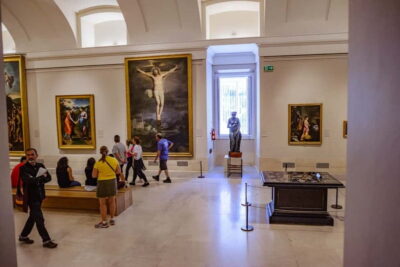
One drawback to plan for: no photography inside (that’s the museum’s policy). Also, with only 1.5 to 2 hours, you won’t see everything—so you’ll need to treat this as a “best-of with meaning” tour, not a full museum marathon.
In This Review
- Key highlights worth your time
- Meeting at Madrid’s Prado Entrance: Goya Statue to Ticket Office
- 1.5 to 2 Hours of Prado: How a Custom Tour Still Makes Sense
- Velázquez and Goya: The Spanish Masters That Anchor the Visit
- Bosch and the Northern Weirdos: When Details Tell the Whole Story
- Raphael, Titian, and Tintoretto: The Italian Renaissance in Madrid
- Rubens, Greco, and Murillo: Spain’s Connections Across Europe
- After the Tour: How to Keep Seeing More Without Getting Overwhelmed
- Price and Value: Why $49 Can Work for a Major Museum
- Who This Prado Guided Tour Is Best For
- Should You Book This Museo del Prado Guided Tour?
- FAQ
- Where do we meet for the tour?
- What’s included in the price?
- How long is the guided portion?
- Is photography allowed inside the Prado?
- What languages are available for the guide?
- Is this a private tour or a group tour?
- Can the tour be customized to what I want to see?
- Is the tour wheelchair accessible?
Key highlights worth your time
- Meet right by the ticket office at the Goya statue, with The guides you need sign—easy to find.
- Official guide + Prado ticket included so you’re not doing museum admin while art is staring at you.
- Flexible route with a suggested chronology, which helps you connect styles and history without getting lost.
- Focus on standout masters: Bosch, Van der Weyden, Dürer, Raphael, Titian, Tintoretto, Greco, Murillo, Velázquez, and Goya.
- Small groups can feel almost private, and that makes crowded galleries easier to manage.
Still on Velazquez and Goya? A few more Prado visits
- Madrid: Prado Museum Entry Ticket★ 4.6 · 20,699 reviews
- Madrid: Small Group of Prado Museum Tour & Optional Tapas★ 4.6 · 2,437 reviews
- Madrid: Prado Museum Guided Tour with Skip-the-Line Ticket★ 4.5 · 2,018 reviews
- Madrid: Prado Museum Guided Tour With Fast Access★ 4.8 · 1,785 reviews
Meeting at Madrid’s Prado Entrance: Goya Statue to Ticket Office
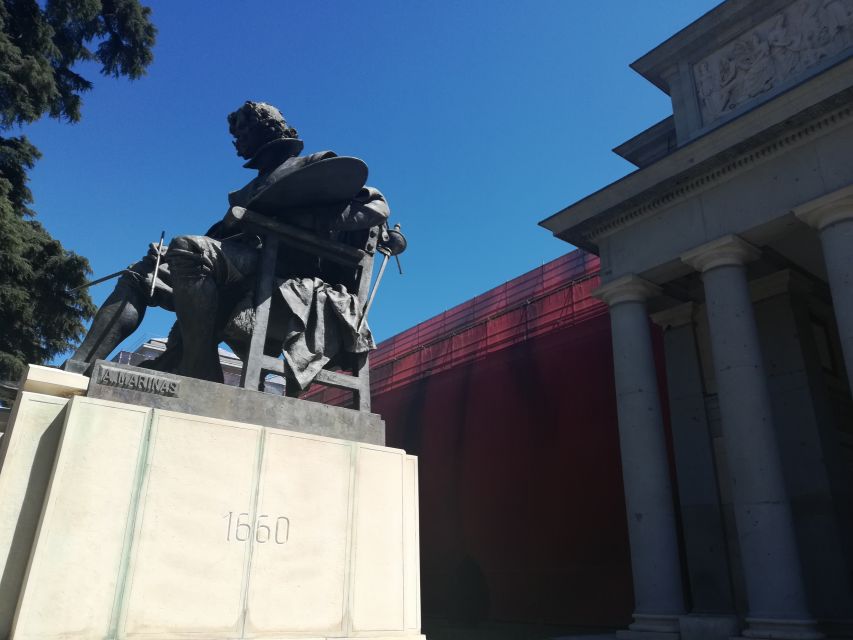
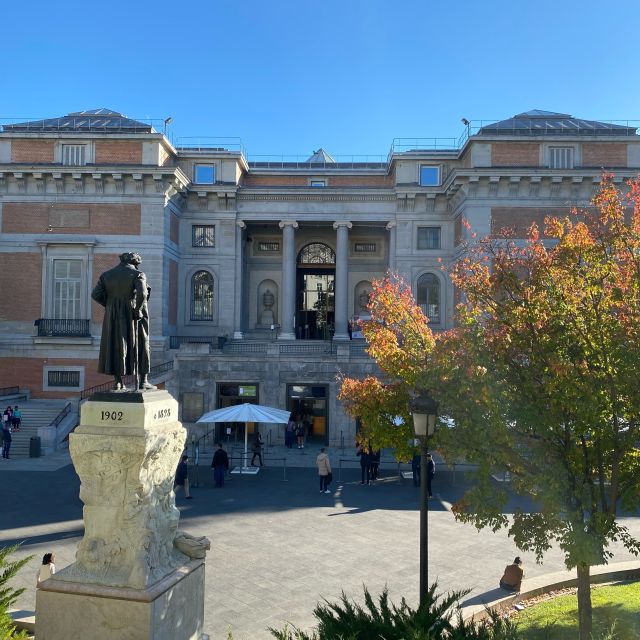
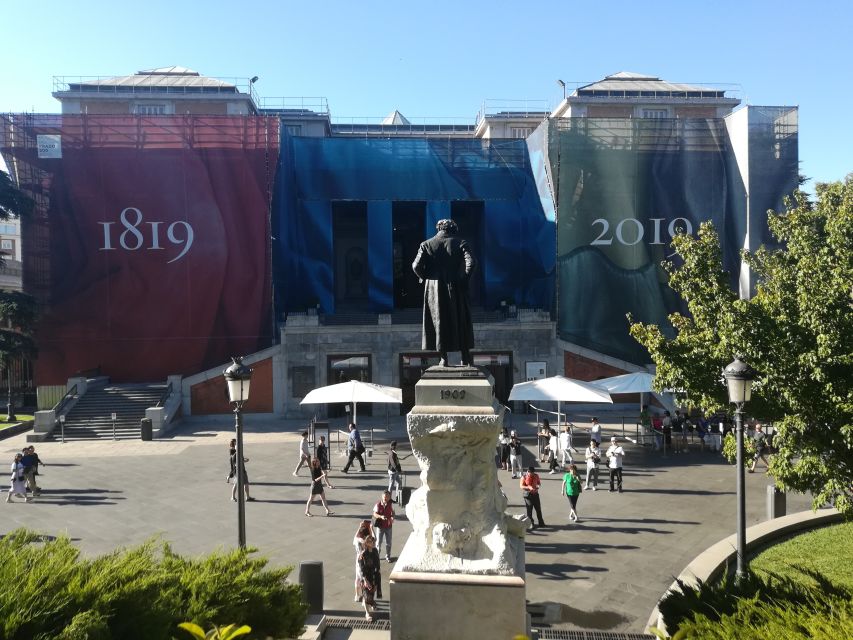
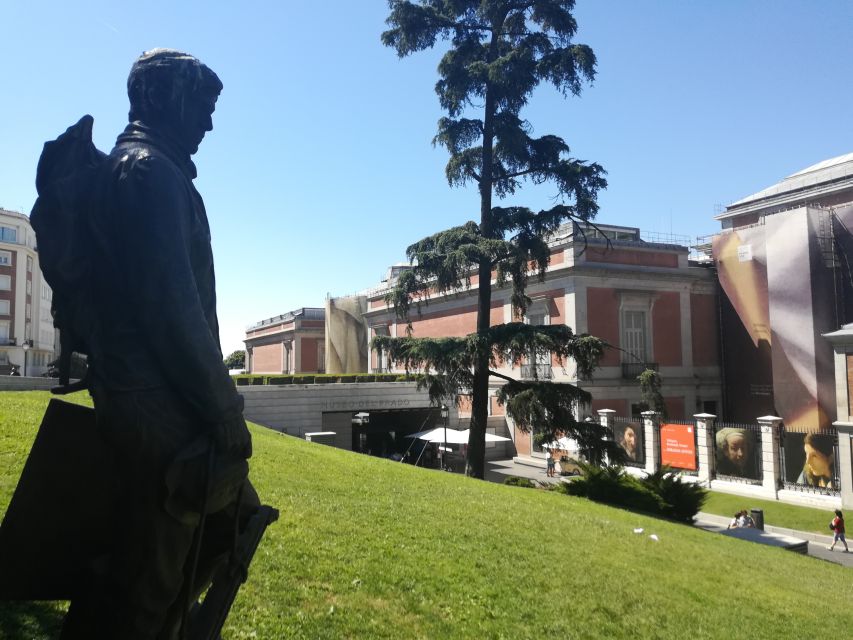
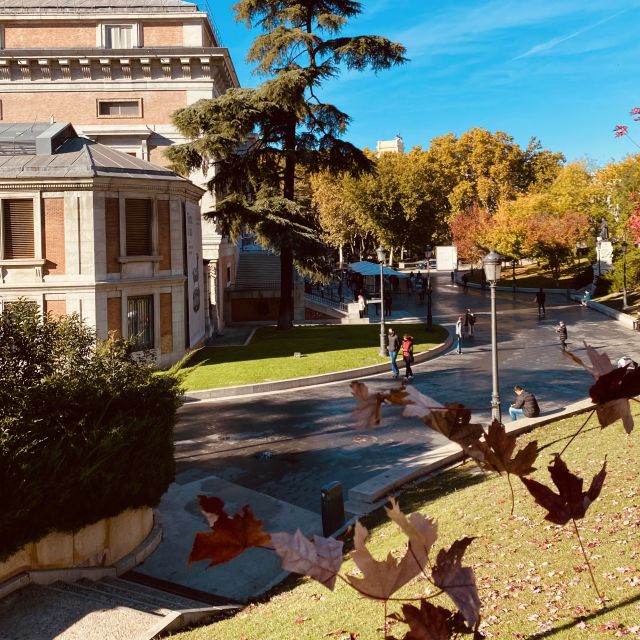
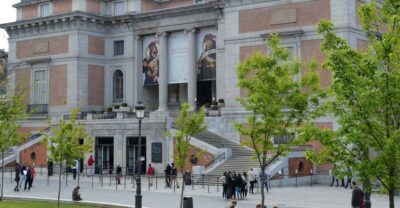
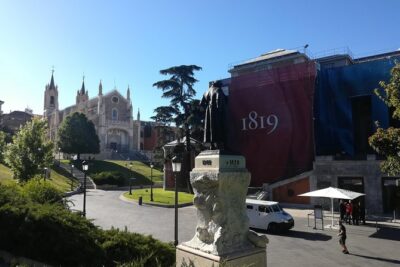
Your tour starts in a spot that removes 80% of the stress. You’ll meet at the Monument to Goya, right in front of the Prado’s ticket office. The guide will have a sign reading The guides you need, so you’re not wandering around guessing if that person with a folder is the right one.
You’ll also see that there’s a second starting option: Monument to Statue. If you’re arriving via different directions around central Madrid, that flexibility can help. Either way, the goal is the same: get you into the museum without wasting your one good afternoon on queues and confusion.
Once you’re inside, the tour begins with what you’ll actually need in a museum this large: direction. The Prado is not one long hallway of masterpieces. It’s multiple galleries and floors, and without a plan, you can end up sprinting past the art that most interests you.
This is where the guide’s role matters. The tour is described as custom to what you want to see, and guides are praised for shepherding groups through crowds while keeping attention on the paintings—not on logistics.
1.5 to 2 Hours of Prado: How a Custom Tour Still Makes Sense
The duration is 1.5 hours minimum up to about 2 hours, and that time window shapes the whole experience. You’re not meant to “finish the Prado.” You’re meant to leave with an understanding of the highlights and the vocabulary to keep enjoying what you see afterward.
Here’s the practical approach you’ll feel during the tour:
- You can steer the visit toward what you care about.
- The guide usually suggests a chronological route, with one or two exceptions. The museum’s size is the reason, not because your guide can’t think in timelines.
Why chronology helps: Prado masterpieces gain extra power when you notice how ideas and techniques shift over time. You start to recognize patterns—what an artist borrows, what they challenge, and how Spanish painting responds to influences coming from elsewhere in Europe.
Also, you’re not stuck with one rigid script. The experience is described as customizable, so if you want specific artists or works in your session, you can set that in advance by emailing the operator. That’s useful if you already know your Prado “must-sees,” or if you’re coming with a theme (religious art, realism, dark humor, myth).
Crowds are part of the Prado. Several guides are singled out for handling busy galleries without losing the conversation. You’ll still feel the museum’s scale, but you won’t be stuck playing game-show “What room are we in now?” while the best paintings get farther away.
Velázquez and Goya: The Spanish Masters That Anchor the Visit
If you only came for two things—Spanish painting at full force and stories you can’t forget—this tour’s structure makes a lot of sense. The highlighted lineup is built around Velázquez and Goya, and those choices don’t feel random.
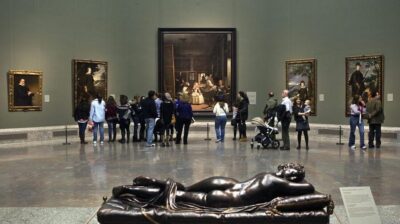
With Velázquez, you’re usually looking at technique plus psychology: how a painter makes a scene feel immediate, how faces carry tension, and how attention is controlled. The guide approach here is about explaining the meanings and techniques behind each masterpiece, so you’ll see more than “a good painting.” You’ll start reading details as intentional choices.
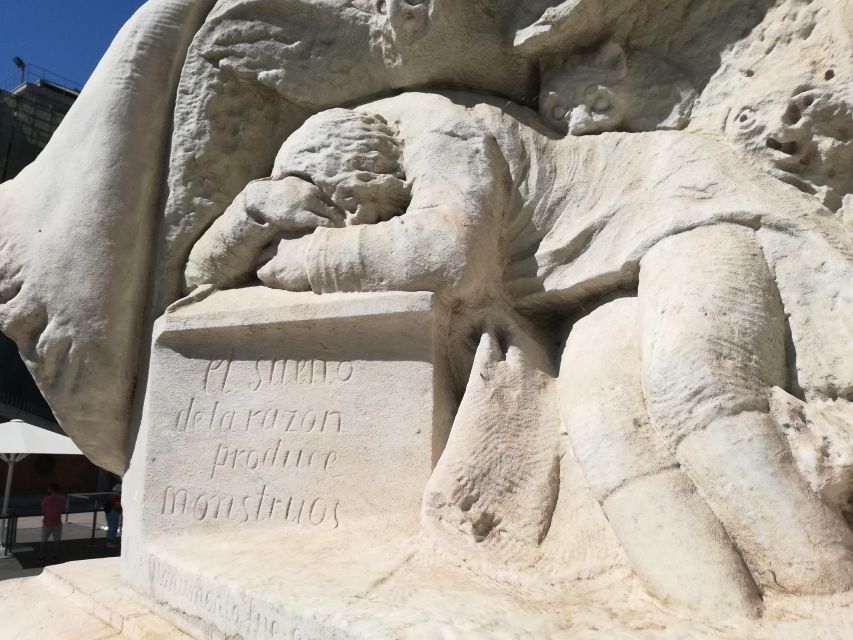
Then comes Goya. Goya is not only about famous works; it’s also about the mood shift in art—what happens when painting starts paying attention to society, fear, satire, and human behavior rather than only idealized subjects.
This is where the guide storytelling style seems to matter a lot. People repeatedly praise guides for connecting art to history in a way that feels fresh and clear. One visitor even notes that a guide (Macarena) made the connection to modern ideas without turning it into a classroom lecture. That’s exactly the sweet spot: you learn enough to understand, but you still feel the emotion of the work.
If you’re a first-timer at the Prado, starting and ending around the Spanish giants helps you understand the museum’s “spine.” Everything else becomes more legible once you’ve got those anchors in your head.
Bosch and the Northern Weirdos: When Details Tell the Whole Story
One of the most interesting parts of this tour is that it doesn’t treat the Prado as only “pretty masterpieces.” It includes artists whose work rewards close looking, especially Bosch and other Northern European figures like Van der Weyden and Dürer.
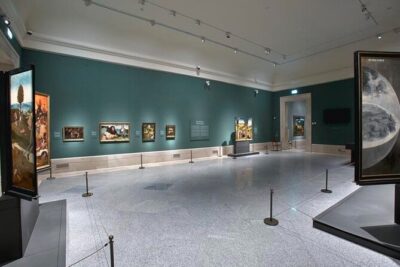
Bosch is a great example of why a guide helps. These scenes are packed, strange, and often unsettling. Without context, you might miss the point because you’re still trying to figure out what you’re even looking at. With guidance, you get the meanings behind the symbolism and the visual logic, so your attention lands in the right places.
The same applies to Van der Weyden and Dürer. Their style can feel “different” from Spanish painting. A good guide explains technique and the historical reasons artists painted the way they did. That means you’re not just admiring skill—you’re understanding why the painting looks the way it does and what it was trying to communicate to its world.
One more bonus: people consistently mention that guides manage the flow well even when the museum is crowded. That matters here. These works can demand patience. If you’re constantly being tugged along, you lose the chance to let details work on you. The best guides keep the pace lively but give you enough time to actually look.
A local guide takes the strain





Raphael, Titian, and Tintoretto: The Italian Renaissance in Madrid
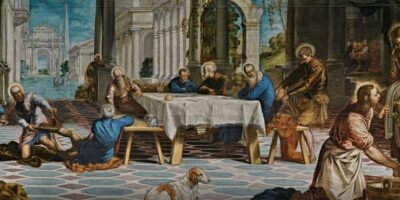
You’ll also spend time with major figures from the Italian tradition, including Raphael, Titian, and Tintoretto (along with the Venetian school focus). This section of the tour is valuable because it shows what “European master painting” means across regions.
Raphael tends to bring clarity—composition, balance, and the sense that every figure belongs in the larger idea of the scene. When a guide explains the meaning and technique, the painting starts to feel like an argument: why this pose, why that expression, why this arrangement of space.
Titian and the Venetian school are a different vibe—color, light, and the painterly surface that can look almost alive. A guide’s explanation here is often the difference between thinking “wow, that’s pretty” and realizing how the paint itself is part of the storytelling.
Tintoretto adds a sense of motion and drama. With the right commentary, you can see how the artist uses energy in the scene to shape what the viewer feels first.
If you’re wondering whether you’ll get enough time with Italian masters: you should. The tour is structured around highlights, and these names show up as part of the “best-of” selection that most art lovers come to the Prado for.
Rubens, Greco, and Murillo: Spain’s Connections Across Europe
Another reason this tour is a strong value is the way it builds a network of influence rather than a list of famous names. You’ll see Rubens, Greco, and Murillo included among the highlights.
Rubens connects the Prado visit to broader European styles. When your guide explains technique and historical context, Rubens can start to feel like a bridge—between different artistic languages and different ideas of grandeur.
Greco is especially interesting for visitors who love art that feels emotionally intense or slightly “off” in a deliberate way. His presence in this highlight set makes sense because he’s a uniquely influential voice that stands apart from smoother Renaissance expectations.
Murillo, tied to Spain’s religious and everyday emotional world, rounds out the contrast. The tour highlights the museum’s top range across generations, so the Spanish story doesn’t stay stuck in one mood.
This “Europe meeting Spain” feel is one of the ways the tour earns its time. You come away understanding not only the artists, but also how Madrid’s Prado collection gathers different schools into one conversation.
After the Tour: How to Keep Seeing More Without Getting Overwhelmed
Here’s a practical detail to remember: your experience includes Prado admission and is designed so you can keep exploring afterward. One guide-led session is paired with skip-the-line entry, and there’s also a note from a past participant that you can stay inside until closing, but you can’t leave and re-enter. That means your best move is simple: use the tour time to understand what matters, then do your follow-up exploring in one continuous stretch.
When the tour ends, you finish back at a monument near the museum—listed as Monument to Statue. From there, you’re on your own to wander with purpose.
If you want to make your Prado visit feel like it has an arc:
- Focus your independent time on artists you learned during the guide.
- Don’t try to see everything at once. Pick 3–5 works and go deep.
- Let the guide’s explanations teach you where to look next.
This is also where comfort matters. The guidance for what to bring is comfortable shoes, because the museum is big and you will be moving through galleries.
Price and Value: Why $49 Can Work for a Major Museum
At $49 per person for about 1.5–2 hours, this tour is priced for people who want a guided “greatest hits” experience without paying for a full private museum day.
You’re getting two major components included:
- An official professional guide
- Your Prado ticket
- Plus skip-the-ticket-line entry
So you’re not paying only for someone to walk with you while you read labels. You’re paying for interpretation, pacing, and route planning inside a crowded, multi-room museum.
Is it the cheapest way to visit the Prado? No. But if you’d otherwise spend your time bouncing around rooms without context, the guide fee can feel like a shortcut—one that gets you to understanding faster.
Also consider group type. The tour is described as private or small groups available. Several participants highlight small-group comfort, including cases where it felt almost private. If you’re traveling with a group where everyone wants a slightly different art focus, a small-group format often gives you the best mix of attention and flexibility.
Who This Prado Guided Tour Is Best For
This is a great fit if:
- You’re visiting the Prado for the first time and want the highlights with real meaning.
- You care about big names like Velázquez, Goya, Bosch, and you want techniques explained.
- You’d rather spend your time looking at fewer paintings better than seeing everything shallowly.
- You like guides who keep energy up and help you navigate crowds.
It might be less ideal if:
- You want to take lots of photos inside (the museum’s policy is no photography).
- You’re the type who wants to wander slowly and read labels for hours with zero structure.
- You’re trying to cover the whole museum in one go.
Should You Book This Museo del Prado Guided Tour?
Yes, if you want a smart, high-impact Prado session that turns the museum’s size into a manageable plan. The combination of official guidance, a highlight-focused route, and the chance to steer your priorities is what makes this feel like good value—not just a walk-through.
If your main goal is to understand the Prado’s top Spanish masters and how they connect to broader European styles, this tour gives you a strong foundation. Then you can use your remaining time to explore on your terms, with your eyes already trained on the right details.
FAQ
Where do we meet for the tour?
You’ll meet at the Monument to Goya, right in front of the Prado Museum ticket office.
What’s included in the price?
The tour includes a professional, official tour guide and your Prado Museum ticket.
How long is the guided portion?
The guided tour runs about 1.5 to 2 hours.
Is photography allowed inside the Prado?
No. Photography is not allowed inside the museum, per the Prado Museum’s policy.
What languages are available for the guide?
The guide is available in Spanish, English, Italian, and French.
Is this a private tour or a group tour?
It can be private or small groups, depending on availability.
Can the tour be customized to what I want to see?
Yes. The format is designed so you can customize what you want to see, and you can request specific items in advance.
Is the tour wheelchair accessible?
Yes, the tour is listed as wheelchair accessible.
More Tours in Madrid
- Madrid: Tour Bernabéu Entry Ticket
★ 4.5 · 21,573 reviews - Madrid: Panoramic Route City Tour
★ 4.1 · 12,259 reviews - Avila & Segovia Tour with Tickets to Monuments from Madrid
★ 5.0 · 9,762 reviews - Madrid: Royal Palace Expert Guided Tour with Skip-the-Line
★ 4.7 · 8,407 reviews - Madrid: Segovia and Toledo Tour, Alcazar, and Cathedral
★ 4.7 · 7,797 reviews - Toledo Tour from Madrid: Cathedral, Synagogue & St. Tome’s Church
★ 5.0 · 6,784 reviews
More Tour Reviews in Madrid
- Madrid: Tour Bernabéu Entry Ticket
★ 4.5 · 21,573 reviews - Madrid: Prado Museum Entry Ticket
★ 4.6 · 20,699 reviews - Madrid: “Emociones” Live Flamenco Performance
★ 4.8 · 12,866 reviews - Madrid: Panoramic Route City Tour
★ 4.1 · 12,259 reviews - Madrid: Live Flamenco Show with Food and Drinks Options
★ 4.5 · 9,901 reviews - Avila & Segovia Tour with Tickets to Monuments from Madrid
★ 5.0 · 9,762 reviews
Inside the Prado: More to See
- Madrid: Prado Museum Entry Ticket
★ 4.6 · 20,699 reviews - Madrid: Small Group of Prado Museum Tour & Optional Tapas
★ 4.6 · 2,437 reviews - Madrid: Prado Museum Guided Tour with Skip-the-Line Ticket
★ 4.5 · 2,018 reviews - Madrid: Prado Museum Guided Tour With Fast Access
★ 4.8 · 1,785 reviews - Prado Museum Small Group Tour with Skip the Line Ticket
★ 5.0 · 1,738 reviews - Royal Palace & Prado Museum Skip the Line Guided Tour
★ 4.5 · 1,347 reviews
Just Added: New Madrid Tour Reviews




Prado Museum Tours, compared.
 ★ 4.6Prado Museum Entry TicketFrom $2120,699 reviews
 ★ 4.6Small Group of Prado Museum Tour & Optional TapasFrom $532,437 reviews
 ★ 4.5Prado Museum Guided Tour with Skip-the-Line TicketFrom $462,018 reviews
 ★ 4.8Prado Museum Guided Tour With Fast AccessFrom $281,785 reviews
 ★ 5.0Prado Museum Small Group Tour with Skip the Line TicketFrom $541,738 reviews
 ★ 4.5Royal Palace & Prado Museum Skip the Line Guided TourFrom $821,347 reviews
 ★ 3.6Prado Museum Ticket with In-App Audio GuideFrom $351,154 reviews
 ★ 4.5Prado Museum Guided Tour with Skip-the-Line TicketFrom $451,146 reviews
Browse the lists this tour appears in