
REVIEW · REINA SOFÍA MUSEUM TOURS
Madrid: Guided visit to Reina Sofia Museum- SMALL GROUP
Madrid art can be heavy. That’s why this small-group Reina Sofía visit works so well. You get radio-guided clarity in a small group (up to 7 people), and the focus stays on the two big magnets: Dalí’s surrealism and Picasso’s Guernica. One potential drawback to keep in mind: you’re in a museum, so the pace can feel brisk compared with wandering on your own.
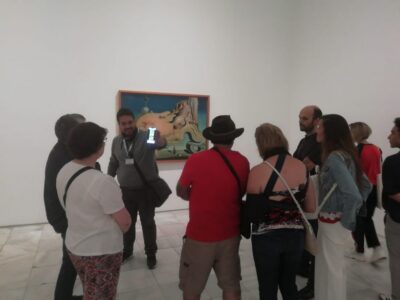
I especially like how the guide turns intimidating works into something you can actually follow, symbol by symbol. And I like that the semi-private setup means you can hear the explanations and keep your eyes on the art instead of chasing your group. If you dislike structured routes or you want to sit in silence for long stretches, you might prefer a self-guided visit.
In This Review
- Key highlights you should care about
- Why the Reina Sofía fits into Madrid’s art triangle so nicely
- Small-group comfort: radios, up to 7 people, and a calmer pace
- Where you meet at Reina Sofía (and what to look for)
- Inside the museum: what the guide does with your time
- Dalí and surrealism: how the guide turns confusion into clarity
- Picasso’s Guernica: the moment everyone photographs, now with meaning
- How much it costs ($74) and whether it’s worth it
- Which guides and styles seem to land best
- Practical tips so you get the most out of 1.5 hours
- Who this tour is best for (and who should skip it)
- Should you book this Reina Sofía small-group visit?
- FAQ
- How long is the Reina Sofía guided visit?
- How big is the group?
- What languages are available?
- What’s included in the price?
- Do I need to bring headphones or special equipment for the guide?
- Are children allowed?
Key highlights you should care about
- Small group (up to 7) means you’re not shoulder-to-shoulder with a crowd.
- Radio guides help you actually hear the story, not just hear people talking.
- Single-language tour keeps explanations consistent and easy to follow.
- Dalí focus gives you a handle on surrealism without needing an art degree.
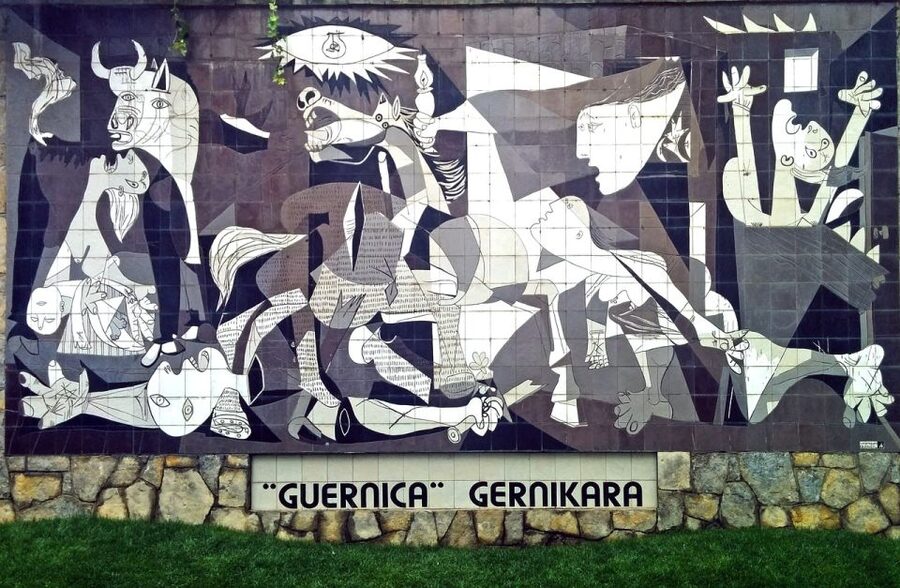
- Guernica at scale gets explained in a way that makes the symbols readable.
- Skip-the-ticket-line saves time at a museum that can get busy.
Guernica and the moderns, another look
- Madrid: Reina Sofía Museum Entrance Ticket★ 4.5 · 8,788 reviews
- Madrid: Reina Sofía Museum Guided Tour★ 4.3 · 659 reviews
- Spanish Civil War start of 2 World War, Guernica Franco★ 5.0 · 462 reviews
- Reina Sofia Museum Small Group Tour -6 people maximum-★ 5.0 · 433 reviews
Why the Reina Sofía fits into Madrid’s art triangle so nicely
Reina Sofía sits on Madrid’s famous Art Triangle, the club of museums that includes the Prado and Thyssen-Bornemisza. The Prado often pulls you toward older masterpieces. The Thyssen tends to broaden the sweep. Reina Sofía is where Madrid shows its 20th-century pulse, and it does it with extra punch.
What makes this guided visit a smart match is the museum’s lineup. You’re walking into a place with major Spanish names everywhere, especially Pablo Picasso, Salvador Dalí, and Joan Miró. This tour doesn’t try to cover everything. It zeroes in on the works that people remember: Dalí’s surrealism and Picasso’s Guernica.
If you like art that connects to history, war, politics, and psychology, Reina Sofía is one of Madrid’s best bets. And with a guide in the room, you’ll spend less time wondering what you’re supposed to notice and more time noticing it.
Small-group comfort: radios, up to 7 people, and a calmer pace
A museum guide is only as good as your ability to hear them. This is where the tour’s setup matters.
You’ll get radio guides, so the explanation doesn’t turn into a mumble behind a shoulder. In a bigger group, the sound problems are real. Here, the group stays small—up to 7 people—so you can hear, look, and keep up without constant backtracking.
You’ll also get a tour in one language (Spanish or English). That matters more than it sounds. When you’re trying to connect symbolism, dates, and artistic choices, mixing languages can turn the whole thing into noise.
One more subtle win: because the group is small and the visit is guided, you’re less likely to waste time trying to figure out where you should be standing. A good route saves brainpower.
Where you meet at Reina Sofía (and what to look for)
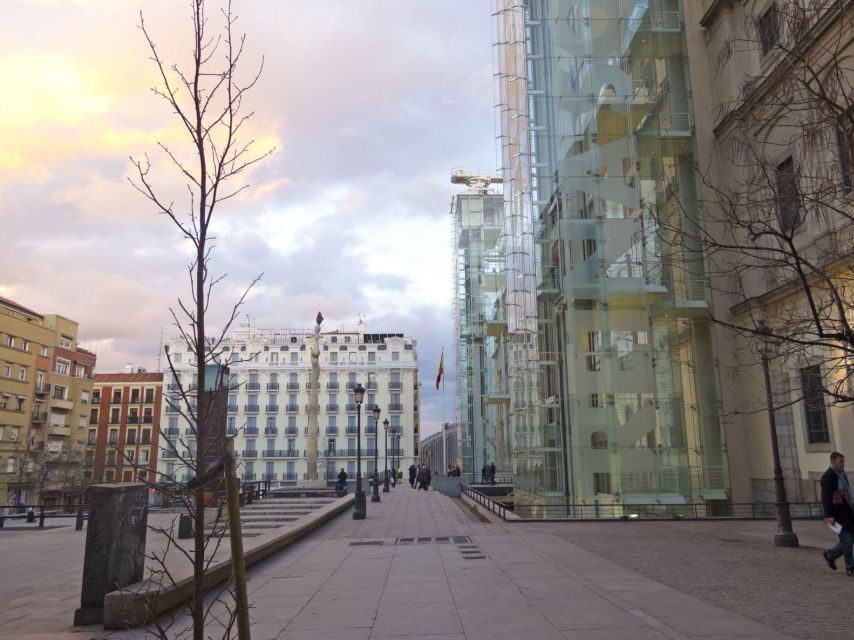
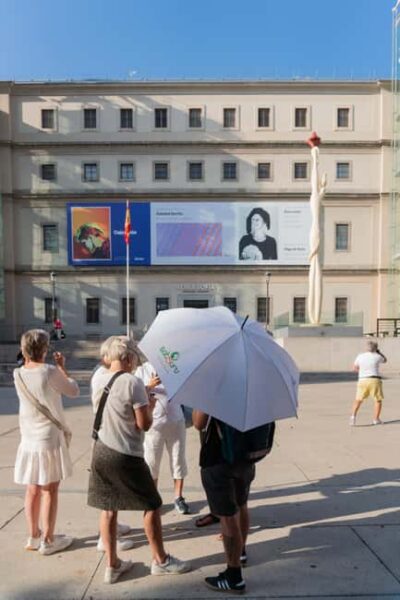
You’ll start at the Reina Sofia Museum at the Nouvel building entrance, specifically at the group access area. It’s noted as being next to the Lichtenstein sculpture. This is the kind of detail that can save you stress, especially when you arrive a little early and the museum layout feels like a puzzle.
Your guide will carry a white umbrella, so you can spot them quickly. The tour ends back at the meeting point, so you’re not left wandering the museum edges trying to guess where everyone will regroup.
This is also a skip-the-ticket-line experience, which is a practical upgrade. When museum lines stretch, your experience time shrinks. Cutting that waiting helps you get to the important part faster.
Inside the museum: what the guide does with your time
This is a 1.5-hour visit, designed for attention, not marathon fatigue. That means you won’t see every room, and you’re not meant to. Instead, you’ll get a guided thread through the museum’s most talked-about 20th-century works.
Expect the guide to do two main things:
- Set context so you understand what you’re looking at (not just what it is).
- Point out details and symbolism, especially in the stops centered on Picasso and Dalí.
That approach is useful because Reina Sofía can feel like a lot of styles and ideas at once. A guide helps you make sense of what connects them. You’re essentially getting a map for your eyes.
Also, if there are exceptional circumstances, the tour could become bilingual. That’s not something you can rely on, but it’s good to know. The standard is a single language visit (Spanish or English).
A local guide takes the strain





Dalí and surrealism: how the guide turns confusion into clarity
Dalí’s brand of surrealism can look either fascinating or baffling, sometimes in the same glance. The good news is that the tour specifically aims to help you understand surrealism through Dalí’s works.
Instead of treating the paintings like puzzles you’re expected to solve alone, your guide will explain the unique aspects of surrealism as you see them. This is where a guided experience beats a casual walk-through: surrealism isn’t just odd imagery. It’s often about subconscious ideas, symbolism, and deliberate visual storytelling.
If you’re the type who wants to know why something is strange and what the strange thing might mean, you’ll likely enjoy this portion. It’s also a great entry point if surrealism is new to you. You’ll finish this stop with a better sense of what to watch for next time you see similar art.
Picasso’s Guernica: the moment everyone photographs, now with meaning
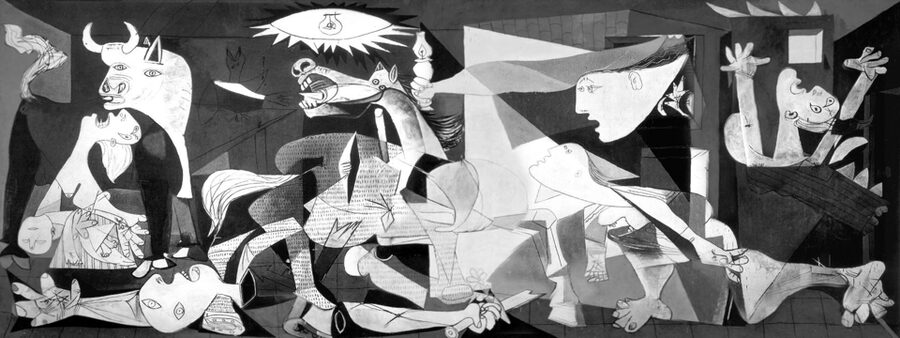
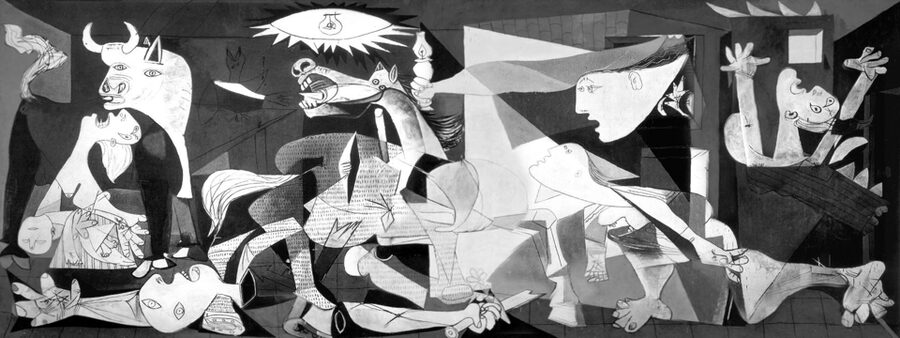
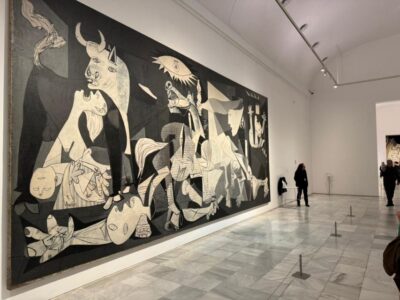
Then comes the big one: Pablo Picasso’s Guernica. This is described as impressive not only for its subject matter but for its sheer magnitude. It’s one of those artworks where a guided explanation can radically change your experience.
The tour’s promise here is practical: your guide reveals the secrets and symbols hidden in the painting. That’s the difference between seeing it as a famous image and understanding it as a constructed message—built with choices about figures, shapes, contrasts, and emotion.
Your guide will connect what you’re seeing to the bigger story behind it. Even if you already know the basics of Guernica, the value of a guided visit is often in the details: how symbols work together, and how the painting communicates its message through design rather than literal storytelling.
I like this kind of focus because it’s not just art appreciation. It’s literacy. You leave knowing more than you started.
How much it costs ($74) and whether it’s worth it
At $74 per person, you’re paying for three things that add up quickly in a museum setting:
- Expert guide time (and you’re not just buying a ticket)
- Entrance included (so your money isn’t split between separate purchases)
- Skip-the-line benefits (time is a real cost while you’re on vacation)
Also, the small-group size matters. If you’ve ever joined a large group tour, you know the downside: you hear less, you see less, and you spend time waiting for your turn to stand somewhere useful. Here, the group is capped at 7, so the guide can actually manage attention.
Is it the cheapest way to see the Reina Sofía? No. But if you care about making the museum understandable, this price often feels reasonable. In other words: you’re paying to reduce the guesswork.
If your goal is pure wandering, you might save money by going on your own. But if your goal is to understand Guernica and surrealism in a short window, a guided format is hard to beat.
Which guides and styles seem to land best
One of the best parts of a guided museum tour is the guide’s voice. In the feedback tied to this experience, certain guides stand out for making art and history feel connected.
For example, Pablo (the Cuban one) is praised for clear explanations and for linking the origins of paintings to the history of the time period. That kind of approach helps you see the artwork as part of a bigger world, not a disconnected museum object.
Ana Cristina is highlighted as awesome and very knowledgeable, and also in tune with people’s needs. There’s also a note that with just two couples, the group felt cosy—an important reminder that small group tours can go from structured to pleasantly relaxed depending on who shows up.
No guide is perfect for every personality, but these comments point to a style that works: clear storytelling, good pacing, and enough flexibility for people to actually look.
Practical tips so you get the most out of 1.5 hours
Since this is a guided sprint, a few choices before you start make a big difference.
- Wear shoes you can stand in comfortably. You’ll be moving through rooms and stopping frequently.
- Show up with a clear focus. On a 1.5-hour visit, you’ll get the most if you care about Dalí and Picasso, because the tour emphasizes them.
- Since food and drinks aren’t allowed, plan to eat before you go.
- If you’re traveling with kids, keep the rules in mind: unaccompanied minors aren’t allowed, and the tour notes a maximum of 2 children per adult, always with an adult.
And if you’re someone who hates rushing, remember: the guide is building a route. You’re not meant to wander freely. You can still take your time at the key moments, but the tour structure is part of the value.
Who this tour is best for (and who should skip it)
This experience is a great fit if you want the museum to feel readable and purposeful.
You’ll probably like it if:
- You’re short on time in Madrid and want the highlights with context
- You enjoy learning the symbolism behind major works
- You prefer hearing explanations through radios rather than crowd-level shouting
- You want a calmer experience with up to 7 people
You might choose something else if:
- You want to spend lots of time in one room with no structure
- You dislike a guided route
- You’re coming mainly for a broad survey of every artist, not just the core masterpieces
Should you book this Reina Sofía small-group visit?
Yes, if you want your time at Reina Sofía to come with understanding. This isn’t just a ticket to the building. It’s a focused walkthrough built around the two works most likely to leave you with questions unless someone answers them: Dalí’s surrealism and Picasso’s Guernica.
I’d book it when you:
- Want a guide to point out details and symbols
- Value hearing clearly with radio guides
- Prefer a semi-private feel over a large group crush
I’d reconsider if your main goal is free roaming or if you’re hoping for a comprehensive museum tour. This one is strong where it aims, but it’s not trying to cover everything.
FAQ
How long is the Reina Sofía guided visit?
The tour is about 1.5 hours.
How big is the group?
It’s a small group, with a maximum of up to 7 people.
What languages are available?
The tour is available in Spanish or English. It’s described as a single-language visit, though it could become bilingual in exceptional circumstances.
What’s included in the price?
The price includes an expert guide, entrance to the Reina Sofía Museum, and skip-the-ticket-line access.
Do I need to bring headphones or special equipment for the guide?
The tour uses radio guides so you can clearly hear the explanations.
Are children allowed?
Unaccompanied minors aren’t allowed. There’s also a note that a maximum of 2 children per adult is allowed, and children must be accompanied by an adult.
Easier With a Local Guide
- Madrid: Royal Palace Expert Guided Tour with Skip-the-Line
★ 4.7 · 8,407 reviews - From Madrid: Guided Day Trip to Toledo by Bus
★ 4.1 · 5,280 reviews - From Madrid: Toledo Guided Day Trip
★ 4.3 · 3,501 reviews - Madrid: Las Ventas Bullring Tour with Audio Guide
★ 4.6 · 3,154 reviews - Madrid: Royal Palace Skip-the-line Guided Tour
★ 4.9 · 3,146 reviews - Madrid Welcome Tour with Local Guide in Eco Tuk Tuk Private
★ 5.0 · 2,936 reviews
More Tour Reviews in Madrid
- Madrid: Tour Bernabéu Entry Ticket
★ 4.5 · 21,573 reviews - Madrid: Prado Museum Entry Ticket
★ 4.6 · 20,699 reviews - Madrid: “Emociones” Live Flamenco Performance
★ 4.8 · 12,866 reviews - Madrid: Panoramic Route City Tour
★ 4.1 · 12,259 reviews - Madrid: Live Flamenco Show with Food and Drinks Options
★ 4.5 · 9,901 reviews - Avila & Segovia Tour with Tickets to Monuments from Madrid
★ 5.0 · 9,762 reviews
Reina Sofia, Beyond Guernica
- Madrid: Reina Sofía Museum Entrance Ticket
★ 4.5 · 8,788 reviews - Madrid: Reina Sofía Museum Guided Tour
★ 4.3 · 659 reviews - Spanish Civil War start of 2 World War, Guernica Franco
★ 5.0 · 462 reviews - Reina Sofia Museum Small Group Tour -6 people maximum-
★ 5.0 · 433 reviews - Madrid: Guided Tour of Reina Sofía Museum with Entry Ticket
★ 4.9 · 363 reviews - Madrid: Reina Sofia and Prado Museum Tickets and Guided Tour
★ 4.6 · 342 reviews
Just Added: New Madrid Tour Reviews




Reina Sofía Museum Tours, compared.
 ★ 4.5Reina Sofía Museum Entrance TicketFrom $148,788 reviews
 ★ 4.3Reina Sofía Museum Guided TourFrom $38659 reviews
 ★ 5.0Spanish Civil War start of 2 World War, Guernica FrancoFrom $3462 reviews
 ★ 5.0Reina Sofia Museum Small Group Tour -6 people maximum-From $59433 reviews
 ★ 4.9Guided Tour of Reina Sofía Museum with Entry TicketFrom $59363 reviews
 ★ 4.6Reina Sofia and Prado Museum Tickets and Guided TourFrom $68342 reviews
 ★ 4.0Prado Museum with Reina Sofia Museum Guided TourFrom $81311 reviews
 ★ 4.3Reina Sofía Guided Tour with Skip-the-Line TicketsFrom $44293 reviews
Browse the lists this tour appears in