
A tuk-tuk keeps your feet fresh. In Madrid, this private ride-and-walk is a fast way to see big landmarks without spending the whole day standing in transit lines. You get an easy route through the historic center and key modern highlights, with pickup offered and a mobile ticket to keep things simple.
I like the practical balance here: you’re not stuck doing only a long walk, and you’re not just sightseeing from a seat. I also like that you can extend the tour and chat with the driver if you want more time on the places that catch your eye.
One thing to consider is timing and sound. On a bad day, a guide named Charly (and Maria) was reportedly hard to hear, and the tour ended early with several planned stops missed—so if you care a lot about hitting every point, go in with realistic expectations about traffic and visibility.
In This Review
- Key highlights (the stuff you’ll feel in the real world)
- Why a Tuk-Tuk City Walk Works So Well in Madrid
- Price and Group Size: What You’re Really Paying For
- Start in Centro: How the Tour Kicks Off
- Puerta del Sol and Plaza Mayor: The Heartbeat You Get Fast
- Mercado San Miguel and Calle Mayor: A Smart Break Without Detouring
- The Church of the Jerónimos Area: A Major Historic Anchor
- Museo del Prado and the Art-Museum Exterior Feeling
- Neptune and Cibeles: Big Landmarks, Easy Photos, Clear Orientation
- Congress of Deputies and Plaza España: Modern Political Madrid
- Gran Vía and the Royal Palace Area: Where Madrid Feels Like a Capital
- Almudena Cathedral and Finishing in the Cathedral Zone
- The Driver Factor: Charlie, Jessica, and Why It Matters
- How to Get the Most From an Hour (Even If You’re Traveling With Kids)
- Should You Book This Madrid Tuk-Tuk City Walk?
- FAQ
- How long is the Madrid tuk-tuk city walk?
- What is the price and group size?
- Is pickup included?
- Where does the tour start?
- Do I get a mobile ticket?
- Can I cancel for a refund?
Key highlights (the stuff you’ll feel in the real world)
- Private group up to 6: more room for questions and less waiting around.
- 1 hour is the sweet spot for getting your bearings across Madrid.
- Pickup offered: less time dragging yourself across the city before you even start.
- Historic + modern mix: you’ll cover central squares and major streets in one loop.
- Friendly flexibility: you can extend the tour to linger where you want.
Buzz the old centre by tuk tuk
- Madrid: Private City Tour by Eco Tuk Tuk★ 4.9 · 3,465 reviews
- Madrid Historical Tour with Local Guide in Eco Tuk Tuk Private★ 5.0 · 876 reviews
- Madrid Express Tour with Local Guide in Eco Tuk Tuk Private★ 5.0 · 413 reviews
- Madrid: Highlights City Tour by Electric Tuk Tuk★ 4.7 · 346 reviews
Why a Tuk-Tuk City Walk Works So Well in Madrid
Madrid is easy to love but sometimes hard to plan. Streets crisscross, plazas open like surprises, and you can burn hours just trying to stay oriented. This tuk-tuk city walk helps you move through the city at a calmer pace, with fewer long stretches on foot.
The big value is that you get a guided route covering both the “wow” sights and the practical landmarks. You’re not just chasing photos; you’re learning the city’s flow. For me, that’s what makes it feel like more than a gimmick.
And the 1-hour length matters. Too-short tours can feel rushed. Too-long tours become “tour exhaustion.” This one sits in the middle, so you can still have energy afterward for lunch, markets, or a slower self-guided wander.
Price and Group Size: What You’re Really Paying For
The price is $180.76 per group with room for up to 6 people. If you fill the group, you’re basically paying about $30 per person—then the value shifts from cost to convenience.
What you’re paying for isn’t only transport. You’re paying for:
- a planned route that links multiple key sights,
- the ability to ask questions without stopping every minute,
- and a guide-led rhythm that keeps you from feeling lost.
Private tours usually cost more than shared ones. This is still “premium,” but it’s closer to “group-friendly” pricing than many sightseeing options. If you’re traveling as a couple or small family, it can still be worth it when you compare it to the time and stress of building your own route across major areas.
Start in Centro: How the Tour Kicks Off
The meeting point is in Centro, Madrid. The tour includes pickup offered, so you might be able to start with less walking before you begin sightseeing.
If you’re the type who hates arriving early to hunt for a meeting spot, this format helps. A mobile ticket also reduces the usual scramble—no heavy paperwork, no guessing where you’re supposed to be.
Once you’re on the tuk-tuk, the tour style is “see a lot, but keep moving.” Think of it as a guided loop where you jump between central points and major visual landmarks. That keeps the hour feeling efficient.
Puerta del Sol and Plaza Mayor: The Heartbeat You Get Fast
A big chunk of the value is the way the tour uses famous central locations to build your mental map. You’ll pass through Puerta del Sol and head toward Plaza Mayor, along with Calle Mayor for the souvenir-and-shops vibe.
This is the part where the tour earns its keep for first-timers. Even if you don’t know Madrid yet, these are the kinds of landmarks that help you understand where things are. After this stop, many other sights become easier to place later when you’re walking on your own.
Plaza Mayor is also a “social” landmark. You’ll likely see plenty of activity around it, which makes it an easy place to absorb Madrid’s everyday energy. And Calle Mayor is practical: it’s a fast way to see the shopping street atmosphere without committing to a long stroll in winter cold or summer heat.
The capital on foot, other routes to try




Mercado San Miguel and Calle Mayor: A Smart Break Without Detouring
The tour includes Mercado San Miguel, plus the Calle Mayor area. I like that markets are built into the route because they give you a real sense of place. Even if you don’t buy anything, markets show you what people actually do and eat around here.
You also get a chance to handle your timing. If you’re hungry, you’re near a food-focused stop. If you’re not hungry, you can still use it as a visual pause—then roll right back into sightseeing.
One practical tip: with a 1-hour tour, you don’t have time for a long sit-down meal. Use the market as a quick palate check, a snack opportunity, or a place to browse before you continue elsewhere.
The Church of the Jerónimos Area: A Major Historic Anchor
The route lists the Church of the Hieronyms (you’ll see it referred to with similar spelling). This kind of landmark works well on a tuk-tuk loop because it’s a “big marker” in the city.
When a tour includes a historic church, you’re not only looking at architecture—you’re also getting a reference point for the old-city grid. That helps when you later try to walk to other places you’ve seen on the ride.
The drawback is simple: religious buildings can be hit-or-miss depending on access at the time you’re there. This tour is focused on seeing and learning during the hour, so think of it as a guided orientation moment rather than a long deep-dive visit.
Museo del Prado and the Art-Museum Exterior Feeling
The tour also includes Museo del Prado. You can’t fully replace a museum visit with a quick stop, but the value here is different: it helps you connect Madrid’s “major art zone” with the rest of what you’re seeing.
Even if you only take in the area from the outside, it’s useful. It tells you which parts of the city are art-heavy and helps you decide later whether you want a dedicated museum day. For me, that’s the sweet spot for a shorter tour: give you enough to plan your next step.
Neptune and Cibeles: Big Landmarks, Easy Photos, Clear Orientation
You’ll see the Neptune and Cibeles fountain area as part of the route. This is one of those Madrid “signature” zones that feels instantly recognizable once you’ve passed it.
It also works as a psychological reset point. After central squares and shopping streets, fountains and grand urban spaces can feel like a breath. They’re also easy orientation anchors—if you can remember Cibeles and Neptune, you’ll do better later navigating on your own.
If you’re sensitive to crowds, this portion can still be manageable because the tour approach keeps you moving. You’re not trapped waiting through a long queue just to arrive at a spot.
Congress of Deputies and Plaza España: Modern Political Madrid
The itinerary includes the congresses of the deputies and Plaza España. This matters because Madrid isn’t only old stone and old plazas. You also need to see the “government and city scale” side of the capital.
A tuk-tuk route is good for this kind of stop because it lets you absorb big civic areas without turning the hour into a long walking mission. It’s the fast lane version of understanding how the city is structured.
And again, this is about building your mental map. Once you’ve seen these areas, other later walks—shopping, sightseeing, or transit—can feel easier to stitch together.
Gran Vía and the Royal Palace Area: Where Madrid Feels Like a Capital
You’ll pass Gran Vía and also visit the palace area and Royal Theatre (both named on the route). This is where Madrid shows its “capital city” side: grand streets, major landmarks, and big visual scale.
For visitors, the value is momentum. The tour is designed to connect these points rather than treat each one as a separate destination. In an hour, that’s exactly what you want.
One note: if you’re hoping for lots of time to enter buildings, this isn’t that kind of tour. It’s a guided sightseeing walk-and-ride format. You’ll get the highlights, then you can choose what deserves a longer visit later.
Almudena Cathedral and Finishing in the Cathedral Zone
The tour includes The Cathedral of Almudena. Ending up around a major cathedral area makes for a strong finish because it’s a distinct visual and historic anchor.
Cathedral zones tend to feel “wide and open” compared with tighter street networks. That gives your eyes a final reset before you head off to the rest of Madrid.
This is also a logical place to plan your next move. If you want to keep exploring on foot afterward, you’ll likely find that the cathedral area works as a natural starting point for your next stroll.
The Driver Factor: Charlie, Jessica, and Why It Matters
The experience lives or dies on communication. In the positive examples, guides like Charlie and Jessica were described as comfortable, prepared, and enthusiastic. One review specifically said Charlie came with blankets for cold weather and that the ride stayed comfortable.
There’s also a cautionary note. A negative account described Charly as hard to hear and said the tour ended early and missed several planned stops. That’s a reminder to manage expectations about route adherence and to ask clearly how timing works if traffic changes the plan.
What you can do to protect yourself:
- If it matters to you, mention your top priorities at the start.
- Pay attention to where the tour is physically taking you rather than assuming every stop gets equal time.
- Dress for weather. If it’s cold or rainy, being prepared can change the whole hour.
How to Get the Most From an Hour (Even If You’re Traveling With Kids)
This tour is private and built for groups up to 6, which makes it a solid choice for families and mixed-age groups. It’s also listed as something most travelers can participate in, plus service animals are allowed.
The key is to treat the hour like a sampler. Walk away with:
- a short list of places you want to revisit,
- a sense of where you are in relation to central squares and major streets,
- and the confidence to navigate the next day on your own.
If you’re traveling with older parents or kids who get tired easily, this is where the tuk-tuk shines. It reduces the “too much walking, too fast” problem that can derail a city day.
If you’re a solo traveler who hates group logistics, the private format is also a win. You still get guidance, but it’s not a crowded herd moving at someone else’s pace.
Should You Book This Madrid Tuk-Tuk City Walk?
I’d book it if you want a fast, guided orientation that ties together central Madrid and big-city landmarks in about an hour. It’s especially good value if you’re splitting the cost across a group of up to 6.
I would think twice if you have a strict checklist and need every single planned stop to be visited with equal time. As the mixed experiences show, traffic and communication can affect how smoothly the hour plays out. Still, the format is flexible enough that you can refocus on what’s most important to you—especially if you plan to extend by talking with the driver.
If your goal is to see the highlights, get your bearings fast, and then enjoy the rest of your day your way, this is a practical pick.
FAQ
How long is the Madrid tuk-tuk city walk?
It runs for about 1 hour.
What is the price and group size?
The price is $180.76 per group, for up to 6 people.
Is pickup included?
Pickup is offered.
Where does the tour start?
The start is in Centro, Madrid, Spain.
Do I get a mobile ticket?
Yes, the tour uses a mobile ticket.
Can I cancel for a refund?
Yes. You can cancel for free up to 24 hours in advance for a full refund. If you cancel within 24 hours of the start time, the amount paid is not refunded.
Madrid on Foot, Continued
- Madrid Tapas & Wine Tasting Walking Tour – Small Group Local Bars
★ 5.0 · 3,644 reviews - Toledo Tour & Vineyard Walk with Wine Tasting from Madrid
★ 5.0 · 2,546 reviews - Madrid Walking Tour from Puerta del Sol to Retiro Park
★ 5.0 · 2,285 reviews - Madrid Old Town & Royal Palace Walking Tour Skip the Line Ticket
★ 4.5 · 1,829 reviews - Madrid: Welcome to Madrid Guided Walking Tour
★ 4.9 · 1,738 reviews - Madrid: Spanish Inquisition and Legends Evening Walking Tour
★ 4.7 · 1,396 reviews
More Tour Reviews in Madrid
- Madrid: Tour Bernabéu Entry Ticket
★ 4.5 · 21,573 reviews - Madrid: Prado Museum Entry Ticket
★ 4.6 · 20,699 reviews - Madrid: “Emociones” Live Flamenco Performance
★ 4.8 · 12,866 reviews - Madrid: Panoramic Route City Tour
★ 4.1 · 12,259 reviews - Madrid: Live Flamenco Show with Food and Drinks Options
★ 4.5 · 9,901 reviews - Avila & Segovia Tour with Tickets to Monuments from Madrid
★ 5.0 · 9,762 reviews
Tuk Tuk Around the Middle
- Madrid: Private City Tour by Eco Tuk Tuk
★ 4.9 · 3,465 reviews - Madrid Welcome Tour with Local Guide in Eco Tuk Tuk Private
★ 5.0 · 2,936 reviews - Madrid Historical Tour with Local Guide in Eco Tuk Tuk Private
★ 5.0 · 876 reviews - Madrid Express Tour with Local Guide in Eco Tuk Tuk Private
★ 5.0 · 413 reviews - Madrid: Highlights City Tour by Electric Tuk Tuk
★ 4.7 · 346 reviews - Madrid: City Highlights Tuk Tuk Tour
★ 4.4 · 334 reviews
Just Added: New Madrid Tour Reviews





Madrid Tuk Tuk Tours, compared.
 ★ 4.9Private City Tour by Eco Tuk TukFrom $283,465 reviews
 ★ 5.0Madrid Welcome Tour with Local Guide in Eco Tuk Tuk PrivateFrom $282,936 reviews
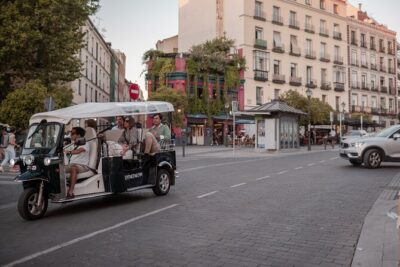 ★ 5.0Madrid Historical Tour with Local Guide in Eco Tuk Tuk PrivateFrom $28876 reviews
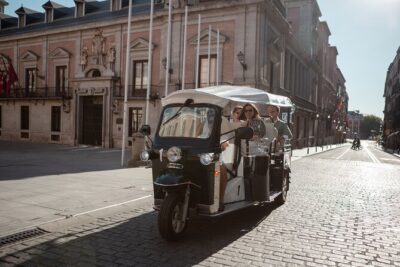 ★ 5.0Madrid Express Tour with Local Guide in Eco Tuk Tuk PrivateFrom $28413 reviews
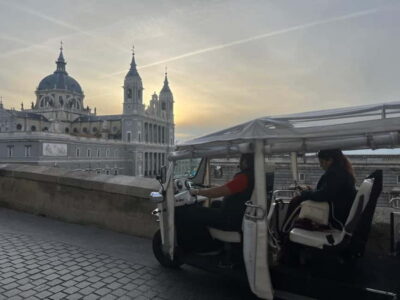 ★ 4.7Highlights City Tour by Electric Tuk TukFrom $28346 reviews
 ★ 4.4City Highlights Tuk Tuk TourFrom $94334 reviews
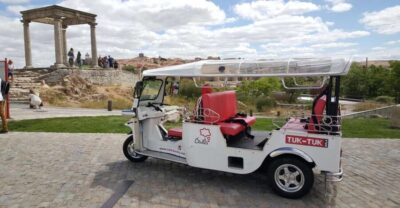 ★ 4.4Tour Guiado En Tuk Tuk Recorre Avila De La Forma Mas ComodaFrom $10235 reviews
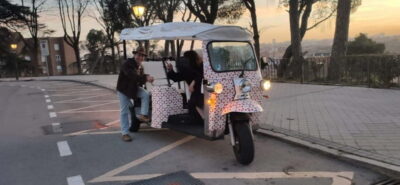 ★ 4.6City Tours – 6 seats private ecological tuk tukFrom $53230 reviews
Browse the lists this tour appears in