
Madrid clicks into place fast. This 2.5-hour old-town walk turns landmarks into stories, from Plaza Mayor to the Almudena Cathedral viewpoint. I especially like the small-group feel (max 10), which keeps the pace human and the questions easy to answer.
Lexi and Joaquin are specifically called out for engaging storytelling and clear Spanish-history context. One watch-out: if you want a quiet, straight-facts-only tour, the humor and narrative style may feel like a lot.
You also get real value beyond photos. The route connects big architecture with the everyday culture of Madrid—food, drink, and social traditions—plus practical dining ideas the moment you need them.
My other big plus is the ending: you finish near Palacio Real and Almudena Cathedral, so you’re not left hunting around for your next stop.
There is one possible drawback. A couple of people found the guide’s style too talky for their taste, and they also noted that online directions to the meeting spot can be a little off—so check your exact start point before you arrive.
In This Review
- Key highlights you’ll feel on the walk
- Plaza de la Provincia: Your launch point for Old Madrid
- Plaza Mayor: more than a pretty square
- What to watch for during this stop
- Spot the good stuff: Madrid’s “special businesses” lesson
- Food, drink, and social Madrid (including the wall-jumping locals)
- How this helps you on the rest of your trip
- Hundreds of years of architecture, all held together
- Almudena Cathedral: striking, unusual, and worth the pause
- Ending at the viewpoint: Palacio Real’s story in one sweep
- The guide effect: Lexi and Joaquin’s storytelling style
- Price and time: does $39.91 feel worth it?
- Practical tips to make the most of your 2.5 hours
- Who should book this tour (and who might not)
- Should you book this Madrid Walking Tour?
- FAQ
- How long is the Madrid Walking Tour?
- Where does the tour start and end?
- How much does it cost?
- Is the tour offered in English?
- Is this a small group tour?
- Do I get a mobile ticket?
- Are service animals allowed?
- Can I cancel for a full refund?
Key highlights you’ll feel on the walk
- Plaza Mayor, explained through its changing roles in Madrid over the centuries
- A guide-led trick for spotting special businesses, not just sightseeing
- Food and social traditions, including lively local habits and a stop tied to a major classic restaurant
- Hundreds of years of architecture in one square-and-street story
- Almudena Cathedral, described as unusual and striking—worth the pause
- A royal palace tale from a great viewpoint, ending close to the sights
The centre on foot, other ways round
- Madrid Tapas & Wine Tasting Walking Tour – Small Group Local Bars★ 5.0 · 3,644 reviews
- Madrid Welcome Tour with Local Guide in Eco Tuk Tuk Private★ 5.0 · 2,936 reviews
- Madrid Walking Tour from Puerta del Sol to Retiro Park★ 5.0 · 2,285 reviews
- Madrid Old Town & Royal Palace Walking Tour Skip the Line Ticket★ 4.5 · 1,829 reviews
Plaza de la Provincia: Your launch point for Old Madrid
The tour starts at Plaza de la Provincia, in central Madrid. That matters more than it sounds. This is the kind of starting location where you can get your bearings quickly, and it’s close to the historic core you came to see.
Expect a walking flow that mixes open squares with short street segments. The timing is about 2 hours 30 minutes, so it’s long enough to build context, but short enough to still have energy for museums or a long dinner after.
A small note from prior participants: directions to the meeting point can be confusing. I’d plan to arrive a few minutes early and confirm the exact spot using the address, not just the map pin.
Plaza Mayor: more than a pretty square
Plaza Mayor is the anchor stop, and the way it’s framed is the whole point. Instead of treating it like a postcard, you learn how the square worked for different purposes as the city changed—plus why people avoided it for decades.
That detail does something useful. It trains your eye to stop seeing the square as static. You start noticing how a place that looks ceremonial can also be political, tense, commercial, or practical depending on the era.
Then the tour widens back out with what people often come to Madrid for: architecture you can actually read. In this route, buildings aren’t just backdrops. They’re clues, and the guide stitches them into a story so you remember them later when you’re walking on your own.
What to watch for during this stop
- Look at the square as a stage: where crowds gather, where movement bottlenecks, where key views would land.
- Pay attention to how the guide describes why certain areas became avoided or used—those choices shape the way the square feels.
Spot the good stuff: Madrid’s “special businesses” lesson
One stop is built around a famous business and then a practical lesson: how to spot other special establishments. This is one of those ideas that sounds small until you try it.
Once someone points out what locals look for—signs, patterns, the kind of place that’s built around craft or tradition—you stop relying only on Google. Your next days get easier. You know what you’re looking at.
This part also keeps the walk from becoming museum-only. Madrid has plenty of history indoors, but it also lives in storefronts and the places where people still meet and eat.
The capital on foot, other routes to try


Food, drink, and social Madrid (including the wall-jumping locals)
The food-and-social portion is where the tour becomes more like “how the city behaves” and less like “what the city used to be.” You’ll explore traditions tied to daily life: people gathering, eating, and using the street culture as part of the evening plan.
There’s also a lively moment involving wall-jumping locals. It’s not presented as a stunt. The point is how locals turn ordinary urban space into play and social ritual—another reminder that Madrid’s identity is not just monuments. It’s also the energy.
And you’ll see the guide connect this street life to a stop related to one of the world’s most important restaurants. Even without diving into menus or reservations (the tour is walking-focused), it gives you a sense of how serious Madrid takes dining as culture, not just fuel.
How this helps you on the rest of your trip
After a food-and-tradition stop like this, you’ll have a better instinct for what kind of evening you want:
- a classic sit-down plan
- a late-night social route
- or a place that feels like it has a regular crowd
Hundreds of years of architecture, all held together
The tour keeps circling back to one theme: Madrid’s layers. You’ll see beautiful buildings and additional unique history—then the route highlights how so much time can coexist within a few streets.
This matters because Madrid can feel overwhelming at first. One minute you’re looking at ornate facades; the next you’re back on a street that looks “everyday.” The guide’s job is to make those moments connect so your brain doesn’t treat them as separate worlds.
Think of it like this: you’re not just collecting sights. You’re collecting a framework. That framework makes later visits faster. You know what you’re looking at, and you know why it’s there.
Almudena Cathedral: striking, unusual, and worth the pause
You’ll observe the Almudena Cathedral and get the kind of explanation that makes a landmark feel less distant. The tour calls it unusual and striking for a reason, and the storytelling keeps it tied to Madrid’s wider identity.
This is also a smart pacing move. After architecture and plaza time, a cathedral stop gives you a new visual “anchor” and a reset point before the ending viewpoint.
If you’re the type who likes to ask why a building looks the way it does, this is a good moment. It’s not only what you see. It’s how the guide frames what you’re seeing.
Ending at the viewpoint: Palacio Real’s story in one sweep
The tour finishes with a magnificent viewpoint and the wild story of the royal palace. Ending this way is a big part of the value.
You get a satisfying arc: history in the streets, culture in the squares, then a finish that points you right toward what you probably came to photograph in the first place.
You also end close to Palacio Real and Almudena Cathedral, specifically near Calle del Factor. That means you can keep going without backtracking or trying to guess where you are on your own.
The guide effect: Lexi and Joaquin’s storytelling style
The strongest praise in the feedback is about the guide’s delivery—especially the way Lexi and Joaquin bring history to life.
Here’s what stands out from the patterns:
- Storytelling that feels engaging, not lecture-like
- A sense of humor mixed with real historical context
- A pace that’s described as well-managed, not rushed
- Extra help after the tour, including helpful recommendations
One theme shows up again and again: the guide doesn’t just walk. They teach you how to look. People also mention receiving a link to a map of favorite places to eat and drink, and being happy to answer questions.
That last part is practical. Madrid can be tough to plan because neighborhoods have their own rhythm. A good guide helps you skip the guessing.
Price and time: does $39.91 feel worth it?
At $39.91 per person for about 2 hours 30 minutes, the price lands in the “good value” zone if you’re using the tour as an orientation.
You’re not just buying access to a guide. You’re buying:
- a narrative thread through Old Madrid
- context for what you’ll see later on your own
- and immediate dining and social suggestions tied to how locals actually spend time
The max 10 travelers limit is part of the value too. Smaller groups usually mean your questions don’t get pushed aside, and the tour doesn’t turn into one-way information.
Also, this is popular—booked about 45 days in advance on average—so if you want a specific date or time window, don’t wait until the last minute.
Practical tips to make the most of your 2.5 hours
Here’s how to get the full benefit without frustration:
- Use comfortable shoes. This is a walking tour through core historic areas.
- Arrive early at Plaza de la Provincia. Online directions can be misleading, so give yourself a buffer.
- Bring curiosity. The tour gets better if you’re willing to ask why things evolved the way they did.
- Plan one flexible dinner slot. The guide’s food and drink ideas will shape where you end up later.
- Use the ending area. When you finish near Palacio Real and Almudena, keep a little time for photos and wandering before you head elsewhere.
Who should book this tour (and who might not)
This tour is a great fit if you:
- want a strong first pass at old Madrid with clear context
- like history mixed with humor and street-level culture
- want practical dining ideas so you can eat like you know the city
It may not be the best match if you prefer:
- a quiet walking pace with minimal story time
- tours that focus only on facts and skip any playful or unusual side stories
Still, even for architecture fans, the guide-led framing is the hook. You’ll likely leave with more than photos—you’ll leave with a mental map of how Madrid works.
Should you book this Madrid Walking Tour?
My take: book it if you want an efficient, human-scale introduction to Old Madrid. The best parts are the combination of Plaza Mayor context, the Almudena Cathedral stop, and the royal palace viewpoint ending—plus that extra layer of food, drink, and local social habits.
It’s also ideal if you’re starting your trip and want to get your bearings fast. One big reason people love this route is that it gives you context you’ll use the rest of your stay.
If you dislike talk-heavy guides, or you need very literal pacing, you can still enjoy the sights—but I’d set expectations ahead of time that this tour is built around storytelling, not silence.
FAQ
How long is the Madrid Walking Tour?
It runs for about 2 hours 30 minutes.
Where does the tour start and end?
It starts at Plaza de la Provincia (Pl. de la Provincia, Centro, 28012 Madrid) and ends at Calle del Factor (Centro, 28013 Madrid), close to Palacio Real and Almudena Cathedral.
How much does it cost?
The price is $39.91 per person.
Is the tour offered in English?
Yes. The tour is offered in English.
Is this a small group tour?
Yes. The tour has a maximum of 10 travelers.
Do I get a mobile ticket?
Yes. It uses a mobile ticket.
Are service animals allowed?
Yes, service animals are allowed.
Can I cancel for a full refund?
Free cancellation is available. You can cancel up to 24 hours in advance for a full refund. If you cancel less than 24 hours before the start time, the amount paid is not refunded.
More Tours in Madrid
- Madrid: Tour Bernabéu Entry Ticket
★ 4.5 · 21,573 reviews - Madrid: Panoramic Route City Tour
★ 4.1 · 12,259 reviews - Avila & Segovia Tour with Tickets to Monuments from Madrid
★ 5.0 · 9,762 reviews - Madrid: Royal Palace Expert Guided Tour with Skip-the-Line
★ 4.7 · 8,407 reviews - Madrid: Segovia and Toledo Tour, Alcazar, and Cathedral
★ 4.7 · 7,797 reviews - Toledo Tour from Madrid: Cathedral, Synagogue & St. Tome’s Church
★ 5.0 · 6,784 reviews
More Tour Reviews in Madrid
- Madrid: Tour Bernabéu Entry Ticket
★ 4.5 · 21,573 reviews - Madrid: Prado Museum Entry Ticket
★ 4.6 · 20,699 reviews - Madrid: “Emociones” Live Flamenco Performance
★ 4.8 · 12,866 reviews - Madrid: Panoramic Route City Tour
★ 4.1 · 12,259 reviews - Madrid: Live Flamenco Show with Food and Drinks Options
★ 4.5 · 9,901 reviews - Avila & Segovia Tour with Tickets to Monuments from Madrid
★ 5.0 · 9,762 reviews
Walk the Heart of Madrid
- Madrid Tapas & Wine Tasting Walking Tour – Small Group Local Bars
★ 5.0 · 3,644 reviews - Madrid Welcome Tour with Local Guide in Eco Tuk Tuk Private
★ 5.0 · 2,936 reviews - Madrid Walking Tour from Puerta del Sol to Retiro Park
★ 5.0 · 2,285 reviews - Madrid Old Town & Royal Palace Walking Tour Skip the Line Ticket
★ 4.5 · 1,829 reviews - Madrid: Welcome to Madrid Guided Walking Tour
★ 4.9 · 1,738 reviews - Madrid: Spanish Inquisition and Legends Evening Walking Tour
★ 4.7 · 1,396 reviews
Just Added: New Madrid Tour Reviews




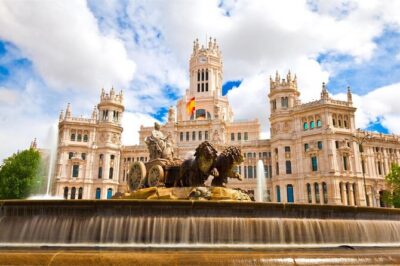
Madrid Guided Walking Tours, compared.
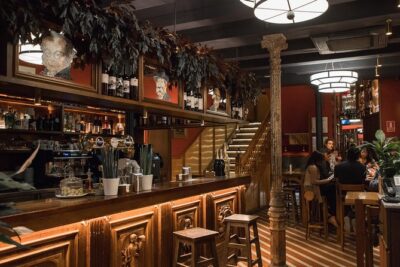 ★ 5.0Madrid Tapas & Wine Tasting Walking Tour – Small Group Local BarsFrom $933,644 reviews
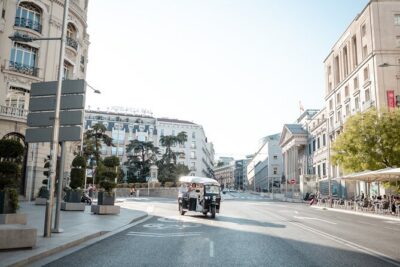 ★ 5.0Madrid Welcome Tour with Local Guide in Eco Tuk Tuk PrivateFrom $282,936 reviews
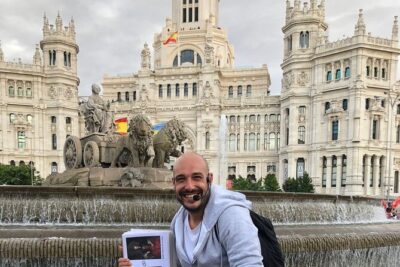 ★ 5.0Madrid Walking Tour from Puerta del Sol to Retiro ParkFrom $32,285 reviews
 ★ 4.5Madrid Old Town & Royal Palace Walking Tour Skip the Line TicketFrom $401,829 reviews
 ★ 4.9Welcome to Madrid Guided Walking TourFrom $311,738 reviews
 ★ 4.7Spanish Inquisition and Legends Evening Walking TourFrom $231,396 reviews
 ★ 5.0Majestic Madrid Walking TourFrom $311,274 reviews
 ★ 5.0Guided Walking Tour of Immortal ToledoFrom $131,116 reviews
Browse the lists this tour appears in