
REVIEW · SEGOVIA DAY TRIPS FROM MADRID
Tour Segovia and La Granja de San Ildefonso from Madrid
Segovia feels cinematic, even without rushing. This semi-private trip keeps things calm and unhurried, with a small group (max 8) and a comfortable Mercedes Vito ride. I love the easy pace and the way the guide ties architecture to real stories, including a top-notch experience with guide Alex in past groups.
Two more reasons this works: you get guided time at the big hitters like the aqueduct and Alcázar, plus enough breaks to actually enjoy the views. One possible drawback to plan for: the Segovia Cathedral and the Church of Vera Cruz have tickets marked as not included, so you may need to budget a bit more once you’re there.
You’ll also be walking around old streets and viewpoints, and the guide is in Spanish with audio support for other languages. If that setup is fine for you, the day has a great rhythm—history in tight doses, then time to breathe.
In This Review
- Key highlights you’ll care about
- The van ride: calm energy out of Madrid
- Segovia Aqueduct first: the Roman workup that still works
- What I’d do with the aqueduct time
- The aqueduct’s sand trap: a less-famous piece of brilliance
- Juan Bravo and Plaza energy: history at street level
- Casa de los Picos: why this façade looks like a puzzle
- San Martín and Corpus Christi: the mix of styles you can actually spot
- San Martín Church
- Iglesia del Corpus Christi (former synagogue)
- La Judería walk: streets that keep the memory
- Segovia Cathedral: your 1-hour window to go your own way
- How to use your cathedral hour
- Alcázar of Segovia: the castle silhouette you came for
- Mirador de la Pradera de San Marcos: the best view break
- Church of Vera Cruz in El Parral: octagon symbolism
- La Granja de San Ildefonso: fountains, geometry, and optional palace time
- Price and value: where the $162.90 is going
- Who this tour fits best
- Should you book Segovia and La Granja with this setup?
- FAQ
- How many people are on the tour?
- What language is the guide?
- Is the tour fully guided, or do I get time on my own?
- Which major admissions are included?
- What happens at La Granja de San Ildefonso?
- What if the weather is bad?
Key highlights you’ll care about
- Max 8 people, semi-private feel: small enough to keep questions going.
- Roman aqueduct details plus a sand-trap stop: more than the postcard view.
- Corpus Christi church inside a former synagogue: distinctive 14th-century-era design.
- Alcázar of Segovia entry included: ship-prow silhouette plus interior time.
- Cathedral + lunch built into the schedule: self-paced block so you can choose your pace.
- La Granja gardens with optional palace time: fountains and geometry, without forcing it.
The aqueduct and the Alcazar, other Segovia days
- Avila & Segovia Tour with Tickets to Monuments from Madrid★ 5.0 · 9,762 reviews
- Three Cities in One Day: Segovia, Avila and Toledo from Madrid★ 5.0 · 8,402 reviews
- Madrid: Segovia and Toledo Tour, Alcazar, and Cathedral★ 4.7 · 7,797 reviews
- Madrid: Toledo & Segovia Tour w/ Cathedral, Alcazar & Lunch★ 4.6 · 5,846 reviews
The van ride: calm energy out of Madrid
This tour is built for people who don’t want a frantic sprint through Spain. You start at P.º del Prado, 3 in Retiro, and you’ll move around in a Mercedes Benz Vito (or similar) with air conditioning. The promise here is a group that stays small, so you’re not constantly waiting on large crowds.
The day is scheduled around a 9 to 10 hour window. That matters because Segovia’s historic center rewards slow attention: stone textures, street angles, and how sites line up with each other. With a small group, you can stop for a better photo moment or take a second look without the whole bus stopping.
One practical note: the guide is Spanish-first, and audio support is used for other languages. If you like learning from a human guide and can follow an audio layer, it should feel smooth. If you need a fully bilingual guide at all times, this setup may feel less ideal.
Segovia Aqueduct first: the Roman workup that still works
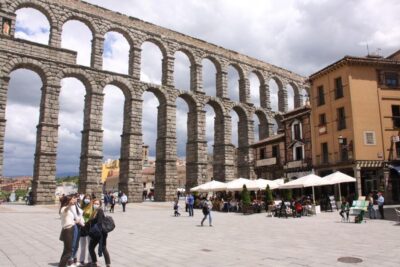
The tour begins with the Segovia Aqueduct, and that’s a smart choice. It’s the city’s most recognizable symbol, and the first stop sets the tone: big Roman engineering, plus the local legends and reconstructions that grew around it.
You’ll spend about 1 hour 30 minutes here, and you get more than a quick walk-by. The emphasis is on how the aqueduct functioned over time—its condition today, what was rebuilt, and why people in Segovia kept returning to this structure as part of their identity. The aqueduct isn’t just impressive; it’s also unusually intact for something that age.
Ticket-wise, it’s marked as free for this stop. That’s good value because it lets you put your money toward the sites where admission is included or where you’ll choose to buy tickets later.
What I’d do with the aqueduct time
If you arrive when the lighting is good, you can take it in from multiple angles. Look at the stones and spacing where arches sit on the same lines across the bridge. And if you’re into “how it worked” details, this is the stop where you’ll get the payoff.
The aqueduct’s sand trap: a less-famous piece of brilliance
Next you’ll visit the Desarenador del Acueducto, specifically the San Gabriel sand trap. This is one of those stops that sounds technical, but it’s actually fascinating because it explains the aqueduct’s logic.
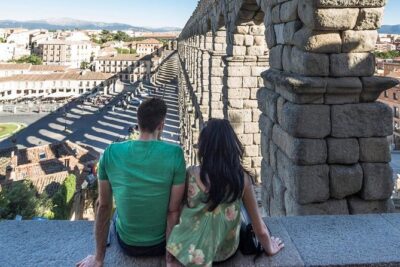
You’ll have about 20 minutes here, and the key idea is that the water went through a second decantation step before continuing toward the upper parts of the city. From the house you can see how water entered the canal, and you get a clearer view of the aqueduct’s aerial section and how it continued along its monumental route.
This is also a free stop. For a day trip priced at $162.90 per person, the “included engineering explanation” is part of the value. Lots of tours show you famous monuments. This one also shows you the systems behind them.




Juan Bravo and Plaza energy: history at street level
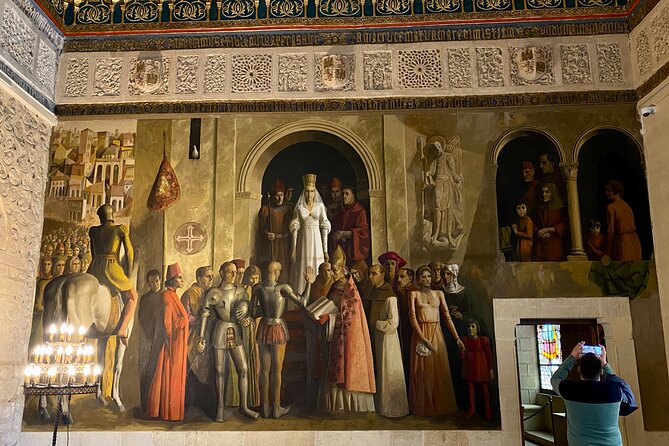
Before you start piling on major monuments, you’ll pass through a political-historical moment in the Medina del Campo Square area. The stop is Monumento a Juan Bravo, tied to the War of the Communities of Castile in the 16th century.
It’s only about 15 minutes, but it gives useful context. Juan Bravo was an important military and political leader, and the statue shows him mounted on a horse with a determined posture. For many visitors, Segovia’s story can feel like architecture only. This stop reminds you that people shaped the city’s political life too.
If you’re in a photography mood, this stop is also a nice breather—less climbing, more open space, and a quick shot with a clear focal subject.
Casa de los Picos: why this façade looks like a puzzle
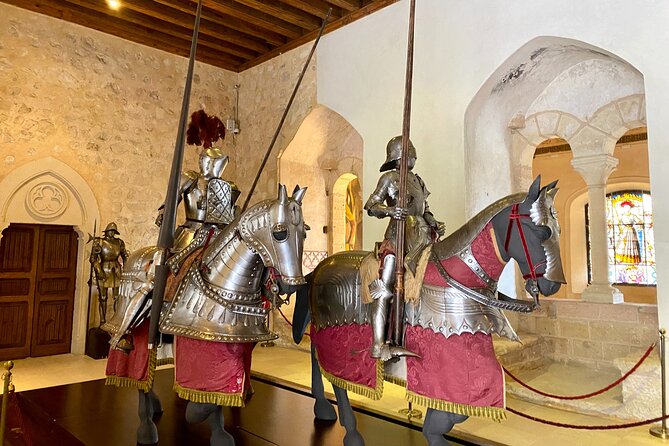
Then comes one of Segovia’s most distinctive buildings: the Casa de los Picos, or House of Spikes. The exterior is covered in granite spikes carved in diamond or spike shapes. That texture is the point, and the tour gives you a chance to see it up close.
You’ll have about 10 minutes here. The origin dates back to the 15th century, and the style blends Gothic and Renaissance touches. It’s a weird-but-perfect Segovia detail, and it helps you start noticing how style shifts even within short distances.
Ticket-wise, it’s listed as free, which again keeps the “must see” costs under control.
San Martín and Corpus Christi: the mix of styles you can actually spot
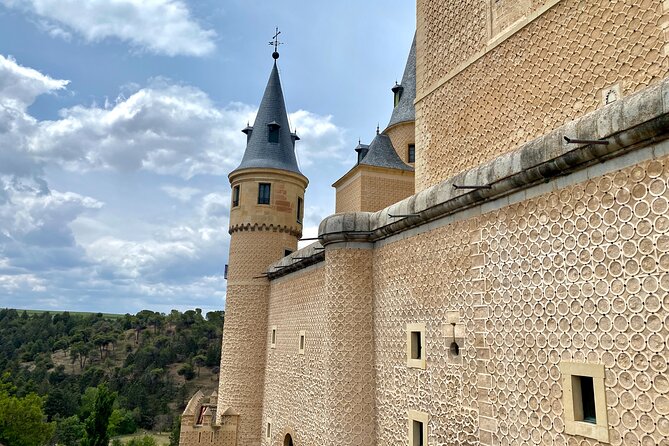
Segovia is famous for blending styles, and two church stops show it clearly.
San Martín Church
San Martín is Romanesque in character, with Gothic and Mudéjar elements added through its evolution. You’ll spend about 15 minutes, and if you like architecture that shows layers rather than a single style frozen in time, this is worth the stop.
Ticket is listed as free, which is great—free time to slow down and see details.
Iglesia del Corpus Christi (former synagogue)
The next stop is the big “wait, really?” moment: Iglesia del Corpus Christi. The current church is the old Main Synagogue of Segovia, with studies suggesting construction around the 14th century. It was converted to Christianity in 1410.
Here you’ll spend about 20 minutes, and admission is marked as included. That’s excellent value, because this is not the kind of place you want to skip once you’re in the area.
Inside, the layout reflects Jewish architectural tradition: a prayer space divided into three naves, separated by horseshoe arches and octagonal pillars topped with pineapple-and-scroll capitals. Above the side naves, there’s a continuous gallery with horseshoe arches mixed with pentalobed arches, and the intrados are decorated with palmettes.
Even if you’re not an architecture nerd, you’ll feel the difference from a typical Christian church. It’s a reminder that Segovia’s story includes multiple communities and long, complex transitions.
La Judería walk: streets that keep the memory
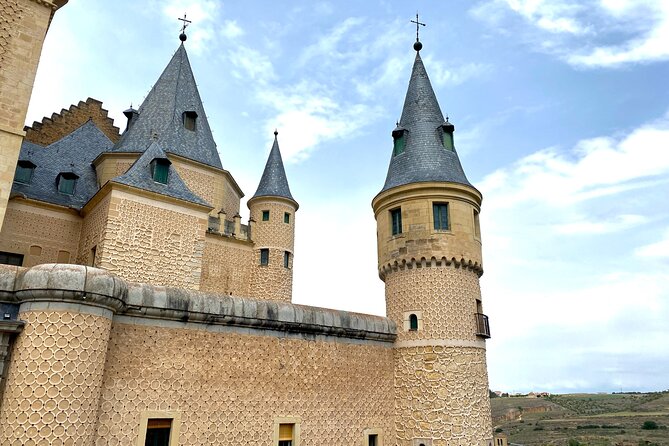
After the synagogue, you’ll walk through the streets of La Judería, Segovia’s Jewish quarter. You’ll have about 15 minutes here with a guide.
The tour frames the historical context in a grounded way: for much of its existence, the neighborhood lived with relative well-being and fewer violent episodes compared to later centuries. You’re not going to get a full lecture on every street corner, but the walk helps you connect the interior architecture you just saw to the streets and scale of the district.
This stop is free. It also makes a difference psychologically: instead of just jumping from one landmark to the next, you’re learning how neighborhoods worked.
Segovia Cathedral: your 1-hour window to go your own way
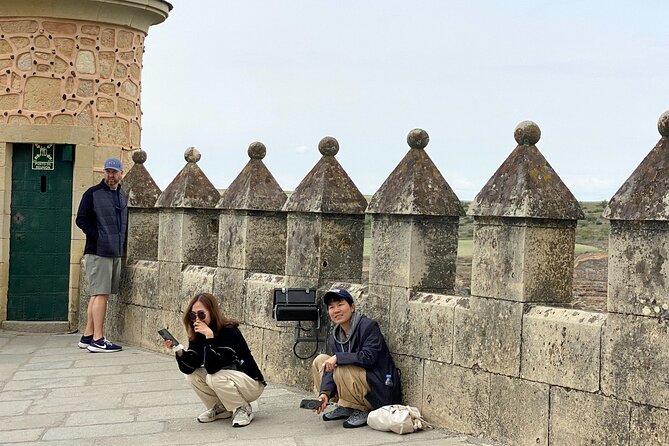
When you reach the cathedral area, the schedule switches gears. You’ll get about 1 hour to visit the cathedral on your own, plus around 1 hour for meal time. The exact flow depends on the group pace.
The plan here is practical. A small group makes it easier because you’re not constantly splitting and regrouping. If you like control over timing, this is where you can choose: quick cathedral visit and climb for views, or a slower interior and then food.
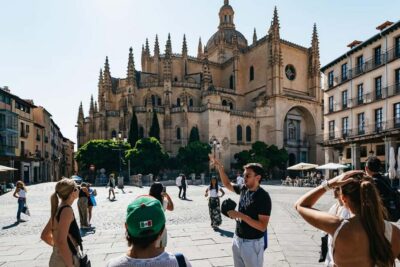
The cathedral is known as the Lady of Cathedrals, a Gothic standout with big scale and fine details. There are also views from the tower. The tour doesn’t list cathedral admission as included, so factor that in.
How to use your cathedral hour
If tower views are your priority, check where the line usually builds and go earlier within your hour. If you care about stained glass or stone carvings more than the view, take your time inside first so you don’t feel rushed later.
Alcázar of Segovia: the castle silhouette you came for
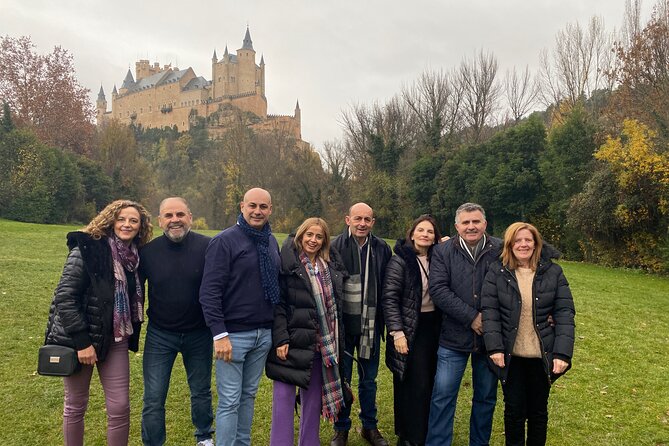
Next is the star that people travel from far away for: the Alcázar of Segovia. It’s one of the most famous castles in Spain, and the shape is the hook right away—fairytale-like, with a distinctive ship-prow profile.
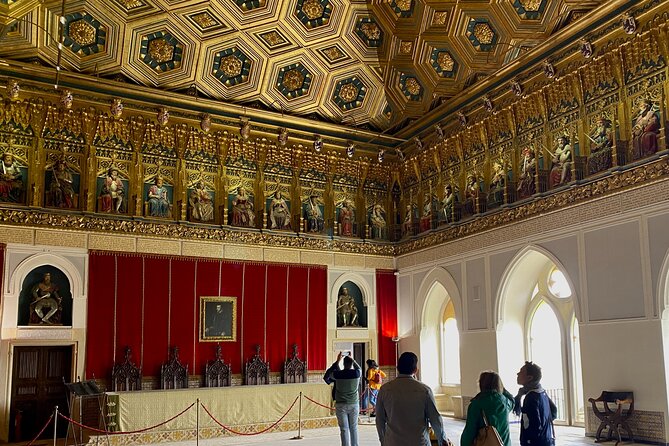
You’ll have about 1 hour 30 minutes, and admission is marked as included. This is another strong value moment. A lot of “day trip” tours include only a photo stop. Here you get enough time for interior highlights and a proper look around.
Inside, you’ll find fascinating architecture and layered history. Even if you’ve seen photos, the real size and the way the structure reads from angles around the site can surprise you.
Mirador de la Pradera de San Marcos: the best view break
Before you move toward the next church, you’ll stop at the Mirador de la Pradera de San Marcos. This is a 15-minute panoramic viewpoint.
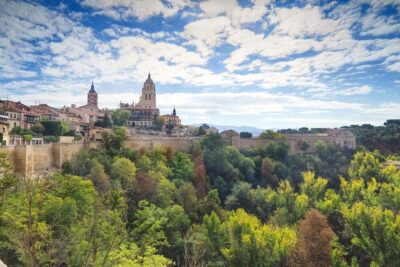
From here you can take in the old town of Segovia, the Alcázar, and the surrounding scenery. It acts like a reset button. By now you’ve seen Roman, medieval, synagogue-to-church conversion, and the castle interior. The view stop ties it all together into one picture.
Ticket is free. So it’s pure time-for-views value.
Church of Vera Cruz in El Parral: octagon symbolism
The final major Segovia church stop is the Iglesia de la Vera Cruz, located on the outskirts of the historic center in an area called El Parral.
You’ll have about 20 minutes here, and admission is marked as not included. The architecture is Romanesque-Mudéjar, built at the end of the 12th century and known for its octagonal plan. The octagon is believed to represent the Holy Sepulcher of Jerusalem, which gives the building a spiritual geography beyond Spain.
If you like symbolism you can see in stone, this stop makes sense as a final architectural note. It’s also a good “lower intensity” stop before you head out to La Granja.
La Granja de San Ildefonso: fountains, geometry, and optional palace time
On the way back to Madrid, the day shifts from Segovia’s tight medieval center to open gardens. You’ll also pass through the Guadarrama mountain range on the route back, so you should get some scenic stretches along the transfer.
Then you reach La Granja de San Ildefonso. Here, participants have an option: you can walk through the gardens with the guide, and if you want, you can visit the Royal Palace on your own.
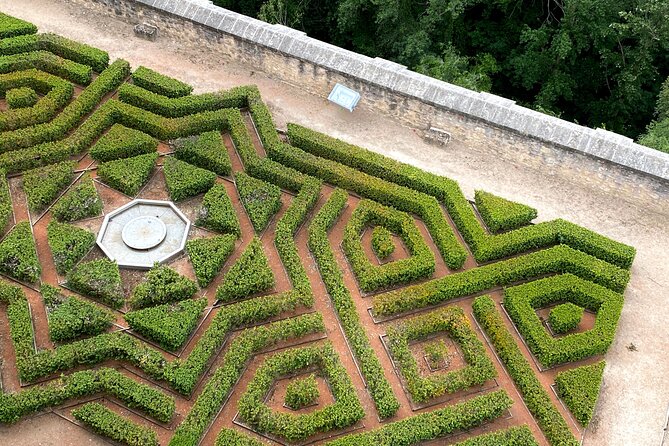
The gardens are the centerpiece. They’re famous for geometric design and spectacular fountains—plus sculptures, statues, and tree-lined walks that create a calm, composed atmosphere. The Royal Palace is an 18th-century royal residence used as a summer home by Spanish monarchs. Think palace-culture and water-worked landscaping in the same place.
Because the data doesn’t say the palace admission is included, treat the palace as optional add-on time you may pay for separately, depending on what you choose to do.
Price and value: where the $162.90 is going
At $162.90 per person, this is not a cheap “grab-and-go” tour. The value is in the structure:
- Small-group format (max 8) means more attention per person.
- Key admissions are handled for you where it matters: Corpus Christi church is included, and Alcázar entry is included.
- You also get explanation time where some tours just point: especially the aqueduct and the sand trap.
- The schedule includes practical pauses: meal and cathedral time are built in rather than squeezed out.
Could it feel pricey if you skip the optional parts? Yes—especially if you end up needing to buy more tickets on your own. But this tour does a good job covering several “pay once, see a lot” sites during the guided portion, which offsets the overall cost.
Who this tour fits best
This is a great choice if you:
- want unhurried Segovia without a rush between every corner
- care about architecture that you can actually describe after
- like small groups where you can ask questions
- prefer a guided day with a couple of self-paced breaks
It may be less ideal if you:
- need a fully non-Spanish guided experience (the guide speaks Spanish and uses audio support for other languages)
- don’t like walking around old streets and viewpoints
- dislike tours where some attractions are self-visit time
Should you book Segovia and La Granja with this setup?
Yes, if you want Segovia in a way that feels thoughtful, not chaotic. The small group size, the included entries for two major interior stops, and the extra engineering context at the aqueduct and sand trap make it feel like more than a checklist tour.
I’d especially book it if you value guide quality. Past experiences with this tour highlight Alex as both very knowledgeable and genuinely helpful, including great photo guidance. That kind of guide turns “I saw it” into “I understood it.”
If you hate paying extra for certain sites, just plan ahead for the Segovia Cathedral and the Church of Vera Cruz, since those are marked as not included.
FAQ
How many people are on the tour?
It’s a semi-private format with a maximum of 8 participants. The overall activity also lists a maximum of 14 travelers, and it runs with a minimum of 4 participants.
What language is the guide?
The guide is in Spanish. Audio support is used for other languages.
Is the tour fully guided, or do I get time on my own?
You’ll have some self-paced time, including about 1 hour for visiting the Segovia Cathedral on your own, plus around 1 hour for meal time.
Which major admissions are included?
Admission is included for the Iglesia del Corpus Christi and the Alcázar of Segovia. The Segovia Aqueduct and several smaller stops are listed as free, while the Segovia Cathedral and Iglesia de la Vera Cruz are listed as not included.
What happens at La Granja de San Ildefonso?
You can join a guided walk through the gardens. You also have the option to visit the Royal Palace of La Granja de San Ildefonso on your own.
What if the weather is bad?
The experience requires good weather. If it’s canceled due to poor weather, you’ll be offered a different date or a full refund.
More Tours in Madrid
- Madrid: Tour Bernabéu Entry Ticket
★ 4.5 · 21,573 reviews - Madrid: Panoramic Route City Tour
★ 4.1 · 12,259 reviews - Avila & Segovia Tour with Tickets to Monuments from Madrid
★ 5.0 · 9,762 reviews - Madrid: Royal Palace Expert Guided Tour with Skip-the-Line
★ 4.7 · 8,407 reviews - Madrid: Segovia and Toledo Tour, Alcazar, and Cathedral
★ 4.7 · 7,797 reviews - Toledo Tour from Madrid: Cathedral, Synagogue & St. Tome’s Church
★ 5.0 · 6,784 reviews
More Tour Reviews in Madrid
- Madrid: Tour Bernabéu Entry Ticket
★ 4.5 · 21,573 reviews - Madrid: Prado Museum Entry Ticket
★ 4.6 · 20,699 reviews - Madrid: “Emociones” Live Flamenco Performance
★ 4.8 · 12,866 reviews - Madrid: Panoramic Route City Tour
★ 4.1 · 12,259 reviews - Madrid: Live Flamenco Show with Food and Drinks Options
★ 4.5 · 9,901 reviews - Avila & Segovia Tour with Tickets to Monuments from Madrid
★ 5.0 · 9,762 reviews
A Day Up in Segovia
- Avila & Segovia Tour with Tickets to Monuments from Madrid
★ 5.0 · 9,762 reviews - Three Cities in One Day: Segovia, Avila and Toledo from Madrid
★ 5.0 · 8,402 reviews - Madrid: Segovia and Toledo Tour, Alcazar, and Cathedral
★ 4.7 · 7,797 reviews - Madrid: Toledo & Segovia Tour w/ Cathedral, Alcazar & Lunch
★ 4.6 · 5,846 reviews - Madrid: Avila and Segovia Day Trip with Tickets to Monuments
★ 4.6 · 4,568 reviews - Toledo & Segovia Tour with Cathedral and Alcazar Tickets & Lunch
★ 4.5 · 4,046 reviews
Just Added: New Madrid Tour Reviews




Segovia Day Trips from Madrid, compared.
 ★ 5.0Avila & Segovia Tour with Tickets to Monuments from MadridFrom $819,762 reviews
 ★ 5.0Three Cities in One Day: Segovia, Avila and Toledo from MadridFrom $1268,402 reviews
 ★ 4.7Segovia and Toledo Tour, Alcazar, and CathedralFrom $487,797 reviews
 ★ 4.6Toledo & Segovia Tour w/ Cathedral, Alcazar & LunchFrom $465,846 reviews
 ★ 4.6Avila and Segovia Day Trip with Tickets to MonumentsFrom $744,568 reviews
 ★ 4.5Toledo & Segovia Tour with Cathedral and Alcazar Tickets & LunchFrom $454,046 reviews
 ★ 4.5Avila with Walls and Segovia with Alcazar from MadridFrom $603,293 reviews
 ★ 4.3From Madrid: Segovia & Avila Day Trip with Optional TicketsFrom $592,161 reviews
Browse the lists this tour appears in