
Prado art can feel like a wall of canvases. This small-group tour turns it into a clear path, with a guide steering you through the key works by Goya and Velázquez, and then letting you keep exploring afterward. I especially like how the guide’s explanations make painting details feel practical, not lofty, and how the group stays small enough to actually hear and ask questions. One possible drawback: you only get a guided run-through for part of your time, so if you want every minute scripted, you’ll have less structure than a full day tour.
You’ll spend about 2.5 hours at the museum, starting with quick orientation near the monument to Goya, then moving inside for the main route. Admission is included, and you’re given headphones so you can follow the guide clearly even in busy rooms. The overall group size caps at 30, which helps, but it’s still the Prado—some galleries get crowded, so plan to use the guide’s viewing tips.
At the end of the guided route, you stay in the museum to keep going at your own pace. That’s a big win for me because you can revisit what caught your eye once you have context. You’ll meet at the Monument to Goya and finish back at the same spot.
In This Review
- Key things I’d plan around
- The Prado works better when you have a map in your head
- Meeting at the Monument to Goya and getting bearings fast
- Inside the Prado: the guided route that focuses your attention
- Headphones included: a small detail that changes everything
- What happens at the end: staying in the museum on your terms
- Timing that actually fits a real day (2 hours 30 minutes)
- Price and value: paying for guidance, not just entry
- Who should book this Prado tour
- Quick expectations checklist before you go
- Should you book this Prado small-group admission tour?
- FAQ
- How long is the Prado tour?
- Is museum admission included?
- What language is the tour offered in?
- Where do we meet and end the tour?
- What group size should I expect?
- Is there a cancellation option if plans change?
Key things I’d plan around
- Admission included for an easy start so you don’t waste time at the ticket desk
- Headphones help you hear the guide in louder rooms and shared spaces
- A focused 90–105 minute museum route aimed at major names like Goya, Rubens, and Velázquez
- Time to keep exploring after the tour using the guide’s recommendations
- Small-group feel within a larger cap (30 people max) for better listening and movement
- English-led tour with local guidance and a certificate included in the package
Still on Velazquez and Goya? A few more Prado visits
- Madrid: Prado Museum Entry Ticket★ 4.6 · 20,699 reviews
- Madrid: Small Group of Prado Museum Tour & Optional Tapas★ 4.6 · 2,437 reviews
- Madrid: Prado Museum Guided Tour with Skip-the-Line Ticket★ 4.5 · 2,018 reviews
- Madrid: Prado Museum Guided Tour With Fast Access★ 4.8 · 1,785 reviews
The Prado works better when you have a map in your head
The Prado is huge, and not just in square meters. It’s huge in emotional tone too. One room can feel tense, another room can feel calm, and then suddenly you’re looking at a painting that seems to be about politics, religion, or human nature—sometimes all at once.
A guided visit helps you avoid the common problem: you stand in front of masterpieces but your brain doesn’t know where to land. This tour gives you a guided path, built around artists you’ll recognize (Goya, Rubens, Velázquez, and more), and it connects the dots between paintings and the stories around them. You don’t need art-history homework. You just need a starting line and a few smart cues for what to notice.
I also like the pace here. It’s not a rushed sprint, and it’s not a slow museum nap either. You get enough guided time to form a mental framework, then you keep the rest of the visit flexible.
Meeting at the Monument to Goya and getting bearings fast
Your tour begins near the Monument to Goya, at C. de Felipe IV, s/n, Retiro, 28014 Madrid. Starting outside matters more than you might think with the Prado, because the museum’s layout is not intuitive if you’re coming in cold.
That initial orientation is designed to get you oriented before you’re swallowed by galleries. You’ll learn the museum’s context and pick up a few “why this room first” pointers. Even if you’ve been to big museums before, I’d treat that outside time as a gift: it reduces wandering later when you’re tired and hungry and trying to remember what you were supposed to see.
Also, the tour is offered in English, and that language consistency helps if you’re traveling with friends and you want everyone hearing the same explanations. The meeting point is near public transportation, which is useful in Madrid where walking can be great but distances still add up.
Inside the Prado: the guided route that focuses your attention
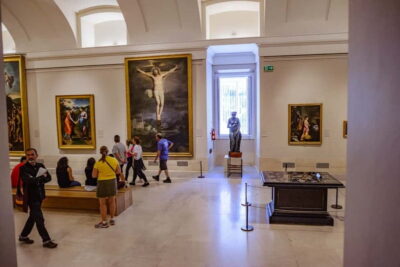
After orientation, you’ll spend roughly 90 to 105 minutes inside the museum on the guided highlights route. This is the part that makes the tour feel efficient: instead of trying to see everything, the guide steers you toward major works and the key ideas that connect them.
Expect the route to focus on major Spanish and European masters. The tour calls out Goya, Rubens, Velázquez, and more, and the tone is very much about meaning, not just labels. The guide’s job is to translate art language into everyday human language: why a figure is posed a certain way, what a scene is doing emotionally, and what to look for in brushwork and composition.
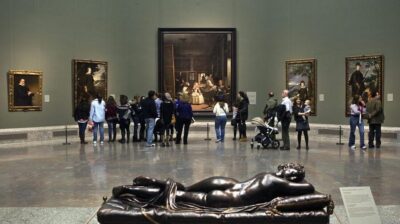
One thing I picked up from the guide style described in real feedback is how they help you physically see the art, not just conceptually. People noted the guide looking for good positions to view paintings and speaking clearly. That matters because in a crowded room, you can end up staring at the worst possible angle and missing the painting’s depth.
If your guide is Julia or Vanessa (names that came up in feedback), you’ll likely get a lively approach with personality and interpretation, including light games and energetic storytelling. That kind of delivery helps you stick with the explanations longer, especially if you worry you’ll get bored in a museum.
Headphones included: a small detail that changes everything
This tour includes admission, a local guide and certificate, and headphones. That last part is underrated.
In museums, your environment fights the tour. Other visitors talk. Floors echo. People stand where they shouldn’t. Without headphones, you end up hearing the guide only when you’re lucky—or when you’re close enough to elbow someone out of the way, which is not a fun travel memory.
With headphones, you can follow the guide at a comfortable distance. You’re also more likely to hear the smaller details the guide points out: why a scene is staged, how a color choice shapes mood, or what a painting’s story is doing beneath the surface.
And because this is English-led, headphones reduce the chance that someone in your group misses something important. If you’re a solo traveler, you still get full audio clarity, which makes it easier to follow along even when you’re navigating rooms quickly.





What happens at the end: staying in the museum on your terms
Here’s the best practical feature: after the guided part, you continue enjoying the Prado at your own pace. The tour explicitly says you must stay in the museum at the end of the route, so you’re not hustled out immediately.
This is the moment when the guide’s work pays off. Early in the visit, you’re given context and recommendations, so when you see a painting again—or you finally wander into a room the guide didn’t have time for—you understand what you’re looking at.
You’ll likely find that your choices get better once you have a mental checklist. You’ll start noticing things you didn’t before: how a painting builds emotion, how the composition guides your eye, and how different artists approach similar themes in different ways. That’s when the Prado stops feeling like a collection and starts feeling like a conversation across time.
If you like slow travel inside major museums, this tour’s structure works well. If you prefer nonstop motion and have zero tolerance for quiet rooms, you might want to plan a slightly more active self-guided follow-up once the tour ends.
Timing that actually fits a real day (2 hours 30 minutes)
The tour runs about 2 hours 30 minutes total. Part of that time is guided inside the Prado (about 90 to 105 minutes), and the rest is used to get your bearings and wrap the experience before you continue on your own.
That timing is a sweet spot for most people. It’s long enough to feel like you learned something and saw key works with direction. It’s short enough that you don’t lose your entire afternoon to one building, which matters if you’re also planning other Madrid sights.
Because the start is outside near the Monument to Goya and the finish is back at the meeting point, you can plug this tour into a broader day plan. Madrid days are easier when you don’t have to guess how you’ll get from place to place after a museum.
Price and value: paying for guidance, not just entry
The price is listed as $343.21 per group, up to 6 people. That’s a different pricing model than the usual per-person rate, and it can be a strong value if you’re traveling with friends or family.
To judge value, I look at three things:
- What’s included: admission, local guide and certificate, and headphones
- How long it helps you inside: the main guided route is long enough to change your viewing habits
- How the group size supports the experience: a small-group feel within a cap of 30
With admission included, you’re not paying extra just to get into the building. Headphones also reduce what you’d otherwise spend (or what you’d otherwise miss) for a guide you can actually hear. And the tour’s real value is the guided route plus the time left in the museum to use what you learned.
If you’re traveling solo, the “per group” model can still work, but your effective cost per person depends on whether you can share the group rate. If you are splitting with 2–6 people, it becomes much easier to justify as a practical sightseeing choice rather than a splurge.
Who should book this Prado tour
This tour works best if you:
- Want a clear starting point in a museum that’s too big to solve on your own
- Prefer guided context for major artists like Goya, Rubens, and Velázquez
- Like the idea of continuing independently after a guided route
- Want headphones so the guide is easy to hear
It’s also a good fit for many different traveler types because it’s offered in English and most people can participate. Service animals are allowed, which is helpful to note if you need that accommodation.
If you’re the kind of art lover who enjoys reading wall labels for everything, this tour still makes sense. The guide gives you a few high-impact cues first, so you’ll get more out of what you read afterward. If you’re the opposite—someone who fears museums will be boring—this tour is built around storytelling and meaning, including guide personality noted in feedback.
Quick expectations checklist before you go
To help you plan your visit with fewer surprises, here’s what I’d expect based on the tour structure:
- You’ll start near the Monument to Goya and walk into the Prado area together
- A guide leads you through the key works in a focused window (about 90–105 minutes)
- You’ll use headphones throughout the tour
- After the guided route ends, you stay in the museum to explore your way
- You return back to the meeting point area when the activity concludes
One more practical note: Madrid museums can be busy. Even with headphones and a guided route, you’ll want to keep your expectations flexible about room crowding. The guide’s habit of steering you toward good viewing positions helps, but it can’t eliminate other visitors’ habits.
Should you book this Prado small-group admission tour?
Yes, I think you should book it if you want the most value out of a limited time slot in the Prado. The combination of admission included, headphones provided, a focused guided route, and time left inside the museum is a smart way to get both context and freedom.
I’d skip it only if you need a fully structured, every-minute itinerary, or if you strongly prefer wandering entirely unassisted with no guided route at all. For everyone else, this is an efficient, friendly way to experience the Prado’s big names and leave with a clearer sense of what you saw and why it matters.
FAQ
How long is the Prado tour?
It lasts about 2 hours 30 minutes.
Is museum admission included?
Yes. Admission to the Prado Museum is included.
What language is the tour offered in?
The tour is offered in English.
Where do we meet and end the tour?
The start is at the Monument to Goya on C. de Felipe IV, s/n, Retiro, 28014 Madrid, Spain. The tour ends back at the meeting point.
What group size should I expect?
The experience has a maximum of 30 travelers.
Is there a cancellation option if plans change?
Yes, free cancellation is available. You can cancel up to 24 hours in advance for a full refund. Cancellation within 24 hours of the start time isn’t refunded.
More Tours in Madrid
- Madrid: Tour Bernabéu Entry Ticket
★ 4.5 · 21,573 reviews - Madrid: Panoramic Route City Tour
★ 4.1 · 12,259 reviews - Avila & Segovia Tour with Tickets to Monuments from Madrid
★ 5.0 · 9,762 reviews - Madrid: Royal Palace Expert Guided Tour with Skip-the-Line
★ 4.7 · 8,407 reviews - Madrid: Segovia and Toledo Tour, Alcazar, and Cathedral
★ 4.7 · 7,797 reviews - Toledo Tour from Madrid: Cathedral, Synagogue & St. Tome’s Church
★ 5.0 · 6,784 reviews
More Tour Reviews in Madrid
- Madrid: Tour Bernabéu Entry Ticket
★ 4.5 · 21,573 reviews - Madrid: Prado Museum Entry Ticket
★ 4.6 · 20,699 reviews - Madrid: “Emociones” Live Flamenco Performance
★ 4.8 · 12,866 reviews - Madrid: Panoramic Route City Tour
★ 4.1 · 12,259 reviews - Madrid: Live Flamenco Show with Food and Drinks Options
★ 4.5 · 9,901 reviews - Avila & Segovia Tour with Tickets to Monuments from Madrid
★ 5.0 · 9,762 reviews
Inside the Prado: More to See
- Madrid: Prado Museum Entry Ticket
★ 4.6 · 20,699 reviews - Madrid: Small Group of Prado Museum Tour & Optional Tapas
★ 4.6 · 2,437 reviews - Madrid: Prado Museum Guided Tour with Skip-the-Line Ticket
★ 4.5 · 2,018 reviews - Madrid: Prado Museum Guided Tour With Fast Access
★ 4.8 · 1,785 reviews - Prado Museum Small Group Tour with Skip the Line Ticket
★ 5.0 · 1,738 reviews - Royal Palace & Prado Museum Skip the Line Guided Tour
★ 4.5 · 1,347 reviews
Just Added: New Madrid Tour Reviews






Prado Museum Tours, compared.
 ★ 4.6Prado Museum Entry TicketFrom $2120,699 reviews
 ★ 4.6Small Group of Prado Museum Tour & Optional TapasFrom $532,437 reviews
 ★ 4.5Prado Museum Guided Tour with Skip-the-Line TicketFrom $462,018 reviews
 ★ 4.8Prado Museum Guided Tour With Fast AccessFrom $281,785 reviews
 ★ 5.0Prado Museum Small Group Tour with Skip the Line TicketFrom $541,738 reviews
 ★ 4.5Royal Palace & Prado Museum Skip the Line Guided TourFrom $821,347 reviews
 ★ 3.6Prado Museum Ticket with In-App Audio GuideFrom $351,154 reviews
 ★ 4.5Prado Museum Guided Tour with Skip-the-Line TicketFrom $451,146 reviews
Browse the lists this tour appears in