

REVIEW · 3-HOUR EXPERIENCES
Tour Madrid: Royals, Plazas & Secrets 3H
Madrid hits you fast—this tour helps more. In just about 3 hours, you get a guided ride that strings together the royal core, classic squares, and major city icons, with mobile tickets and an English-speaking guide. What makes it especially useful is the mix: places you can linger at, plus quick photo stops that still teach you what you’re looking at.
I love that it’s built for orientation. You’ll pass landmarks like the Royal Palace area, Almudena Cathedral, and Plaza Mayor, then keep rolling toward the Prado district and beyond, so your second day in Madrid feels easier. I also like the value math: it’s priced per group up to 4, so it can work out very well if you travel with friends or family.
One drawback to plan for: most stops are short. This is a highlights-and-photos style tour, and the Palacio Real is specifically marked as not included, so you’ll need extra time (or a separate ticket plan) if you want a deep interior visit.
In This Review
- Key takeaways before you ride
- The real appeal: royals, plazas, and big Madrid in 3 hours
- Where you start (and why it matters): Plaza de la Lealtad in Retiro
- Royal Madrid core: Plaza de Santa Ana to Almudena and the Palace area
- Old-town flow: Plaza Mayor, Mercado San Miguel, Cervantes, and Lope de Vega
- Prado district and royal-adjacent monuments: Almudena Museum, Prado, Jerónimos, Puerta de Alcalá
- Stadium Madrid and classic spectacle: Las Ventas, Barrio de Salamanca, Bernabéu
- Big monuments and major boulevards: Paseo de la Castellana, Plaza Colón, Cibeles, Gran Vía, Retiro
- Final cultural stops: Teatro Real and the Prado-area back half
- Price and value: $323.59 per group for a 3-hour highlights sprint
- Should you book Royals, Plazas & Secrets (3H) with Green Tours?
- FAQ
- Is this tour offered in English?
- How long is the Madrid Royals, Plazas & Secrets tour?
- What’s included in the price?
- Is the Royal Palace of Madrid admission included?
- Where does the tour start and end?
- Can I cancel and get a full refund?
Key takeaways before you ride
- A tight 3-hour loop: royal sights, old-town plazas, and modern Madrid all in one morning or afternoon.
- Photo-friendly pacing: lots of brief stops built around “see it, understand it, snap it.”
- Free-site heavy route: many stops are listed with free admission, keeping the trip lower-stress.
- Private, group-only experience: only your party participates, so it’s easier to ask questions or adjust your pace.
- Big city variety: from ancient Egypt’s Debod Temple to Santiago Bernabéu and Las Ventas.
Set these beside it before you book anything in Madrid
- Best of Madrid: 3-Hour Guided Bike Tour in Small Groups★ 4.8 · 1,417 reviews
- Madrid: 3 hour Guided Highlights Bike Tour with Optional Tapas★ 5.0 · 443 reviews
- Madrid: 3-Hour Sightseeing Tour by Electric Bike★ 4.6 · 192 reviews
- Madrid: Prado Museum 3-Hour Private Tour★ 5.0 · 129 reviews
The real appeal: royals, plazas, and big Madrid in 3 hours
Madrid can feel like two cities in one day. There’s the classic old center with its plazas and churches, and then there’s the modern face—wide boulevards, stadium-sized landmarks, and grand monuments that look like they belong on a postcard.
This tour is designed for that tension. You’ll start in the Retiro area and work outward through the sights that most people list on day one, but you don’t just “check boxes.” The guiding style is meant to help you connect the dots—why buildings are where they are, what changed over time, and how the city’s power centers shifted.
And yes, it’s also a practical time-saver. If you have limited hours—maybe you’re arriving late, leaving early, or you want one solid “get my bearings” outing—this kind of route pays off quickly.
Where you start (and why it matters): Plaza de la Lealtad in Retiro
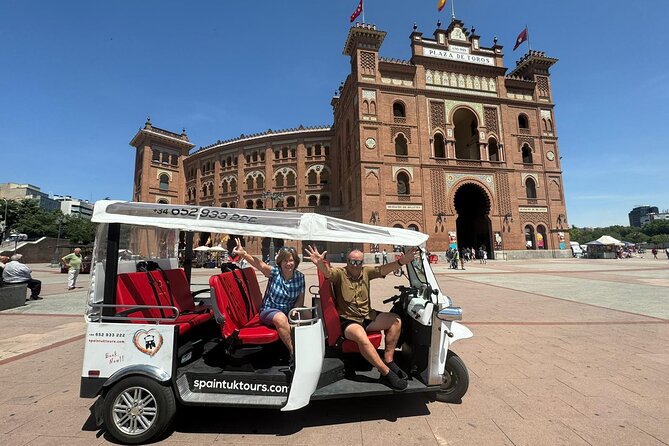
Your meeting point is Pl. de la Lealtad, 1, Retiro, 28014 Madrid, and the experience ends back there. Starting in Retiro is a smart choice because it puts you near major transit lines and gives you an easy anchor point for the rest of your day.
From there, the route is built to move you through Madrid’s major zones without you constantly rerouting on foot. Even if you’re a confident walker, three hours passes fast. A guided vehicle loop helps you stay focused on sights instead of map math.
Royal Madrid core: Plaza de Santa Ana to Almudena and the Palace area
Early on, you roll into the heart of Centro. First is Plaza de Santa Ana, a well-known open square in the Cortes neighborhood. It dates from 1810, and the point of this stop isn’t just its view—it’s the neighborhood feel. It’s a good place to notice how Madrid’s plazas function like outdoor living rooms, not just empty squares.
Then you head to the Royal Palace of Madrid, also called Palacio de Oriente. Construction began in 1738 and lasted seventeen years, and Carlos III established it as his habitual residence in 1764. The tour’s time here is brief, and the Royal Palace admission is not included, so you should treat this stop as a great outside look plus orientation to the royal complex—not a full interior visit.
Right after that, you get the Museo de la Catedral de la Almudena (listed as free on this tour). The Almudena Cathedral is consecrated in 1993, making it a modern milestone for the Catholic Church, and the museum collects objects that tell the story of Madrid’s diocese across twelve rooms. Ten minutes isn’t long, but it’s enough to skim the key themes and leave with a better sense of the cathedral’s role.
Next comes the Jardines de Sabatini, directly in front of the north facade of the palace area. This is one of those “small stop, big payoff” moments. It’s free, it’s photogenic, and it gives your brain a break between major monuments.
Finally in this royal stretch, there’s a surprise turn that changes the mood: the Templo de Debod—an ancient Egyptian temple moved to Madrid. It’s listed as free, and it gives you a visual reminder that Madrid’s cultural story isn’t only Spanish. The setting on a hill near Plaza de España helps make this stop feel like a real detour, even when the ride is fast.
Old-town flow: Plaza Mayor, Mercado San Miguel, Cervantes, and Lope de Vega
After the palace-and-church zone, the tour leans into “Madrid de los Austrias”—the old-town vibe people come for.
Plaza Mayor is first. It began on the site of an older marketplace (the Plaza del Arrabal) at the end of the 15th century, and later, architect Juan Gómez de Mora was commissioned in 1617 to create uniform building lines. The square has hosted celebrations, bullfights, coronations, and other major public events over centuries. Even with a short stop, you get the square’s scale and symmetry—exactly what helps when you later wander the streets around it.
Next, you stop at Mercado San Miguel, a covered market dating to around 1916. It’s known for local food and delicatessen, and the tour frames it as an elegant indoor setting where you can see how Madrid snacks and eats like a city, not a museum. If you like food stops but don’t want a full meal commitment, this is a smart “peek” stop.
Then come the writer-house stops. You’ll visit Casa de Cervantes (Miguel de Cervantes’ former residence, author of Don Quijote) where guided tours are available, and Casa Museo Lope de Vega, the 16th-century house where Lope de Vega lived until his death in 1635. These aren’t huge time sinks on this tour, but they add a “Spanish Golden Age” layer that most quick city walks miss. If you’re a literature person, you’ll appreciate how the tour keeps Madrid human, not only royal.
As the ride continues, you also pass Plaza de las Cortes, tied to the Spanish Courts. The facade has a neoclassical portico with six Corinthian columns, and the lions flanking the entrance are made from iron connected to cannons captured during the war in Africa. That detail is the kind of thing that makes monuments feel less abstract.



Prado district and royal-adjacent monuments: Almudena Museum, Prado, Jerónimos, Puerta de Alcalá
From the older center, the route pushes you toward the “culture corridor” of Madrid.
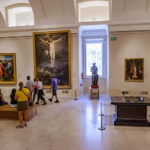
You’ll see the Museo Nacional del Prado listed with free admission on this tour. The tour pacing here is short, so manage expectations: you likely won’t see much art inside in a 3-hour outing. But the value is in the context. Prado is described as especially strong in works by major European painters such as Velázquez, El Greco, Goya, and others—so even a brief stop helps you anchor what people mean when they say it’s a top European painting museum.
Next is Jeronimos, officially Parish Church of San Jerónimo el Real, known as Los Jerónimos. It has late Gothic form with Renaissance influences from the early 16th century, and it’s historically tied to Spanish monarchs. The tour description also notes that it served as a spiritual retreat and was used for royal ceremonies, including Alfonso XIII’s wedding, with a grand stairway added in 1906. For many people, Jerónimos is a “wait, this is so close to Prado?” moment. The timing works because the tour keeps you in the same general zone.
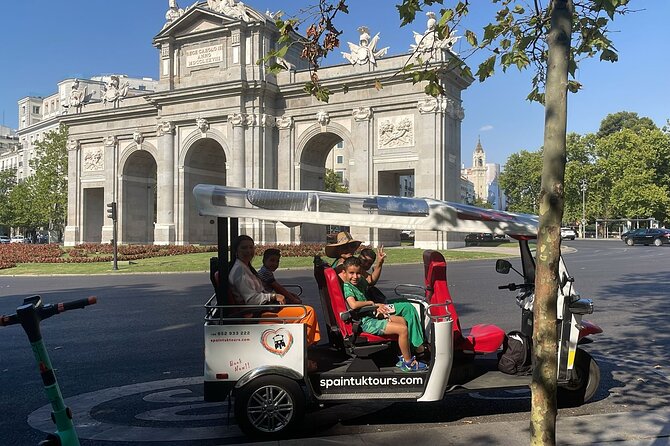
Then you hit Puerta de Alcalá—a neoclassical granite triumphal arch built by Carlos III in 1778, designed by Francesco Sabatini. It’s described as the first built in Europe after the fall of the Roman Empire, and its five openings (instead of the usual three) make it look a bit different than the more famous gate comparisons you might hear later. This is another brief stop, but it’s a good one for photos because the geometry is clean and the monument is tall enough to photograph even from a distance.
Stadium Madrid and classic spectacle: Las Ventas, Barrio de Salamanca, Bernabéu
One reason I like this tour is that it doesn’t treat Madrid like a single mood. It also shows the city’s big-stage identity.
You’ll stop at Las Ventas Bullring, described as the largest bullfighting venue in Spain, with 23,798 spectators, and a ring diameter of 61.5 m. Even if you don’t care about bullfights, the bullring is a major Madrid landmark, tied to how public spectacle has shaped Spanish public life.
Then the ride moves into Barrio de Salamanca, with time for the main streets such as Velázquez, Ortega y Gasset, and Serrano. This area reads like modern Madrid’s shopping and business swagger, and the quick views help you understand the city’s layers: history not only in old stones, but also in how neighborhoods evolved.
After that, you go to Santiago Bernabéu Stadium. It was inaugurated on December 14, 1947 and has a current capacity of 81,044. Again, time is brief, so the point isn’t a tour of the stadium interior—it’s the scale. If you’re a football fan, you’ll already know that Bernabéu is one of Europe’s gravitational centers. If you aren’t, it still registers as a modern monument that’s as much about identity as sport.
Big monuments and major boulevards: Paseo de la Castellana, Plaza Colón, Cibeles, Gran Vía, Retiro
The route then leans into the city’s monumental axis and classic promenades.
Along the way you’ll travel the Paseo de la Castellana through the Financial District zone. This is where Madrid starts to look like a global capital—wide lanes, civic buildings, and long sightlines.
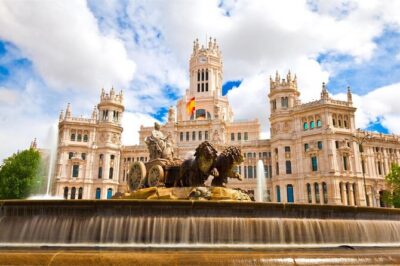
You’ll stop at Plaza de Cibeles and see the Cibeles Fountain, representing the goddess Cibeles riding a car pulled by two lions. The sculpture is described as the work of Francisco Gutiérrez, with the lions by the Frenchman Roberto Michel. It’s also tied to Real Madrid celebrations, which is an extra layer beyond the myth—sports here become civic ritual.
Then comes Banco de España. The building is described as decorative and tied to a National Exhibition of Fine Arts award in 1884, and its mission relates to Spain’s coin and bill issuance. Important practical note: the interior is described as only visitable by groups from educational centers and universities, and only exceptionally by other non-profit cultural entities. So on a short tour, you’re mainly seeing the exterior and appreciating the scale from outside.
Next up: Gran Vía, Madrid’s iconic major street. It runs from Calle de Alcalá toward Plaza de España and developed in the early 20th century with commercial, tourist, and leisure life. Even a short stop helps you place where the city’s “walk-and-window-shop” energy lives.
Then you reach Parque del Retiro with a 20-minute stop at the main entrance. This matters because it balances the hard edges of monuments with real green space. Even if you don’t go deep into the park, you’ll feel the shift in pace immediately.
The tour also includes Paseo del Prado, driven all the way down to Atocha train station. This is a helpful transit-line finish because it points you toward a practical option if you need to connect to trains later.
Final cultural stops: Teatro Real and the Prado-area back half
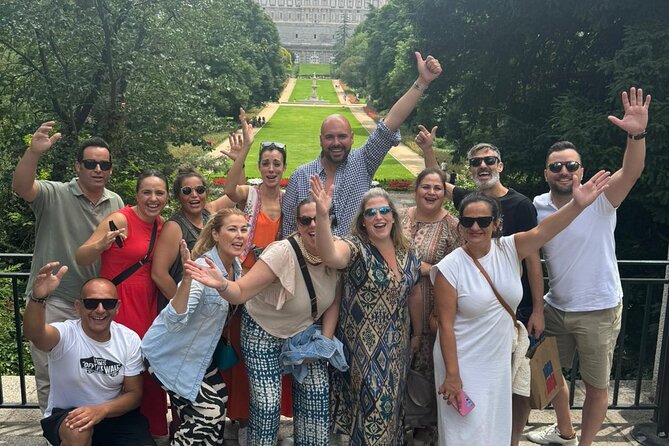
Near the end you see Teatro Real, described as an opera house that’s about 200 years old. You don’t get a full theatre experience in a 3-hour tour, but seeing it on the route gives you a clearer picture of Madrid’s cultural backbone: music and performance alongside museums and monarch-themed architecture.
In a tour like this, these last minutes matter because you’ll often walk away with one or two neighborhoods you want to return to. If Teatro Real sparks your interest, you’ll likely follow up in the evening. If the Prado district pulled you in, you’ll know exactly where to target next.
Price and value: $323.59 per group for a 3-hour highlights sprint
The price is $323.59 per group (up to 4). That’s a big deal. In many Madrid tours, pricing is per person, and a short duration still costs you like a longer day. Here, the group cap can keep your per-person cost reasonable if you travel with anyone.
A few value signals from the tour info:
- Many stops are marked free for admission.
- The one notable exception is the Palacio Real admission, which is not included.
- GST is included, which removes one small “surprise fee” concern.
- You get a private format, meaning you’re not packed into someone else’s schedule.
So the value isn’t only about what’s inside buildings. It’s about getting a guided “map of meaning” across lots of famous places quickly—then using your remaining time to go deeper where you actually want it.
Should you book Royals, Plazas & Secrets (3H) with Green Tours?
Book it if you want:
- A fast orientation to Madrid’s major sights without hours of route planning.
- A mix of old-town and modern icons in one outing.
- A ride style where you can ask questions and shape what you notice, rather than following a strict checklist.
Skip it (or plan differently) if:
- You want long museum time or a deep interior experience. The Royal Palace isn’t included, and most stops are designed for quick looks.
- You’re the type who needs extended seating breaks. This is built for movement.
If you’re short on time, this tour can be a smart first move. Then, for the rest of your trip, you return to one or two areas—like Plaza Mayor’s surrounding streets, the Prado/Los Jerónimos zone, or the Retiro edge—for the kind of slower wandering that makes Madrid stick.
FAQ
Is this tour offered in English?
Yes. The tour is offered in English.
How long is the Madrid Royals, Plazas & Secrets tour?
It’s approximately 3 hours.
What’s included in the price?
The price is $323.59 per group up to 4, and GST is included. It does not include lunch or dinner.
Is the Royal Palace of Madrid admission included?
No. Palacio Real admission is not included.
Where does the tour start and end?
It starts at Pl. de la Lealtad, 1, Retiro, 28014 Madrid, Spain and ends back at the same meeting point.
Can I cancel and get a full refund?
Yes. You can cancel up to 24 hours in advance for a full refund. If you cancel less than 24 hours before the start time, you don’t get a refund.
More 3-Hour Experiences in Madrid
- Best of Madrid: 3-Hour Guided Bike Tour in Small Groups
★ 4.8 · 1,417 reviews - Madrid: 3 hour Guided Highlights Bike Tour with Optional Tapas
★ 5.0 · 443 reviews - Madrid: 3-Hour Sightseeing Tour by Electric Bike
★ 4.6 · 192 reviews - Madrid: Prado Museum 3-Hour Private Tour
★ 5.0 · 129 reviews - Madrid 3-Hour Sightseeing Tour
★ 4.1 · 85 reviews - Madrid: Private 3-Hour Tour
★ 4.9 · 81 reviews
More Tours in Madrid
- Madrid: Tour Bernabéu Entry Ticket
★ 4.5 · 21,573 reviews - Madrid: Panoramic Route City Tour
★ 4.1 · 12,259 reviews - Avila & Segovia Tour with Tickets to Monuments from Madrid
★ 5.0 · 9,762 reviews - Madrid: Royal Palace Expert Guided Tour with Skip-the-Line
★ 4.7 · 8,407 reviews - Madrid: Segovia and Toledo Tour, Alcazar, and Cathedral
★ 4.7 · 7,797 reviews - Toledo Tour from Madrid: Cathedral, Synagogue & St. Tome’s Church
★ 5.0 · 6,784 reviews
More Tour Reviews in Madrid
- Madrid: Tour Bernabéu Entry Ticket
★ 4.5 · 21,573 reviews - Madrid: Prado Museum Entry Ticket
★ 4.6 · 20,699 reviews - Madrid: “Emociones” Live Flamenco Performance
★ 4.8 · 12,866 reviews - Madrid: Panoramic Route City Tour
★ 4.1 · 12,259 reviews - Madrid: Live Flamenco Show with Food and Drinks Options
★ 4.5 · 9,901 reviews - Avila & Segovia Tour with Tickets to Monuments from Madrid
★ 5.0 · 9,762 reviews
Just Added: New Madrid Tour Reviews


3-Hour Experiences, compared.
 ★ 4.8Best of Madrid: 3-Hour Guided Bike Tour in Small GroupsFrom $331,417 reviews
 ★ 5.03 hour Guided Highlights Bike Tour with Optional TapasFrom $35443 reviews
 ★ 4.63-Hour Sightseeing Tour by Electric BikeFrom $53192 reviews
 ★ 5.0Prado Museum 3-Hour Private TourFrom $243129 reviews
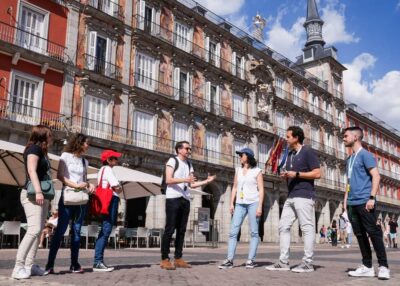 ★ 4.1Madrid 3-Hour Sightseeing TourFrom $3985 reviews
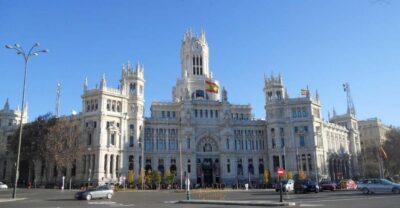 ★ 4.9Private 3-Hour TourFrom $18881 reviews
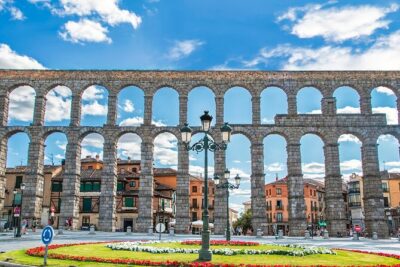 ★ 4.5Segovia Walking Private Tour 3 hours with tickets includedFrom $21645 reviews
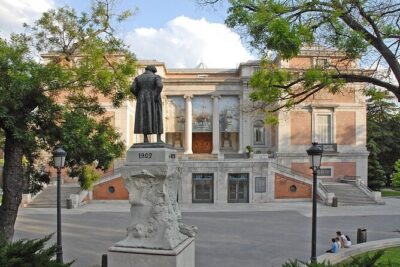 ★ 5.0Prado Museum Masterpieces – 3 hours Full tour – Small groupFrom $8037 reviews
Browse the lists this tour appears in