
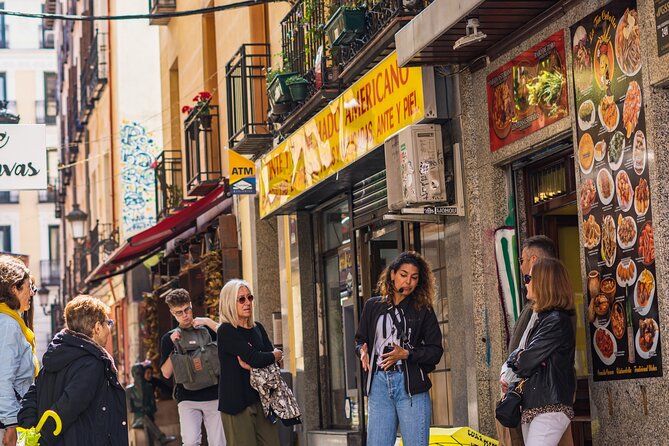
REVIEW · TOURS
Tour “Barrio de las Letras” Spanish Golden Age
Madrid’s Literary Quarter turns streets into stories. On this Spanish Golden Age walk, you follow the names you know and the details you don’t—moving street by street through a neighborhood built for literature fans. I love the way the tour uses specific landmarks to explain why writers mattered here, and I also love the lively, well-informed guidance (Marivic is repeatedly praised for staying attentive and keeping the group with her). One thing to consider: it’s mostly a walking tour, so you’ll want comfortable shoes and an easy pace for 2 hours 30 minutes.
You start in the busy center, then slow down as the neighborhood shifts into quieter literary backstreets and theatre corners. The group stays small enough to ask questions, and the pacing is designed for reading the city in a new way—not just taking photos. If you’re hoping for a long sit-down museum visit, this isn’t that kind of tour; it’s a guided street walk with one museum stop at the end.
In This Review
- Key reasons this Barrio de las Letras tour works
- The Literary Quarter feels like a living book
- Puerta del Sol: getting the Golden Age map in your head
- Calle de la Cruz and the trampantojo that plays with your eyes
- Calle de Álvarez Gato: Bohemian Lights and the “sperpentos”
- Plaza de Santa Ana: statues, theatre, and the Corral de Comedias
- Iglesia de San Sebastián: a historic monument stop that earns its place
- Calle de las Huertas: the street of letters and character stories
- The convent stop: where Cervantes rests forever (and admission is included)
- Calle de Quevedo: the rivalry that shaped the vibe
- Casa Museo Lope de Vega: the Phoenix of the Wits finale
- Price and timing: what $3.47 per group really buys you
- Group size, pace, and how to get the most in 2.5 hours
- A quick reality check: who this tour fits best
- Should you book Barrio de las Letras: Spanish Golden Age?
- FAQ
- Where does the tour start and end?
- What time does the tour begin?
- How long is the tour?
- How much does the tour cost?
- What kind of ticket do I get?
- Is admission included anywhere?
- Do I need to bring snacks?
- How big is the group?
- Is this tour near public transportation?
- What’s the cancellation policy?
Key reasons this Barrio de las Letras tour works
- A writer-focused route that links major figures to real streets, plazas, and buildings
- Trickery and theatre details explained through spots like a standout trampantojo and the Corral de Comedias
- Cervantes gets a proper stop at the convent where he is laid to rest, with admission included
- Small-group feel with a maximum of 20 travelers, plus it’s priced per group (up to 6)
- A guide standard of excellence, with Marivic noted for knowledge and staying engaging
Still deciding? Here are other Madrid tours to weigh up first.
- Madrid: Tour Bernabéu Entry Ticket★ 4.5 · 21,573 reviews
- Madrid: Prado Museum Entry Ticket★ 4.6 · 20,699 reviews
- Madrid: “Emociones” Live Flamenco Performance★ 4.8 · 12,866 reviews
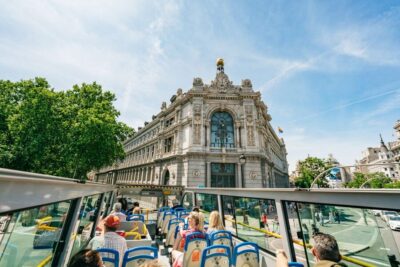
- Madrid: Panoramic Route City Tour★ 4.1 · 12,259 reviews
The Literary Quarter feels like a living book
The Barrio de las Letras in Madrid isn’t just “old Madrid.” It’s the kind of place where the streets have a theme, and the theme is words—poetry, plays, satire, and the arguments that writers had with each other. This tour is built to help you read that atmosphere as you walk, so you’re not stuck trying to figure everything out on your own.
I like that the tour doesn’t treat famous authors like distant statues. Instead, it connects them to particular corners and famous literary references you’ll recognize. If you’re the type who enjoys walking tours where you learn names and how those names connect to places, you’ll probably enjoy this format.
Puerta del Sol: getting the Golden Age map in your head
You begin near Puerta del Sol, where the guide gives a short orientation to the Spanish Golden Age and what you’ll be seeing next. This first stop is about setting your expectations quickly, so the rest of the walk makes sense rather than feeling like random sight-seeing.
Even in 15 minutes, this matters. When you understand the “why” behind the area—why writers clustered here, how the literary scene shaped public life—you notice more as the route continues. You’ll also learn what to look for, which is useful in a neighborhood where details can blend into everyday street life.
Practical tip: since you start at a central, high-traffic area, arrive a touch early so you’re not doing last-minute timing math while the group is forming.
Calle de la Cruz and the trampantojo that plays with your eyes
Next comes Calle de la Cruz, where the tour points out one of Madrid’s striking trampantojos. If you’ve never encountered one, think of it as an artistic illusion: something designed to trick your eyes and make you look twice.
The fun here is that you’re not just being shown a pretty wall. You’re being taught the story behind what you’re seeing, which makes the illusion feel like part of the neighborhood’s creative identity. This is a good example of how this tour mixes entertainment with context, the kind of combo that keeps a walking tour from turning into a lecture.
This stop is short, but it’s memorable because you’ll actually notice the trick while you’re standing there. That’s a win in a city where many streets blur together fast.
Calle de Álvarez Gato: Bohemian Lights and the “sperpentos”
On Calle de Álvarez Gato, the tour introduces you to the sperpentos linked to Bohemian Lights. Even if you don’t know the term, the guide frames it in a way that helps you connect it to the artistic mood of the era.
What I like about this part is that it anchors literature to tone and style. You start thinking about comedy, drama, and distortion—not just dates and author biographies. When a guide explains literary references in plain language at street level, you end up with a mental picture you can carry into the next stop.
The drawback to flag: this stop depends a bit on how much you enjoy literary references. If you want purely historical facts without interpretation, you may find some of the literary flavor harder to grasp quickly.





Plaza de Santa Ana: statues, theatre, and the Corral de Comedias
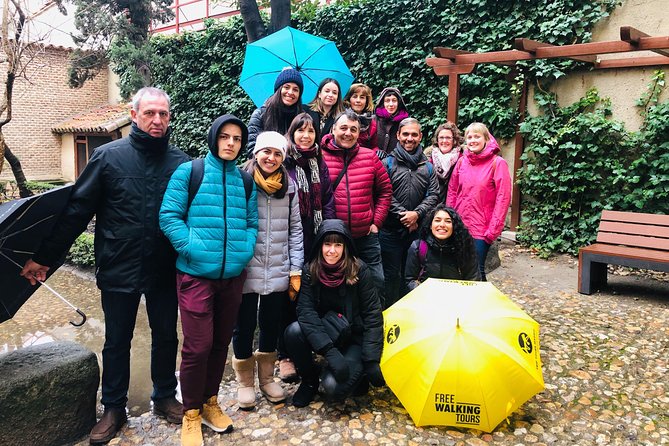
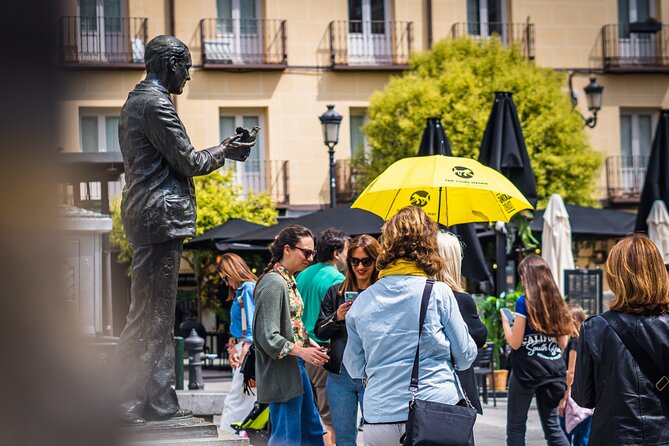
Then you reach Plaza de Santa Ana, the heart of a more bohemian stretch of Madrid. Here, the tour slows enough to focus on two things: stories connected to the statues and the Corral de Comedias.
This is where the tour starts feeling like Madrid as an entertainment capital, not just a place where writers lived. The Corral de Comedias idea matters because it connects literature to performance—plays weren’t silent page-turning. They were staged, loud, social events. Understanding that makes later author stories hit differently.
If you enjoy theatre history, this plaza stop is one of the best “bridge moments” on the walk, because it links authors to how people actually consumed their work.
Iglesia de San Sebastián: a historic monument stop that earns its place
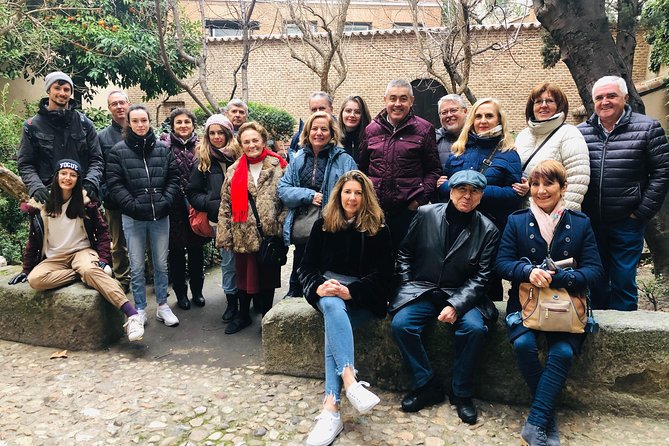
The walk continues to Iglesia de San Sebastián, described as a National Artistic Historic Monument of Spain. This stop is only 15 minutes, but it’s the kind of placement that makes sense: you get a structured cultural “anchor” before the tour moves back into streets and writer-linked corners.
A church like this is often easy to pass without noticing. A guided stop changes that. You’re not just looking at architecture—you’re hearing why the building matters, and how it fits into the area’s identity.
Consideration: if you prefer larger indoor museum time, this is still a brief stop. The value is in the explanation, not in a long visit.
Calle de las Huertas: the street of letters and character stories

Calle de las Huertas is one of the tour’s more narrative sections, with about 20 minutes allocated here. The guide walks you through the street and its connection to major figures of the Golden Age—basically, the neighborhood’s literary “mail route,” but in stories instead of paper.
I like this stretch because it helps you connect a street name to meaning. When you understand why a street is associated with writers and what kinds of lives they lived, you stop viewing the neighborhood like a postcard and start viewing it like a living scene.
If you’re traveling with a mix of people—one who reads about Madrid and one who just wants to feel the atmosphere—this is a good stop to catch both groups. The street feels fun to walk, and the guide’s stories give it purpose.
The convent stop: where Cervantes rests forever (and admission is included)
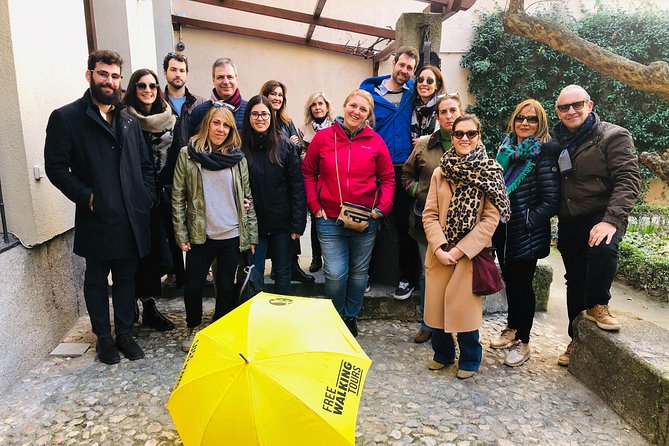
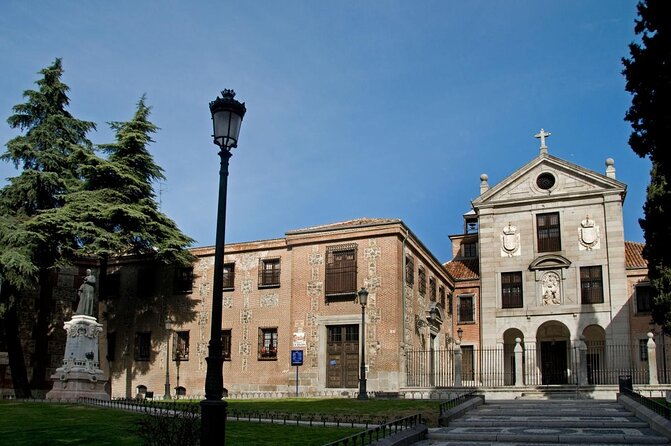
After the letters street, you reach Convento de las Trinitarias Descalzas de San Ildefonso, where the tour highlights the fact that Miguel de Cervantes rests forever. This is a key emotional and historical point on the route, and it comes with admission included, so you’re not guessing about what’s covered.
This is also the moment where the tour becomes more than literary fun. It’s a human stop—Cervantes as a real person with a final place. Even if you’ve only read a little, you’ll likely feel the weight of the connection.
What’s great here is that the tour gives you just enough time to slow down and focus without dragging. For a 2.5-hour walk, that balance is hard to beat.
Practical tip: if you have limited stamina, this is where you’ll want to give yourself a few extra moments to settle in. It’s a calmer contrast to the earlier street-hopping.
Calle de Quevedo: the rivalry that shaped the vibe
Next is Calle de Quevedo, a street you shouldn’t ignore. The guide explains what happened between rivals Francisco de Quevedo and Luis de Góngora—one of those classic literary rivalries that still sparks curiosity today.
This stop is short, but rivalry is a powerful teaching tool. It shows you that the Golden Age wasn’t only about achievement. It was also about competition, ego, style, and different approaches to art and language. When you understand that, later references you may hear around Madrid start making more sense.
If you like gossip—academic gossip, but still—you’ll probably enjoy this one.
Casa Museo Lope de Vega: the Phoenix of the Wits finale
You finish at Casa Museo Lope de Vega, also known as the House of the Phoenix of the Wits. The tour ends with about 15 minutes here, with the guide tying together the story of Lope de Vega and what made him such a central figure.
I like tour endings that feel like a payoff, not a “thank you for coming.” This one aims to do that by closing on one of the most recognizable names tied directly to the neighborhood’s identity. You also end at a logical place for further exploration: if you want more, you’re already at the museum doorstep.
One more practical note: because you end at Lope de Vega’s House Museum, you can plan your next step after the tour. It’s easier to keep momentum when the finale is at a destination rather than backtracking.
Price and timing: what $3.47 per group really buys you
The price is listed as $3.47 per group (up to 6), and the tour is about 2 hours 30 minutes. That structure changes the value equation. Instead of paying a per-person rate, you’re effectively buying a guided experience where the cost per head drops if you’re traveling with others.
You also get a mobile ticket, a small-group cap (maximum 20 travelers), and a route packed with multiple stops. Most of the walking segments are listed as free admissions at the stop level, with one included admission at the convent. For a short, focused time window, that’s a fair trade.
About scheduling: this tour is often booked around 23 days in advance on average. That suggests it’s not something you should wait until the last week to plan if your dates are tight.
Should you go if you’re solo? Yes, but if you’re traveling with friends or family, you’ll likely feel the value even more.
Group size, pace, and how to get the most in 2.5 hours
With up to 20 travelers, you’re unlikely to feel lost in the crowd. It’s still a walking experience, so you’ll want to keep your energy steady.
Here’s how to make it smooth:
- Bring water, but keep snack expectations realistic: snacks aren’t included.
- Have your mobile ticket ready so you’re not slowing the group.
- Wear shoes that handle cobblestones comfortably, because you’ll be on the move most of the time.
- If something catches your interest—like a trampantojo, a theatre reference, or a writer rivalry—ask about it. This tour’s style benefits from that back-and-forth.
Also, the start is 11:00 am, and the meeting point is in the Centro area near Puerta del Sol. You’ll save time by planning for a quick arrival and a calm handoff to the guide.
A quick reality check: who this tour fits best
This is a strong choice if you want a guided walk where the city’s literary identity becomes clear fast. It’s especially good for:
- People who know the big names and want the places behind them
- Anyone interested in theatre culture and the Golden Age’s public life
- Travelers who like story-driven stops more than long museum time
It’s less ideal if you’re looking for a slow, museum-heavy day or you don’t enjoy literary framing. Most stops are short, so you’ll be learning in motion.
Should you book Barrio de las Letras: Spanish Golden Age?
If you want Madrid to feel like a story you can walk through, I think you should book it. The combination of writer-linked streets, theatre connections in Plaza de Santa Ana, the Cervantes convent stop with included admission, and the Lope de Vega museum finale creates a clean arc in just 2 hours 30 minutes.
The best reason to choose it is the guide quality. The name Marivic comes up in feedback for keeping attention high and explaining the barrio with solid knowledge. That kind of guiding makes a difference when you’re learning on the move.
If you’re flexible, take comfort in the fact that cancellation is free up to 24 hours in advance. And if you’re traveling in a group of up to six, the per-group pricing is unusually friendly.
FAQ
Where does the tour start and end?
It starts at Trip Tours Madrid near Puerta del Sol, Centro, 28013 Madrid, Spain. It ends at Lope de Vega’s House-Museum on Calle de Cervantes, 11, Centro, 28014 Madrid, Spain.
What time does the tour begin?
The start time listed is 11:00 am.
How long is the tour?
The duration is approximately 2 hours 30 minutes.
How much does the tour cost?
The price is $3.47 per group, for groups of up to 6.
What kind of ticket do I get?
You receive a mobile ticket.
Is admission included anywhere?
The Convento de las Trinitarias Descalzas de San Ildefonso stop includes admission. Other listed stops show free admission at the stop level.
Do I need to bring snacks?
Snacks are not included.
How big is the group?
This activity has a maximum of 20 travelers.
Is this tour near public transportation?
Yes, it is near public transportation.
What’s the cancellation policy?
You can cancel for a full refund up to 24 hours in advance of the experience start time. If you cancel less than 24 hours before, the amount paid is not refunded.
More Tours in Madrid
- Madrid: Tour Bernabéu Entry Ticket
★ 4.5 · 21,573 reviews - Madrid: Panoramic Route City Tour
★ 4.1 · 12,259 reviews - Avila & Segovia Tour with Tickets to Monuments from Madrid
★ 5.0 · 9,762 reviews - Madrid: Royal Palace Expert Guided Tour with Skip-the-Line
★ 4.7 · 8,407 reviews - Madrid: Segovia and Toledo Tour, Alcazar, and Cathedral
★ 4.7 · 7,797 reviews - Toledo Tour from Madrid: Cathedral, Synagogue & St. Tome’s Church
★ 5.0 · 6,784 reviews
More Tour Reviews in Madrid
- Madrid: Tour Bernabéu Entry Ticket
★ 4.5 · 21,573 reviews - Madrid: Prado Museum Entry Ticket
★ 4.6 · 20,699 reviews - Madrid: “Emociones” Live Flamenco Performance
★ 4.8 · 12,866 reviews - Madrid: Panoramic Route City Tour
★ 4.1 · 12,259 reviews - Madrid: Live Flamenco Show with Food and Drinks Options
★ 4.5 · 9,901 reviews - Avila & Segovia Tour with Tickets to Monuments from Madrid
★ 5.0 · 9,762 reviews
Just Added: New Madrid Tour Reviews




Tours, compared.
 ★ 4.5Tour Bernabéu Entry TicketFrom $4121,573 reviews
 ★ 4.1Panoramic Route City TourFrom $3912,259 reviews
 ★ 5.0Avila & Segovia Tour with Tickets to Monuments from MadridFrom $819,762 reviews
 ★ 4.7Segovia and Toledo Tour, Alcazar, and CathedralFrom $487,797 reviews
 ★ 5.0Toledo Tour from Madrid: Cathedral, Synagogue & St. Tome’s ChurchFrom $816,784 reviews
 ★ 4.6Toledo & Segovia Tour w/ Cathedral, Alcazar & LunchFrom $465,846 reviews
 ★ 4.5Toledo Half or Full Day Tour with Optional Lunch from MadridFrom $645,807 reviews
 ★ 4.5Toledo & Segovia Tour with Cathedral and Alcazar Tickets & LunchFrom $454,046 reviews