
REVIEW · TOURS
Secrets of Madrid Small Group Tour
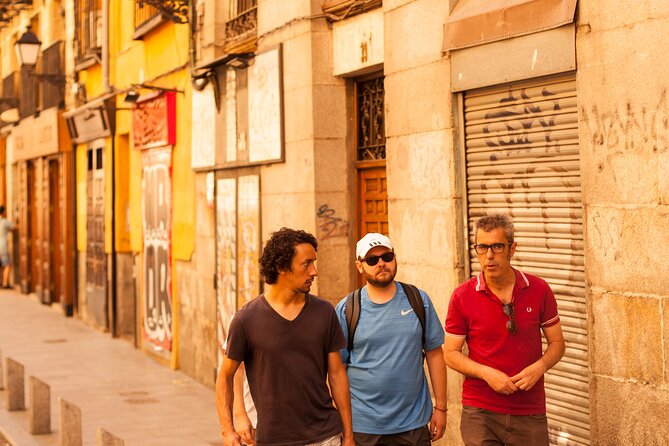
Madrid’s secrets are built into every corner. This 2.5-hour walk weaves major royal sights with quieter, almost forgotten pockets of old Madrid—think medieval lanes, convent courtyards, and Baroque church drama—all in one tight route with English narration.
I especially love two things. First, the pacing and storytelling from guide Juan, who blends clear context with humor and ends with a recap using a stone-style map to help everything stick. Second, you get a rare mix: you’ll see the city’s architecture shifts (Mudéjar, Plateresque, Habsburg, Baroque) without it turning into a school lecture.
One drawback to plan around: there’s a lot of walking (and some stairs), and the Royal Palace stop does not include palace entry—so if you want inside access, you’ll need to buy that separately.
In This Review
- Key highlights you’ll feel on the walk
- Price and timing: what $32.53 really buys you
- Start at Plaza de Puerta Cerrada and set your bearings
- Plaza de la Villa and Calle de Codo: medieval Madrid in two breaths
- Corpus Christi convent access and the galletas ritual
- San Miguel and Plaza de la Cruz Verde: Baroque drama meets fear’s aftermath
- Casa a la Malicia and San Pedro El Viejo: small rebellions and mudéjar traces
- Jardin del Principe de Anglona and Las Vistillas: shade, jasmine, and sky views
- Calle de los Mancebos, Palacio de Consejos, and the empire in plain sight
- Almudena’s late-20th-century façade and the Royal Palace moment from the hill
- Philip IV in bronze and the finish at Plaza de Isabel II
- What kind of traveler should book this?
- Should you book Secrets of Madrid Small Group Tour?
- FAQ
- How long is the Secrets of Madrid Small Group Tour?
- What language is the tour offered in?
- What is the group size limit?
- Where does the tour start, and when?
- Is the Royal Palace ticket included?
- Are the other stops free to enter?
- Do I need to print anything?
- What happens if the weather is bad?
- Is there free cancellation?
Key highlights you’ll feel on the walk
- Small group size (max 10) keeps questions easy and the pace comfortable
- English narration with mobile tickets for simple check-in
- Convent access moments like Corpus Christi biscuits sold through a revolving window
- Architecture spotting game across Mudéjar, Plateresque, Habsburg, and Baroque Madrid
- Break points for shade, drinks, and facilities so you don’t feel rushed
- A fast orientation to old Madrid before you go explore on your own
Still deciding? Here are other Madrid tours to weigh up first.
- Madrid: Tour Bernabéu Entry Ticket★ 4.5 · 21,573 reviews
- Madrid: Prado Museum Entry Ticket★ 4.6 · 20,699 reviews
- Madrid: “Emociones” Live Flamenco Performance★ 4.8 · 12,866 reviews
- Madrid: Panoramic Route City Tour★ 4.1 · 12,259 reviews
Price and timing: what $32.53 really buys you
At $32.53 per person for about 2 hours 30 minutes, this tour is built for value: you’re paying for a guided route through a concentrated slice of central Madrid, with all fees and taxes included. Most stops are free to see, and the walking route is designed to hit both famous anchors and lesser-known corners you’d likely miss if you’re wandering independently.
It also helps that this tour is typically booked ahead (on average about 43 days in advance). That’s usually a sign of steady demand for a small-group walk that doesn’t require special tickets for most of the route.
Bottom line: if you want fast context, a tight path, and access to quiet places, this price makes sense. If you’re only interested in one big interior attraction, you’ll probably feel less satisfied, since the Royal Palace entry is not included.
Start at Plaza de Puerta Cerrada and set your bearings
The tour meets at Plaza de Puerta Cerrada (Centro, Madrid) at 10:30 am, and it ends back at the same meeting point. That out-and-back logic is practical: you don’t need to worry about end-of-tour transit or how to get “somewhere else” for your next plan.
You’ll also be using a mobile ticket, which keeps everything simple at the start. And because the group is capped at 10 people, you’re more likely to get a real conversation than a one-way talk.
One more practical point: this is a walking itinerary with multiple close-together stops. I’d treat it like a mini workout—comfortable shoes matter, and staying hydrated is smart even if the day is mild.
Plaza de la Villa and Calle de Codo: medieval Madrid in two breaths
Your first stop, Plaza de la Villa, is one of Madrid’s oldest squares. Here, you can literally see layers of power and style in the stone façades—Mudéjar, Plateresque, and Habsburg influences that overlap like different eras refusing to move out. Look closely at the coat of arms of King Charles II carved into the stone; it’s a small detail, but it’s the kind of clue that helps the rest of the walk make sense.
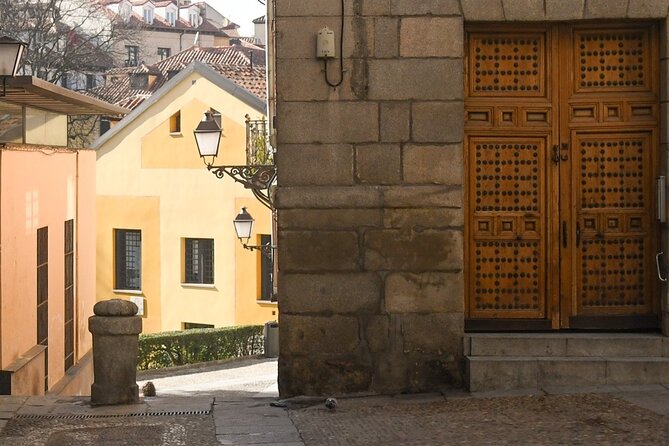
Then you move just a few steps to Calle de Codo, also called the Elbow Street. It’s one of Madrid’s narrowest lanes, with a sharp bend that still follows the medieval street line. This is the sort of place where the shape of the street matters: shadows pool on irregular stones, and you can feel why old Madrid was harder to navigate for outsiders—and easier to defend for insiders.
If you like history you can see, these first two stops do a good job getting your eyes working.
Corpus Christi convent access and the galletas ritual
Next comes a very different kind of Madrid: Monasterio del Corpus Christi. You’ll find it behind an unmarked door, and inside is a 17th-century convent atmosphere that still feels closer to routines than to tourism. The story centers on the cloistered nuns—people outside rarely see them, and that seclusion is part of what makes the visit feel real.
A standout moment is the convent’s biscuit ritual. The nuns bake traditional biscuits known as galletas de las Carboneras, and they sell them through a small revolving window. It’s a simple mechanism, but it creates a quiet bridge between present-day Madrid and daily life that’s been protected for centuries.
This is also one of the best parts of the tour for anyone who wants Madrid beyond the big postcard scenes. You’re not just looking; you’re learning how daily rhythm shaped the city.



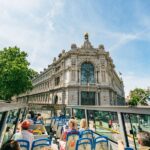

San Miguel and Plaza de la Cruz Verde: Baroque drama meets fear’s aftermath
After the convent quiet, the tour throws you back into public spectacle at Basilica de San Miguel. Rising unexpectedly among narrow streets, this 18th-century church brings Baroque energy to old Madrid. The curved façade and dramatic proportions were designed to feel like faith in motion—faith presented as a public statement, not just a private one.
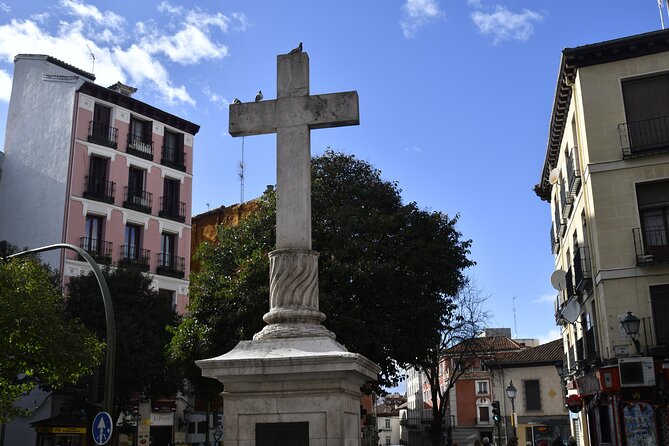
Then you’ll head to Plaza de la Cruz Verde, where the tone shifts again. In medieval Madrid, this square was linked to public executions carried out by the Inquisition before later moving the ritual to Plaza Mayor. The green cross associated with the square connects to that emblem used in solemn processions.
Today, you’re looking at a calmer place. That contrast is part of the lesson: Madrid doesn’t wipe history away; it coats it in new routines. It’s worth keeping that in mind as you walk—this route doesn’t treat every stop as a simple photo op.
Casa a la Malicia and San Pedro El Viejo: small rebellions and mudéjar traces
One of the more clever stories on the walk is tied to Casa a la Malicia (introduced near the Calle de Rollo Fountain). In the 16th century, King Philip II ordered a census to tax new houses. Locals didn’t want to pay, so they built houses that looked unfinished from the outside—an act of civic irony designed to confuse inspectors.
It’s the kind of tale that helps you understand Madrid’s humor and resistance. The city learned to survive bureaucracy with a wink, and you can see that mindset echoed in other street-level stories along the route.
You’ll also visit Iglesia de San Pedro El Viejo, dating from the 14th century and described as the second-oldest building in Madrid. The focus here is the mudéjar influence—Christian in purpose with Islamic-influenced brickwork and design details. Even though the church is modest compared to bigger landmarks, it’s memorable because it shows how cultures overlapped without always blending neatly.
Jardin del Principe de Anglona and Las Vistillas: shade, jasmine, and sky views
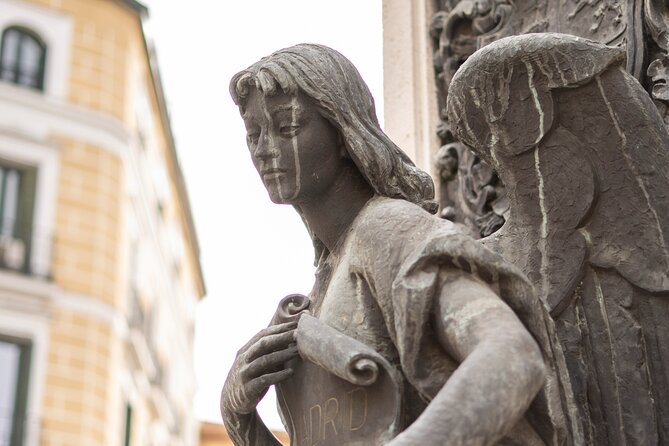
Not every stop is meant to be loud. Jardin del Principe de Anglona is hidden behind high brick walls and gives you a Romantic-era pause. Expect a garden feeling built around symmetry, shaded benches, and the kind of calm that inspired poets and lovers. Jasmine is mentioned as part of the sensory atmosphere, which makes this section feel like a real reset for your senses.
Then the walk opens up at Jardines de Las Vistillas. This terrace gives you one of the city’s classic views—toward the Manzanares River and in the direction of distant mountains. After narrow streets and long stone corridors, this “air and light” moment matters. It helps you mentally stitch the route together and gives you a natural break before you move back into denser old-town scenes.
If you tend to lose momentum on city walks, plan to enjoy these two garden segments as your energy checkpoint.
Calle de los Mancebos, Palacio de Consejos, and the empire in plain sight
As the tour moves toward the political heart of old Madrid, it keeps throwing stories at you that connect street-level life to empire-level decisions.
At Plaza De La Paja, you’ll see the Vargas Palace. The Vargas family were powerful early feudal lords of Madrid before it became a royal capital, and they played roles connected to the conquest and administration of the Americas. There’s also a tradition tying San Isidro—Madrid’s patron saint—to work connected with humble service here, which creates a strong contrast: saintly simplicity next to elite power.
Then you reach Calle de Madrid, also known as the calle de los mancebos. This narrow street ties to a tragic, partly unresolved legend about two youths accused of killing a prince who died in 1217. You don’t have to know the story beforehand; the tour helps you understand why Madrid loves mixing legend and stone.
Finally, Calle Mayor brings you to the Palacio de Consejos. The architecture here reflects the Counter-Reformation idea that faith and governance should be disciplined and sober. It’s a Habsburg-style look: brick walls and slate spires rather than flashy decoration. The point isn’t just the building—it’s the role the Royal Councils played in administering the empire, with religion and governance sharing the same physical space.
Almudena’s late-20th-century façade and the Royal Palace moment from the hill
At Museo de la Catedral de la Almudena, you’ll get a quick lesson in how buildings can fake continuity on purpose. The cathedral may look old, but it was completed in the late 20th century. The façade is neo-Habsburg, designed during the Franco era to imitate 17th-century architecture so the city feels like it’s preserving a historical thread.
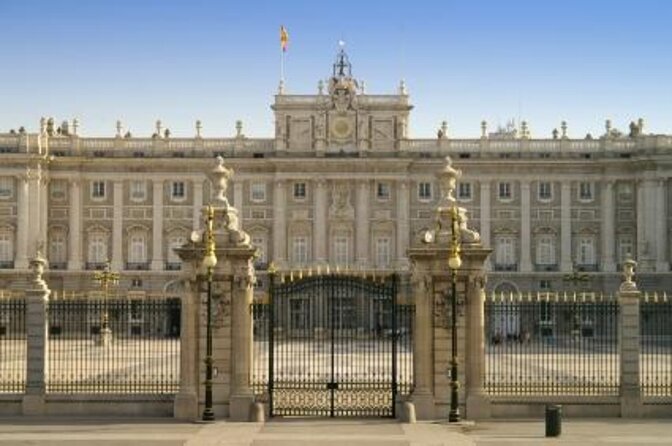
Then comes the big visual payoff at Royal Palace of Madrid. From this small hill, you see the palace’s mass and symmetry clearly—white stone rising above the valley of the Manzanares. The Bourbons built this palace in the 18th century as a replacement for the old Alcázar of the Habsburgs, which burned down in 1734.
A note on expectations: the tour includes the exterior experience and the view, but Royal Palace admission is not included. If you only want a quick look, you’ll be fine. If you care about rooms, collections, or interiors, budget extra time and money for the separate ticket.
Philip IV in bronze and the finish at Plaza de Isabel II
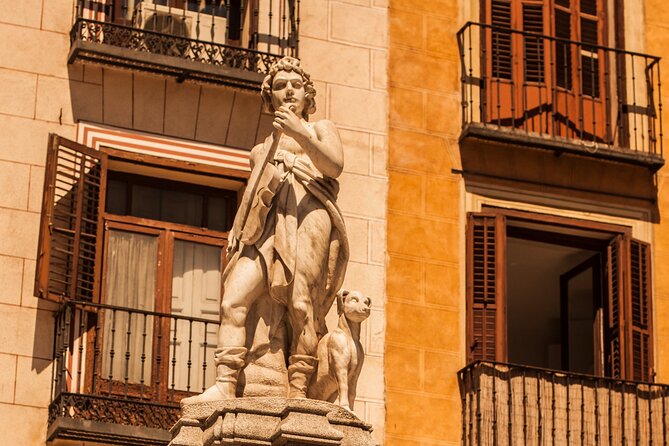
You’ll end with high-impact royal imagery. In Plaza de Oriente, the Monumento a Filippo IV centers the statue of King Philip IV, described as a major artistic achievement cast in bronze in the 17th century. It’s famous for being the first equestrian statue in the world balanced on rear legs—a technical feat credited to Galileo’s calculations. Even if you’re not a math person, it’s the kind of detail that makes the statue feel alive rather than decorative.
Then the walk ends at Plaza de Isabel II, between the Royal Theatre area and the busy streets of modern Madrid. The guide brings it together by tying the medieval lanes to royal grandeur, and by connecting faith, power, and day-to-day life into one story you can carry after you leave.
What kind of traveler should book this?
This is a great pick if you:
- want a guided walk through old Madrid with both major and overlooked stops
- like architecture details you can spot on your own later
- enjoy stories with humor and clear context, not just dates on a timeline
- prefer a small group where you can ask questions
It may feel less ideal if you:
- only want a single big-ticket interior attraction (since Royal Palace entry isn’t included)
- dislike walking a lot on uneven old-street surfaces
If you’re doing Madrid for the first time, I’d see this as your orientation walk. It gives you a mental map of how different eras built over each other.
Should you book Secrets of Madrid Small Group Tour?
Yes—if you want a smart, compact way to understand Madrid’s layers, this tour is worth it. For the price, you get a guided route, English narration, a max of 10 people, and lots of stop types: squares, churches, convent spaces, and garden pauses.
Just go in with the right mindset: wear comfortable shoes, expect real walking, and treat the Royal Palace as a strong viewing stop rather than an included interior tour. If that fits what you want, you’ll come away with Madrid that feels less like a list of sights and more like a living story you can actually follow.
FAQ
How long is the Secrets of Madrid Small Group Tour?
It runs for about 2 hours 30 minutes.
What language is the tour offered in?
The tour is offered in English.
What is the group size limit?
The maximum group size is 10 travelers.
Where does the tour start, and when?
It starts at Plaza de Puerta Cerrada at 10:30 am and ends back at the same meeting point.
Is the Royal Palace ticket included?
No. Admission to the Royal Palace is not included.
Are the other stops free to enter?
The stops listed have admission ticket free noted for the visits included on the walk.
Do I need to print anything?
No. The tour uses a mobile ticket.
What happens if the weather is bad?
The tour requires good weather. If it’s canceled due to poor weather, you’ll be offered a different date or a full refund.
Is there free cancellation?
Yes. You can cancel up to 24 hours in advance for a full refund. If you cancel less than 24 hours before the start time, the amount paid is not refunded.
More Tours in Madrid
- Madrid: Tour Bernabéu Entry Ticket
★ 4.5 · 21,573 reviews - Madrid: Panoramic Route City Tour
★ 4.1 · 12,259 reviews - Avila & Segovia Tour with Tickets to Monuments from Madrid
★ 5.0 · 9,762 reviews - Madrid: Royal Palace Expert Guided Tour with Skip-the-Line
★ 4.7 · 8,407 reviews - Madrid: Segovia and Toledo Tour, Alcazar, and Cathedral
★ 4.7 · 7,797 reviews - Toledo Tour from Madrid: Cathedral, Synagogue & St. Tome’s Church
★ 5.0 · 6,784 reviews
More Tour Reviews in Madrid
- Madrid: Tour Bernabéu Entry Ticket
★ 4.5 · 21,573 reviews - Madrid: Prado Museum Entry Ticket
★ 4.6 · 20,699 reviews - Madrid: “Emociones” Live Flamenco Performance
★ 4.8 · 12,866 reviews - Madrid: Panoramic Route City Tour
★ 4.1 · 12,259 reviews - Madrid: Live Flamenco Show with Food and Drinks Options
★ 4.5 · 9,901 reviews - Avila & Segovia Tour with Tickets to Monuments from Madrid
★ 5.0 · 9,762 reviews
Just Added: New Madrid Tour Reviews



Tours, compared.
 ★ 4.5Tour Bernabéu Entry TicketFrom $4121,573 reviews
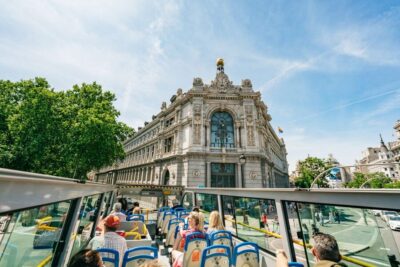 ★ 4.1Panoramic Route City TourFrom $3912,259 reviews
 ★ 5.0Avila & Segovia Tour with Tickets to Monuments from MadridFrom $819,762 reviews
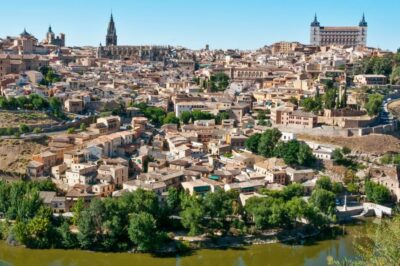 ★ 4.7Segovia and Toledo Tour, Alcazar, and CathedralFrom $487,797 reviews
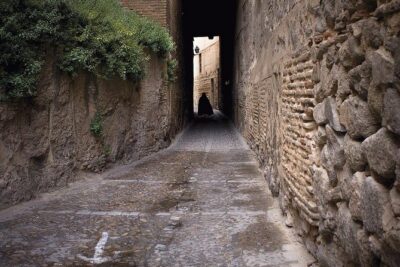 ★ 5.0Toledo Tour from Madrid: Cathedral, Synagogue & St. Tome’s ChurchFrom $816,784 reviews
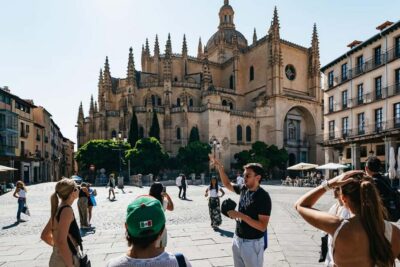 ★ 4.6Toledo & Segovia Tour w/ Cathedral, Alcazar & LunchFrom $465,846 reviews
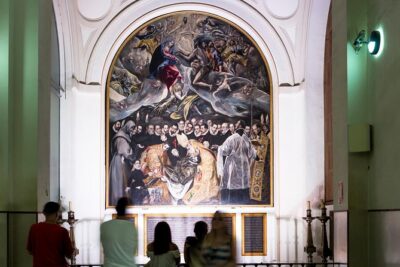 ★ 4.5Toledo Half or Full Day Tour with Optional Lunch from MadridFrom $645,807 reviews
 ★ 4.5Toledo & Segovia Tour with Cathedral and Alcazar Tickets & LunchFrom $454,046 reviews