
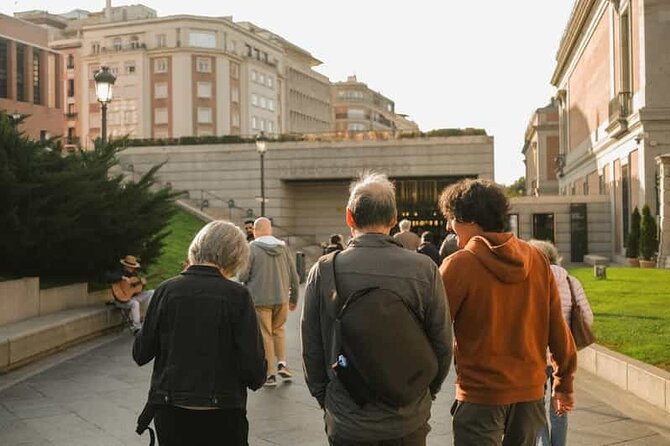
REVIEW · PRADO MUSEUM TOURS
Prado walking Tour with an Art Lover
Art at the Prado can feel like a maze at first. This 2.5-hour, small-group visit turns it into a clear timeline, with skip-the-line tickets and a maximum of seven people. I love that it stays beginner-friendly while still giving real insight into how Spanish painting evolved. One thing to consider: you’re focused on the main highlights, so if you want total freedom to wander room-by-room, this isn’t that kind of visit.
You’ll meet at the Monument to Goya and spend the tour moving through the museum with Joaquín, a certified guide, tracing art from the 15th through the 19th century. I also like the practical extras: a PDF of recommendations after the tour and a list of places to eat near the museum. A possible drawback is that the group ends inside the Prado on the southernmost side, so if you’re hoping to leave immediately at the main entrance, plan a short walk.
The payoff is simple: you get your bearings fast, learn what to look for, and leave knowing which painters and ideas matter most.
In This Review
- Key things that make this Prado tour work
- First stop: why meeting at Goya matters
- Skip-the-line Prado entry: time you actually feel
- Inside the Prado: a 2.5-hour route with a clear art timeline
- The painters you’ll hear about: Bosch through Goya
- Why the small-group pace feels different
- Learning techniques, not just names
- Where the tour ends inside the museum (and why that can help)
- The PDF and food list: how to keep the momentum going
- Price and value: what $76.89 buys you
- Who this Prado walking tour is perfect for
- Should you book this Prado Art Lover tour?
- FAQ
- How long is the Prado walking tour?
- Where does the tour start?
- Where does the tour end?
- Is museum admission included?
- Is the tour offered in English?
- How big is the group?
- Can I cancel for a full refund?
Key things that make this Prado tour work
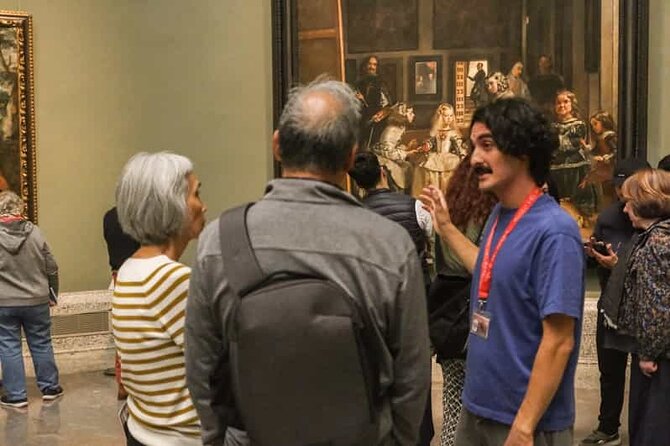
- Up to seven people keeps questions from getting lost and pacing from dragging
- Skip-the-line museum entry saves time so you spend it on art, not queues
- A 15th–19th century art storyline gives you a framework instead of random facts
- Joaquín guides you through the big names like Bosch, Raphael, Titian, Velázquez, and Goya
- A take-home PDF helps you continue after the tour, when your curiosity is highest
- End location inside the museum can be handy if you want to keep exploring right away
Still on Velazquez and Goya? A few more Prado visits
- Madrid: Prado Museum Entry Ticket★ 4.6 · 20,699 reviews
- Madrid: Small Group of Prado Museum Tour & Optional Tapas★ 4.6 · 2,437 reviews
- Madrid: Prado Museum Guided Tour with Skip-the-Line Ticket★ 4.5 · 2,018 reviews
- Madrid: Prado Museum Guided Tour With Fast Access★ 4.8 · 1,785 reviews
First stop: why meeting at Goya matters
Your tour starts at the Monument to Goya (C. de Felipe IV, s/n, Retiro). That’s not just a convenient landmark. It sets the tone. You’re walking in with a clear theme—Goya—and that helps the Prado make more sense once you’re inside.
Also, this start point is in the Retiro area and is near public transportation. That matters because the Prado can be a timing headache on busy days. Getting to the meeting spot without stress is a big deal when your whole experience is only about 2 hours 30 minutes.
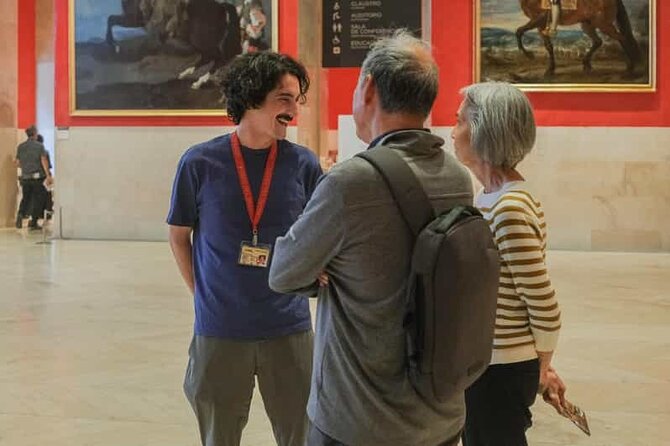
The guide is Joaquín (Joaquín Guide Madrid), and the small-group format is central to how the tour feels. With a maximum of seven travelers, the experience doesn’t turn into a lecture where you only hear half the time. It’s the kind of setup where you can ask a question and actually get an answer that fits what you’re looking at.
Skip-the-line Prado entry: time you actually feel
One of the best parts is the skip-the-line tickets. The Prado is popular, and lines can eat into your day. Here, that time gets repurposed into looking carefully at paintings instead of standing still and scrolling your phone.
This tour also includes admission, so you’re not juggling additional costs or figuring out ticket types mid-trip. That’s real value if you’re trying to keep Madrid simple: pay once, show your mobile ticket, and go.
In a museum, time isn’t just about minutes—it’s about attention. If you arrive already tired from waiting, you miss details. Skip-the-line entry helps you start the experience in a better mood, ready to see more.
Inside the Prado: a 2.5-hour route with a clear art timeline
The heart of this experience is the museum walkthrough, built around the evolution of art from the 15th to the 19th century. The guide connects the dots between eras so the Prado doesn’t feel like disconnected rooms.
Instead of treating paintings as isolated masterpieces, you’ll learn how ideas and styles change over time—what artists adopted, what they reacted against, and how Spanish art developed into something unmistakable. That timeline approach is what makes the tour useful even if you’re brand-new to museum visits.
Expect the guide to point out stories and artistic techniques as you move. That matters because the Prado can be intimidating if you don’t know what you’re looking for. With a framework in place, even casual looking turns into meaningful looking.
The painters you’ll hear about: Bosch through Goya
This is a Prado tour for art lovers, but it’s not only for art experts. It’s built around big names, and those names act like signposts.
You’ll cover key painters including Bosch, Raphael, Titian, Velázquez, and Goya. The guide ties them into the broader evolution of art, so you understand why each painter matters and how their influence shows up in later generations.
Here’s why that lineup is powerful for first-timers:
- Bosch helps you see how creativity and imagination can become a whole visual language.
- Raphael and Titian bring a sense of the European art atmosphere that shaped how Spanish painting developed.
- Velázquez is the kind of artist you can spend a long time with, because his approach feels both precise and human.
- Goya often lands with modern viewers fast, because his work can feel direct and emotionally sharp.
You won’t just get a list of artists. You’ll get a sense of what changed across centuries: what counted as effective painting, how artists organized scenes, and what techniques helped them express ideas.
The centre on foot, other ways round





Why the small-group pace feels different
Up to seven travelers is a major quality factor here. In big-group museum tours, you often end up watching from the side because everyone is funneling toward the same spot. With a smaller group, the rhythm is easier to manage.
I like that the tour is described as engaging and approachable for all levels. That usually means the guide isn’t assuming you already know terms and techniques. You get explanations without turning it into a textbook.
The pace matters too. When the timing is around 2.5 hours, you want a guide who knows how long to stay at key moments and when to keep moving. The best sign is how focused the experience feels—like you leave with answers in your head, not just impressions in your camera roll.
A practical bonus: if you’re visiting with kids or teens, this format can work better than a long, one-speed adult tour. The guide can adapt to what you care about, and you’re not stuck letting everyone check out mentally.
Learning techniques, not just names
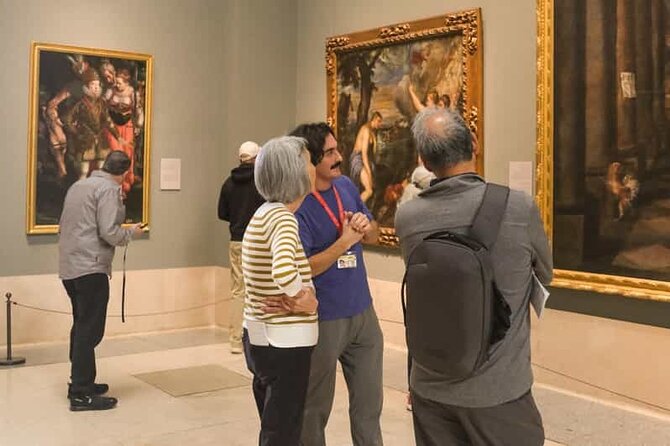
Paintings can look like art school homework if you don’t know what to notice. This tour’s emphasis on Spanish history, artistic techniques, and stories behind the masterpieces helps you look differently once you’re standing in front of the canvas.
You’re not only learning who painted what. You’re learning how painting communicates:
- What artists emphasize and what they leave quiet
- How composition can guide your eyes
- How style shifts from one century to the next
- How storytelling shows up in visual details
That kind of instruction is exactly what makes a museum visit more valuable over time. When you walk out, you don’t just remember a few famous faces. You start recognizing patterns—eras, influences, and artistic choices.
Where the tour ends inside the museum (and why that can help)
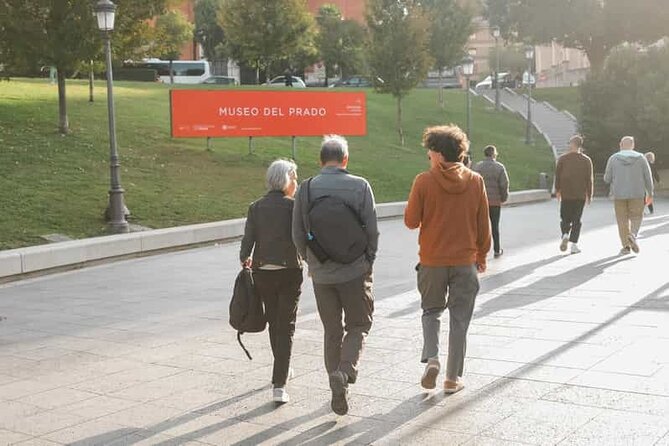
The tour ends inside the Prado on its southernmost side, at Pl. Murillo, 1, Retiro, 28014 Madrid, Spain. That’s useful if you plan to keep exploring right after the guided part.
And there’s a helpful note: the guide can take you back to the main entrance if you need it. That’s a small thing, but it removes a common anxiety. If you end up turned around, you’re not stuck figuring it out alone.
If you’re planning dinner, this ending location can be convenient because it keeps you near the area where you can transition from museum mode to food mode.
The PDF and food list: how to keep the momentum going
One of my favorite parts of this kind of tour is what happens after. This one includes:
- A PDF with recommendations to continue your visit after the tour
- A list of recommended places to eat near the museum
Even if you’re not a heavy planner, a short list like that saves energy. You don’t have to guess what’s nearby or waste time looking for reviews on the spot.
Use it like this: once you’re walking around post-tour, that PDF gives you targets. You can go back to the artworks that stayed in your mind and spend time where your interest is already awake.
If you’re tired at the end of the day, the nearby eating list helps too. Madrid is full of good options, but you want dinner when you’re ready, not when you’re still searching.
Price and value: what $76.89 buys you
At $76.89 per person, this tour is priced for the “guided, timed, skip-the-line, small group” experience. And that’s the key: the admission ticket is included, plus the skip-the-line setup.
So you’re paying for three things that are hard to replicate on your own:
- A certified guide (Joaquín) who knows how to explain what matters
- A structured route through the museum’s big eras
- Time savings through the skip-the-line tickets
If you’ve ever done the Prado solo and realized you spent most of your day deciding where to go, the value becomes clearer. This tour helps you prioritize. You’re not just buying entry—you’re buying direction.
The small group size is also part of the value. Paying a bit more for a maximum of seven people can feel like a bargain if you care about questions, pace, and actually hearing your guide.
Who this Prado walking tour is perfect for
This experience fits best if you want a guided Prado that doesn’t talk down to you.
You’ll especially like it if:
- You’re visiting the Prado for the first time and want a mental map
- You love art but need help connecting eras and influences
- You’re traveling with people who have different art comfort levels
- You want a tour that works at a real-life museum pace, not an all-day marathon
If you’re the type who wants to linger for hours at a single painting or wander freely without structure, you might find the guided route feels a bit tighter. The tour is designed to highlight must-sees and key ideas, not to provide unlimited room-by-room freedom.
Should you book this Prado Art Lover tour?
I’d book it if you want the Prado to click fast. The combination of skip-the-line entry, a small group (up to seven), and Joaquín’s guided storyline from the 15th to the 19th centuries is a smart way to get more from limited time in Madrid.
Book it especially if you’re unsure where to start. This tour gives you a framework, points you toward the major painters like Bosch, Raphael, Titian, Velázquez, and Goya, and ends with a PDF so you can keep learning at your own speed.
If you hate structure and want total wandering freedom, consider a self-guided plan instead. But if you want art understanding—not just art photos—this is a strong choice.
FAQ
How long is the Prado walking tour?
The tour lasts about 2 hours 30 minutes.
Where does the tour start?
It starts at the Monument to Goya, C. de Felipe IV, s/n, Retiro, 28014 Madrid, Spain.
Where does the tour end?
It ends inside the museum on its southernmost side at Pl. Murillo, 1, Retiro, 28014 Madrid, Spain. The guide can take you back to the main entrance if you need.
Is museum admission included?
Yes. A Prado museum admission ticket is included.
Is the tour offered in English?
Yes, it is offered in English.
How big is the group?
The tour has a maximum of 7 travelers.
Can I cancel for a full refund?
Yes. You can cancel for a full refund up to 24 hours in advance of the experience start time.
If you tell me your travel dates and who you’re going with (adults only, teens, total first-timers), I can help you decide if the timing and group size will match your style.
More Tour Reviews in Madrid
- Madrid: Tour Bernabéu Entry Ticket
★ 4.5 · 21,573 reviews - Madrid: Prado Museum Entry Ticket
★ 4.6 · 20,699 reviews - Madrid: “Emociones” Live Flamenco Performance
★ 4.8 · 12,866 reviews - Madrid: Panoramic Route City Tour
★ 4.1 · 12,259 reviews - Madrid: Live Flamenco Show with Food and Drinks Options
★ 4.5 · 9,901 reviews - Avila & Segovia Tour with Tickets to Monuments from Madrid
★ 5.0 · 9,762 reviews
Walk the Heart of Madrid
- Madrid Tapas & Wine Tasting Walking Tour – Small Group Local Bars
★ 5.0 · 3,644 reviews - Madrid Welcome Tour with Local Guide in Eco Tuk Tuk Private
★ 5.0 · 2,936 reviews - Madrid Walking Tour from Puerta del Sol to Retiro Park
★ 5.0 · 2,285 reviews - Madrid Old Town & Royal Palace Walking Tour Skip the Line Ticket
★ 4.5 · 1,829 reviews - Madrid: Welcome to Madrid Guided Walking Tour
★ 4.9 · 1,738 reviews - Madrid: Spanish Inquisition and Legends Evening Walking Tour
★ 4.7 · 1,396 reviews
Inside the Prado: More to See
- Madrid: Prado Museum Entry Ticket
★ 4.6 · 20,699 reviews - Madrid: Small Group of Prado Museum Tour & Optional Tapas
★ 4.6 · 2,437 reviews - Madrid: Prado Museum Guided Tour with Skip-the-Line Ticket
★ 4.5 · 2,018 reviews - Madrid: Prado Museum Guided Tour With Fast Access
★ 4.8 · 1,785 reviews - Prado Museum Small Group Tour with Skip the Line Ticket
★ 5.0 · 1,738 reviews - Royal Palace & Prado Museum Skip the Line Guided Tour
★ 4.5 · 1,347 reviews
Just Added: New Madrid Tour Reviews





Prado Museum Tours, compared.
 ★ 4.6Prado Museum Entry TicketFrom $2120,699 reviews
 ★ 4.6Small Group of Prado Museum Tour & Optional TapasFrom $532,437 reviews
 ★ 4.5Prado Museum Guided Tour with Skip-the-Line TicketFrom $462,018 reviews
 ★ 4.8Prado Museum Guided Tour With Fast AccessFrom $281,785 reviews
 ★ 5.0Prado Museum Small Group Tour with Skip the Line TicketFrom $541,738 reviews
 ★ 4.5Royal Palace & Prado Museum Skip the Line Guided TourFrom $821,347 reviews
 ★ 3.6Prado Museum Ticket with In-App Audio GuideFrom $351,154 reviews
 ★ 4.5Prado Museum Guided Tour with Skip-the-Line TicketFrom $451,146 reviews
Browse the lists this tour appears in