
Madrid is best when you walk it. This 3-hour, max-6 tour strings together the Royal Palace area, Almudena Cathedral, and Plaza Mayor with clear stories that help you understand what you’re looking at.
What I like most is the tight group size (so you’re not lost in a crowd) and the way the route layers “old Madrid” street by street, ending with big-city views on Gran Vía. One possible drawback: it’s a solid walking loop through Old Madrid’s pedestrian zones, so you’ll want comfortable shoes and a pace that works for you.
In This Review
- Quick hits before you go
- The 3-hour plan that helps you get your bearings fast
- Starting at Plaza de España and Monumento a Cervantes
- Royal Palace and Plaza de Oriente: Madrid’s power center
- Teatro Real and Almudena Cathedral: architecture you can actually compare
- Calle Mayor and Plaza de la Villa: where old Madrid feels walkable
- Mercado de San Miguel: short taste time, not a full meal
- Plaza Mayor and Restaurante Botín: Madrid’s big public square energy
- Santa Cruz Palace, Sobrino de Botín, Puerta del Sol: Madrid’s center of gravity
- Gran Vía and the Bank of Spain: the modern skyline punch
- Cibeles Fountain finish: a landmark that also works as a turning point
- Price and value: is $23 a good deal for this route?
- Who this tour suits best
- Should you book it?
- FAQ
- How long is the Madrid walking tour?
- What is the group size limit?
- Where is the meeting point?
- Where does the tour end?
- What languages is the guide available in?
- Is the tour wheelchair accessible?
- What landmarks are included on the route?
- Are meals or drinks included?
- What should I bring?
Quick hits before you go
- Small group of up to 6: easier questions, more personal attention, and less waiting around.
- Meet by Monumento a Cervantes: your starting point is easy to find in the middle of the action.
- Old Madrid to Gran Vía in 3 hours: historic squares first, then the city’s main boulevard.
- Mercado de San Miguel stop: a short window to taste local snacks at your own pace.
- Finish at Fuente de Cibeles: a classic photo spot that also helps you move on to your next plan.
- Guide support in multiple languages: English, Spanish, Russian, and Turkish if needed.
The centre on foot, other ways round
- Madrid Tapas & Wine Tasting Walking Tour – Small Group Local Bars★ 5.0 · 3,644 reviews
- Madrid Welcome Tour with Local Guide in Eco Tuk Tuk Private★ 5.0 · 2,936 reviews
- Madrid Walking Tour from Puerta del Sol to Retiro Park★ 5.0 · 2,285 reviews
- Madrid Old Town & Royal Palace Walking Tour Skip the Line Ticket★ 4.5 · 1,829 reviews
The 3-hour plan that helps you get your bearings fast
This tour is built for the first-time Madrid visitor who wants more than postcards. In three hours, you cover key points across the city center: royal sites, major churches, historic streets, and the famous boulevard.
Because the group is capped at 6 people, the guide can slow down when you’re standing in front of something that matters—like the Royal Palace area or the squares where Madrid’s public life has played out for centuries. You’ll still walk, but you won’t feel like you’re sprinting with a headset tour.
You also get a practical benefit: the stops are placed so you can mentally map Madrid. After this, your “where am I?” questions turn into “oh, I remember that—Cibeles is just down the way.”
Starting at Plaza de España and Monumento a Cervantes
You meet by the Cervantes Monument in the center of Plaza de España. That’s a smart choice because the square acts like a launch pad into the central historic grid—less confusion, fewer detours.
One more detail to know: the tour can start from Plaza de España or Plaza de Cibeles, depending on how your group sets it up. Either way, the core experience stays the same: you’re moving through the city’s most recognized landmarks on foot.
Bring comfortable shoes. Not because it’s a brutal hike, but because you’ll spend time standing in open squares. And those squares don’t care if it’s sunny or chilly—Madrid weather can change your mood quickly.
Royal Palace and Plaza de Oriente: Madrid’s power center
The walking route leads you to the Royal Palace of Madrid area next. Even if you never plan to go inside, the exterior and surroundings teach you a lot. This is where you can see how Madrid presents itself: grand, symmetrical, and designed to signal authority.
Right after, you’re guided through Plaza de Oriente, a square wrapped by historic buildings and the kind of view you’ll want to slow down for. It’s the spot where you can connect the palace with the broader skyline and streets you’ll walk next.
If you’re the type who likes context more than trivia, you’ll appreciate this portion. You’re not just told what things are called—you get the “why” behind the layout and how royal Madrid shaped the city.
Teatro Real and Almudena Cathedral: architecture you can actually compare
From the palace zone, you move toward Teatro Real and then Almudena Cathedral. Teatro Real is part of Madrid’s cultural identity, and even a short stop helps you place the theater within the city’s central landscape.
Then you hit Almudena Cathedral, described in the itinerary as neo-Gothic. The value here isn’t only the look—it’s that your guide helps you notice what makes this cathedral feel different from other churches you might have seen in Spain. Once someone points out the style cues, you start “reading” the building instead of just photographing it.
Expect to walk at a comfortable pace, with story stops where you can catch your breath. This is also a good section for asking questions—cathedrals and theaters are where Madrid’s layers show up fast.
The capital on foot, other routes to try




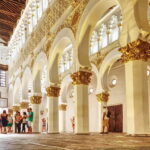
Calle Mayor and Plaza de la Villa: where old Madrid feels walkable
Next comes the historic rhythm of Calle Mayor, one of Madrid’s older streets. This is where the tour starts to feel less like a checklist and more like a neighborhood. The guide’s stories help you notice the street’s role in the city’s everyday life, not just its official monuments.
You then stop at Plaza de la Villa, a charming square with historic buildings. Squares like this are Madrid’s “pause points”—you can look around, orient yourself, and feel the city’s human scale before moving into the bigger showpieces.
If you like wandering, this section gives you a reason to slow down. If you don’t, it still works because it’s functional: it breaks the walk into logical chunks.
Mercado de San Miguel: short taste time, not a full meal
The tour includes a stop at Mercado de San Miguel. The itinerary lists about 15 minutes here, plus food-related options like street food and cheese tasting, with drink categories such as beer, wine, and even coffee.
Important: meals and drinks aren’t included, so this is more of a sampling window than a guaranteed lunch. You’re paying your own way for what you choose to try. That said, it’s a great setup because you arrive with context—your guide can steer you toward local snacks that won’t feel random.
This stop is also a stress reducer on a first trip. Instead of hunting for what to eat and getting overwhelmed, you get a quick introduction to Madrid’s “market as experience” culture. Then you can decide what you want to repeat later.
Plaza Mayor and Restaurante Botín: Madrid’s big public square energy
After the market, the tour reaches Plaza Mayor, one of Madrid’s most iconic squares. This is one of those places where the architecture does part of the storytelling—wide views, grand facades, and a layout that makes sense for crowds and gatherings.
The itinerary then includes a stop at Restaurante Botín, called the oldest restaurant in the world, where you learn about its history. You’re not there to eat on the tour’s dime; it’s a history stop. But even a quick look helps you understand why some addresses in Madrid feel like landmarks themselves.
If you’re a history-and-people-watching type, Plaza Mayor is where you’ll feel that. If you’re not, it still works because it’s a key reference point for your mental map.
Santa Cruz Palace, Sobrino de Botín, Puerta del Sol: Madrid’s center of gravity
Your walk continues past Santa Cruz Palace and includes Sobrino de Botín as another landmark stop. Then you hit Puerta del Sol, described as the heart of Madrid.
This is where the tour shifts into “city center momentum.” Puerta del Sol is busy by nature, and that’s exactly why it’s valuable for an orientation walk. You see how Madrid gathers energy, not just where it hides official monuments.
From there, you continue along Calle de Alcalá, a main street that leads you toward the next phase: the modern Madrid look.
Gran Vía and the Bank of Spain: the modern skyline punch
Once you reach Gran Vía, the city suddenly feels louder and taller. That boulevard is one of Madrid’s most famous streets, and the guide’s job here is to connect the visual drama to the city’s development.
You’ll also see the Bank of Spain as part of the route near this stretch. Even in a short walking tour, it matters. Financial institutions and theaters and main streets are part of the same story: how Madrid built its center as the city grew.
This is a section where you’ll probably stop and look up a lot. That’s good. The tour sets you up for those “wow” moments without wasting time.
Cibeles Fountain finish: a landmark that also works as a turning point
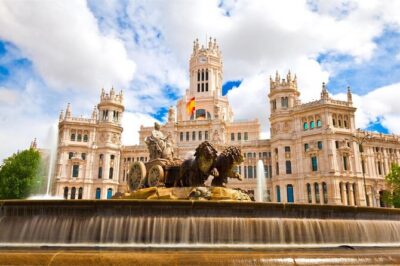
The tour ends at Fuente de Cibeles (Plaza de Cibeles). This finish is perfect because it’s a recognizable landmark with options. If you want to wander afterward, you’re in the right zone. If you’re ready to rest, you’ve hit one of the best points to reset and head back.
Finishing at Cibeles also gives you a clean contrast to where you started. Plaza de España kicks things off with royal-city scale; Cibeles closes with a grand, open, classic Madrid scene.
Price and value: is $23 a good deal for this route?
At about $23 per person for 3 hours, the value comes from two things: access and efficiency.
You’re covering major sights that normally take separate planning: Royal Palace area, Almudena Cathedral, Plaza Mayor, Puerta del Sol, Gran Vía, plus the market stop. You’re also getting a guide who can explain what you’re seeing instead of you trying to interpret everything alone.
The small-group cap (max 6) matters too. You’re not paying the same price as a giant group where questions get ignored. And from the experience reports, guides like Osvan are the reason it feels personal—he’s described as friendly, engaging, and willing to give detailed context (and in one case, undivided attention when the group was tiny).
One caution on value: since meals and drinks aren’t included, you may spend a bit at Mercado San Miguel if you want samples. But that’s also what makes the stop flexible—you choose how much you want to taste.
Who this tour suits best
This one fits you if you:
- Want a fast, structured overview of central Madrid that still feels human.
- Like architecture and city layout, with stories that connect the dots.
- Prefer small groups and a guide who can adapt when you have questions.
It may be less ideal if you:
- Want a fully planned sit-down meal included.
- Dislike walking through multiple major squares back-to-back.
Should you book it?
I think this is a smart booking for your first visit—especially if you want the city’s big landmarks in a short window and you enjoy guided context. The route hits Madrid’s recognizable spine: palace-to-cathedral-to-squares-to-Gran Vía, ending at Cibeles where it’s easy to continue exploring.
If you can only spare three hours and you’d rather not play “map detective,” this tour is a strong use of time. And if your priority is the stories and the architecture details (not just photos), you’ll likely get exactly what you came for.
FAQ
How long is the Madrid walking tour?
It lasts 3 hours.
What is the group size limit?
The tour is a small group limited to up to 6 participants.
Where is the meeting point?
You meet by the Cervantes Monument in the center of Plaza de España.
Where does the tour end?
The tour ends at Plaza de Cibeles at Fuente de Cibeles.
What languages is the guide available in?
The live guide can offer the tour in English, Spanish, Russian, and Turkish if needed.
Is the tour wheelchair accessible?
Yes, it’s listed as wheelchair accessible.
What landmarks are included on the route?
You’ll visit stops that include Palacio Real (Royal Palace), Almudena Cathedral, Plaza Mayor, Puerta del Sol, Gran Vía, and Fuente de Cibeles, plus other notable landmarks along the way such as Teatro Real, Plaza de Oriente, Calle Mayor, Plaza de la Villa, and Mercado de San Miguel.
Are meals or drinks included?
No. Souvenirs, meals, and drinks aren’t included.
What should I bring?
Wear comfortable shoes.
More Tours in Madrid
- Madrid: Tour Bernabéu Entry Ticket
★ 4.5 · 21,573 reviews - Madrid: Panoramic Route City Tour
★ 4.1 · 12,259 reviews - Avila & Segovia Tour with Tickets to Monuments from Madrid
★ 5.0 · 9,762 reviews - Madrid: Royal Palace Expert Guided Tour with Skip-the-Line
★ 4.7 · 8,407 reviews - Madrid: Segovia and Toledo Tour, Alcazar, and Cathedral
★ 4.7 · 7,797 reviews - Toledo Tour from Madrid: Cathedral, Synagogue & St. Tome’s Church
★ 5.0 · 6,784 reviews
More Tour Reviews in Madrid
- Madrid: Tour Bernabéu Entry Ticket
★ 4.5 · 21,573 reviews - Madrid: Prado Museum Entry Ticket
★ 4.6 · 20,699 reviews - Madrid: “Emociones” Live Flamenco Performance
★ 4.8 · 12,866 reviews - Madrid: Panoramic Route City Tour
★ 4.1 · 12,259 reviews - Madrid: Live Flamenco Show with Food and Drinks Options
★ 4.5 · 9,901 reviews - Avila & Segovia Tour with Tickets to Monuments from Madrid
★ 5.0 · 9,762 reviews
Walk the Heart of Madrid
- Madrid Tapas & Wine Tasting Walking Tour – Small Group Local Bars
★ 5.0 · 3,644 reviews - Madrid Welcome Tour with Local Guide in Eco Tuk Tuk Private
★ 5.0 · 2,936 reviews - Madrid Walking Tour from Puerta del Sol to Retiro Park
★ 5.0 · 2,285 reviews - Madrid Old Town & Royal Palace Walking Tour Skip the Line Ticket
★ 4.5 · 1,829 reviews - Madrid: Welcome to Madrid Guided Walking Tour
★ 4.9 · 1,738 reviews - Madrid: Spanish Inquisition and Legends Evening Walking Tour
★ 4.7 · 1,396 reviews
Just Added: New Madrid Tour Reviews




Madrid Guided Walking Tours, compared.
 ★ 5.0Madrid Tapas & Wine Tasting Walking Tour – Small Group Local BarsFrom $933,644 reviews
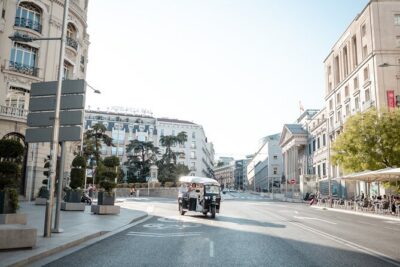 ★ 5.0Madrid Welcome Tour with Local Guide in Eco Tuk Tuk PrivateFrom $282,936 reviews
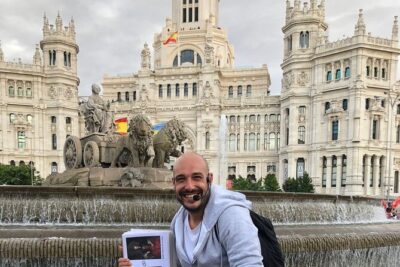 ★ 5.0Madrid Walking Tour from Puerta del Sol to Retiro ParkFrom $32,285 reviews
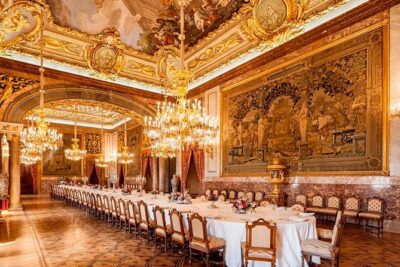 ★ 4.5Madrid Old Town & Royal Palace Walking Tour Skip the Line TicketFrom $401,829 reviews
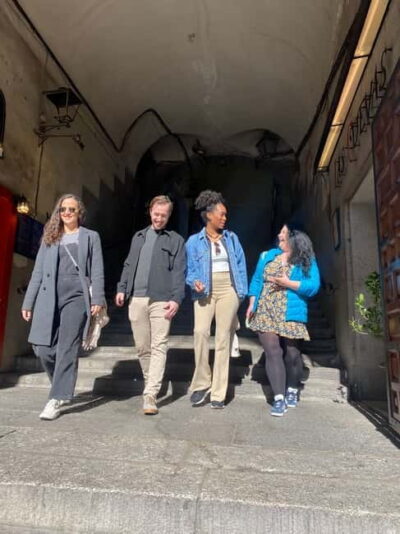 ★ 4.9Welcome to Madrid Guided Walking TourFrom $311,738 reviews
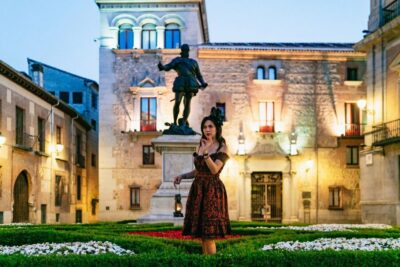 ★ 4.7Spanish Inquisition and Legends Evening Walking TourFrom $231,396 reviews
 ★ 5.0Majestic Madrid Walking TourFrom $311,274 reviews
 ★ 5.0Guided Walking Tour of Immortal ToledoFrom $131,116 reviews
Browse the lists this tour appears in