
REVIEW · MADRID GUIDED WALKING TOURS
Madrid: Hidden Gems and Secrets Small Group Walking Tour
Madrid layers show up fast.
This small-group walk is built for people who like their sightseeing with a story, not just photos, with stops that connect Muslim roots, Habsburg austerity, and Bourbon glamour. I also like how the route threads famous places into quieter corners like Puerta Cerrada and the Mudejar-era sights around San Pedro El Viejo—so the city feels less like a checklist and more like chapters.
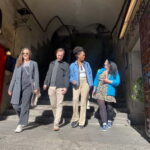
You’re out with an English guide and a limit of 10 people, so you can ask questions and keep moving without that big-group chaos. One thing to plan for: the tour is listed as 2.5 hours, but there’s at least one note that it can run about an hour longer than expected, so leave extra time if you have tight plans later.
If you enjoy architecture, street history, and the “how did this become that?” side of travel, this is a great way to get your bearings in Madrid’s historical center—especially if it’s your first visit or you want something more local-feeling than the usual big-bus loop.
In This Review
- Key things to know before you walk
- Why this Madrid walk feels like a city in chapters
- Meeting at Plaza Puerta Cerrada (and why that location helps)
- Puerta Cerrada to the Royal Palace: medieval entrances to imperial power
- Plaza de la Villa and architectural styles you can actually spot
- Food, faith, and the darker side: Corpus Christi cookies and Plaza de la Cruz Verde
- Mercado San Miguel and tapas time without the tourist trap feeling
- Muslim walls, Mudejar towers, and the architecture that survived
- Napoleon’s imprint: plazas, a viaduct tragedy, and urban design
- Felipe IV and a statue made possible by Galileo
- Calle de Cava Baja and Plaza de los Carros: everyday Madrid meets medieval memory
- Jardin del Príncipe de Anglona and a calmer moment in the middle of history
- Plaza de la Paja and Church of St. Nicholas of the Servitas
- The last stretch: Calle de Codo, Puerta Cerrada, and San Pedro El Viejo’s tower
- Price, time, and group size: the value check
- Who should book this Madrid walking tour?
- Should you book this tour?
- FAQ
- How long is the Madrid hidden gems walking tour?
- What does the tour cost?
- Where do I meet the guide?
- Where does the tour end?
- Is the tour a small group?
- What language is the tour guide?
- What key sights are included?
- What should I bring?
- Is it suitable for wheelchair users?
- What is the starting reference point mentioned as La Vacuna Bar?
- Can I cancel or pay later?
Key things to know before you walk
- Puerta Cerrada sets the tone: you start in a medieval entrance area and spend the tour tracing Madrid’s evolution.
- You’ll hear how a 9th-century fort storyline connects to Madrid becoming a capital of empire.
- The tour mixes major icons (including the Royal Palace) with lesser-seen spots like monasteries, small plazas, and old churches.
- Expect culture plus flavor stops, including cookies from a monastery and time at Mercado San Miguel for tapas.
- History stops get specific, like the Plaza de la Cruz Verde connection to Inquisition trials and a route shaped by Napoleon-era changes.
- It’s paced as a 2.5-hour walking experience, but build in slack because timing can run long.
The centre on foot, other ways round
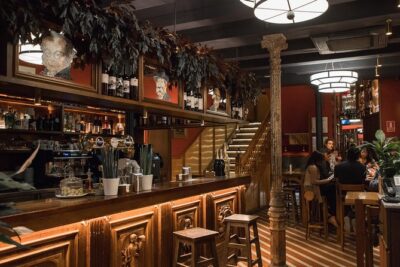
- Madrid Tapas & Wine Tasting Walking Tour – Small Group Local Bars★ 5.0 · 3,644 reviews
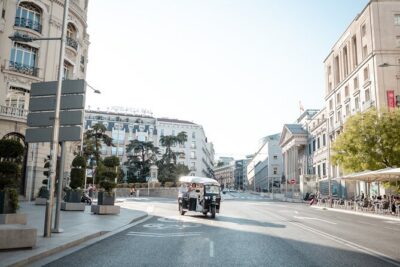
- Madrid Welcome Tour with Local Guide in Eco Tuk Tuk Private★ 5.0 · 2,936 reviews
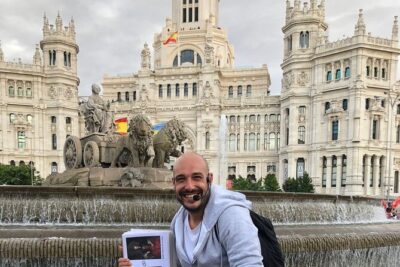
- Madrid Walking Tour from Puerta del Sol to Retiro Park★ 5.0 · 2,285 reviews
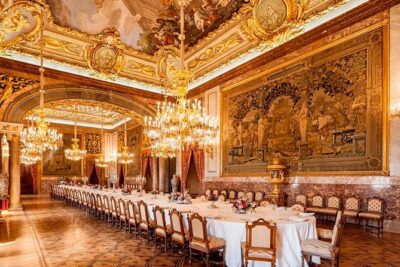
- Madrid Old Town & Royal Palace Walking Tour Skip the Line Ticket★ 4.5 · 1,829 reviews
Why this Madrid walk feels like a city in chapters
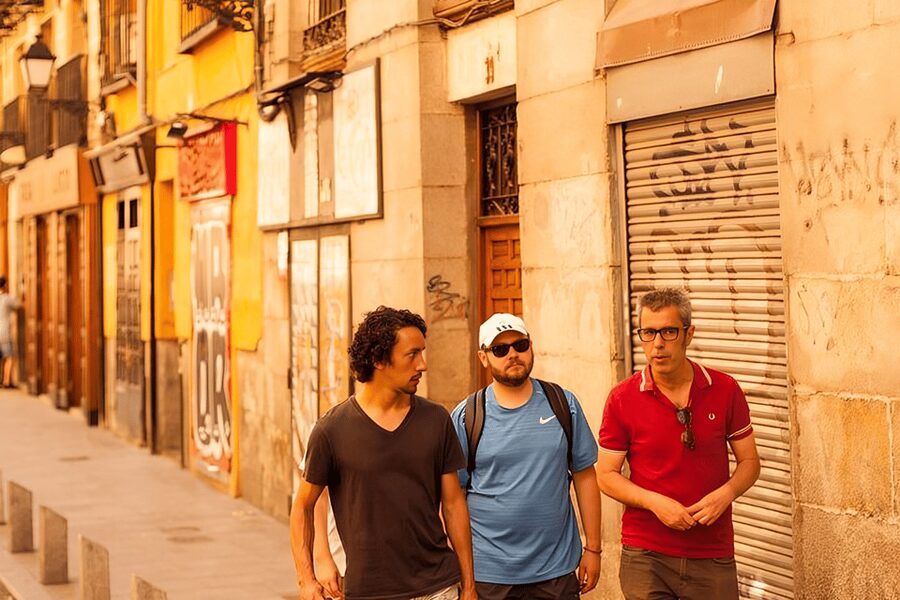
This tour works because it’s not only “look at this.” It’s “here’s how Madrid became Madrid.” Your guide ties together big power shifts—Muslim influence, Habsburg rule, and Bourbon style—then links them to what you can still see in the streets and buildings today. That approach turns the center into a living timeline.
I like the practical format, too: you cover a lot of territory on foot in a short window, and you don’t have to manage transfers or hunt down information. And since the group is kept to 10 people, the guide can slow down when a question comes up, especially around architecture terms and why certain plazas matter.
The other advantage is that you get stories that explain the city’s layout. Madrid is full of plazas that feel ordinary until someone tells you what happened there—trials, redesigns, market life, or royal power staging. After a walk like this, the streets make more sense, even when you’re not following the tour route anymore.
Meeting at Plaza Puerta Cerrada (and why that location helps)
You meet in Plaza Puerta Cerrada, about two minutes from Plaza Mayor. Look for a big cross in the center and stand near Cafestic, in that small square at the end of Cuchilleros between Lartoneros and Tintoreros.
You’ll also see La Vacuna Bar listed as a starting reference point, which makes it easier if you’re looking for a nearby landmark. Either way, the logic is the same: starting here puts you right at the edge of the old medieval city, so the tour starts with the idea of “original Madrid,” not the modern version.
This matters because the first stretch is where you set your mental map. Once you understand Puerta Cerrada as an old entrance area, later stops like Plaza de la Paja, Calle de Codo, and Iglesia de San Pedro El Viejo land with more meaning.
Puerta Cerrada to the Royal Palace: medieval entrances to imperial power
One of the tour’s strengths is the way it moves you from tight medieval spaces toward royal spectacle. You’ll hear how the city’s story starts far back—your guide connects a 9th-century fort to how Madrid grew into a seat of empire. It’s the kind of background that makes later stops feel earned, not random.
As you walk, you’ll get to the Royal Palace of Madrid, described as the biggest royal palace in Europe with 3418 rooms. Even if you don’t go inside, the scale alone changes how you see the area around it. And the guide’s framing helps you notice the political message behind royal architecture: in Madrid, power has always been visible.
From there, you shift toward the old middle-age core, including time in La Latina, where the story of earlier city life meets the reality of later royal influence. This is where you start picking up the “layers” effect that makes Madrid fun to revisit—you feel like you’re walking through a city that kept being rebuilt instead of erased.
Plaza de la Villa and architectural styles you can actually spot
A standout stop is Plaza de la Villa, the kind of place where your eyes can learn fast. You’ll see the evolution of architecture here in a way that’s easy to understand during a walk: the guide points out references to Mudejar Casa Lujanes, then later layers like the Plateresco of Palacio Cisneros, and also Habsburg-era traces around the area of Casa de la Villa.
This is the point where the tour becomes more than stories. You start noticing that Madrid’s architecture is a set of choices made over centuries—materials, decorative details, and even the “feel” of buildings change with politics and culture.
A big plus: this isn’t museum-only education. You’re getting it right in the street context, where you can look up at details and turn your head between buildings while the guide explains what to look for.
The capital on foot, other routes to try


Food, faith, and the darker side: Corpus Christi cookies and Plaza de la Cruz Verde
Madrid has two moods—grandeur and grit—and this tour tries to show both.
You’ll stop at Monasterio Del Corpus Christi, where the tour includes tasting the cookies of the nuns. This is one of those experiences that’s small in time but big in atmosphere. If you like learning how religious communities lived day-to-day, this kind of stop gives you a human-scale memory to keep.
Then you pivot to a more serious story at Plaza de la Cruz Verde, described as the old square connected to Inquisition trials. It’s a good reminder that not every “historic plaza” was just a scenic backdrop. Even when the square looks calm, the guide’s context changes how you read the space.
Next up is Catedral de Santa María la Real de la Almudena, noted as a recent but meaningful cathedral. It’s a nice contrast after the older sites: you see how Madrid kept adding spiritual and cultural landmarks as it moved into newer eras.
Mercado San Miguel and tapas time without the tourist trap feeling
When the tour goes to Mercado San Miguel, you get a moment that fits Madrid’s everyday rhythm: food as a meeting place, not just a meal. The market is described as popular for tapas, and that’s exactly how it functions in practice—lots of small bites, lots of choices, and a social buzz.
Because the tour is walking-focused, you don’t need to plan a full restaurant stop around it. You can sample at a comfortable pace, then get back to sightseeing with your energy still intact.
Tip from a practical perspective: if you’re the type who wants to try everything, go in with a plan for what you want to taste. Markets can be overwhelming fast, especially when you’re combining them with history stops on the same day.
Muslim walls, Mudejar towers, and the architecture that survived
Madrid’s Moorish and Mudejar layers are a big reason people fall for the city when they look beyond the headline attractions.
You’ll see the old Muslim wall at Parque Emir Mohamed I, with the guide connecting it to Madrid’s earlier Islamic period. Even if you’ve read about Al-Andalus before, seeing a remnant like this in the urban layout makes the story feel real. It’s like a physical reminder that Madrid wasn’t always Christian royal center—it has earlier roots that shaped the city.
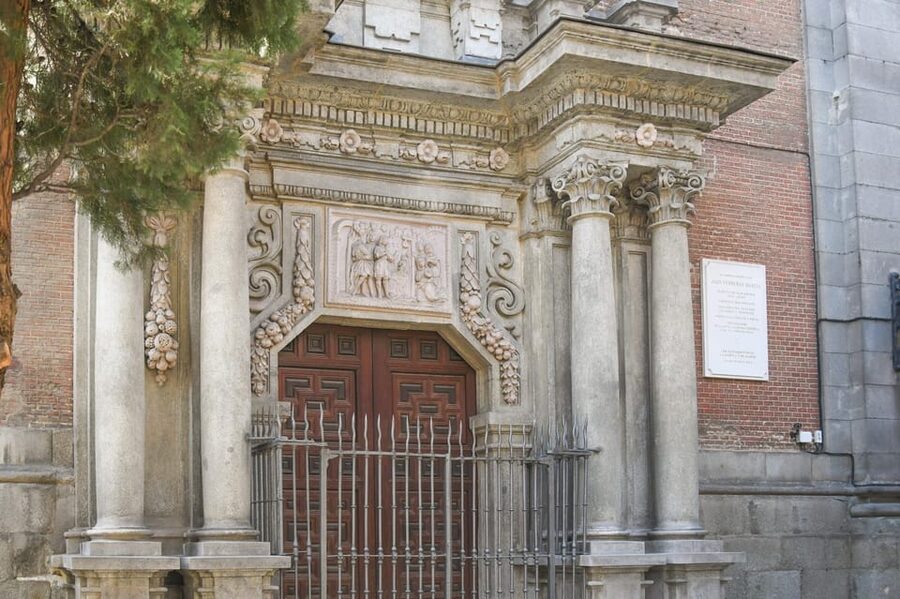
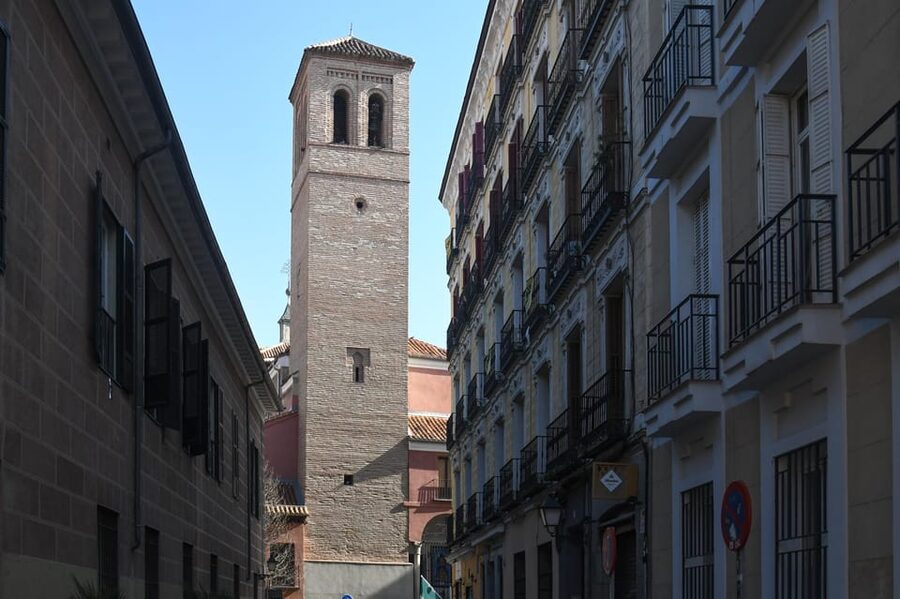
Another key stop is Iglesia de San Pedro El Viejo, a Mudejar tower from the XIV century. This kind of building works best when you’re not rushing. Look up, slow down, and take in the tower form as the guide explains what makes it Mudejar in style.
And if you like continuity, you’ll notice how these architectural themes echo earlier plazas like the Mudejar reference around Casa Lujanes in Plaza de la Villa. The tour ties those strands together, so you’re not just collecting stops—you’re building a mental framework.
Napoleon’s imprint: plazas, a viaduct tragedy, and urban design
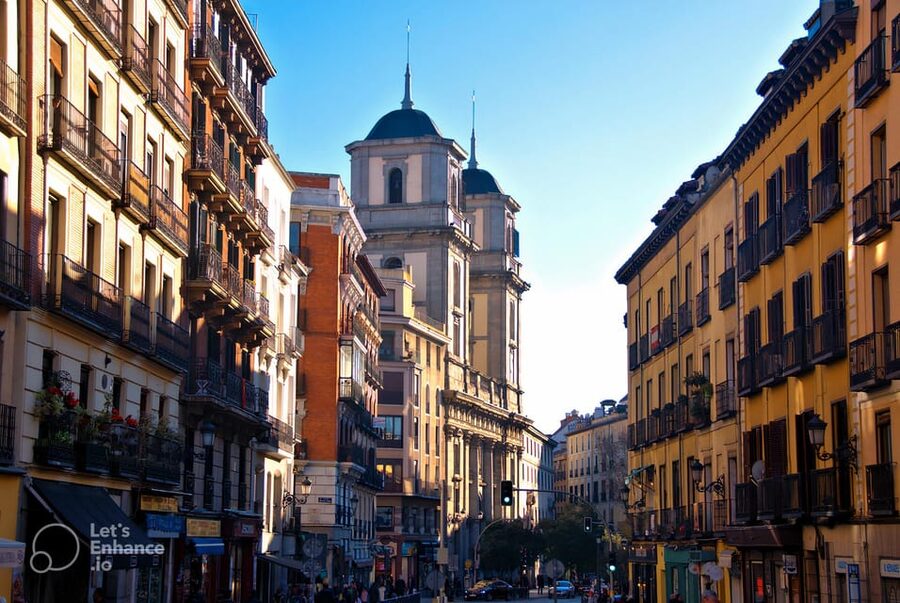
Madrid has a special way of remembering Napoleon—some of it is dramatic, some is in the way streets and squares look.
You’ll hear about Plaza de Ramales, explained through the idea that Napoleon influenced the design of the urban center of Madrid. You’ll also encounter Plaza de Oriente, described as a Napoleon square with statues of Spanish kings. Even if you already know that France-era influence existed, the tour helps you connect it to the specific shapes of the city.
There’s also Calle de Bailén, described as a beautiful viaduct with a tragic background. The exact details aren’t what you need to memorize; what matters is that the city’s infrastructure often carries stories of loss alongside beauty.
Between those stops, the guide’s theme becomes clear: power changes people, but it also changes streets.
Felipe IV and a statue made possible by Galileo
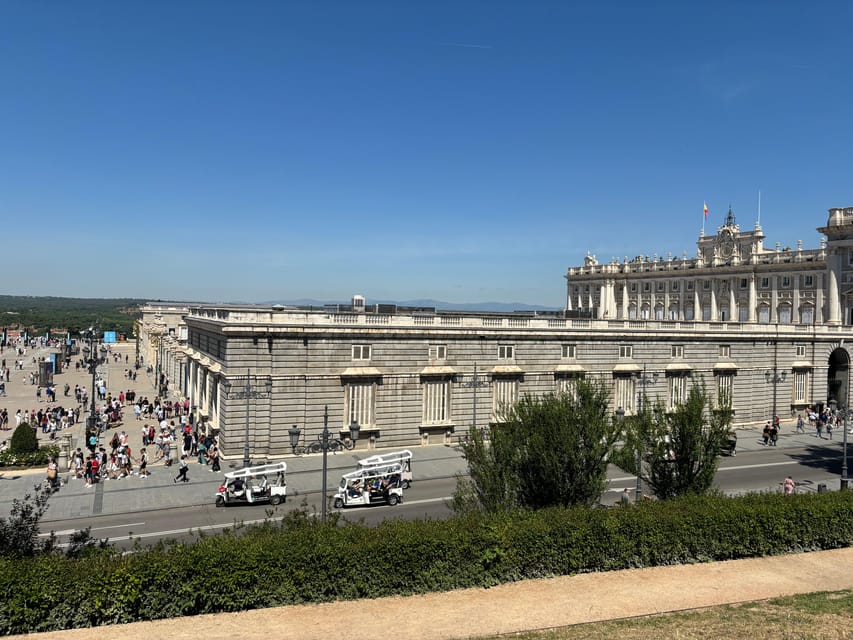
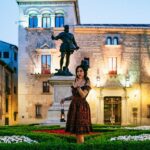
One of the most intriguing specific bits is the Monument to Felipe IV, where the tour highlights how Galileo Galilei made the statue possible. Whether you treat that as a fun historical cross-connection or a sign of how science and statecraft have always been linked, it’s a memorable moment in the walk.
It’s also a good reminder that Madrid’s famous figures aren’t only artists and monarchs. The tour encourages you to notice the broader intellectual world that got tied to court power—math, engineering, astronomy, and the people who could make monuments happen.
This is the kind of detail that makes the tour worth it even if you’re not a hardcore history person.
Calle de Cava Baja and Plaza de los Carros: everyday Madrid meets medieval memory
As you move through the center, you get a practical sense of what areas were built for daily life.
Plaza de los Carros is described as the taxi area of the middle-age city. That’s a helpful way to think about movement and commerce: long before cars, there were still hubs where people and goods needed to load, unload, and circulate.
Then you hit Calle de la Cava Baja, described as the street of some of the best traditional restaurants in Madrid. This is where you get that strong local vibe without the need to pretend you’re a foodie influencer. If you enjoy people-watching, small conversations, and the sheer smell of a food street, this stop adds a lot even without a long meal.
Jardin del Príncipe de Anglona and a calmer moment in the middle of history
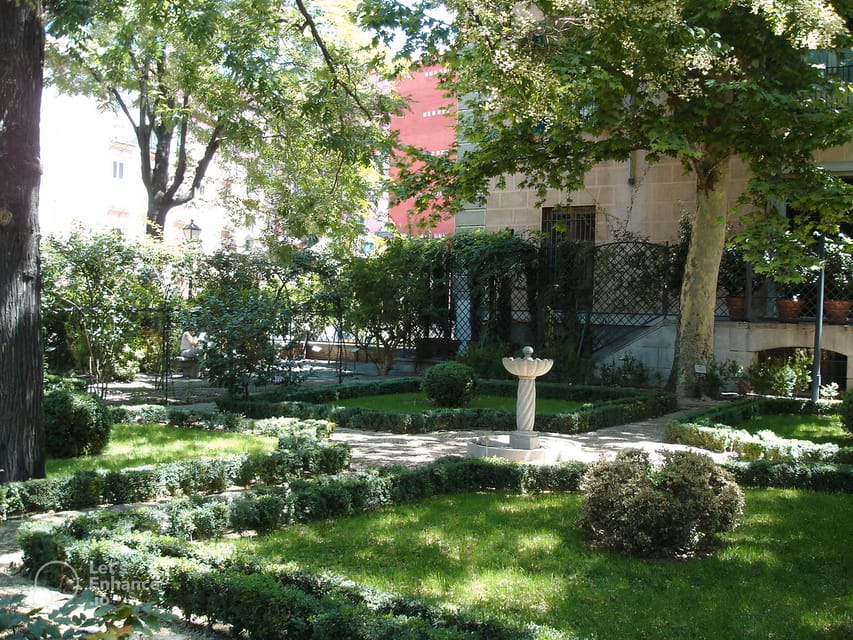
Even history-heavy tours need breaks, and this one gives you a greener pause at Jardín del Príncipe de Anglona, described as a beautiful garden from the late XVIII century.
This is a good time to breathe and look around without constantly scanning for details. It also gives you contrast after plazas and stone buildings—Madrid feels different when you’re near greenery.
If you’re the kind of traveler who gets museum-ed out, this garden stop can be the difference between enjoying the day and wanting to sit down halfway through.
Plaza de la Paja and Church of St. Nicholas of the Servitas
Another older stop worth paying attention to is Plaza de la Paja, paired with the Church of St. Nicholas of the Servitas, described as the oldest building in Madrid.
Even though the tour is primarily a walking experience, stops like this are where you get the feeling of standing on long-used ground. Old churches can feel similar until someone points out what “oldest” means in a city like Madrid—how unusual it is for a place to survive through centuries of redesign.
This section fits travelers who like their history in physical form: a place you can walk into time itself.
The last stretch: Calle de Codo, Puerta Cerrada, and San Pedro El Viejo’s tower
You’ll finish back near where you started, looping through the old entrance area again.
The last part includes Calle de Codo and Plaza de Puerta Cerrada, described as the old entrance to the middle-age city. That loop-back matters. You’re not just walking away from the start point—you’re revisiting it with fresh context, which makes the whole route feel tighter and more satisfying.
Then you end at Iglesia de San Pedro El Viejo, with its XIV-century Mudejar tower as a strong closing image. Ending on a tower is smart: it’s vertical, distinctive, and built to catch your eye as you wrap up the walk.
Price, time, and group size: the value check
At $31 per person for a guided walking tour of about 2.5 hours, you’re paying for three things: a structured route, a live English guide, and access to storytelling you might not find quickly on your own. For Madrid’s center, that’s a fair deal if you want context fast and you’re comfortable walking.
The group size limit of 10 participants is a real value factor. Smaller groups usually mean better interaction and fewer distractions, especially on history-focused routes with lots of architecture cues.
One note for your planning: there’s an indication it can run longer than the listed duration. So I’d treat 2.5 hours as the minimum and plan your day with cushion—especially if you have a reservation after the tour.
Also bring comfortable shoes and water. This is a walk-first experience, not a “take the elevator” kind of day.
Who should book this Madrid walking tour?
You’ll probably love it if you:
- Enjoy architecture and city history tied to what you can see outside
- Want an easy first-or-second-day plan that gets you oriented in the center
- Like food-adjacent stops, including Monasterio cookies and time at Mercado San Miguel
- Prefer small groups and a route that moves with purpose
You might want a different option if you:
- Have very tight timing later in the day (because the walk can run long)
- Want mostly inside-only attractions with long museum time
- Need a very slow pace with frequent long breaks
The tour is run by Juan Sarda Frouchtmann, and it’s guided in English, so it fits well for English-speaking visitors who want clear explanations while walking.
Should you book this tour?
Yes, if you want Madrid to feel like a story you can walk through. The best part of this experience is the way it connects big historical themes—empire, religion, and political redesign—with specific places you can actually locate in your photos later.
I’d book it when you have one open morning or afternoon and you want a guided thread through the center. If your calendar is tight, give yourself extra time afterward. And if you care about mobility needs, double-check accessibility details directly with the provider because the info provided includes conflicting notes.
If you’re going to do just one “get to know Madrid” walk, this one is a strong candidate.
FAQ
How long is the Madrid hidden gems walking tour?
The tour duration is listed as 2.5 hours. Starting times depend on availability.
What does the tour cost?
The price is $31 per person.
Where do I meet the guide?
Meet in Plaza Puerta Cerrada, about two minutes from Plaza Mayor. Look for a big cross in the center, in front of Cafestic.
Where does the tour end?
The tour ends back at the meeting point in Plaza Puerta Cerrada.
Is the tour a small group?
Yes. The group is limited to 10 participants.
What language is the tour guide?
The tour is guided in English.
What key sights are included?
The route includes stops such as the Royal Palace of Madrid, La Latina, Plaza de la Villa, Monasterio Del Corpus Christi, Mercado San Miguel, Plaza de la Cruz Verde, Catedral de Santa María la Real de la Almudena, and Iglesia de San Pedro El Viejo, plus several plazas and historic streets along the way.
What should I bring?
Bring comfortable shoes, a camera, and water.
Is it suitable for wheelchair users?
The provided information includes both wheelchair accessibility and a note that it is not suitable for wheelchair users. If this affects you, confirm directly with the provider before booking.
What is the starting reference point mentioned as La Vacuna Bar?
La Vacuna Bar is listed as the starting location in the itinerary, while the formal meeting point is Plaza Puerta Cerrada in front of Cafestic. Plan to use Plaza Puerta Cerrada as your meeting spot.
Can I cancel or pay later?
The tour lists free cancellation up to 24 hours in advance for a full refund, and it also offers reserve now & pay later.
More Tours in Madrid
- Madrid: Tour Bernabéu Entry Ticket
★ 4.5 · 21,573 reviews - Madrid: Panoramic Route City Tour
★ 4.1 · 12,259 reviews - Avila & Segovia Tour with Tickets to Monuments from Madrid
★ 5.0 · 9,762 reviews - Madrid: Royal Palace Expert Guided Tour with Skip-the-Line
★ 4.7 · 8,407 reviews - Madrid: Segovia and Toledo Tour, Alcazar, and Cathedral
★ 4.7 · 7,797 reviews - Toledo Tour from Madrid: Cathedral, Synagogue & St. Tome’s Church
★ 5.0 · 6,784 reviews
More Tour Reviews in Madrid
- Madrid: Tour Bernabéu Entry Ticket
★ 4.5 · 21,573 reviews - Madrid: Prado Museum Entry Ticket
★ 4.6 · 20,699 reviews - Madrid: “Emociones” Live Flamenco Performance
★ 4.8 · 12,866 reviews - Madrid: Panoramic Route City Tour
★ 4.1 · 12,259 reviews - Madrid: Live Flamenco Show with Food and Drinks Options
★ 4.5 · 9,901 reviews - Avila & Segovia Tour with Tickets to Monuments from Madrid
★ 5.0 · 9,762 reviews
Walk the Heart of Madrid
- Madrid Tapas & Wine Tasting Walking Tour – Small Group Local Bars
★ 5.0 · 3,644 reviews - Madrid Welcome Tour with Local Guide in Eco Tuk Tuk Private
★ 5.0 · 2,936 reviews - Madrid Walking Tour from Puerta del Sol to Retiro Park
★ 5.0 · 2,285 reviews - Madrid Old Town & Royal Palace Walking Tour Skip the Line Ticket
★ 4.5 · 1,829 reviews - Madrid: Welcome to Madrid Guided Walking Tour
★ 4.9 · 1,738 reviews - Madrid: Spanish Inquisition and Legends Evening Walking Tour
★ 4.7 · 1,396 reviews
Just Added: New Madrid Tour Reviews



Madrid Guided Walking Tours, compared.
 ★ 5.0Madrid Tapas & Wine Tasting Walking Tour – Small Group Local BarsFrom $933,644 reviews
 ★ 5.0Madrid Welcome Tour with Local Guide in Eco Tuk Tuk PrivateFrom $282,936 reviews
 ★ 5.0Madrid Walking Tour from Puerta del Sol to Retiro ParkFrom $32,285 reviews
 ★ 4.5Madrid Old Town & Royal Palace Walking Tour Skip the Line TicketFrom $401,829 reviews
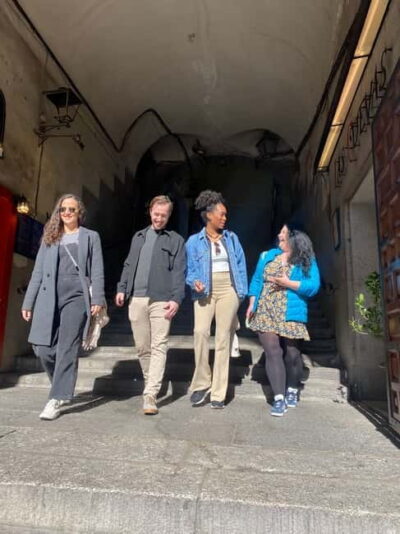 ★ 4.9Welcome to Madrid Guided Walking TourFrom $311,738 reviews
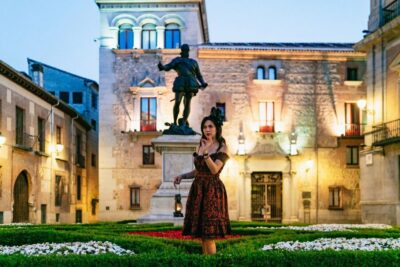 ★ 4.7Spanish Inquisition and Legends Evening Walking TourFrom $231,396 reviews
 ★ 5.0Majestic Madrid Walking TourFrom $311,274 reviews
 ★ 5.0Guided Walking Tour of Immortal ToledoFrom $131,116 reviews
Browse the lists this tour appears in