
REVIEW · MADRID GUIDED WALKING TOURS
Highlights of Madrid – Small Group Walking Tour
Two hours can change your Madrid map. I like that this small-group walking tour strings together major sights fast without feeling rushed, and I also like the expert local guide who explains what you’re actually looking at. The only real consideration: it covers about 2 miles, so if you’re hoping for a mostly-stop-and-sit pace, plan for some steady walking.
You start at Puerta del Sol in the morning (9:00am) and finish at Temple of Debod, which is a smart end point if you want to keep exploring afterward. It runs in English, uses a mobile ticket, and keeps the group to a maximum of 25, which helps the guide keep things clear for everyone. Recent feedback also puts a big spotlight on the guide experience, with Fatima praised as both informative and full of Madrid know-how.
In This Review
- Key highlights you’ll feel right away
- Price and value: why $24 can work in Madrid
- Puerta del Sol: the symbolic start that teaches you how Madrid ticks
- Plaza Mayor: architecture plus legends you can picture
- Mercado de San Miguel: cast-iron beauty and a taste of daily life
- Plaza de la Villa: older than you expect, with buildings that span centuries
- Royal Palace area: the scale shock at the Royal Palace and Teatro Real
- Plaza de España and Cervantes: literature in stone
- Temple of Debod: ancient Egypt arrives in Madrid
- Almudena Cathedral: the patroness and the architecture finish
- What makes the guide matter: Fatima’s example
- Who should book this Madrid walking tour
- Should you book the Highlights of Madrid Small Group Walking Tour?
- FAQ
- How long is the Madrid highlights walking tour?
- Where does the tour start and where does it end?
- Is the tour offered in English?
- What is the price per person?
- Is there a mobile ticket?
- How many people are in the group?
- Are the sights included free to view?
- Is the tour near public transportation?
- Can I get a full refund if I cancel?
- How far do you walk during the tour?
Key highlights you’ll feel right away

- A tight route from Puerta del Sol to Temple of Debod that makes Madrid’s layout click
- Free-to-view stops, so you’re not stacking extra entry fees onto the day
- A small group (up to 25) that supports real Q and A
- English-led interpretation focused on what you see, not just dates
- Landmark variety from royal grandeur to an Egyptian temple
The centre on foot, other ways round
- Madrid Tapas & Wine Tasting Walking Tour – Small Group Local Bars★ 5.0 · 3,644 reviews
- Madrid Welcome Tour with Local Guide in Eco Tuk Tuk Private★ 5.0 · 2,936 reviews
- Madrid Walking Tour from Puerta del Sol to Retiro Park★ 5.0 · 2,285 reviews
- Madrid Old Town & Royal Palace Walking Tour Skip the Line Ticket★ 4.5 · 1,829 reviews
Price and value: why $24 can work in Madrid
For about $24 per person, you’re buying something Madrid is great at: walking-based orientation plus explanations you’d otherwise miss. The route is about 2 hours and around 2 miles at a leisurely pace, which is a good match for the first day of a trip or anytime you want a clean overview.
You’ll also appreciate that the stops are listed as free admission for what you view on this walk. That matters. Cities like Madrid can get expensive fast when every stop turns into a ticket line. Here, you can spend your money on food, a coffee break, or a later museum—without feeling like the tour is charging you again and again.
And because the group is capped at 25, you’re less likely to get drowned out. That’s not a luxury detail. It’s practical. When the guide can actually get people’s attention, the story sticks.
One more practical note: it’s booked about 27 days in advance on average. That’s not a guarantee, but it’s a hint. If your dates are firm, booking ahead saves you from last-minute scrambling.
Puerta del Sol: the symbolic start that teaches you how Madrid ticks
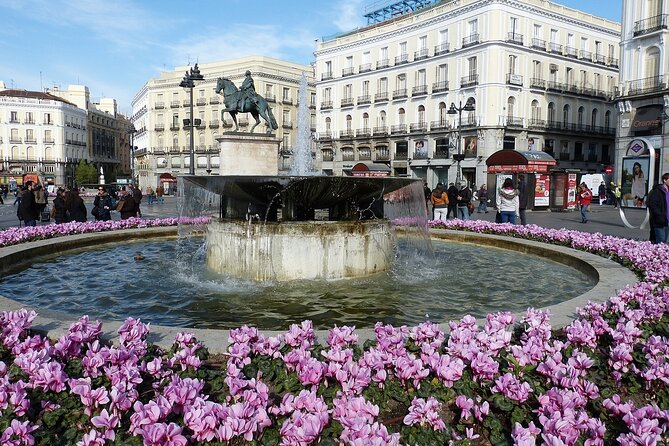
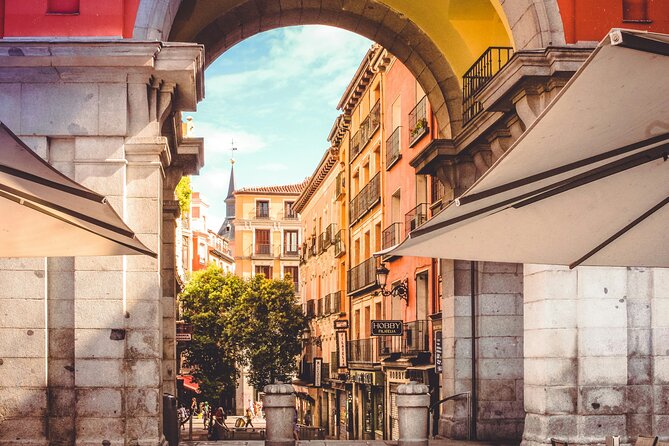
Most Madrid days start with Puerta del Sol, but this tour helps you read the square instead of just passing through it. You’ll stand at the marker tied to the 16th-century Spanish Road, then look for the famous Bear and the Strawberry Tree symbol.
Here’s why that’s valuable. Puerta del Sol isn’t just a pretty central square. It’s a reference point for how Madrid organizes itself—roads, time, movement, and civic identity. Once you understand that, the rest of the day feels less like wandering and more like following a map with meaning.
You’ll also get a sense of how guides turn big symbols into small details you can notice. It’s a good skill to have in Madrid, where a lot of the charm is visual: monuments, corners, and building shapes that only make sense when someone points them out.
If you’re not an early-morning person, the morning start can still be a win. Sol tends to be easier to handle before the crush. You’ll get your bearings fast, and you’ll spend less of your day negotiating crowds.
Plaza Mayor: architecture plus legends you can picture
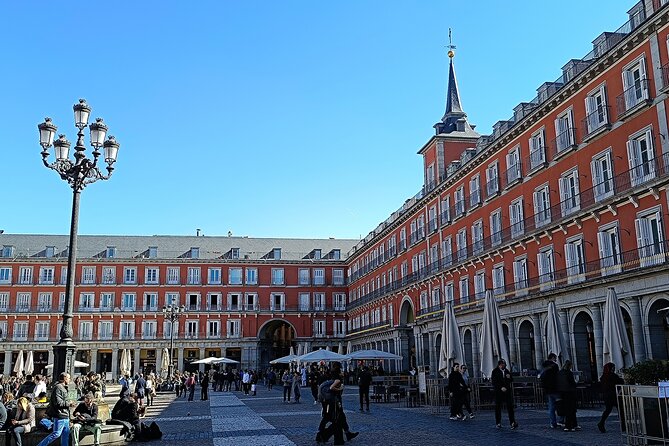
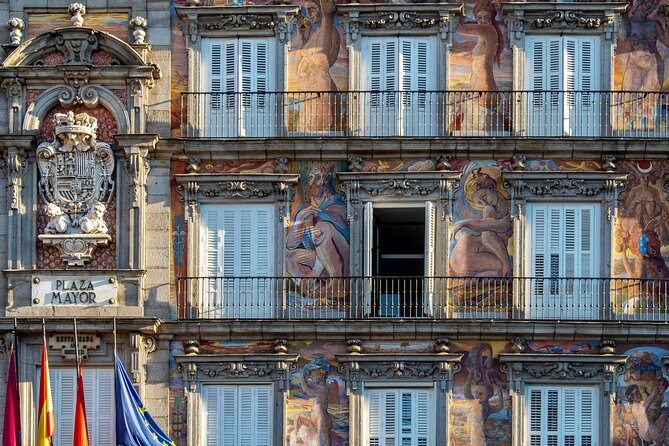
Next comes Plaza Mayor, one of the city’s classic “stop here and look up” squares. This is where you’ll connect Old Madrid to what you see today—architecture, lively streets around it, and the feeling that the city has been staging scenes here for centuries.
The tour adds value by sharing legends tied to the place. You don’t need to be a history buff to enjoy this part. Stories like these change how you view a square. Instead of just seeing buildings, you start noticing where entrances, sightlines, and local traditions would have mattered.
A small drawback: Plaza Mayor can be a busy zone. Even if the walk pace is leisurely, you may feel a little crowd energy. Still, that’s the point of choosing a guided pass—your guide helps you focus on what matters in the middle of the motion.
Mercado de San Miguel: cast-iron beauty and a taste of daily life
Then you reach Mercado de San Miguel, a food market that has been operating since May 1916. The tour highlights the building’s cast-iron architecture, including the fact that the landmark look connects strongly to the 2009 era of preservation and refinement.
Why I like this stop for first-time visitors: markets are where cities show their everyday personality. Even if you don’t buy much (or you snack later), being there lets you feel the rhythm of Madrid’s food culture in a way a photo can’t.
You’ll spend a short moment here, so treat it like orientation. Look closely at the structure. See how the market wraps the activity. If you do want to eat, plan to do it thoughtfully—quick bites, not a full meal, since the tour keeps moving.
The capital on foot, other routes to try


Plaza de la Villa: older than you expect, with buildings that span centuries
At Plaza de la Villa, you’ll feel the contrast between Madrid’s “famous” center and its older civic layers. This is one of the oldest squares in the city, and the tour points out the Casa de los Lujanes, described as the oldest civil building in Madrid.
What makes this stop especially interesting is the time scale. You’ll see how you can spot three different buildings built across three centuries. That’s the kind of detail that makes a city feel real—Madrid wasn’t built all at once, and it didn’t stop evolving. You’re looking at a timeline you can walk past.
Potential consideration: because this segment is older and more architectural, it rewards people who like to look. If you’re hoping for constant big-photo moments, you may want to keep your camera ready and ask your guide to point out specific features.
Royal Palace area: the scale shock at the Royal Palace and Teatro Real
The walking route then moves into palace country, starting with the Royal Palace of Madrid. The tour frames it as the official city residence of the Spanish royal family and notes it as the largest royal palace in Western Europe. Even when you’re just viewing the exterior, that size hits you.
What you gain on a guided stop like this is context. The palace isn’t only a monument. It’s a statement about power, ceremony, and how the monarchy shaped the city’s identity. Hearing stories of Spanish royals while you’re there helps the building feel connected to human drama, not just stone.
Right near it is Teatro Real, Madrid’s Royal Theater. The tour points out that it’s a major opera house in Europe, built in the 19th century, facing the palace in Plaza de Oriente. This is a strong combo stop: the royal setting plus the performing arts. It’s like seeing two sides of the same cultural coin—authority and entertainment.
Practical note: if your day includes other big-ticket attractions later, you’ll appreciate that this segment doesn’t require an additional paid entry in order to enjoy the main viewpoints.
Plaza de España and Cervantes: literature in stone
From the palace area, you’ll reach Plaza de España, known for the monument to Miguel de Cervantes, author of Don Quixote. This is one of those “city people know this” moments. You’re not just seeing a statue—you’re seeing how Madrid honors its literary identity in public space.
The tour also connects this moment to Spanish literature, which helps you understand why Cervantes belongs on a major square rather than in a museum basement. It’s culture as geography: the city itself becomes the reading list.
This part is also a good pacing break. Plaza spaces are easier to stand in and listen than narrow streets. You can take a breath before the route shifts again toward something completely different.
Temple of Debod: ancient Egypt arrives in Madrid
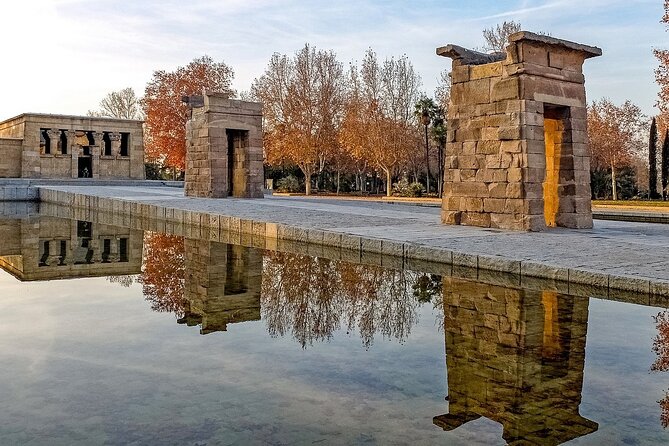
Then comes the surprise landing: Temple of Debod, an ancient Egyptian temple dating back to 200 BC. The tour explains why this structure ended up in Madrid, turning it into one of those “wait, what am I seeing” stops that makes a walking tour worth it.
This is the moment where Madrid shows its unexpected side. Having an Egyptian temple in the city center isn’t something you’d guess from the streets alone. A guided stop helps you make sense of the move, so it’s not just a curiosity. It becomes part of a larger story about how world cultures can connect.
Since this is also the tour end point—Temple of Debod—it’s a great way to finish strong. You’re leaving the tour with a landmark that feels different from everything before it. And because you’re in Moncloa – Aravaca territory, you can also plan an easy follow-on with public transport if you want.
One consideration: this is a long enough day that you might want comfortable shoes. The walk is listed at a leisurely pace, but you’re still doing several segments over about 2 miles.
Almudena Cathedral: the patroness and the architecture finish
Your final stop on the route is Catedral de Sta Maria la Real de la Almudena, dedicated to the Virgin of Almaden, patroness of the city. The tour ties it together with local meaning and architecture, so you don’t just admire the façade and move on.
This is a strong closing choice because cathedrals reward slow attention. Even if you’re not a church architecture specialist, listening to the dedication and the story behind it helps you understand why locals care. It’s also a good moment to reset your eyes after earlier contrasts: Sol’s civic symbol, markets, royal scale, literature, and Egyptian stone—all of it leads logically into a religious landmark dedicated to Madrid’s identity.
If you like taking a final look and lingering, this is the kind of stop where you can do it. The tour ends here, so you can spend a few extra minutes soaking in the details at your own pace.
What makes the guide matter: Fatima’s example
This is where the best feedback pays off. A guide named Fatima is singled out for being absolutely amazing, full of Madrid know-how, and very informative. That lines up with what you want from a highlights walking tour: clear explanations, good pacing, and stories that make the streets readable.
In practice, that means you’re not just hearing facts. You’re getting help linking the dots between places: why Puerta del Sol matters, why legends live in Plaza Mayor, why cast-iron makes Mercado de San Miguel a feature, and why Temple of Debod is such a memorable finish.
When a tour keeps a small group and has a guide praised for clarity, it’s usually a sign the route doesn’t feel like a checklist. It feels like a story you can follow.
Who should book this Madrid walking tour
I’d point you to this tour if you want:
- A 2-hour, first-day-friendly Madrid orientation without museum stress
- A route focused on major landmarks you can see for free
- An English-speaking guide and a smaller group size (max 25)
- A balanced mix of civic Madrid, royal Madrid, and the unexpected (Temple of Debod)
It’s also a nice fit for people who prefer structure. If you’ve got limited time and you don’t want to guess which sights are worth your energy, this gives you a guided path that hits the big themes.
If, on the other hand, you want deep time-consuming stops or long museum-style visits, you may feel a bit constrained by the compact format. This is a highlights walk, not a long-form deep study.
Should you book the Highlights of Madrid Small Group Walking Tour?
Yes, I think you should book it if you’re trying to get a strong overview quickly. The combo of expert guide, small group size, and free-to-view stops creates good value at $24. Ending at Temple of Debod is a smart twist that makes your final impression feel different from the royal-palace standard route.
Book it especially if you’re visiting for the first time or you want an efficient morning plan starting at 9:00am. And because it’s popular enough that people book about 27 days in advance, grabbing a spot ahead of time is a smart move.
If you’re very sensitive to walking distance, double-check your comfort level for about 2 miles total. Otherwise, this is an excellent way to turn Madrid from a list of photos into a place you can actually navigate.
FAQ
How long is the Madrid highlights walking tour?
It runs for about 2 hours.
Where does the tour start and where does it end?
It starts at Heladería Palazzo (Puerta del Sol), 11, Centro, 28013 Madrid and ends at Temple of Debod, C. de Ferraz, 1, Moncloa – Aravaca, 28008 Madrid.
Is the tour offered in English?
Yes, it is offered in English.
What is the price per person?
The price is $24.00 per person.
Is there a mobile ticket?
Yes, the tour includes a mobile ticket.
How many people are in the group?
The tour has a maximum of 25 travelers.
Are the sights included free to view?
Each listed stop is marked Admission Ticket Free, so you’re not paying separate admission for these stops on the walk.
Is the tour near public transportation?
Yes, it is marked as near public transportation.
Can I get a full refund if I cancel?
Yes. Free cancellation is available if you cancel up to 24 hours before the experience starts.
How far do you walk during the tour?
The tour covers about 2 miles at a leisurely pace.
More Tours in Madrid
- Madrid: Tour Bernabéu Entry Ticket
★ 4.5 · 21,573 reviews - Madrid: Panoramic Route City Tour
★ 4.1 · 12,259 reviews - Avila & Segovia Tour with Tickets to Monuments from Madrid
★ 5.0 · 9,762 reviews - Madrid: Royal Palace Expert Guided Tour with Skip-the-Line
★ 4.7 · 8,407 reviews - Madrid: Segovia and Toledo Tour, Alcazar, and Cathedral
★ 4.7 · 7,797 reviews - Toledo Tour from Madrid: Cathedral, Synagogue & St. Tome’s Church
★ 5.0 · 6,784 reviews
More Tour Reviews in Madrid
- Madrid: Tour Bernabéu Entry Ticket
★ 4.5 · 21,573 reviews - Madrid: Prado Museum Entry Ticket
★ 4.6 · 20,699 reviews - Madrid: “Emociones” Live Flamenco Performance
★ 4.8 · 12,866 reviews - Madrid: Panoramic Route City Tour
★ 4.1 · 12,259 reviews - Madrid: Live Flamenco Show with Food and Drinks Options
★ 4.5 · 9,901 reviews - Avila & Segovia Tour with Tickets to Monuments from Madrid
★ 5.0 · 9,762 reviews
Walk the Heart of Madrid
- Madrid Tapas & Wine Tasting Walking Tour – Small Group Local Bars
★ 5.0 · 3,644 reviews - Madrid Welcome Tour with Local Guide in Eco Tuk Tuk Private
★ 5.0 · 2,936 reviews - Madrid Walking Tour from Puerta del Sol to Retiro Park
★ 5.0 · 2,285 reviews - Madrid Old Town & Royal Palace Walking Tour Skip the Line Ticket
★ 4.5 · 1,829 reviews - Madrid: Welcome to Madrid Guided Walking Tour
★ 4.9 · 1,738 reviews - Madrid: Spanish Inquisition and Legends Evening Walking Tour
★ 4.7 · 1,396 reviews
Just Added: New Madrid Tour Reviews




Madrid Guided Walking Tours, compared.
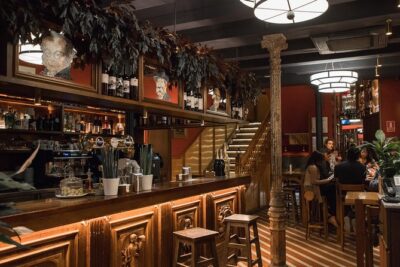 ★ 5.0Madrid Tapas & Wine Tasting Walking Tour – Small Group Local BarsFrom $933,644 reviews
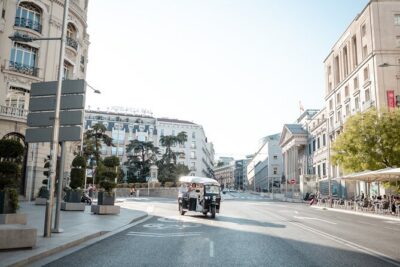 ★ 5.0Madrid Welcome Tour with Local Guide in Eco Tuk Tuk PrivateFrom $282,936 reviews
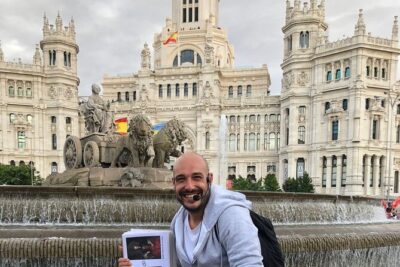 ★ 5.0Madrid Walking Tour from Puerta del Sol to Retiro ParkFrom $32,285 reviews
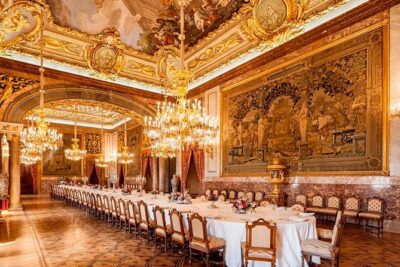 ★ 4.5Madrid Old Town & Royal Palace Walking Tour Skip the Line TicketFrom $401,829 reviews
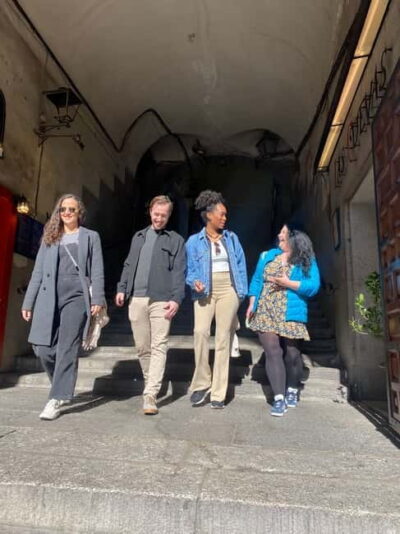 ★ 4.9Welcome to Madrid Guided Walking TourFrom $311,738 reviews
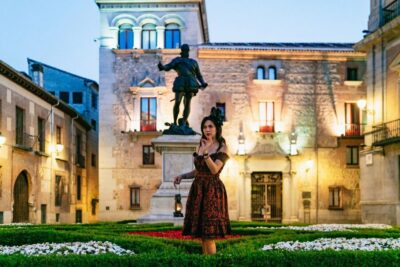 ★ 4.7Spanish Inquisition and Legends Evening Walking TourFrom $231,396 reviews
 ★ 5.0Majestic Madrid Walking TourFrom $311,274 reviews
 ★ 5.0Guided Walking Tour of Immortal ToledoFrom $131,116 reviews
Browse the lists this tour appears in