
REVIEW · MUSEUMS
Hidden Art Galleries and Artist’s Studio in Madrid
Madrid’s art hides in plain sight. In this small-group tour in the Salesas-Chueca neighborhood, I loved how an active artist guide helps you connect what you see in contemporary galleries to the city around you. You get a local take on exhibitions and the art scene, not just gallery names on a map.
I especially like two parts: the artist-led gallery stops (with different exhibition styles and spaces) and the relaxed finale at the artist’s studio, where you share tapas and beverages. The limit of eight people keeps the pace human, so you can ask questions and actually talk about what’s going on with the work.
One thing to consider: this is firmly contemporary art focused, and it’s offered in English—so if you want classic sightseeing only, or you’re relying on Spanish for art talk, you’ll want to think twice before booking.
In This Review
- Key highlights I’d circle on your Madrid plan
- Salesas-Chueca: Madrid’s Contemporary Art Pocket
- Meeting the group and starting at C. de Piamonte
- Artist-led gallery stops: what changes when the guide creates, too
- Salesas-Chueca walk: how to get more out of each stop
- The studio finale near Iglesia metro station (with tapas and drinks)
- Price and time: why $85 can make sense here
- Who should book this (and who might not love it)
- Should you book Hidden Art Galleries and Artist’s Studio in Madrid?
- FAQ
- What’s the duration of this tour?
- Where does the tour start?
- Where does the tour end?
- Is the tour in English?
- How many people are in the group?
- Does it include food and drinks?
- Do I get a mobile ticket?
- What’s the price?
- Can I cancel for a full refund?
Key highlights I’d circle on your Madrid plan
- Max 8 people for a more personal, conversation-based walk
- Salesas-Chueca for contemporary galleries in a smart, walkable area
- Artist guide + art-community context that helps you understand what you’re looking at
- Tapas and beverages served at the end of the tour at the studio
- Mobile ticket for easier last-minute planning
- English tour for visitors who want the story in plain language
Gallery hours worth the queue
- Madrid: Prado Museum Entry Ticket★ 4.6 · 20,699 reviews
- Madrid: Reina Sofía Museum Entrance Ticket★ 4.5 · 8,788 reviews
- Madrid: Small Group of Prado Museum Tour & Optional Tapas★ 4.6 · 2,437 reviews
- Madrid: Prado Museum Guided Tour with Skip-the-Line Ticket★ 4.5 · 2,018 reviews
Salesas-Chueca: Madrid’s Contemporary Art Pocket
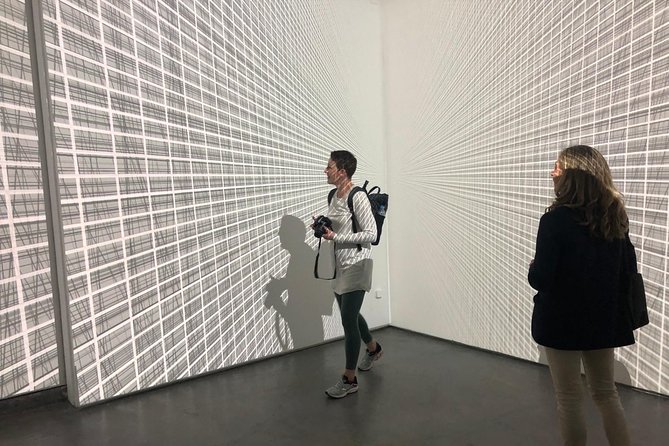
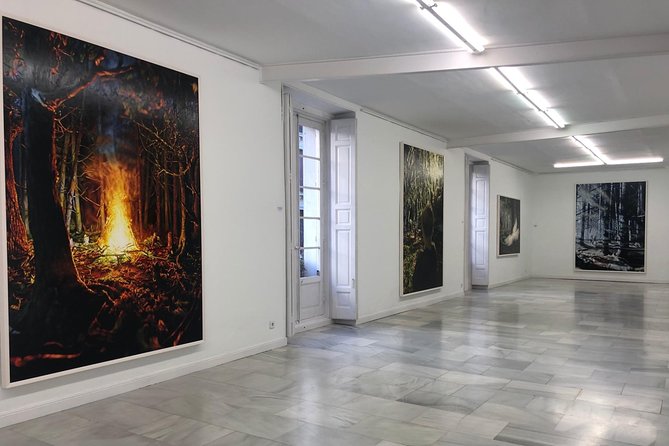
Salesas-Chueca is the kind of neighborhood that feels like it was made for art spotting. You’re not dealing with a single landmark museum where everyone funnels in and out. Instead, you’ll be moving through a cluster of contemporary spaces, where galleries can be small, experimental, and personal.
That’s exactly why this tour works. The route is built around the idea that contemporary art makes more sense when you see it in context—gallery layout, how the space frames the art, and the creative mindset behind current work. You’ll get that context fast because your guide isn’t just a lecturer. They’re an artist participating in the same scene you’re visiting.
And because the tour is in Salesas-Chueca, you’re also staying in a part of Madrid that feels livable between stops. It’s not about racing from one famous site to the next. It’s about slowing down enough to notice how different galleries present different kinds of contemporary work.
Meeting the group and starting at C. de Piamonte

You start at C. de Piamonte, 10, Centro (28004 Madrid). The good news is that it’s near public transportation, so you can fit it into a day without a long, stressful trek across the city. The time window is also sensible: the tour runs about 2 hours 30 minutes, which is long enough to make the experience feel substantial, but not so long that it eats your whole afternoon.
The small group size matters from minute one. With a maximum of eight travelers, the tour doesn’t feel like a lecture line. It feels more like a guided walk where you can ask questions as they come up. If you’ve ever been in a bigger group tour where you only get to see things through someone else’s headset comments, this format is a breath of fresh air.
Also, the tour is offered in English, so you won’t have to fight through translation to understand the art conversation. That makes a big difference with contemporary work, where details and choices matter.
Artist-led gallery stops: what changes when the guide creates, too
This is where the tour’s reputation comes from. You’ll visit contemporary galleries with a local artist guide who can talk about more than just the finished product. The strongest value here is how the guide connects the dots between the art, the artist’s process, and the way galleries function as spaces—not just as rooms that happen to hang paintings.
In practice, that means you’ll likely notice differences you’d miss on your own:
- Some galleries show work in ways that make it feel intimate, like you’re inside the artist’s thinking.
- Others treat the space more like a stage, where the arrangement becomes part of the message.
- You may see a range of exhibition approaches, not one single style repeated everywhere.
Your guide also tends to bring art-community context into the conversation. That’s useful because contemporary art often feels like it’s speaking in a language you don’t automatically know. When someone can explain why an artist chose a certain direction, you start reading the work instead of just looking at it.
One more plus: your guide is part of the creative world you’re touring. That gives the tour a sense of lived reality. It’s not a script, and it’s not just “facts about artists.” It’s someone actively working with the same questions the artists are tackling.
Salesas-Chueca walk: how to get more out of each stop

Even without a museum label board, you can get a lot more out of a gallery crawl when you have a small set of listening skills. Here are the habits I’d use on a tour like this:
First, pay attention to how the space frames the art. Are you looking straight on, or do you have to move to see the work as intended? Contemporary galleries often use layout and sightlines as part of the experience.
Second, track the emotional temperature of the work. Some contemporary pieces feel calm and controlled. Others feel urgent or unfinished on purpose. If you keep an eye on that, your questions turn from vague to specific—much easier to discuss with your artist guide.
Third, don’t treat every piece like it has to be your style. This tour isn’t about forcing agreement. It’s about learning what the artist is trying to do, and why that matters now. That mindset fits the neighborhood too: Salesas-Chueca is known for people who want to see what’s current, not only what’s proven.
The route itself is built around this idea—moving through multiple galleries in a compact area so you can compare exhibition styles and keep your attention from fading.




The studio finale near Iglesia metro station (with tapas and drinks)
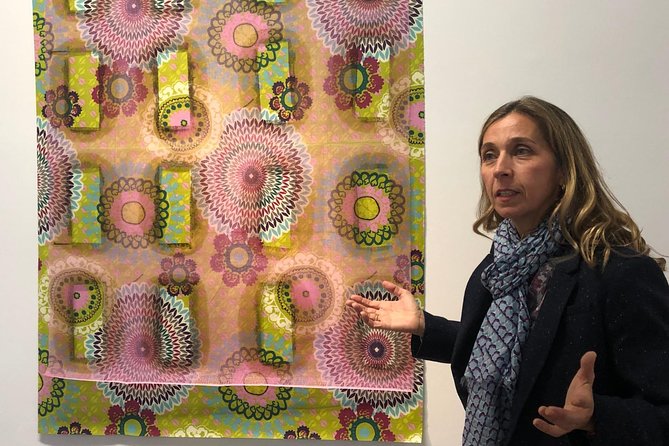
The tour ends at the artist’s studio, by Iglesia metro station—specifically at C. de Medellín, 4, Chamberí (28010 Madrid). This is one of the best parts of the whole experience because it changes the energy. Galleries feel like presentation. A studio feels like creation.
You’ll enjoy tapas and beverages at the studio, which turns the ending into something more memorable than a quick handshake and goodbye. It’s also when the conversation often becomes most human. You’re no longer focused on walking and viewing—you’re sharing food, asking follow-up questions, and absorbing what the artist thinks about the work outside the gallery context.
Another practical benefit: the studio setting can make art purchasing feel more real. If you want to buy, you get a chance to see the work in a direct, personal setting and talk with the person making it. (If you’re simply browsing, that’s fine too—you’re still getting access to the creative side of the scene.)
And because the group is small, you’re less likely to feel like you’re crowding the moment. You can actually linger without the tour turning into a timed queue.
Price and time: why $85 can make sense here
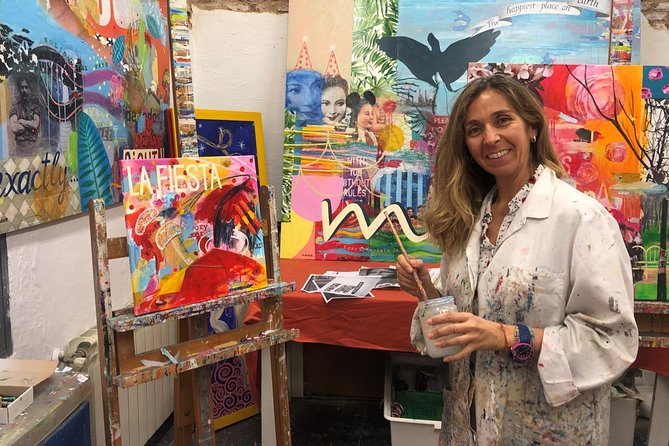
At $85 per person for about 2.5 hours, the price isn’t the cheapest way to spend an afternoon in Madrid. But it also isn’t trying to be a generic walking tour. You’re paying for three things that are harder to price than “someone tells you where to go”:
1) access to multiple contemporary gallery stops through an artist guide
2) the studio visit, which changes the whole vibe of the experience
3) tapas and beverages included in the finale
When you look at it that way, the value becomes clearer. You’re not just getting directions. You’re getting a guided reading of contemporary art—plus the social, food-based wrap-up that makes the experience feel complete.
One more small data point that matters: this tour is typically booked about 19 days in advance. That’s a good sign the format is in demand, especially with the cap of eight travelers. If you know you want it, I’d book earlier rather than waiting for the last week.
Who should book this (and who might not love it)
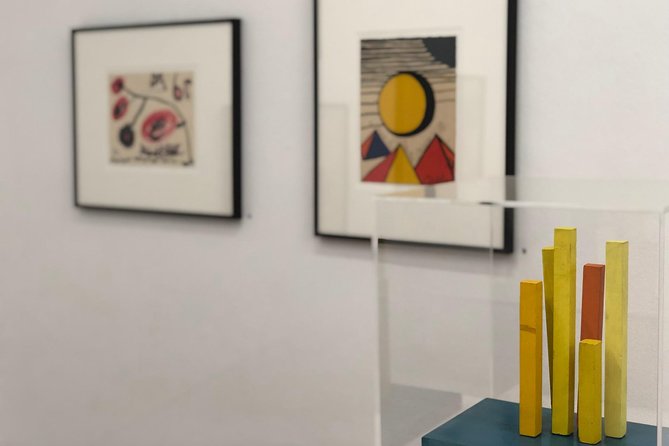
This tour is a great match if you:
- like contemporary art and want help understanding it without feeling talked down to
- want a guided experience that stays in one neighborhood instead of doing a nonstop cross-city sprint
- enjoy small groups where conversation actually happens
- appreciate an ending that includes a real artist studio moment, not just another photo stop
You might hesitate if you:
- want only major classical sights and big-name museums
- expect a broad history lecture rather than an art-and-process conversation
- prefer tours that focus more on architecture or landmarks than on contemporary artistic choices
The language is English, so if your comfort zone is Spanish-first, you’ll want to consider whether the discussion flow would feel limited.
Should you book Hidden Art Galleries and Artist’s Studio in Madrid?
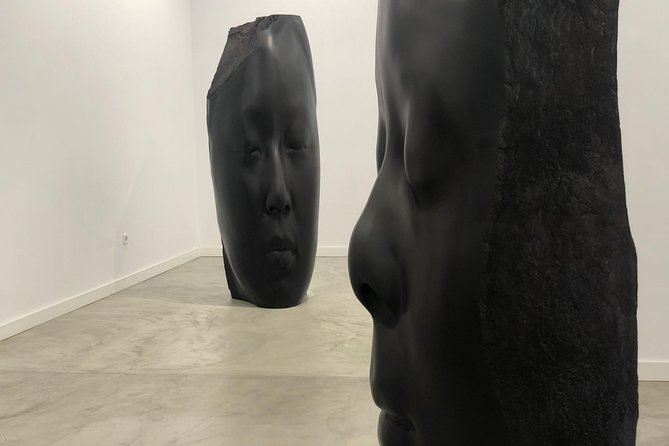
I’d book it if you’re the kind of traveler who likes being taught how to look. The standout strength here is the pairing of contemporary gallery access with an artist’s studio ending, plus the fact that the group stays small enough for real dialogue. And the tapas-and-drinks finale makes it feel like a complete experience, not just a hallway tour.
I’d skip it if contemporary art doesn’t interest you, or if you’re hunting for only the biggest famous sights. In that case, your time might be better spent elsewhere.
If you do book, go in with curiosity rather than expectations that everything will click immediately. Contemporary art often rewards attention and conversation—and this tour is built for exactly that.
FAQ
What’s the duration of this tour?
It lasts about 2 hours 30 minutes.
Where does the tour start?
The start point is C. de Piamonte, 10, Centro, 28004 Madrid, Spain.
Where does the tour end?
It ends at C. de Medellín, 4, Chamberí, 28010 Madrid, Spain, at the artist’s studio by Iglesia metro station.
Is the tour in English?
Yes, it’s offered in English.
How many people are in the group?
The tour has a maximum of 8 travelers.
Does it include food and drinks?
Yes. You’ll enjoy tapas and beverages at the artist’s studio.
Do I get a mobile ticket?
Yes, it’s a mobile ticket.
What’s the price?
The price is $85.00 per person.
Can I cancel for a full refund?
Yes. You can cancel up to 24 hours in advance for a full refund. If you cancel less than 24 hours before the start time, the amount isn’t refunded.
Indoors and Worth It: Madrid Galleries
- Madrid: Prado Museum Entry Ticket
★ 4.6 · 20,699 reviews - Madrid: Reina Sofía Museum Entrance Ticket
★ 4.5 · 8,788 reviews - Madrid: Small Group of Prado Museum Tour & Optional Tapas
★ 4.6 · 2,437 reviews - Madrid: Prado Museum Guided Tour with Skip-the-Line Ticket
★ 4.5 · 2,018 reviews - Madrid: Prado Museum Guided Tour With Fast Access
★ 4.8 · 1,785 reviews - Prado Museum Small Group Tour with Skip the Line Ticket
★ 5.0 · 1,738 reviews
More Tour Reviews in Madrid
- Madrid: Tour Bernabéu Entry Ticket
★ 4.5 · 21,573 reviews - Madrid: Prado Museum Entry Ticket
★ 4.6 · 20,699 reviews - Madrid: “Emociones” Live Flamenco Performance
★ 4.8 · 12,866 reviews - Madrid: Panoramic Route City Tour
★ 4.1 · 12,259 reviews - Madrid: Live Flamenco Show with Food and Drinks Options
★ 4.5 · 9,901 reviews - Avila & Segovia Tour with Tickets to Monuments from Madrid
★ 5.0 · 9,762 reviews
Just Added: New Madrid Tour Reviews






Museums, compared.
 ★ 4.6Prado Museum Entry TicketFrom $2120,699 reviews
 ★ 4.5Reina Sofía Museum Entrance TicketFrom $148,788 reviews
 ★ 4.6Small Group of Prado Museum Tour & Optional TapasFrom $532,437 reviews
 ★ 4.5Prado Museum Guided Tour with Skip-the-Line TicketFrom $462,018 reviews
 ★ 4.8Prado Museum Guided Tour With Fast AccessFrom $281,785 reviews
 ★ 5.0Prado Museum Small Group Tour with Skip the Line TicketFrom $541,738 reviews
 ★ 4.5Royal Palace & Prado Museum Skip the Line Guided TourFrom $821,347 reviews
 ★ 3.9Sweet Space Museum Entry TicketFrom $171,227 reviews
Browse the lists this tour appears in