
REVIEW · SEGOVIA DAY TRIPS FROM MADRID
Segovia Experience
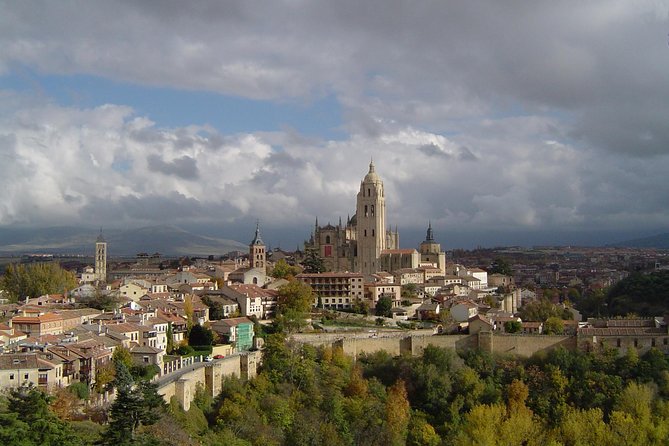
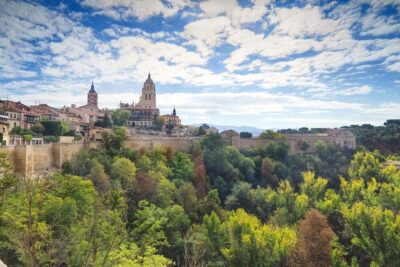
Segovia pulls you in fast with stone that still looks new. This half-day guided walk from Madrid hits the Roman aqueduct that’s basically a city postcard, then climbs into the medieval feel around the Alcázar and the Gothic cathedral. I like the mix here: structured stops with a real guide, plus real freedom at the end to do things at your pace.
Two things I especially enjoy: you see the city’s main showpieces with clear context, and you also get actual time to roam afterward instead of getting herded non-stop. One thing to consider: the schedule can feel tight if the bus runs late, and you’ll feel that in the amount of free time you get at the end.
In This Review
- Key Points You’ll Care About
- From Madrid to Segovia: A Short Day That Still Packs a Punch
- Getting on the Bus: Meeting Point and What “Mobile Ticket” Means
- Stop 1: The Roman Aqueduct—Segovia’s Instant-Recognition Star
- Stop 2: Segovia Cathedral—Gothic Shape, Virgin Mary Dedication
- Stop 3: Church of St Stephen—A Medieval Bell Tower You Can’t Miss Once You Look
- Stop 4: The Alcázar of Segovia—Castle-Palace Over Rivers
- The Best Part: Free Time to Eat and Explore Your Way
- Transportation and Timing: The Convenience Trade-Off
- What the Guide Adds (and What You Can Do With It)
- Who This Tour Fits Best—and Who Might Want Another Option
- Practical Tips Before You Go
- Should You Book the Segovia Tour From Madrid?
- FAQ
- How long is the Segovia tour from Madrid?
- What time does the tour start?
- Where do I meet the guide in Madrid?
- Does the price include transportation to and from Madrid?
- What’s included in the tour?
- Is the tour ticket digital?
- What sights are included during the guided portion?
- What is the cancellation policy?
Key Points You’ll Care About
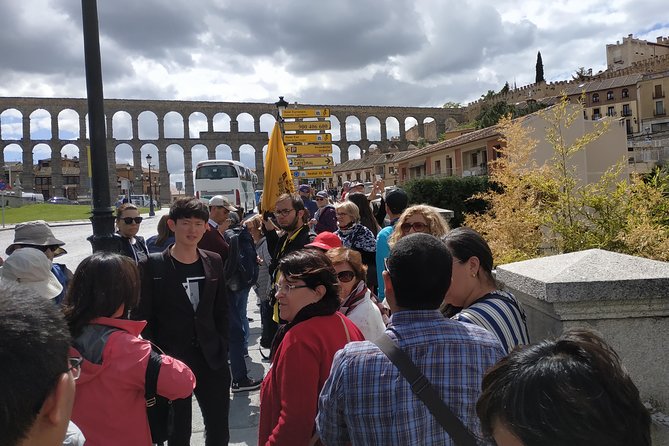
- Roman Aqueduct that’s still intact: one of Segovia’s defining sights you’ll recognize immediately.
- Alcázar on a rocky crag: views and that ship-bow shape that makes the place unforgettable.
- Four main photo-and-walk stops: Aqueduct, Cathedral, Church of St Stephen, then the Alcázar area.
- Guided walking + free time: structured sightseeing first, then you choose what to eat and where to linger.
- Round-trip transport from Madrid: air-conditioned vehicle included, with group size capped at 55.
The aqueduct and the Alcazar, other Segovia days
- Avila & Segovia Tour with Tickets to Monuments from Madrid★ 5.0 · 9,762 reviews
- Three Cities in One Day: Segovia, Avila and Toledo from Madrid★ 5.0 · 8,402 reviews
- Madrid: Segovia and Toledo Tour, Alcazar, and Cathedral★ 4.7 · 7,797 reviews
- Madrid: Toledo & Segovia Tour w/ Cathedral, Alcazar & Lunch★ 4.6 · 5,846 reviews
From Madrid to Segovia: A Short Day That Still Packs a Punch
If you only have one half day away from Madrid, Segovia can feel like you stole extra time. You start in Madrid and ride out with a guide doing the heavy lifting—where to look, what you’re seeing, and why it matters. Then you get your own window to wander.
This is an 11-hour outing (approx.), even though it’s described as half-day. Translation: plan for a long day. You’ll want comfortable shoes and a light plan for lunch because you’ll end with free time to eat and explore on your own.
The price—$51.20 per person—works best when you want the convenience of transport plus a guide. You’re not just buying a bus ticket. You’re buying a guided walking route that connects the city’s top landmarks without you needing to map every turn.
Group size is capped at 55, and the tour includes an air-conditioned vehicle plus an official bilingual English-Spanish guide. Most people will find this format manageable: you get walking, but it’s not a marathon of nonstop marching.
Getting on the Bus: Meeting Point and What “Mobile Ticket” Means
You meet at C. de San Bernardo, 5, Centro, 28013 Madrid. The start time is 9:00 am, and the tour ends back at the same meeting point. That round-trip consistency is a big deal. It means you don’t have to solve the return like you would on a DIY day trip.
This tour uses a mobile ticket. In practice, that means you’ll want your phone charged and ready. If you rely on battery a lot for navigation, bring a small backup battery—Segovia’s historic core is easy to lose track of in without even trying.
The meeting point is near public transportation, so it’s doable even if you’re coming from a hotel that’s not right next to major lines. I like that. It reduces stress on the morning start.
Stop 1: The Roman Aqueduct—Segovia’s Instant-Recognition Star
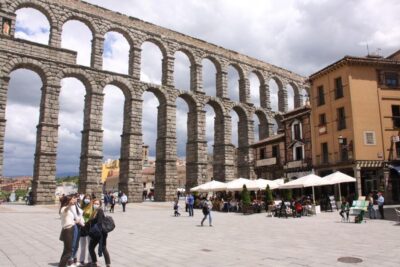
The first stop is one of the best-preserved elevated Roman aqueducts, and it’s the foremost symbol of Segovia. This is not a subtle sight. You see it and you instantly get why people build their day around it.
What makes this stop valuable on a guided tour is the “why it looks the way it does” part. It’s elevated, it carries water, and it’s still there. The guide’s job is to help you spot key features quickly so it’s more than just a photo backdrop.
Even if you’ve seen Roman remains before, this one lands differently because it’s so visually intact. You’re looking at infrastructure, not ruins-as-a-vibe. Take a moment and really look at the arches and the long line of it. Then look back at the streets around it. Segovia builds its identity around that kind of permanence.
If you love photography, this is a great anchoring point early in the day, when you’re still fresh and your brain isn’t fried by travel logistics.
Stop 2: Segovia Cathedral—Gothic Shape, Virgin Mary Dedication
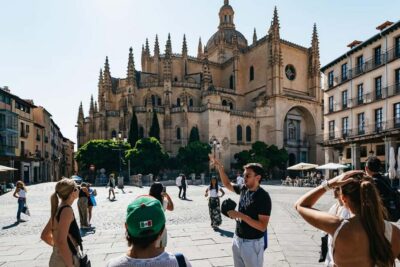
Next up is the Segovia Cathedral, in the main square. It’s a Gothic-style Roman Catholic cathedral dedicated to the Virgin Mary, built in the mid-16th century.
This stop is about learning to read the architecture. Gothic cathedrals often get described like they’re all style and no story, but the setting here matters—being in the main square means the building feels like part of daily life, not a museum object behind a fence.
On foot, you’ll get a better sense of the cathedral’s mass and how the streets frame it. If you’re the type who likes to “see the plan” in your head, this is a good moment to slow down and do that.
One practical note: if you’re sensitive to cold or wind, bring a layer. Cathedral squares can funnel weather, especially outside the peak summer months.





Stop 3: Church of St Stephen—A Medieval Bell Tower You Can’t Miss Once You Look
The Church of St Stephen is one of the medieval churches in Segovia, dating from the 12th century. What draws attention is its Romanesque bell tower.
This is the kind of stop that can be overlooked when a day is dominated by big-ticket sights like the aqueduct and the Alcázar. But it’s a smart pause because it adds depth: you start to see how medieval Segovia kept shaping itself after Roman times.
The Romanesque style tends to feel heavier and more grounded than Gothic. If you’ve ever wondered why some church towers look like they belong to another century, this is a chance to notice those details without needing a formal architecture degree.
This stop also keeps the walking route interesting. Instead of going straight from one landmark to the next, the tour adds variety: different eras, different design language, different mood.
Stop 4: The Alcázar of Segovia—Castle-Palace Over Rivers
Then comes the star—Alcázar of Segovia. It’s a medieval alcázar located in a UNESCO World Heritage Site area. The Alcázar rises on a rocky crag above the confluence of two rivers near the Guadarrama mountains, and its shape is famous: like the bow of a ship.
That shape matters because it’s why the Alcázar reads as distinctive from so far away. You’re not just looking at a castle. You’re looking at a building that was placed for drama and defense, and later adapted for royal and institutional uses.
Historically, it has served as a fortress, a royal palace, a state prison, a Royal Artillery College, and a military academy. Today it’s used as a museum and a military archives building. You may not get the full backstory in one brief stop, but the guide should give you enough context to make it feel real instead of just “another castle.”
What to do here: give yourself time to look from multiple angles. Even if you only have a short guided window, you can still notice how the structure hugs the rock and how the river setting changes the feel.
And yes, the Alcázar is the kind of place where your brain goes into postcard mode. That’s fine. Just don’t forget to look past the obvious angles and check the details too—the overall form is the magic, and the details are the bonus.
The Best Part: Free Time to Eat and Explore Your Way
After the guided stops, you’ll have ample free time to eat, explore, and sightsee. This is where the tour earns its value for me. A lot of “tours” treat free time like an afterthought. Here it’s built in as a genuine payoff.
Use this window smart. Pick one thing to eat (don’t try to do two “small bites” zones and end up hungry). Then choose one area to wander slowly. If you’re walking enough to feel the day, the win is finding a corner that makes you want to linger.
Cold day tip: one review highlighted something wonderfully practical—at the palace cafeteria, the hot chocolate and even Irish Coffee were called out as standouts. I can’t promise your visit matches that exact treat, but it’s a good reminder: plan for weather, and don’t skip warming up during your own time.
Also, this is when you can slow down and revisit whatever you liked most. If you loved the aqueduct, go find another angle. If the churches grabbed you, you can spend longer around that Gothic square feeling.
Transportation and Timing: The Convenience Trade-Off
The tour includes transportation to and from Madrid with an air-conditioned vehicle, which is a real quality-of-life perk on a day trip. Comfort matters when you’re leaving Madrid in the morning and doing a lot of walking.
One consideration: timing is the weak spot on any day trip by road. In one experience, the bus was delayed by about 35 minutes and the group still had to depart at the same overall time, which cut into time in Segovia. That’s not the end of the world, but it means you should keep expectations flexible—especially if you’re the kind who plans a specific lunch reservation.
My advice: don’t treat this tour like a strict timeline for a second plan later the same day. Give yourself buffer time after the return. If you want a calm evening back in Madrid, you’ll have it.
What the Guide Adds (and What You Can Do With It)
You’ll have a bilingual English-Spanish official guide leading the walking route. The guide’s main job is translating “what you see” into “what it means,” so you can look smarter, not harder.
I like guided architecture stops because they help you avoid the tourist trap of just reading names off signs. With the aqueduct, cathedral, St Stephen’s church, and Alcázar, there are enough different styles that a guide helps your eye sort it out quickly.
After the guided segment, you’ll get to take ownership. That’s the ideal rhythm: you learn the story in a condensed form, then you decide what story you want to keep living.
If you’re traveling solo, couples, or with friends who think in different tempos, this format is a good compromise. One person can stay interested while another can drift into the free-time mode without feeling like the whole day must match one pace.
Who This Tour Fits Best—and Who Might Want Another Option
This tour fits best if you want:
- A one-day Segovia plan with transport included
- A guided route that covers the city’s key landmarks
- Time afterward to eat and explore without feeling rushed
It may feel less ideal if:
- You need a super strict schedule with lots of guarantee on the length of free time
- You prefer to linger inside buildings for long stretches (this tour is built around walking stops and then free time, and specific interior timing isn’t described)
Also, if you’re already doing a deep-dive architectural day trip elsewhere, this one still works because Segovia’s landmarks are visually iconic. You’ll likely see enough even in a shorter guided format to come away satisfied.
Practical Tips Before You Go
Bring:
- Comfortable walking shoes with a solid grip
- A layer for cathedral and terrace winds
- Water or a small snack for the gaps between stops (the route includes multiple sights, but not every moment is described as timed for breaks)
Plan your mindset:
- Treat the guided stops as a quick orientation, not a full museum marathon
- Use your free time as your personal “Segovia essay”—pick what you want to remember and spend time there
And if you’re sensitive to delays, keep your schedule loose for later that evening. It’s rare, but it’s enough of a risk that it deserves respect.
Should You Book the Segovia Tour From Madrid?
I think you should book this tour if you want a stress-reduced way to see Segovia’s headline landmarks without planning transport and without turning your day into a map-reading contest. For $51.20 with guided walking and round-trip transport, the value is strongest when you’ll actually use the guide and then take advantage of the free time.
Skip or consider another option if you’re the kind of traveler who needs guaranteed time at each stop, especially if you’re traveling with tight commitments later in the day. Road timing is always a variable on day trips, and the overall return matters.
If you want a classic Segovia day—Roman aqueduct to medieval Alcázar—this is a practical way to do it.
FAQ
How long is the Segovia tour from Madrid?
It’s listed as approximately 11 hours.
What time does the tour start?
The start time is 9:00 am.
Where do I meet the guide in Madrid?
You meet at C. de San Bernardo, 5, Centro, 28013 Madrid, Spain.
Does the price include transportation to and from Madrid?
Yes. Transportation to and from Madrid is included.
What’s included in the tour?
Included services are a bilingual English-Spanish official guide, an air-conditioned vehicle, and a bilingual English-Spanish guided walking tour around the city.
Is the tour ticket digital?
Yes, it uses a mobile ticket.
What sights are included during the guided portion?
The itinerary includes the Roman aqueduct, Segovia Cathedral, the Church of St Stephen, and the Alcázar of Segovia.
What is the cancellation policy?
Free cancellation is available. You can cancel up to 24 hours in advance for a full refund.
More Tour Reviews in Madrid
- Madrid: Tour Bernabéu Entry Ticket
★ 4.5 · 21,573 reviews - Madrid: Prado Museum Entry Ticket
★ 4.6 · 20,699 reviews - Madrid: “Emociones” Live Flamenco Performance
★ 4.8 · 12,866 reviews - Madrid: Panoramic Route City Tour
★ 4.1 · 12,259 reviews - Madrid: Live Flamenco Show with Food and Drinks Options
★ 4.5 · 9,901 reviews - Avila & Segovia Tour with Tickets to Monuments from Madrid
★ 5.0 · 9,762 reviews
A Day Up in Segovia
- Avila & Segovia Tour with Tickets to Monuments from Madrid
★ 5.0 · 9,762 reviews - Three Cities in One Day: Segovia, Avila and Toledo from Madrid
★ 5.0 · 8,402 reviews - Madrid: Segovia and Toledo Tour, Alcazar, and Cathedral
★ 4.7 · 7,797 reviews - Madrid: Toledo & Segovia Tour w/ Cathedral, Alcazar & Lunch
★ 4.6 · 5,846 reviews - Madrid: Avila and Segovia Day Trip with Tickets to Monuments
★ 4.6 · 4,568 reviews - Toledo & Segovia Tour with Cathedral and Alcazar Tickets & Lunch
★ 4.5 · 4,046 reviews
Just Added: New Madrid Tour Reviews




Segovia Day Trips from Madrid, compared.
 ★ 5.0Avila & Segovia Tour with Tickets to Monuments from MadridFrom $819,762 reviews
 ★ 5.0Three Cities in One Day: Segovia, Avila and Toledo from MadridFrom $1268,402 reviews
 ★ 4.7Segovia and Toledo Tour, Alcazar, and CathedralFrom $487,797 reviews
 ★ 4.6Toledo & Segovia Tour w/ Cathedral, Alcazar & LunchFrom $465,846 reviews
 ★ 4.6Avila and Segovia Day Trip with Tickets to MonumentsFrom $744,568 reviews
 ★ 4.5Toledo & Segovia Tour with Cathedral and Alcazar Tickets & LunchFrom $454,046 reviews
 ★ 4.5Avila with Walls and Segovia with Alcazar from MadridFrom $603,293 reviews
 ★ 4.3From Madrid: Segovia & Avila Day Trip with Optional TicketsFrom $592,161 reviews
Browse the lists this tour appears in