REVIEW · MADRID
Monastery Royal Barefoot Visit with entrance without waiting for queues
Royal silence, line-free entry, and art that stops you. This guided visit gets you into the Monasterio de las Descalzas Reales without queue stress, so you can focus on what matters: Juana of Austria’s convent story told through paint, sculpture, and prayerful spaces. It’s one of those Madrid experiences where the time feels different—quiet corridors, big religious art, and details you’ll want to look at twice.
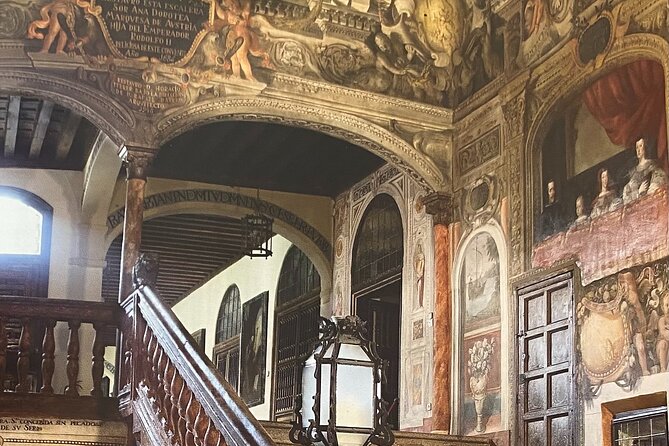
I especially liked two things. First, the main staircase frescoes attributed to Claudio Coello, which give you a strong visual hook right away. Second, the choir area, including Pedro de Mena’s Dolorosa, plus the tombs of Empress María and her daughter, Infanta Margarita—royal, intimate, and unmistakably “Austrias” in spirit.
One consideration: the pacing can feel a bit uneven depending on your taste, and the tapestries commissioned by Isabel Clara Eugenia don’t always land the same way for everyone. Also, the monastery may close for solemn events or national holidays, so it pays to check the day before.
In This Review
- Key highlights you’ll care about
- Line-Free Entry Into the Monasterio de las Descalzas Reales
- Juana of Austria, the Barefoot Convent, and the Story You’ll Track
- Main Staircase Frescoes: Claudio Coello’s Moment Right at the Start
- Upper Cloister Chapels and the Recumbent Christ on Fridays
- Choir Stalls, Pedro de Mena’s Dolorosa, and Royal Tombs
- Paintings From Three Countries: Flemish, Italian, and Spanish Works
- Tapestries and “Small-Detail” Clues You Might Miss on Your Own
- Optional Add-On: Madrid de los Austrias Walk Through Plaza Mayor and Plaza de la Villa
- Price and Value at About $34.62
- Who Should Book This Monastery Visit (and Who Might Skip)
- Should You Book the Descalzas Reales Monastery Visit?
- FAQ
- What’s included in the Monastery of the Descalzas Reales guided visit?
- How long does the monastery visit take?
- Is there an entrance line?
- Where do I meet the guide?
- What’s the maximum group size?
- Is it easy to get there using public transportation?
- What if the monastery closes due to an event or holiday?
- What should I bring or pay for separately?
- Can I change or cancel after booking?
Key highlights you’ll care about
- Skip-the-line entry keeps your 1–2 hours focused on art, not waiting
- Claudio Coello frescoes on the main staircase set the tone fast
- Choir + Dolorosa by Pedro de Mena is the spiritual centerpiece
- Royal tombs of Empress María and Infanta Margarita add real weight
- Flemish, Italian, and Spanish paintings span the 16th and 17th centuries
- Optional Madrid de los Austrias walk connects the monastery to the city’s Austrias-era landmarks
Still deciding? Here are other Madrid tours to weigh up first.
- Madrid: Tour Bernabéu Entry Ticket★ 4.5 · 21,573 reviews
- Madrid: Prado Museum Entry Ticket★ 4.6 · 20,699 reviews
- Madrid: “Emociones” Live Flamenco Performance★ 4.8 · 12,866 reviews
- Madrid: Panoramic Route City Tour★ 4.1 · 12,259 reviews
Line-Free Entry Into the Monasterio de las Descalzas Reales
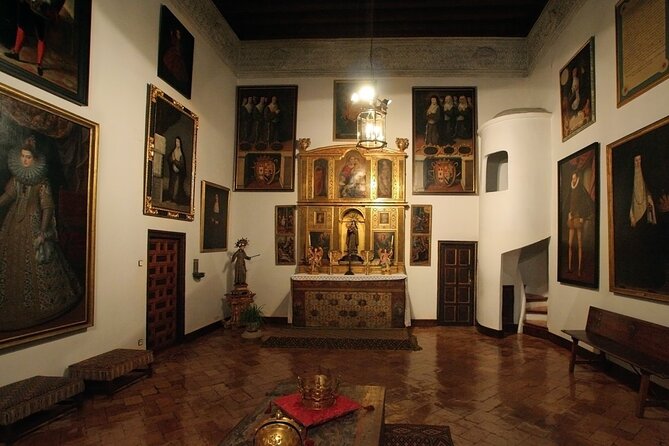
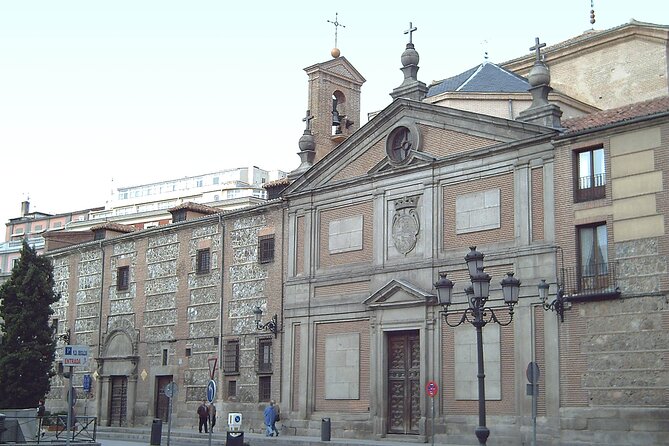
This is the kind of museum-adjacent visit I like in Madrid: short, guided, and not padded. You start at the monastery entrance at Pl. de las Descalzas, 3, and the big practical win is that you go in with entrance without waiting for queues. With a group capped at 15 people, the flow stays calm enough that you actually have time to look, not just follow.
The total visit is about 1–2 hours for the monastery portion. That’s an ideal length if you’re doing a packed day—this is art you can process, but it won’t swallow your afternoon. And because it’s near public transportation, you’re not stuck planning your whole route around one tricky stop.
Juana of Austria, the Barefoot Convent, and the Story You’ll Track
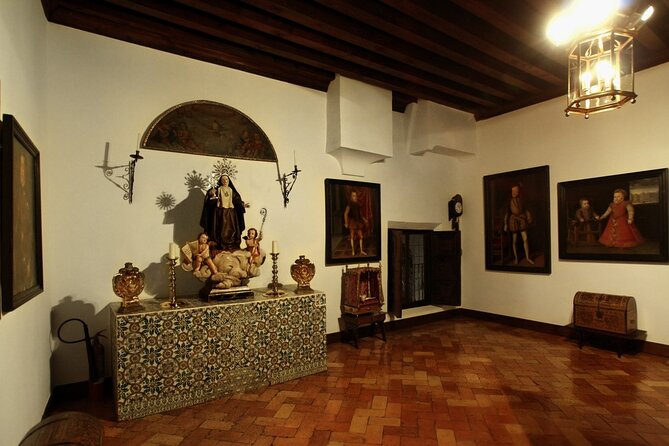
The heart of this place is Juana of Austria, the youngest daughter of Charles V and sister of Philip II. The monastery was founded as a convent for her community, and the guide frames what you see around that lived religious setting—not just as an art collection.
You’ll spend the time moving through spaces that still function as prayer spaces, so the mood changes when you reach the choir area. One of the best “value” parts of a guided visit here is how the art connects to the people behind it: the Austrias dynasty isn’t just names on plaques. You feel it in how the monastery was decorated and how it was used.
You may also notice the monastery’s barefoot community in daily life. Some descriptions point out there are still around 18 shoeless women—and if you time it well, mass can add a whole extra layer (including singing). The visit itself is guided, but the monastery’s ongoing routine is part of the atmosphere.
Main Staircase Frescoes: Claudio Coello’s Moment Right at the Start
If you want a strong “first wow,” this tour gives you one. The main staircase frescoes are attributed to Claudio Coello, and the guide’s job is to help you see beyond the first glance. You’re not just looking at color—you’re learning how the frescoes shape the experience of moving upward through the building.
Why this matters for you: in a small group, you can actually get oriented. Many sites in Madrid are visually intense all at once. Here, the staircase works like a visual map. It tells you where to stand, what details to look for, and how the monastery’s artistic language works.
Even if frescoes aren’t your usual thing, this portion tends to hook people fast because it’s so central to the building’s layout. You get the art in the right place—literally built into the way you move.
Upper Cloister Chapels and the Recumbent Christ on Fridays
As you head toward the upper cloister areas, the tour zooms in on the chapel decorations. One standout described here is an image of a recumbent Christ from the 16th century, attributed to Gaspar Becerra. The guide also notes that this image is carried in a procession on Friday.
This is a useful tip because it changes your way of looking. Instead of thinking of the image as “just religious art,” you understand it as something used—something carried—meaning it has a life beyond the wall. If you’re going on a Friday, it’s worth asking how the monastery’s schedule affects what you can see during your visit.
The overall effect of this cloister section is more intimate than you might expect. The spaces feel designed for attention: chapels, images, and details that reward slower looking.

Choir Stalls, Pedro de Mena’s Dolorosa, and Royal Tombs
This is where the tour becomes truly memorable for many people, and it’s easy to see why. You’ll admire the choir with its original stalls, where the community gathers to pray. That matters because it keeps the art grounded in function, not just display.
Then comes Pedro de Mena’s Dolorosa—a magnificent depiction that’s described as a key highlight here. When you see it in context of the choir space, it clicks as both artwork and devotion. It’s the kind of sculpture that makes you pause, because it feels emotionally specific, not decorative.
And you don’t just get one artistic highlight: near the choir area you also find the tombs of Empress María and Infanta Margarita. That royal connection deepens the whole visit. The monarchy isn’t abstract; it’s literally resting here. For anyone who likes European art more when it’s tied to family stories and power networks, this part is a big payoff.
Practical note: because you’re in a working monastery setting, keep your voice low and your photo-taking sensible. You’ll have a better experience, and you’ll fit the atmosphere.
Paintings From Three Countries: Flemish, Italian, and Spanish Works
After the sculpture and choir focus, the tour shifts into paintings from the 16th and 17th centuries. You’ll be shown works described as Flemish, Italian, and Spanish, including pieces made by artists such as Vincenzo Carducci and Antonio Moro.
This section is valuable because it helps you connect styles. You can start to notice how different regions painted saints, portraits, and religious narratives. The guide’s role here is to point out what to look for so you’re not just staring at frames.
If you like art tours, you’ll appreciate the pacing: the tour doesn’t try to overwhelm you with dozens of works in quick succession. Instead, it focuses on major ones, then gives you enough context to recognize patterns—so the paintings start to feel like a conversation rather than random masterpieces.
Tapestries and “Small-Detail” Clues You Might Miss on Your Own
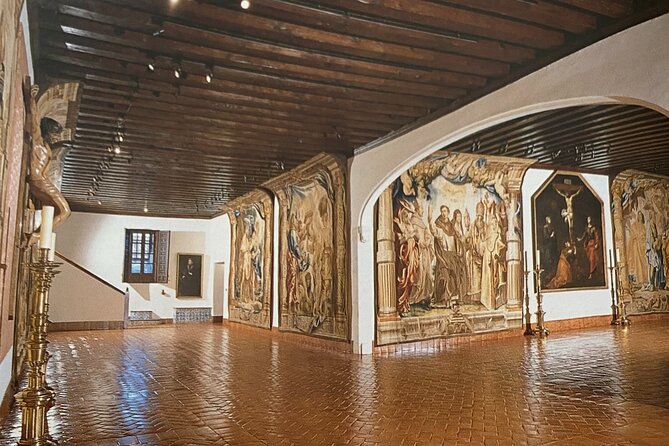
One of the notable parts of this monastery’s artistic plan is the tapestries commissioned by Isabel Clara Eugenia. These are part of what the guide highlights, and you’ll likely see them in interior areas connected to the decoration of the monastery.
Here’s the balanced reality: some people love every element of the textile work; others find it less satisfying than the paintings and sculpture. If you’re the type of visitor who needs “wow” in every single room, you might feel a little mismatch here. That said, the value of the tapestries section is still in the historical idea—how Isabel Clara Eugenia shaped the visual environment of the monastery.
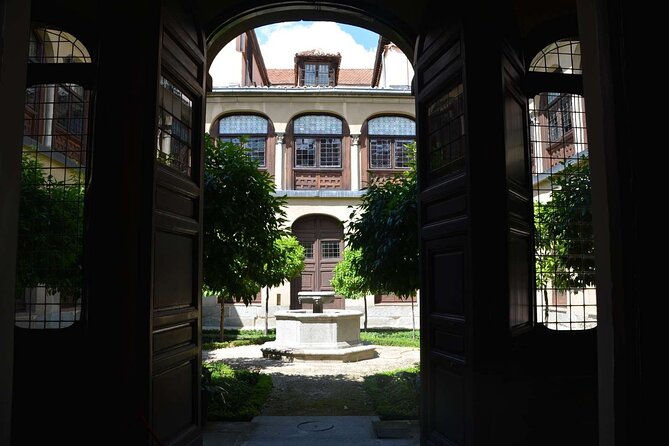
Also keep an eye out for the quieter stuff people often miss: descriptions mention two interior gardens, Latin inscriptions you may want help reading, and well-kept floors that make the spaces feel cared for. These details don’t always scream for attention like a big painting, but they’re part of why the monastery feels lived-in and deliberate.
If you want to maximize this portion, ask questions. A good guide will help you read inscriptions or explain what a motif means, and that can turn a “plain wall text” into a story you’ll remember.
Optional Add-On: Madrid de los Austrias Walk Through Plaza Mayor and Plaza de la Villa
There’s an optional extension called something along the lines of a Monastery of the Barefoot + Walk through Madrid of the Austrias. If you pick it, you’ll add about 1 hour of walking and see emblematic Austrias-era spaces, including Plaza Mayor and Plaza de la Villa.
This add-on is worth considering if you want your monastery visit to connect to the broader city story. The Austrias dynasty shows up everywhere in Madrid—buildings, legends, and street-level reminders of where royal power shaped the city. In a short walk, you won’t cover the whole empire, but you’ll get enough context to make sense of what you see later on your own.
A practical tip: if you’re tired or short on time, keep it simple. The monastery itself is already a full art-focused experience. The walk is best when you want a smooth bridge from indoor art to the urban stage where that power played out.
Price and Value at About $34.62
At $34.62 per person, this visit sits in a “reasonable for what you get” zone—especially because tickets and the guided visit are included. You’re paying for three things: access, interpretation, and a time-efficient route through the most important parts of the monastery.
The skip-the-line factor matters more than it sounds. In central Madrid, time can slip away fast. Here, you protect your schedule and reduce stress. With a small group size (max 15), you also tend to get better flow and more room for questions, which is part of what turns a religious art stop into a personal experience.
If you love art but don’t want a half-day commitment, this is a strong fit. If you only care about the biggest “signature” masterpieces and hate guided pacing, you might feel the tour hits more than you want. Still, the format is tight enough that it doesn’t drag.
Who Should Book This Monastery Visit (and Who Might Skip)
You’ll likely love this if you:
- want major religious art in a working monastery setting
- enjoy paintings plus sculpture, not just one category
- like short guided experiences that still feel meaningful
- care about how the Austrias dynasty shows up through art and architecture
You might choose something else if:
- you dislike slow-looking in quiet spaces
- you’re mainly hunting for shopping streets and big city views today
- you only want the most famous single artwork (because the experience spreads across multiple rooms and themes)
The monastery’s closure risk is real: the site may close due to solemn events or national holidays. If you’re visiting on a date with major religious observances, double-check so you don’t lose your whole plan.
Should You Book the Descalzas Reales Monastery Visit?
Yes—if you want a focused, art-centered Madrid experience without queue stress. This is the kind of tour that works especially well when you’re balancing a busy schedule with your desire to see something authentic and specific. The combination of Claudio Coello’s staircase frescoes, Pedro de Mena’s Dolorosa, and the royal tombs is strong, and the small-group format helps you actually take it in.
Book it when you can, because it’s priced fairly and the monastery setting isn’t something you can easily replicate on your own in the same way.
FAQ
What’s included in the Monastery of the Descalzas Reales guided visit?
The tour includes tickets and a guided visit.
How long does the monastery visit take?
The duration is listed as 1 to 2 hours (approx.) for the activity.
Is there an entrance line?
The experience is described as having entrance without waiting for queues.
Where do I meet the guide?
The meeting point is Monasterio de las Descalzas Reales, Pl. de las Descalzas, 3, Centro, 28013 Madrid, Spain.
What’s the maximum group size?
The tour has a maximum of 15 travelers.
Is it easy to get there using public transportation?
Yes, it’s listed as being near public transportation.
What if the monastery closes due to an event or holiday?
The information says the monastery may close due to solemn events or national holidays.
What should I bring or pay for separately?
Drinks and tip are not included.
Can I change or cancel after booking?
This experience is listed as non-refundable and cannot be changed for any reason. If canceled due to not meeting the minimum traveler requirement, you’ll be offered another date/experience or a full refund.
More Tour Reviews in Madrid
- Madrid: Tour Bernabéu Entry Ticket
★ 4.5 · 21,573 reviews - Madrid: Prado Museum Entry Ticket
★ 4.6 · 20,699 reviews - Madrid: “Emociones” Live Flamenco Performance
★ 4.8 · 12,866 reviews - Madrid: Panoramic Route City Tour
★ 4.1 · 12,259 reviews - Madrid: Live Flamenco Show with Food and Drinks Options
★ 4.5 · 9,901 reviews - Avila & Segovia Tour with Tickets to Monuments from Madrid
★ 5.0 · 9,762 reviews