
Toledo turns one day into a real brain workout. You’ll glide about 60 km south from Madrid by comfortable coach with panoramic windows, then walk the old city that grew from a long mix of Jewish, Muslim, and Christian communities. Two things I really like about this outing are the official guided walking tour (so you get your bearings fast) and the added sword & damasquine factory visit, which gives you something hands-on beyond views. One possible drawback to keep in mind: the stops are time-boxed, and if the bilingual delivery doesn’t land with your preferred language, the commentary may feel thin.
This is also built for people who want the logistics handled. You meet near C. de Ferraz 3 in Moncloa–Aravaca, ride together in a small group (up to 30), and come back at either 2:30 pm or 5:30 pm depending on which option you choose. The pacing is relaxed in the sense that you’re not navigating buses and transfers yourself, but it’s still a sightseeing day, so wear comfy shoes.
Finally, the payoff is that Toledo is compact and unforgettable. The protected old center, the Casco Histórico, wraps the Tagus River meander and was declared a UNESCO World Heritage Site in 1986. That means you can see big “how did they build this?” moments without spending your entire day on transit.
In This Review
- Key points to know before you go
- The Madrid-to-Toledo coach ride: easy mode for a long day
- Picking your return time: 2:30 pm vs 5:30 pm
- Plaza de Zocodover: where Toledo’s old-city life used to center
- Catedral Primada: the Gothic facade moment (and what’s not included)
- Jewish Quarter viewpoints: layered communities in a tight walking route
- Casco Histórico de Toledo: UNESCO magic in street form
- Sword & damasquine factory: craft tourism that breaks up the photos
- Free time in Toledo: make it count with a simple plan
- Price and value: what you pay for, and what you’ll still pay for
- Potential hiccups: pacing, language balance, and guide depth
- Should you book this Toledo day trip from Madrid?
- FAQ
- How long is the Toledo trip from Madrid?
- Is it full day or half day?
- What time do I return to Madrid?
- Where do I meet in Madrid?
- What’s included in the tour price?
- Are cathedral tickets included?
- How large are the groups?
- Can I cancel, and when?
- Is the tour near public transportation?
Key points to know before you go
- Coach ride with panoramic windows for easy orientation before you even step off the bus
- Official guided walking tour focused on key sights in the old city
- Plenty of guided highlights at Plaza de Zocodover, the Primate Cathedral facade area, and the Jewish Quarter area
- Sword & damasquine factory visit adds a craft stop to break up the walking
- Return choice at 2:30 pm or 5:30 pm to match your energy and timing
- Cathedral admission not included, so plan what you want to do once you’re there
South to Toledo, more ways to make the run
- Three Cities in One Day: Segovia, Avila and Toledo from Madrid★ 5.0 · 8,402 reviews
- Madrid: Segovia and Toledo Tour, Alcazar, and Cathedral★ 4.7 · 7,797 reviews
- Toledo Tour from Madrid: Cathedral, Synagogue & St. Tome’s Church★ 5.0 · 6,784 reviews
- Madrid: Toledo & Segovia Tour w/ Cathedral, Alcazar & Lunch★ 4.6 · 5,846 reviews
The Madrid-to-Toledo coach ride: easy mode for a long day
The whole day starts with a comfortable coach ride from central Madrid, 60 km south to Toledo. That distance matters: Toledo is close enough for a same-day trip, but far enough that self-driving can be annoying with traffic and parking. Here, you simply board near C. de Ferraz 3 (Moncloa–Aravaca), sit back, and let someone else handle the route.
I also like the “eyes-on-the-road” setup. The panoramic sightseeing windows are a small detail, but they help you understand how Toledo rises above the land and why the river bend shapes the city. Even before your walking tour begins, you start getting the visual map.
The group size cap (up to 30) is another practical plus. Large buses can feel chaotic; smaller ones tend to move more smoothly on and off, especially when you need everyone together for the next photo stop. This matters when your schedule is tight and your time in the old city is limited to short guided segments.
Picking your return time: 2:30 pm vs 5:30 pm
You’ve got two options for coming back to Madrid: arrival at 2:30 pm or 5:30 pm. That choice is basically your choice of pace.
If you come back earlier, you’ll be trading extra wandering time for a faster wrap-up. This works well if you’re also doing other Madrid plans the same evening, or if you just want a highlights-focused introduction to Toledo. If you choose the later return, you’ll have more breathing room for unplanned detours like a second viewpoint, a longer snack break, or lingering in the historic streets around the old center.
Either way, plan on the day running roughly 6 to 9 hours total (depending on which option you select and how the day flows). Toledo rewards slow walking, but this is still a guided day trip, so expect a structure: brief stops with commentary, then pockets of freedom.
Plaza de Zocodover: where Toledo’s old-city life used to center
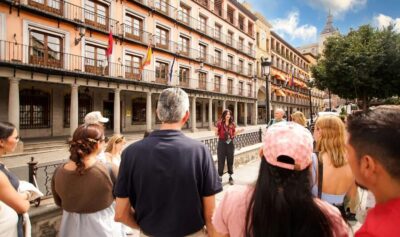
Your walking loop begins at Plaza de Zocodover, the historic heart of Toledo. It was the main hub for much of the city’s history, which is why it still feels like the natural place to get your bearings. In a city where streets twist and viewpoints appear suddenly, starting at a recognizable center reduces stress.
The stop is short (about 10 minutes), so think of it as an orientation moment, not a deep dive. Use it to notice street directions and how people move between squares and viewpoints. Even if you’re not studying architecture, you’ll start to feel the city’s logic: open spaces, then sudden narrow climbs and turns.
Practical tip: if you’re sensitive to crowds, step aside from the busiest corners during the first minutes. Once the group is moving, the square often becomes easier to enjoy at your own pace during your later free time.
Catedral Primada: the Gothic facade moment (and what’s not included)
Next up is the Catedral Primada de Toledo area, often called the Primate Cathedral. This cathedral is one of Spain’s 13th-century High Gothic cathedrals and is widely viewed as a top example of the Gothic style in the country. It was begun in 1226 under Ferdinand III, which is a good anchor for appreciating why the building looks the way it does.
Here’s the key catch: the time allocated is brief (around 10 minutes), and admission tickets are not included. That means you’re mostly seeing the facade area through the guided walk and viewpoints, not doing a full interior visit as part of the package.
So I’d frame it like this: this stop is for first impressions and outdoor photo angles. If you want a full cathedral visit inside, you’ll need to plan separately once you’re there (timing and ticketing depend on your day). If you’re mainly interested in the exterior Gothic lines and the city’s dramatic viewpoints, this works perfectly as a quick, high-impact stop.
Set these beside it before you book anything in Madrid



Jewish Quarter viewpoints: layered communities in a tight walking route
Toledo is famous for the way different religious communities lived alongside each other, sometimes peacefully, sometimes not. This tour’s walking plan includes the Jewish Quarter of Toledo, where the Jewish community became prominent in the 12th and 13th centuries and was known for being among the most populous and wealthy in the Kingdom of Castile.
The guided stop here is also short (about 10 minutes), but you’re in the part of the city where the streets and placement make the story easier to understand. Even without a long lecture, the physical layout helps you grasp why people clustered and how communities interacted across neighborhoods.
The tour overview also signals that the guide will point out synagogue and mosque-related highlights as part of the broader city story. That’s helpful for first-time visitors, because it nudges you beyond just “cathedral photos.” Still, keep expectations realistic: with time-boxed stops, you’ll get guided direction and context rather than a classroom-style lesson.
Practical approach: if this topic matters to you, listen for the themes the guide emphasizes and then use your later free time to linger around the areas you found most interesting. The city is compact enough that you can follow your curiosity without adding major transit.
Casco Histórico de Toledo: UNESCO magic in street form
One of the best parts of Toledo is that its old center is protected and visually consistent. The tour includes the Casco Historico de Toledo, described as the protected area of the old city center, enclosed by the city wall and shaped by the meander formed by the Tagus River. It was declared a UNESCO World Heritage Site in 1986, which is exactly the kind of label that matters here because the streets still feel “kept.”
The guided time at this portion is around 15 minutes, so think of it as a guided route through the city’s sense of place. You’re not just learning names—you’re walking the kind of layout that makes the city feel like it was planned for defense, daily life, and long-distance survival all at once.
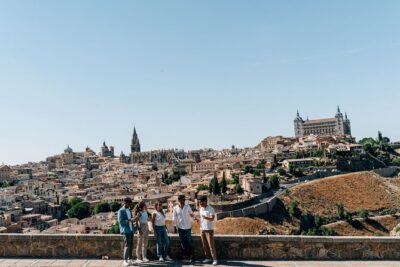
This is also where you’ll get some of the easiest photo moments: river views, wall-lined streets, and the sense that Toledo sits above everything else. If you’re short on time, Casco Histórico is where you’ll get the most “why this city is different” payoff per minute.
Sword & damasquine factory: craft tourism that breaks up the photos
A big inclusion in this tour is a guided visit to a sword & damasquine factory. This is the one stop that turns it from a pure walking sightseeing day into something more memorable for many people: you get to see a craft focus tied directly to the city’s reputation.
Because the plan just says “guided visit,” you won’t be getting every possible technical detail built into your schedule. But it’s still a meaningful change of pace. Walking uphill in Toledo for hours can blur together unless you have a break that’s structured and interesting.
I’d treat this stop as an opportunity to ask practical questions from the guide: what you’re seeing, how the process is described, and what you should pay attention to. If you like artisan workshops and you’re okay with a short break from street walking, you’ll probably enjoy it. If you prefer pure monuments and don’t care about crafts, you may view this as optional flavor rather than the main event.
Free time in Toledo: make it count with a simple plan
The tour includes free time to explore at your own pace after the guided segments. That’s valuable because Toledo doesn’t always “cooperate” with fixed schedules. You’ll often want to slow down at one overlook or return to a street corner where the light looked better than your first pass.
To use your free time well, I’d keep your plan simple:
- Pick one viewpoint to return to and spend 20–30 minutes there
- Decide early if you want more time around the cathedral area (since entry isn’t included)
- Grab lunch nearby rather than searching far; Toledo’s streets can make long detours harder than they look
If you only do the guided stops, you’ll get the highlights. If you add a little free-time wandering, you’ll feel the city’s rhythm and get better photos without rushing.
Price and value: what you pay for, and what you’ll still pay for
At $30.72 per person, this tour is positioned as a budget-friendly way to get to Toledo without handling transport and navigation yourself. For many people, that’s the real value: the package bundles coach travel, an official guided walking tour, the sword & damasquine factory stop, and time to explore on your own.
What’s not included is important: cathedral admission is not included. That means your total cost in the end depends on whether you plan to enter the cathedral interior or just see the facade and viewpoint portions during the guided walk.
So, is it worth it? In my view, it’s a solid buy if you want:
- a structured introduction to Toledo’s major districts
- a low-stress day plan
- a mix of monument views and a craft stop
It’s less ideal if you’re expecting long, detailed time inside major sites. This itinerary is built to cover key areas, not to linger for deep interior experiences.
Potential hiccups: pacing, language balance, and guide depth
The biggest risk with any guided bilingual day trip is balance. One reported concern is that the bilingual setup may lean heavily toward Spanish at the start, and then the English commentary may feel limited once you’re in Toledo. Another issue mentioned was disorganization and guides with limited depth on Toledo.
I can’t promise how it will go on your specific date, but I can help you plan smarter. Here’s how I’d protect your experience:
- Arrive with a short list of what you want most: cathedral views, Jewish Quarter context, or craft stop
- If you’re relying on the guide’s explanations, be ready to ask a question or two while you have a moment
- Don’t assume every stop will be a long lesson; the schedule uses quick windows for highlights
Also, remember the stops themselves are brief. Plaza de Zocodover and the Jewish Quarter segment are around 10 minutes each, and the cathedral facade time is similarly short. That’s not “bad”—it’s the design. But it does mean you should use your included free time to slow down where the guide piqued your interest.
Should you book this Toledo day trip from Madrid?
Book it if you want a stress-free Toledo overview with transport handled, a guided walk that covers multiple community stories, and a craft stop that adds variety. This is especially good for first-timers who want the city’s main highlights without planning a full day on their own.
Skip it (or choose a different format) if you need lots of interior time inside major sites, or if you strongly prefer one language style over bilingual commentary. Because the guided stops are short, the experience works best when you treat it as a curated sampler and then use free time for what genuinely grabs you.
FAQ
How long is the Toledo trip from Madrid?
The duration is approximately 6 to 9 hours, depending on the option you choose.
Is it full day or half day?
You can choose either a full day or a half day.
What time do I return to Madrid?
The tour offers two return choices: arrival back at 2:30 pm or at 5:30 pm.
Where do I meet in Madrid?
The meeting point is C. de Ferraz, 3, Moncloa – Aravaca, 28008 Madrid, Spain. The activity ends back at the meeting point.
What’s included in the tour price?
Included are an air-conditioned vehicle, a guided walking tour with an official guide, a guided visit to the sword & damasquine factory, and free time to explore on your own.
Are cathedral tickets included?
No. Admission for the Catedral Primada is not included.
How large are the groups?
The maximum group size is 30 travelers.
Can I cancel, and when?
Yes, you can cancel for free up to 24 hours in advance for a full refund. If you cancel less than 24 hours before the start time, the amount paid is not refunded.
Is the tour near public transportation?
Yes, the meeting point is near public transportation.
More Full-Day in Madrid
- Toledo Half or Full Day Tour with Optional Lunch from Madrid
★ 4.5 · 5,807 reviews - From Madrid: Toledo Full-Day Trip with Optional Cathedral
★ 4.6 · 2,414 reviews - Full Day Tour to Avila & Segovia from Madrid
★ 5.0 · 1,133 reviews - From Madrid: Avila and Segovia Full-Day Tour
★ 4.6 · 1,052 reviews - Madrid to Avila & Segovia: Full-Day Highlights Tour
★ 4.5 · 661 reviews - From Madrid: Half-Day or Full-Day Trip to Segovia
★ 3.9 · 211 reviews
More Tour Reviews in Madrid
- Madrid: Tour Bernabéu Entry Ticket
★ 4.5 · 21,573 reviews - Madrid: Prado Museum Entry Ticket
★ 4.6 · 20,699 reviews - Madrid: “Emociones” Live Flamenco Performance
★ 4.8 · 12,866 reviews - Madrid: Panoramic Route City Tour
★ 4.1 · 12,259 reviews - Madrid: Live Flamenco Show with Food and Drinks Options
★ 4.5 · 9,901 reviews - Avila & Segovia Tour with Tickets to Monuments from Madrid
★ 5.0 · 9,762 reviews
Down to Toledo for the Day
- Three Cities in One Day: Segovia, Avila and Toledo from Madrid
★ 5.0 · 8,402 reviews - Madrid: Segovia and Toledo Tour, Alcazar, and Cathedral
★ 4.7 · 7,797 reviews - Toledo Tour from Madrid: Cathedral, Synagogue & St. Tome’s Church
★ 5.0 · 6,784 reviews - Madrid: Toledo & Segovia Tour w/ Cathedral, Alcazar & Lunch
★ 4.6 · 5,846 reviews - Toledo Half or Full Day Tour with Optional Lunch from Madrid
★ 4.5 · 5,807 reviews - From Madrid: Guided Day Trip to Toledo by Bus
★ 4.1 · 5,280 reviews
Just Added: New Madrid Tour Reviews




Toledo Day Trips from Madrid, compared.
 ★ 5.0Three Cities in One Day: Segovia, Avila and Toledo from MadridFrom $1268,402 reviews
 ★ 4.7Segovia and Toledo Tour, Alcazar, and CathedralFrom $487,797 reviews
 ★ 5.0Toledo Tour from Madrid: Cathedral, Synagogue & St. Tome’s ChurchFrom $816,784 reviews
 ★ 4.6Toledo & Segovia Tour w/ Cathedral, Alcazar & LunchFrom $465,846 reviews
 ★ 4.5Toledo Half or Full Day Tour with Optional Lunch from MadridFrom $645,807 reviews
 ★ 4.1From Madrid: Guided Day Trip to Toledo by BusFrom $405,280 reviews
 ★ 4.5Toledo & Segovia Tour with Cathedral and Alcazar Tickets & LunchFrom $454,046 reviews
 ★ 4.3From Madrid: Toledo Guided Day TripFrom $323,501 reviews
Browse the lists this tour appears in