REVIEW · MADRID
Don Quixote Quest Experience in Madrid
Madrid is fun when you’re not rushing. This Don Quixote Quest turns sightseeing into a 2-hour game, and I like how it mixes the freedom of doing things at your pace with a clear guided flow. I also like that it targets places tied to big names like Cervantes and Goya (plus a few you’d likely miss). One thing to keep in mind: city construction can make some instructions feel slightly dated, so plan to stay flexible and read directions carefully.
The route moves through classic squares and author landmarks, but the real payoff is the way you look up, slow down, and notice details that don’t show up on a quick walk-by. You’ll start near C. del Marqués Viudo de Pontejos and finish in the middle of Plaza de Sta. Ana, with the app guiding you step by step.
In This Review
- Key things I’d plan for before you start
- What Don Quixote Quest is really like (and why it works)
- Price and how much you actually get for $8.40
- The walk begins near the old center, then ramps up fast
- Stop 1: Plaza Mayor and the art of looking around
- Puerta Cerrada: the story of a gate you don’t see anymore
- A square tied to banking power and old city changes
- Iglesia de San Sebastián on Atocha Street
- Lope de Vega’s House-Museum: the writer’s real address
- Cervantes childhood home museum: the Don Quixote heart of the route
- Cervantes burial site clues: 2015 forensics changes the ending
- Plaza de Sta. Ana and the final stretch with culture and tapas energy
- What you’ll miss without a physical guide (and how to fix it)
- Good fit for: families, friend groups, and literature-lovers with limited time
- Should you book Don Quixote Quest in Madrid?
- FAQ
- How long is the Don Quixote Quest experience?
- Where does the experience start and end?
- What time of day can I start?
- Do I need internet to play?
- Is there a physical tour guide?
- Is it private for my group?
- Is it free for kids?
- How much does it cost?
- Can I cancel and get a refund?
Key things I’d plan for before you start
- Offline city game: you don’t need internet to play, which is a lifesaver in spotty coverage areas
- Private for your group: only your party plays, so it feels more personal than a big tour
- Start any time: it runs 12:00 AM to 11:59 PM, so you can fit it into your day
- Mobile ticket: access is set up through your phone
- Cultural stops with real stories: Plaza Mayor, Puerta Cerrada, Lope de Vega, Cervantes, and more
- Family-friendly: it’s free for kids and works well for families and friends
Still deciding? Here are other Madrid tours to weigh up first.
- Madrid: Tour Bernabéu Entry Ticket★ 4.5 · 21,573 reviews
- Madrid: Prado Museum Entry Ticket★ 4.6 · 20,699 reviews
- Madrid: “Emociones” Live Flamenco Performance★ 4.8 · 12,866 reviews
- Madrid: Panoramic Route City Tour★ 4.1 · 12,259 reviews
What Don Quixote Quest is really like (and why it works)
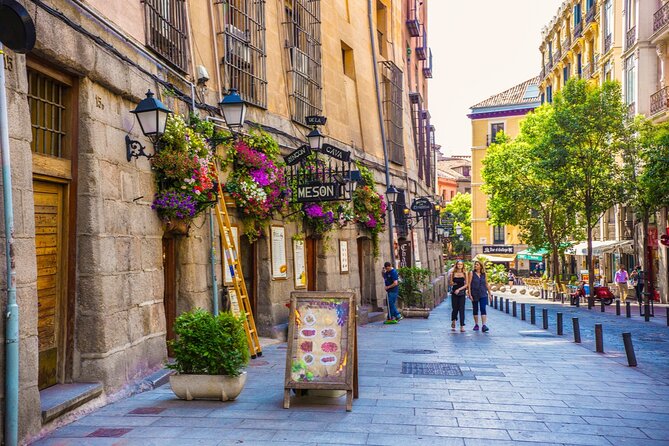
Don Quixote Quest in Madrid is part scavenger hunt, part self-guided walking tour, and part literature lesson. Instead of following a lecturer, you follow prompts on your phone. You answer challenges, move to the next spot, and slowly stitch together a route through central Madrid.
The value here is that it gives structure without removing choice. You can start at any hour, take a break, and resume later. That matters in Madrid, where your best plans often depend on weather, lunch timing, and how long you feel like wandering.
Another strong point: you can play offline. That means you can download the app and run the experience without worrying about data, roaming costs, or a dead signal at street level.
Price and how much you actually get for $8.40
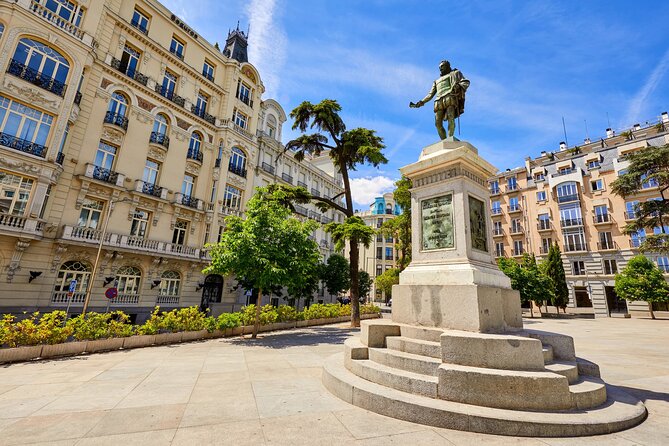
At about $8.40 per person for a roughly 2-hour experience, this is a budget-friendly way to cover a lot of ground in central Madrid. You’re not paying for a physical tour guide on foot; you’re paying for the route, the prompts, and the game format.
That pricing makes sense if you want:
- A low-stress activity that keeps everyone moving
- A way to see major literary sites without committing to a long guided tour
- A shared activity for friends or families that doesn’t feel like homework
It also helps if you’re staying in the area anyway. The start and finish are both central, and the walk naturally lines up with some of Madrid’s most famous stops.
The walk begins near the old center, then ramps up fast
You’ll start at C. del Marqués Viudo de Pontejos, 17 (Centro). From there, the quest leads you through a sequence of plazas and author-linked sites, with each stop tied to a specific challenge.
The pacing is flexible. Even though the quest is designed for about two hours, you can take your time. That’s useful because several locations reward looking closely—especially when you’re hunting for the right detail to answer the prompt.
You’ll end in the middle of Plaza de Sta. Ana, guided by precise instructions in the app. The official endpoint is listed at C. del Príncipe, 2 (Centro), but in practice you’ll land at the square via the quest directions.
Stop 1: Plaza Mayor and the art of looking around
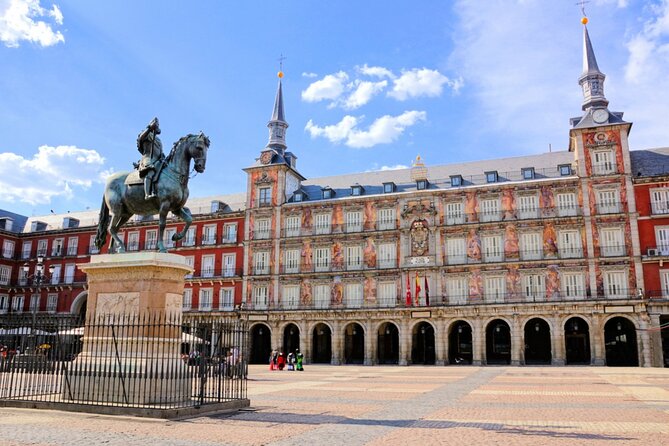
Plaza Mayor is one of Madrid’s big public spaces—historic, central, and busy in the best way. This is where the old Madrid used to gather. It was first built during the reign of Philip III, and it sits just a few blocks from Puerta del Sol.
In the quest, Plaza Mayor is where you get into the rhythm: you’ll scan the space to find the answer to a challenge, then move on to the next location. The game structure makes you treat the square like more than a photo backdrop.
What I’d watch for: don’t speed through the open area. The challenge is tied to the physical details in front of you, and those are easier to catch when you slow down.
Potential drawback: if you’re visiting during heavy crowds, you may need to pause a bit longer to read what the quest needs you to notice.




Puerta Cerrada: the story of a gate you don’t see anymore
Next comes a spot connected to Puerta Cerrada, a name preserved in a complex near where the Christian wall of Madrid opened during the Middle Ages and the Renaissance. That gate was later demolished in 1569, around the time of Isabel de Valois’s entry into the city as wife of Felipe II.
This is a good example of how the quest adds depth. You may not realize you’re walking near a historical transition point, but the prompt pulls you toward the story.
Why this works for value: it’s easy to spend an hour in central Madrid just moving between famous attractions. Here, you get one specific historical thread, and it makes the location feel more real.
Tip: stay patient. Historic sites often reward careful reading, not quick glances.
A square tied to banking power and old city changes
The route then moves to a square created in 1926, shaped by earlier demolitions around the Old Customs square and the area of La Leña (later Calle de la Bolsa). This included the Convent of the Trinitarios Calzados and the fish market of Almidón.
After the expansion, the palace of the Five Major Guilds (built by Manuel de la Ballina in the 17th century) became the property of the Bank of Isabel II. When that bank merged with the bank of San Carlos, it formed the first headquarters of the Bank of Spain. Today, the area houses the General Directorate of the Treasury.
You’ll again answer a challenge by looking around to find the correct clue. This stop is especially interesting if you like the way cities reinvent themselves—sometimes right on top of older urban life.
What to expect on your phone: the prompt will push you to notice something specific tied to that story, not just admire the architecture.
Iglesia de San Sebastián on Atocha Street
The quest continues to Iglesia de San Sebastián, a 16th-century church on Atocha street, number 39. The name comes from a devotional chapel found along the route to the Basilica of Nuestra Señora de Atocha, founded in 1541.
This stop feels like a reset after the busier squares—more focused, more “walk right up and pay attention.” The challenge again asks you to look around and figure out the answer that advances you.
Why it’s worth it: churches in central Madrid often get passed quickly. Here, you’re forced to slow down enough to notice the connection between names, routes, and centuries.
Consideration: if you’re sensitive to religious spaces and quiet rules, keep your voice down and follow any on-site guidance.
Lope de Vega’s House-Museum: the writer’s real address
Next is the House-Museum of Lope de Vega, the writer’s home now turned museum. Lope de Vega bought the sixteenth-century house in 1610.
Even if you don’t go deep inside like a long museum visit, this stop is a strong anchor for the quest’s theme. You’re not just hearing about famous authors—you’re moving through places tied to their lives and work.
In the quest flow, you’ll look around and answer the prompt to learn the story of this stop before moving forward. That makes the museum feel like part of your route, not an optional detour.
Cervantes childhood home museum: the Don Quixote heart of the route
Then the game hits its emotional center. The childhood home of Miguel de Cervantes Saavedra is now a museum dedicated to him. It recreates customs, traditions, and everyday life from the 16th and 17th centuries.
This is also where the quest adds an extra layer for literature fans: the museum includes an important bibliographic collection with editions of Cervantes’ work from different periods and languages, shown in a temporary exhibition room. It also runs activities such as workshops for children and teenagers, conferences, plays, and musical shows.
When you reach this stop, expect the quest to point you toward some detail tied to the Cervantes story. The point is to connect the author’s life with Madrid itself, not treat Don Quixote as a museum-only concept.
If you like family-friendly activities: this stop is the most natural place to slow down. The museum’s child and teen programs mean it tends to feel welcoming even if you’re traveling with kids.
Cervantes burial site clues: 2015 forensics changes the ending
After Cervantes’s home, the quest jumps to where he’s buried. Cervantes was buried at a convent in 1616. His remains were temporarily transferred elsewhere during rebuilding in 1673, then were lost until forensic scientists discovered them in 2015.
This stop adds a real-world twist. History here isn’t just old facts; it includes modern investigation that reshaped what we know.
The quest again asks you to look around and find the right answer for the challenge. It’s a practical way to keep momentum while still feeling like you’re learning something meaningful.
Plaza de Sta. Ana and the final stretch with culture and tapas energy
The quest ends in the middle of Plaza de Sta. Ana, and this is a great payoff location because the square is lively and easy to enjoy after your walking effort.
This area features monuments to Spanish Golden Age writer Pedro Calderón de la Barca and poet/playwright Federico García Lorca, along with lots of restaurants, cafes, and tapas bars. Terraces cover much of the square’s sides, which makes it a natural place to reward yourself after finishing the game.
In the quest flow, you’ll complete the final challenge and arrive at the end point through the app’s exact instructions. Once you’re there, you can keep hanging out or hop to dinner without having to backtrack.
Tip: plan a snack or drink timing for right after the finish. You’ll feel done, and the atmosphere will match that mood.
What you’ll miss without a physical guide (and how to fix it)
This is not a live guided tour. There’s no physical tour guide walking with you. The tradeoff is that you get flexibility and a game-like way to learn. The tradeoff also means you won’t have someone answering your random questions on the spot.
If you want a bit more context while you play, build in a simple strategy:
- Pause longer at the stops that interest you most (Cervantes and Lope de Vega are usually the big ones)
- Read what you can from signs and nearby information panels
- Use the prompts as your anchor, then take a second look around with your own curiosity
The quest is designed to work on its own. But you can still add your own layer of learning without slowing the game down too much.
Good fit for: families, friend groups, and literature-lovers with limited time
This experience is a strong match if you want:
- A fun activity for families and friends
- Something that feels more like an activity than a lecture
- A way to explore Madrid’s center without committing to a long tour
- An easy plan you can fit into different schedules, since you can start at any hour and pause/resume
It also works well for residents of Madrid. If you already know the major landmarks, the prompts tend to steer you toward nearby details and side stops you might skip on autopilot.
Should you book Don Quixote Quest in Madrid?
If you want a low-cost, flexible, offline-friendly way to cover a classic Madrid route while staying entertained, this is an easy yes. The stops connect clearly to major literary figures and Madrid’s layered history, and the game format nudges you to look closely instead of just passing through.
I’d skip it only if you strongly prefer a live guide who can explain everything in real time, or if your schedule is so tight you can’t pause for the occasional crowd or signage read.
Overall: for about $8.40 and around two hours, you’re buying a clever way to see central Madrid with your brain switched on.
FAQ
How long is the Don Quixote Quest experience?
It takes about 2 hours (approx.), though you can take your time.
Where does the experience start and end?
It starts at C. del Marqués Viudo de Pontejos, 17, Centro, 28012 Madrid, Spain. The game ends in the middle of Plaza de Sta. Ana, with the end location guided by instructions in the app.
What time of day can I start?
It’s available from 12:00 AM to 11:59 PM.
Do I need internet to play?
No. You can play offline, and you do not need an internet connection to play the city game.
Is there a physical tour guide?
No physical guide is included. This is a private game-meets-tour experience where you follow prompts.
Is it private for my group?
Yes. It’s private, and only your group will participate.
Is it free for kids?
Yes, it’s free for kids.
How much does it cost?
The price is listed as $8.40 per person.
Can I cancel and get a refund?
You can cancel for a full refund if you cancel at least 24 hours before the experience starts. If you cancel less than 24 hours before, the amount paid is not refunded.
More Tour Reviews in Madrid
- Madrid: Tour Bernabéu Entry Ticket
★ 4.5 · 21,573 reviews - Madrid: Prado Museum Entry Ticket
★ 4.6 · 20,699 reviews - Madrid: “Emociones” Live Flamenco Performance
★ 4.8 · 12,866 reviews - Madrid: Panoramic Route City Tour
★ 4.1 · 12,259 reviews - Madrid: Live Flamenco Show with Food and Drinks Options
★ 4.5 · 9,901 reviews - Avila & Segovia Tour with Tickets to Monuments from Madrid
★ 5.0 · 9,762 reviews