REVIEW · MADRID
Combined admission to San Antonio de los Alemanes and the Monastery of San Plácido
Baroque Madrid hides a two-building art feast. You get a focused one-day visit to San Antonio de los Alemanes and the Monastery of San Plácido, open for cultural visits, with audio support that keeps you from wandering in the dark. I love the fresco drama at San Antonio de los Alemanes, and I appreciate that the audio guides are there in Spanish, English, and French. One thing to consider: there is no live guided tour, so the experience depends on you pressing play and following along.
My second big reason to like this stop is the Monastery of San Plácido. After centuries closed to the public, this Benedictine church now lets you see an enormous showcase of Claudio Coello’s work, led by a main altar canvas that’s almost seven meters high. If you’re the type who likes quiet, art-led pacing, it’s a great match.
In This Review
- Key points before you go
- San Antonio de los Alemanes: a Baroque room that guides your eyes
- Frescoes you can track: Giordano, Carreño de Miranda, and Francisco Rizi
- Manuel Pereira sculptures: the part people forget (until they don’t)
- Moving to San Plácido: a monastery that changes the pace
- Claudio Coello’s Annunciation: the main altar moment
- What the combined ticket really covers (and what it doesn’t)
- Price and logistics for a one-day visit that feels complete
- Who should book this Madrid Baroque two-stop ticket
- Should you book San Antonio de los Alemanes + San Plácido?
- FAQ
- How long does the experience last?
- Is a guided tour included?
- What’s included in the ticket price?
- Where do I go to check in?
- What language options are available for the audio guide?
- Can I cancel for a refund?
Key points before you go
- San Antonio de los Alemanes as Madrid’s Sistine Chapel nickname
- Elliptical church layout that shapes how you view the artwork
- Fresco names to look for: Luca Giordano, Carreño de Miranda, Francisco Rizi
- Monastery of San Plácido: Benedictine space with a major art collection
- Claudio Coello’s Annunciation: a monumental altarpiece near seven meters
Still deciding? Here are other Madrid tours to weigh up first.
- Madrid: Tour Bernabéu Entry Ticket★ 4.5 · 21,573 reviews
- Madrid: Prado Museum Entry Ticket★ 4.6 · 20,699 reviews
- Madrid: “Emociones” Live Flamenco Performance★ 4.8 · 12,866 reviews
- Madrid: Panoramic Route City Tour★ 4.1 · 12,259 reviews
San Antonio de los Alemanes: a Baroque room that guides your eyes
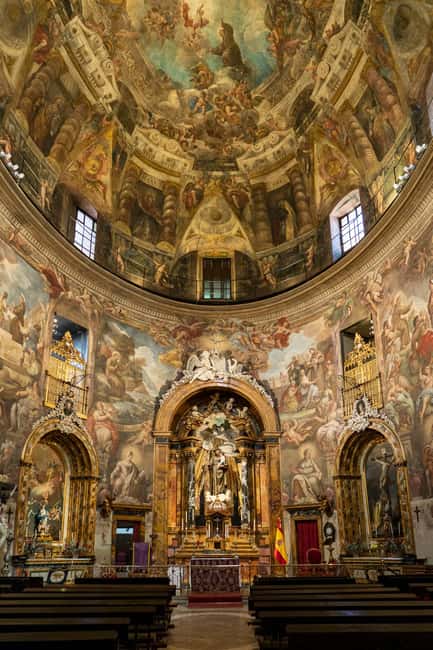
Start at San Antonio de los Alemanes, the first and loudest visual hit of the day. This church is famous for its unusual elliptical design, and that shape changes the feeling of the visit. Instead of feeling like you’re standing in a box, you feel directed, pulled around the space as you look from one section to the next.
I like that the atmosphere is built for art viewing. Baroque architecture here isn’t just decoration; it acts like stage design. You’ll notice the way your position affects what you see, which makes the place feel more alive than a flat museum gallery.
You’re also in for a practical bonus: this is the kind of monument where audio guidance really matters. If you’re not sure what you’re looking at, the audio helps connect the names and themes to what’s on the walls and in the church’s sculptural program. Even if you consider yourself a casual art fan, the experience is much easier when you use the guide rather than relying on your eyes alone.
Frescoes you can track: Giordano, Carreño de Miranda, and Francisco Rizi
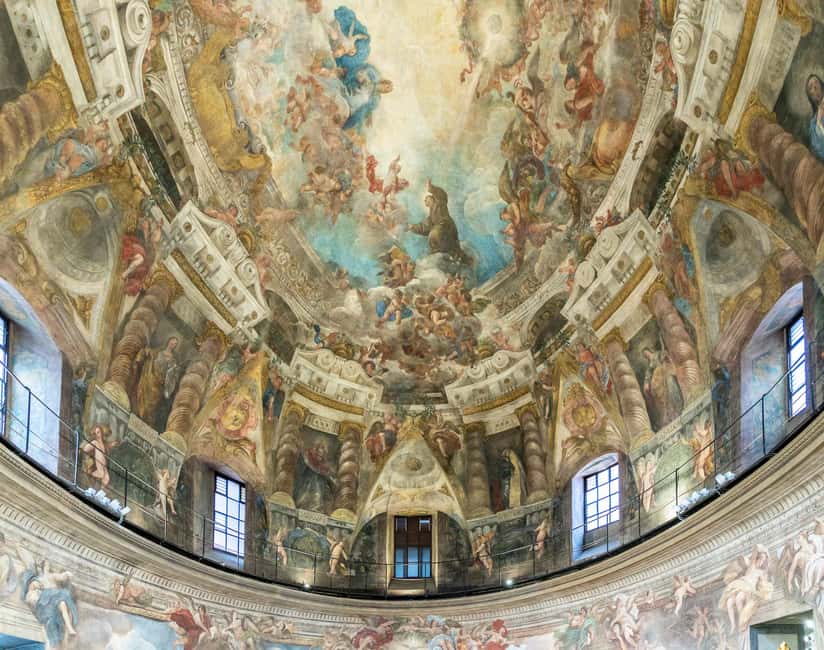
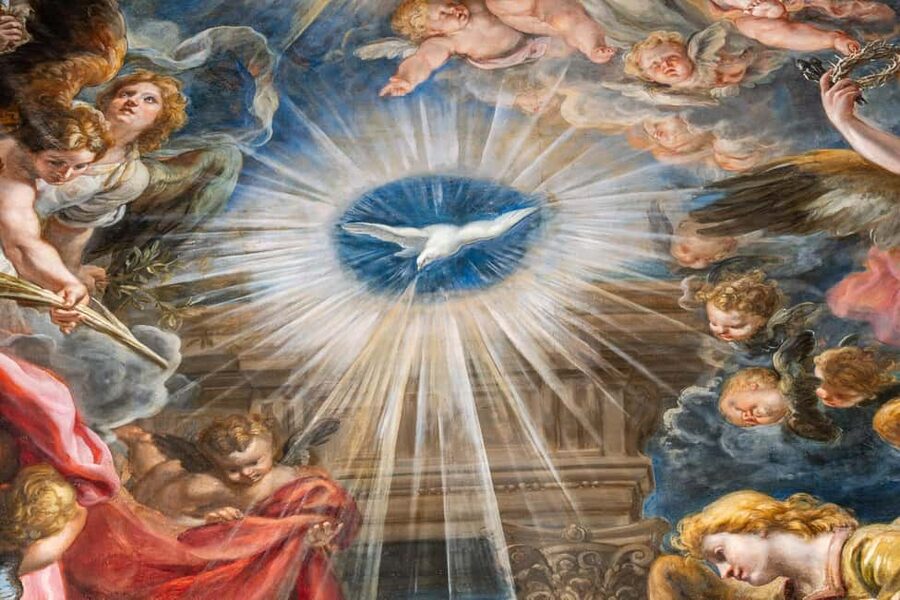
The big draw at San Antonio de los Alemanes is the fresco program, and it’s not random. This church is known for major Baroque painters, including Luca Giordano, Carreño de Miranda, and Francisco Rizi. When you see those names attached to real wall-and-ceiling work in the same space, it’s a very direct way to understand how Madrid Baroque worked.
Here’s how I’d approach it so you don’t miss the good stuff. Move slowly, and pick one artist or one section to focus on before you go hunting for the next image. The church’s layout and the fresco placement reward that method. If you sprint from ceiling to ceiling, you’ll remember the colors but not the structure.
The frescoes are also the moment most people get quiet. Not because the place forces it, but because the scale and detail make you stop. In an itinerary that’s only one day, that effect matters. It means you can spend less time searching and more time actually looking.
Manuel Pereira sculptures: the part people forget (until they don’t)
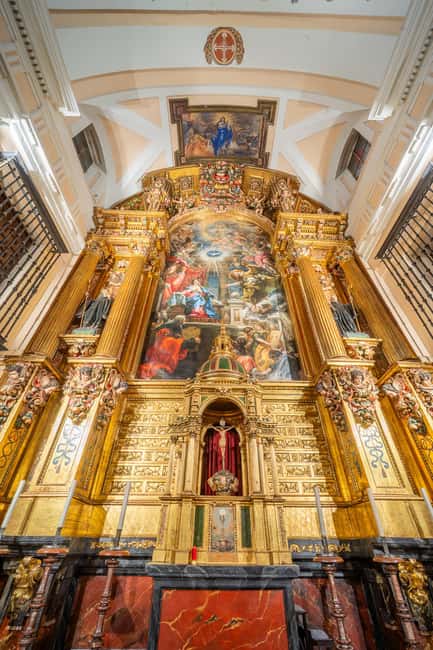
Frescoes get the attention, but San Antonio de los Alemanes also includes striking sculpture by Manuel Pereira. This matters because Baroque interiors work as a total composition—paint and sculpture are meant to play off each other.
In practical terms, don’t only point your camera up. Pause at the sculptural elements and then look back to the painted areas. You’ll start to see how the church is designed to keep you shifting your gaze. That back-and-forth visual rhythm is one of the reasons the nickname of Sistine Chapel of Spain sticks, even if you don’t treat it like a literal comparison.
If you tend to rush through religious art because you think you already get it, this section is a good counterweight. The sculptures give you something tangible to hold onto, so your brain can rest even while your eyes keep moving.
Moving to San Plácido: a monastery that changes the pace
After San Antonio de los Alemanes, you’ll enter the Monastery of San Plácido, a Benedictine space with a very different mood. This is one of Madrid’s best lesser-known Baroque stops, and the contrast is part of the value of doing them together.
The key detail here is that the monastery was closed to the public for four centuries. Now you can see the church as it was meant to be seen, which gives the visit weight. It’s not just a pretty room; it’s a place with a long timeline, and opening it up to visitors changes the way people experience the art.
Because there’s no live guided tour, your audio will help you adjust to this new setting. In a monastery, silence and slower movement are part of the experience. I’d plan to take your time at the entrances and main church areas before you aim for the biggest artwork.

Claudio Coello’s Annunciation: the main altar moment
At San Plácido, the headline is the largest collection of works by Claudio Coello in the world. That claim alone is impressive, but the real reason it lands is the main altar canvas: the Annunciation, almost seven meters high.
This is the kind of artwork where the scale changes what you notice. Up close, you start seeing details. From a few steps back, the composition clicks into place as a whole. If you treat it like any other painting, you’ll miss that scale-driven experience.
So here’s your simple plan: stand back first, then step in for a closer look. Repeat if you’re curious. The Annunciation becomes less about a single subject and more about how Baroque painting turns religious themes into a theatrical, space-filling event.
I also like that this stop connects art to setting. A monastery church isn’t a neutral container for paintings. The Benedictine setting gives context for why such monumental work would be made and preserved, and why it would take centuries to reopen to the public.
What the combined ticket really covers (and what it doesn’t)
This combined admission gives you access to both monuments in one day: San Antonio de los Alemanes and the Monastery of San Plácido. Included with the ticket is an audio guide in Spanish, English, and French, which is a big part of how the experience works since there’s no guided tour.
That’s also your main trade-off. You won’t have a person leading you through the narrative in real time. If you like asking questions, you may feel a little alone during key moments. On the other hand, audio guides have a benefit too: you control pacing. You can pause where your eyes want to pause.
If you want a smooth day, treat it like a self-guided art route with two anchor points. San Antonio delivers the fresco-and-architecture shock. San Plácido delivers the Coello concentration and the main altar scale. The combined ticket helps you do both without backtracking through Madrid for separate entries.
Price and logistics for a one-day visit that feels complete
At about $14 per person, this is good value if you’re aiming to see two major Baroque monuments that are not always easy to fit together. The price is especially fair considering you’re getting admission to both sites plus audio guidance, and the experience is built around cultural openings rather than generic sightseeing.
To keep it practical, plan your day around this route rather than slotting it in randomly. Once you’re inside the first church, you’ll want time to see more than just the obvious ceiling moments. Then you’ll switch settings to the monastery, where slower looking will pay off.
Meeting point is straightforward: go inside the building where you’ll find a ticket office. Show your electronic voucher to the staff. After that, the rest is mostly about using the audio guide and giving each site enough time to land.
If you’re trying to choose a starting time, remember the ticket is valid for one day and you’ll want a slot that gives you enough daylight or energy to do both spaces carefully. If you only have energy for a quick pass, you’ll still see a lot—but you’ll miss the chance to experience the art as a system.
Who should book this Madrid Baroque two-stop ticket
I think this works best for three types of visitors.
First, art lovers who want Baroque detail without needing a lecturer. The fresco and sculpture names give you handles to follow, and the audio guides help you understand what you’re seeing while you’re standing in front of it.
Second, people who like self-paced visits. There’s no pressure from a group schedule, and the churches’ layouts make slow movement worthwhile.
Third, visitors who want a Madrid experience that feels less mass-route. San Plácido in particular is the kind of stop that rewards curiosity, because it offers a monumental Coello focus and an opening after long closure that you can really feel in the visit.
If you need a live guide to explain everything, or you hate using audio devices, you might find the experience a bit more challenging. But if you’re willing to press play and follow the artwork, you’ll likely leave with that rare feeling of having seen something important without it being exhausting.
Should you book San Antonio de los Alemanes + San Plácido?
Yes, book it if you want a high-impact one-day Baroque plan with strong art payoff. For me, the best reason is simple: you get two major worlds—fresco architecture and monumental Coello painting—within one ticket and one day. The audio guides in multiple languages make the experience manageable even if you’re not a specialist.
Skip it only if you’re set on a live guided tour. With this option, your success depends on your willingness to use the audio and take time at the artwork.
If your goal is to see Madrid Baroque in a way that feels intentional rather than checkbox-driven, this combined admission is a solid choice.
FAQ
How long does the experience last?
The duration is listed as 1 day, with access tied to the starting times available.
Is a guided tour included?
No. This experience includes admission and an audio guide, but it does not include a guided tour.
What’s included in the ticket price?
You get combined admission to San Antonio de los Alemanes and the Monastery of San Plácido. Audio guides are included in Spanish, English, and French.
Where do I go to check in?
You need to go inside the building where there is a ticket office. Show your electronic voucher to the staff.
What language options are available for the audio guide?
The audio guides are available in Spanish, English, and French.
Can I cancel for a refund?
Yes. Free cancellation is available up to 24 hours in advance for a full refund. You can also reserve now and pay later.
More Tour Reviews in Madrid
- Madrid: Tour Bernabéu Entry Ticket
★ 4.5 · 21,573 reviews - Madrid: Prado Museum Entry Ticket
★ 4.6 · 20,699 reviews - Madrid: “Emociones” Live Flamenco Performance
★ 4.8 · 12,866 reviews - Madrid: Panoramic Route City Tour
★ 4.1 · 12,259 reviews - Madrid: Live Flamenco Show with Food and Drinks Options
★ 4.5 · 9,901 reviews - Avila & Segovia Tour with Tickets to Monuments from Madrid
★ 5.0 · 9,762 reviews