REVIEW · MADRID
10-Day Andalusia and Morocco from Madrid
One trip, two countries, nonstop wow. This route strings together Andalusia’s showpiece cities and Morocco’s medinas with guided city tours and a fast-ferry hop that keeps you moving without losing the context of what you’re seeing.
What I like most is how much you get guided instead of wandering on your own. The itinerary includes local-guided sightseeing in Seville, Cordoba, Fez, Rabat, Granada, and Toledo, so the big sights come with the stories that make them make sense.
One consideration: you’ll be on coaches for long stretches and still walking in multiple historic centers, and the Morocco hotel experience—especially in Rabat—can vary by room and location.
In This Review
- Key points to know before you go
- A Ten-Day Spain–Morocco Route That Actually Has a Plan
- Caceres First: Starting in Extremadura Gives Perspective
- Seville in Full Color: Santa Cruz, Plaza de España, Giralda
- Cordoba’s Mosque/Cathedral and the Jewish Quarter Walk
- The White Villages and Ronda: Views You Feel in Your Legs
- Tangier and Assilah: Morocco Starts at the Strait
- Rabat’s Hassan Tower and Mohamed V Mausoleum
- Fez El Bali: Dar Al-Makhzen Leads You Into the Medina
- Chefchaouen: Blue Streets, Real Morning Pace, and an Eye for Light
- Ferry Back to Spain: How Day 8 Works as a Reset
- Granada’s Alhambra and Generalife: The Day to Slow Down
- Toledo: Mirador del Valle and Old Town Walking Done Right
- Price and Logistics: What You’re Paying For (and Where to Watch Your Step)
- Who This Tour Fits Best (and Who Might Want a Different Plan)
- Should You Book This Andalusia and Morocco Tour?
- FAQ
- What cities does the tour include?
- When does the tour depart from Madrid?
- How long is the tour?
- Are meals included?
- Does the tour include transportation between Spain and Morocco?
- Is there Wi‑Fi on the bus?
- How much luggage can I bring?
- Is passport information required?
- How many people are on the tour?
Key points to know before you go
- Guided sightseeing in six major cities: Seville, Cordoba, Fez, Rabat, Granada (Alhambra/Generalife), and Toledo are all handled with local guides.
- Fez El Bali is treated like a real city, not a postcard with Dar Al-Makhzen viewpoints and the UNESCO-medina feel of hundreds of streets.
- Ronda and the White Villages route gives you dramatic views plus the classic Costa del Sol starting point on Spain’s side.
- Air-conditioned coach with onboard Wi‑Fi helps a lot on travel days, especially when you’re waiting for ferry segments.
- Chefchaouen’s blue streets are scheduled for walking time rather than only a quick photo stop.
- Optional flamenco add-ons are available in Seville and again in Granada/Sacromonte if you want the extra night culture.
Still deciding? Here are other Madrid tours to weigh up first.
- Madrid: Tour Bernabéu Entry Ticket★ 4.5 · 21,573 reviews
- Madrid: Prado Museum Entry Ticket★ 4.6 · 20,699 reviews
- Madrid: “Emociones” Live Flamenco Performance★ 4.8 · 12,866 reviews
- Madrid: Panoramic Route City Tour★ 4.1 · 12,259 reviews
A Ten-Day Spain–Morocco Route That Actually Has a Plan
This is the kind of tour I think of as a well-built corridor between highlights: Madrid meeting point, south through Extremadura and Andalusia, ferry across the Strait of Gibraltar, then a Morocco run that lands in Fez and Chefchaouen before you pop back to Spain for Granada and Toledo.
The main value is balance. You get polished guided time in the major cities, but you’re not locked into only museums. You also spend real time walking through old neighborhoods—especially in Morocco, where walking is the point.
And yes, you’re crossing borders on a tight schedule, so you’ll want to travel light and keep an eye on your passport details.
Caceres First: Starting in Extremadura Gives Perspective
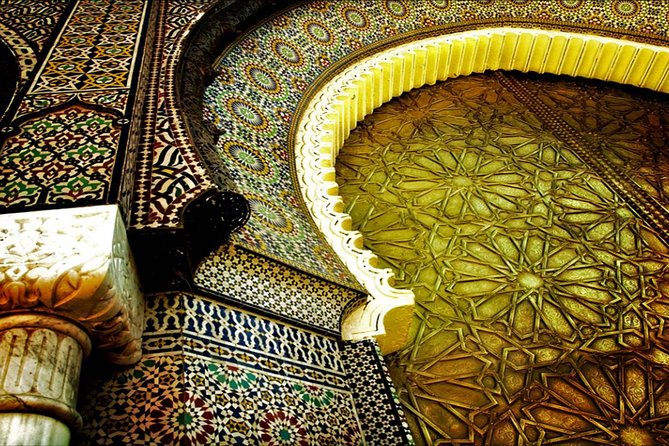
Day 1 sets the tone with a stop in Cáceres, arriving after an 8:00 a.m. departure from the meeting point at C. de Ferraz, 3 in Madrid (Moncloa–Aravaca area). You get leisure time to explore the Plaza Mayor and the old medieval quarter, which is known for being exceptionally well preserved.
Why I like this opening: it breaks the pattern of immediately chasing Spain’s biggest headlines. You’re eased into historic streets and scale before the tour ramps up toward Seville and beyond. It’s also a good day to get your bearings—especially useful if you’re not used to traveling by coach and meeting groups in a new language environment.
Practical note: lunch is on your own this day, so budget a bit of flexibility.
Seville in Full Color: Santa Cruz, Plaza de España, Giralda
Seville is where the tour starts feeling like a movie set—in a good way, because you’re guided through what to look for and why it matters.
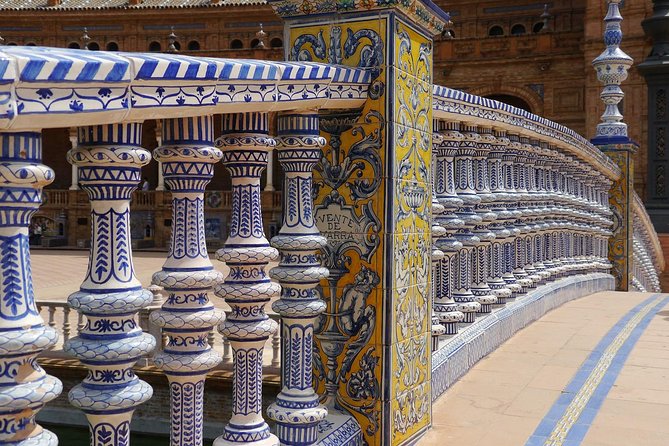
You’ll do a morning sightseeing tour that covers María Luisa Park, Plaza de España, and the exterior of the stunning Cathedral plus the Giralda (the famous bell tower). Then it moves into Santa Cruz, with its streets, squares, and narrow alleys.
A nice touch is that the schedule leaves room for optional add-ons:
- You can optionally navigate the Guadalquivir river for panoramic views (including the Gold Tower and Expo 92).
- Or you can visit the Maestranza bullring.
In the evening, dinner and an optional flamenco show are on the table if you want that classic Seville night vibe. Even if you skip the optional performances, the day is still strong thanks to the guided core.
Cordoba’s Mosque/Cathedral and the Jewish Quarter Walk
Cordoba is one of those places where arriving without context can leave you saying, That’s pretty… and moving on too fast. This tour keeps you from that problem by starting your day with a walking tour.
You’ll walk through the area starting at Almodóvar Gate, then through the Jewish Quarter, and finally visit the famous Mosque/Cathedral. After that, you’ll have time to wander on your own in the afternoon.
Why this works for most people: you get the structure first (gate → quarter → centerpiece), then you get freedom to absorb. If you like photography, you’ll find plenty of back-street angles after the guided route, too.



The White Villages and Ronda: Views You Feel in Your Legs
Day 4 is built around two different kinds of “wow.”
First comes the Route of the White Villages—classic hill-town scenery—then you move to Ronda for free time. Ronda is the dramatic contrast point: you get that sense of elevation and the way the town is shaped by its landscape.
After Ronda, the day continues to the Costa del Sol area. That transition matters. It sets up your next days in Morocco, because you’re not bouncing between far-flung Spanish cities every other day—you’re using Costa del Sol as a stable base point.
One practical consideration: free time can mean hills. Wear shoes that handle uneven stone.
Tangier and Assilah: Morocco Starts at the Strait
Then it’s ferry time. Day 5 starts in Spain with breakfast and heads from the Costa del Sol toward Tangier, crossing the Strait of Gibraltar on included fast-ferry tickets.
Once in Morocco, you continue on to Rabat, with a stop for free lunch in Assilah, a beautiful city you’ll have time to explore briefly.
What’s valuable here is the sequencing. You land in the country, get a taste of a different coastal atmosphere in Assilah, and then shift inland to Rabat the same day. That keeps jet-lag and culture-shock from piling up.
If you like photo stops: Assilah’s streets and sea-facing angles are often the kind of quick hits you can enjoy without needing a full-day plan.
Rabat’s Hassan Tower and Mohamed V Mausoleum
Rabat is your first major “big monuments” day in Morocco.
You’ll visit key points including Tour Hassan, an unfinished mosque that rises above the esplanade with more than 200 columns, and the Mausoleum of Mohamed V, built in memory of the sultan who achieved independence. The royal guard detail is part of the appeal—colorful in full dress and guarding the entrance on horseback.
Then the tour continues to Fez, described as the intellectual and religious capital, and the trip sets you up for one of the main reasons people choose this itinerary: Fez El Bali.
Fez El Bali: Dar Al-Makhzen Leads You Into the Medina
Day 6 is the anchor day for many people in Morocco.
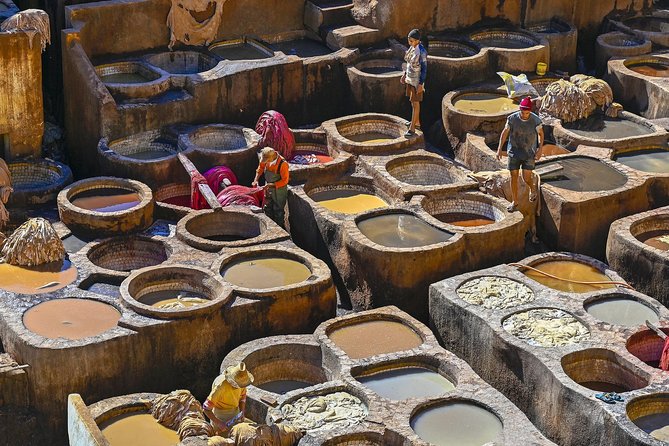
After breakfast, you’ll have a panoramic tour that includes the royal palace and its 7 gates of Dar Al-Makhzen, and then you’ll head toward the medina of Fez El Bali. This area is UNESCO-listed and often feels like a living labyrinth: the info here is concrete—785 mosques and more than 2000 squares, streets, and alleys.
You’ll get a lunch break in a typical restaurant and then continue with accommodation.
My advice for Fez: treat walking speed like a choice. Don’t try to force “tour mode” pacing. If your group moves fast, it’s okay to slow down for a minute. Fez rewards patience—the kind that turns the maze into a sequence of mini-scenes.
Also, expect more sensory input than Spain: smells, sounds, workshop fronts, and street life. That’s part of the deal here.
Chefchaouen: Blue Streets, Real Morning Pace, and an Eye for Light
On Day 7, you travel to Chefchaouen (Chaouen), one of Morocco’s most picturesque places. The walk is a highlight: you’ll stroll along blue-painted streets to Outta El Hamman Square, with free time built into the schedule.
Why the timing matters: the tour gives you time to wander without rushing, so you can catch the shifting light on the walls and decide where you want to pause. If you only do a quick photo stop, you miss the point of Chefchaouen. This schedule gives you a better chance to enjoy it as a lived-in town rather than a background.
After the walk, you return by departure to Tangier, with dinner and accommodation.
Ferry Back to Spain: How Day 8 Works as a Reset
Day 8 begins with breakfast and a free morning until ferry departure time. Then you board the ferry back to Spain, and transfer to the Costa del Sol for dinner and accommodation.
I like this kind of reset day inside a fast itinerary. You get a breath of flexibility in Morocco before you travel again, and once back in Spain your route starts aiming at Granada and Toledo—two stops that usually require different energy: more monumental walking and museum-like pacing.
Granada’s Alhambra and Generalife: The Day to Slow Down
Granada is Day 9, and it’s planned around the Alhambra and Generalife, the former residence of the Moorish kings. You’ll have a guided visit to the Alhambra area and Generalife’s fountains, gardens, and arches.
Then there’s an option if you want to add more culture late in the evening: you can go to the caves of Sacromonte and attend a typical show of gipsy flamenco.
Even if you skip the optional show, the main guided visit is the reason you’re here. This is the portion of the trip where Spain’s architecture does the heavy lifting, and the guide helps you understand what you’re looking at so it’s not just pretty walls.
Toledo: Mirador del Valle and Old Town Walking Done Right
Day 10 brings the “last grand finish” vibe with Toledo, called the Imperial City full of history and monuments.
You’ll have lunch and a panoramic view from Mirador del Valle, then you’ll walk through Toledo’s old town. After that, you continue back to Madrid and the service ends back at the meeting point.
Why Toledo is such a smart closer: it turns the trip into a single story arc—Andalusia’s mixed heritage and landscapes, Morocco’s medina experience, then a Spain city where you can connect multiple layers of past influences.
It’s also a good finale because it’s walkable and photo-friendly without being as exhausting as an all-day theme-park style schedule.
Price and Logistics: What You’re Paying For (and Where to Watch Your Step)
At $1,797.71 per person for about 10 days, the pricing looks high until you break down what’s included.
You’re getting:
- Air-conditioned coach with onboard Wi‑Fi
- Local-guided sightseeing in several major destinations (Seville, Cordoba, Fez, Rabat, Granada, Toledo)
- Multi-lingual tour escort
- Travel insurance
- Fast-ferry tickets for the Spain–Morocco crossings
- 9 nights with breakfast and 8 dinners, plus 2 lunches
For value, that’s the key: transportation plus guided time plus ferry costs. Those pieces add up quickly if you book everything yourself, especially with guided entry-style sightseeing in heavy-hitter places like the Alhambra.
Now, the watch-outs that actually matter:
- Luggage limits: only one piece of luggage per person, and you clear customs with your own luggage.
- No pickup/drop-off: you start and end at the meeting point back in Madrid (near public transportation).
- Long days and walking: even with buses, you’ll be moving through historic centers. Comfortable shoes are not optional here.
Group size is capped at 50 travelers, which usually keeps things from feeling like a chaotic stampede, though you’ll still share time and space with others.
One more human detail: in feedback from the trip, the driver-guide Mohamed Arhoun was highlighted for professionalism and for giving extra information during the runs, while staying focused on the group.
Who This Tour Fits Best (and Who Might Want a Different Plan)
This itinerary fits you best if you:
- Want to see both Andalusia and Morocco without planning your own ferry connections and daily routing.
- Like guided structure in major sights (Seville, Cordoba, Fez, Rabat, Granada, Toledo).
- Don’t mind walking in old cities and hills, especially around Ronda and in Morocco’s medinas.
- Appreciate a mix of “big monument days” (Alhambra, Hassan Tower) and “walk-and-get-lost days” (Fez El Bali, Chefchaouen).
It may not fit you as well if you:
- Want a low-activity vacation with lots of free time and minimal transfers.
- Are very sensitive to hotel location differences—there has been at least one concern about the Rabat hotel area being darker for some guests.
Should You Book This Andalusia and Morocco Tour?
I’d book it if your goal is a single, organized route that hits serious highlights on both sides of the Strait—without the stress of coordinating everything yourself. The mix of guided city time plus hands-on walking in Morocco is exactly the kind of combo that tends to feel satisfying at the end.
Before you commit, I’d also ask yourself:
- Can I travel with just one piece of luggage and handle customs on my own?
- Am I okay with early starts and multiple walking days in historic areas?
- Do I want flamenco as an optional add-on rather than a guaranteed nightly plan?
If your answers are yes, this is a strong way to get Andalusia’s icons and Morocco’s medina energy in one trip.
FAQ
What cities does the tour include?
The tour includes guided sightseeing in Seville, Cordoba, Fez, Rabat, Granada, and Toledo, plus stops in Cáceres, Ronda, the Costa del Sol, Tangier, Assilah, and Chefchaouen.
When does the tour depart from Madrid?
It starts at 8:00 a.m. from C. de Ferraz, 3, Moncloa – Aravaca, 28008 Madrid, Spain.
How long is the tour?
It runs for 10 days approximately.
Are meals included?
Breakfast is included for 9 days, dinners for 8 days, and lunch for 2 days. Some lunches (like in Cáceres) are on your own.
Does the tour include transportation between Spain and Morocco?
Yes. Fast-ferry tickets are included, and the route covers the Strait of Gibraltar crossings to connect Tangier and Spain.
Is there Wi‑Fi on the bus?
Yes. The coach includes free Wi‑Fi onboard.
How much luggage can I bring?
Only one piece of luggage is allowed per person, and you’ll need to clear customs with your own luggage.
Is passport information required?
Yes. Passport details are mandatory to complete the booking.
How many people are on the tour?
The tour has a maximum of 50 travelers.
More Tour Reviews in Madrid
- Madrid: Tour Bernabéu Entry Ticket
★ 4.5 · 21,573 reviews - Madrid: Prado Museum Entry Ticket
★ 4.6 · 20,699 reviews - Madrid: “Emociones” Live Flamenco Performance
★ 4.8 · 12,866 reviews - Madrid: Panoramic Route City Tour
★ 4.1 · 12,259 reviews - Madrid: Live Flamenco Show with Food and Drinks Options
★ 4.5 · 9,901 reviews - Avila & Segovia Tour with Tickets to Monuments from Madrid
★ 5.0 · 9,762 reviews